
Executive Overview
The landscape of global agriculture is undergoing a profound, technology-driven metamorphosis. As climate change accelerates weather volatility, arable land contracts, labor shortages intensify, and environmental regulations tighten, the world’s food producers are leaning heavily into radical innovation. Recognizing this pivotal juncture, TIME magazine has unveiled the agriculture category of its prestigious annual Best Inventions list, spotlighting six groundbreaking technologies poised to redefine how humanity grows crops, rears animals, and manages ecosystems.
Part of TIME’s broader 2026 Best Inventions ranking—which catalogs 300 products, software solutions, and conceptual frameworks engineered to make the world "better, smarter, and more fun"—the agricultural cohort represents a masterclass in cross-disciplinary engineering. From advanced crop genetics activated by light and autonomous robotics combatting stubborn vineyard pathogens, to AI-driven beekeeping, circular waste-valorization platforms, and nutrient recovery systems, these innovations underscore a singular imperative: modern farming must become smarter, more resilient, and radically more sustainable.
Selected from a rigorous global pool of nominations evaluated by TIME’s editors, correspondents, and industry experts based on originality, efficacy, ambition, and impact, these six honorees offer a window into the farm of tomorrow. This comprehensive report examines the technological breakthroughs behind each winner, the market pressures driving their adoption, and the macro-trends shaping the future of global food security.
Detailed Chronology: The Evolution of AgTech to 2026
To understand the weight of TIME’s 2026 selections, one must contextualize the rapid acceleration of AgTech over the past decade. The journey from rudimentary mechanized tractors to AI-orchestrated, biological-chemical-digital ecosystems has been nothing short of dizzying.
- The Early 2020s (The Foundation Years): The post-pandemic agricultural landscape was defined by severe labor crunches, skyrocketing fertilizer prices driven by geopolitical conflicts, and an urgent push to reduce chemical pesticide dependency. Early-stage agricultural robots and basic digital crop monitoring tools gained traction, yet adoption remained fragmented due to high capital costs and hardware reliability issues.
- The Mid-2020s (The AI and Biological Boom): As artificial intelligence matured and generative models integrated seamlessly into edge computing, agricultural robotics transitioned from proof-of-concept novelties to indispensable field units. Concurrently, synthetic biology and seed trait technologies broke away from traditional, decades-long breeding cycles. Companies began unlocking plant potential via targeted light spectrums and gene-editing frameworks, shrinking trait development timelines dramatically.
- 2025–2026 (Mainstream Commercialization and Validation): By 2026, technologies that were once confined to venture-backed startups achieved commercial scale. Autonomous platforms like Saga Robotics’ Thorvald secured multi-national footholds—treating vast acreages across Europe and North America. Simultaneously, sustainability pressures forced a reckoning with circularity, moving waste-to-nutrient and human-waste recycling initiatives from the fringe to institutional recognition, as evidenced by their inclusion on global innovation watchlists like TIME’s.
Supporting Context & Metrics: The Six Game-Changers of 2026
TIME’s curated list captures the breadth of contemporary agricultural innovation by dividing its focus across six distinct pillars: seed genetics, field robotics, pollinator health, circular bio-economy, specialty crop disease control, and nutrient recycling.
+---------------------------------------------------------------------------------+
|                        TIME'S 2026 AGTECH INNOVATION PILLARS                    |
+--------------------------+------------------------------------------------------+
| Pillar                   | Featured Technology & Core Impact                    |
+--------------------------+------------------------------------------------------+
| Crop Genetics            | BioLumic xTraits (Light-activated seedling resilience) |
| Field Automation         | Burro Grande 44 (Multi-purpose labor-multiplier robot)|
| Pollinator Management    | Beewise Robi (AI-powered automated hive health)      |
| Circular Agriculture     | 2nd Nature AgWaste Portal (AI-driven waste valorization)|
| Disease Control Robotics | Saga Robotics Thorvald (UV-C powdery mildew control)   |
| Nutrient Recovery        | VunaNexus Aurin (Urine-derived sustainable fertilizer) |
+--------------------------+------------------------------------------------------+
1. BioLumic: Light-Activated Crop Genetics
- The Innovation: BioLumic’s xTraits platform utilizes patented ultraviolet and visible light treatments on seeds and seedlings to trigger specific, beneficial biological mechanisms without altering the native DNA.
- The Impact: TIME highlighted the technology for "giving crops a stronger start." By priming seedlings with precise light frequencies, the platform enhances root development, photosynthetic efficiency, and natural resistance against biotic and abiotic stressors. This provides farmers with a powerful, non-GMO mechanism to boost productivity and crop resilience amidst escalating climate pressures.
2. Burro Grande 44: The All-Purpose Farm Robot
- The Innovation: Addressing the chronic global labor crisis, Burro’s latest iteration—the Burro Grande 44—stands out as a versatile, heavy-duty autonomous mobile robot designed to handle logistics, heavy hauling, and field support tasks alongside human workforces.
- The Impact: Unlike autonomous platforms designed to replace human labor entirely, Burro’s philosophy centers on human-robot collaboration. By taking over the physical burden of transporting harvested produce from pickers back to central collection hubs, the robot drastically reduces downtime and physical strain.
3. Beewise Robi: Artificial Intelligence in Apiculture
- The Innovation: Beewise Robi brings industrial automation and edge AI to the ancient art of beekeeping. The system monitors commercial beehives 24/7, detecting temperature anomalies, pest infestations (such as Varroa mites), and swarming behaviors, while autonomously executing interventions like pest control and feeding.
- The Impact: With roughly one-third of the human diet dependent on insect pollination—particularly for high-value specialty crops like almonds, apples, and berries—the health of commercial honeybee colonies is of paramount economic and ecological importance. Robi mitigates high hive-loss rates, safeguarding critical agricultural yields.
4. 2nd Nature AgWaste Portal: Unlocking Value from Scraps
- The Innovation: The agricultural and food processing industries generate millions of tons of organic side streams annually. The 2nd Nature AgWaste Portal leverages artificial intelligence to catalog, analyze, and identify commercially valuable compounds within these agricultural waste streams.
- The Impact: Described by TIME as providing "a second life for scraps," the platform bridges the gap between agricultural producers and downstream chemical, cosmetic, and food ingredient manufacturers. It transforms liability-heavy waste into high-margin biochemical assets, driving the global transition toward a true circular bio-economy.
5. Saga Robotics Thorvald: UV-C Light Against Powdery Mildew
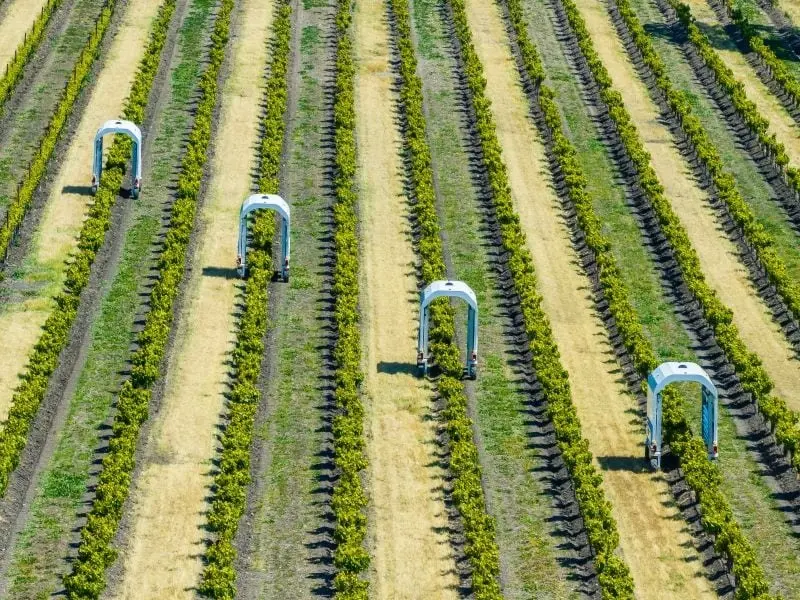
- The Innovation: Saga Robotics has cemented its market leadership through Thorvald, an autonomous, all-electric robotic platform that navigates vineyards and high-wire greenhouse systems at night, administering targeted UV-C light treatments to eradicate powdery mildew and other fungal pathogens.
- The Impact: Powdery mildew is one of the most persistent and economically destructive threats to specialty crops. Traditionally controlled via heavy applications of synthetic fungicides, Thorvald offers a clean, chemical-free alternative that prevents chemical resistance build-up. By 2026, Thorvald has scaled remarkably, treating an estimated 30% of the United Kingdom’s tabletop strawberry production and managing approximately 2,500 acres of prime California vineyards.
6. VunaNexus Aurin: Nutrient Recovery from Human Urine
- The Innovation: Closing the nutrient loop at its most fundamental level, VunaNexus Aurin is a commercial fertilizer product derived from processed, sterilized human urine.
- The Impact: Dubbed by TIME as "garden fertiliser from urine," this technology taps into an abundant, localized, and renewable source of nitrogen, phosphorus, and potassium. As the agricultural sector faces volatile mineral fertilizer markets and stringent environmental quotas on agricultural runoff, urine-derived fertilizers offer a vital pathway toward localized nutrient sovereignty and reduced reliance on energy-intensive Haber-Bosch synthetic nitrogen.
Official Statements and Industry Insights
The convergence of robotics, artificial intelligence, and biological innovation has elicited enthusiastic commentary from industry pioneers, startup founders, and agricultural economists alike.
Addressing the economics of farm automation and the labor multiplier effect, Charlie Andersen, CEO of Burro, noted in his interview with TIME:
"When you have a robot running around carrying the fruit people pick back to central points, each person is 30% more productive."
This metric speaks directly to the financial viability of agricultural robotics. Rather than pricing out smallholders or replacing skilled harvesters—a frequent critique of early automation—modern robotics is increasingly designed to integrate symbiotically with human workforces, amplifying human capability during peak harvest windows when labor is scarce and expensive.
Similarly, industry analysts point to the strategic importance of non-chemical crop protection systems like Saga Robotics’ Thorvald. As regulatory bodies in Europe and North America steadily phase out conventional active ingredients due to environmental accumulation and consumer safety demands, autonomous UV-C treatment represents a lifeline for specialty crop producers striving to maintain yield volume without sacrificing export market compliance.
Future Outlook: The Horizon of AgTech
As we look beyond the 2026 accolades, the trajectory of agricultural innovation points toward deeper integration, greater autonomy, and absolute hyper-efficiency. The winners of TIME’s Best Inventions list are not isolated novelties; they are the building blocks of an interconnected agricultural grid.
Several macro-trends will dictate the evolution of these technologies over the remainder of the decade:
- Cross-Platform Interoperability: Future farms will not operate on siloed software systems. The data gathered by autonomous robots like Burro and Thorvald will seamlessly feed into predictive agronomic models, while waste streams mapped by AI platforms like 2nd Nature will be automatically coordinated with localized biorefineries.
- Accelerated Biological Integration: Seed treatments like BioLumic’s light-activated traits will increasingly merge with microbial soil inoculants and gene-edited resilience packages, creating multi-layered defense systems tailored to hyper-local microclimates.
- Decentralized Nutrient Economies: Innovations like VunaNexus Aurin signal the early stages of a profound paradigm shift in municipal and rural infrastructure. The decoupling of agricultural fertilizer supply chains from fossil-fuel-dependent manufacturing will become an imperative for national food security.
Ultimately, TIME’s recognition of these six distinct agricultural technologies serves as a powerful validation of the sector’s ingenuity. Farming—traditionally viewed as one of the most conservative, risk-averse industries—has evolved into a vanguard of applied science. By marrying ecological stewardship with cutting-edge engineering, these innovators are ensuring that the global agricultural sector can meet the formidable challenges of the 21st century head-on.