In the quiet corners of private property management and rural oversight, abandonment cases frequently fly under the radar, leaving vulnerable animals exposed to the harsh realities of the elements and neglect. However, a routine observation recently transformed into a critical rescue operation when an ordinary, tarp-covered trailer left unattended on private land yielded an unexpected discovery: eight tiny, defenseless kittens locked inside a concealed crate.
Thanks to the intuition and persistence of a watchful passerby who refused to walk past the suspicious setup, these eight young felines were spared from what could have been a grim fate. The intervention catalyzed a rapid response from the River Cities Humane Society for Cats, a dedicated rescue organization that took custody of the vulnerable litter.
While the incident highlights the ongoing, distressing trend of pet abandonment and the strain placed on regional animal shelters, it also underscores the profound impact of community vigilance. Today, the kittens are safe, receiving medical care, and stepping onto a path toward permanent adoption. This comprehensive report explores the chronology of their discovery, the broader implications of pet overpopulation, the vital role of local rescue infrastructure, and the essential steps required to prevent similar crises in the future.
Detailed Chronology of the Rescue
The Suspicious Trailer
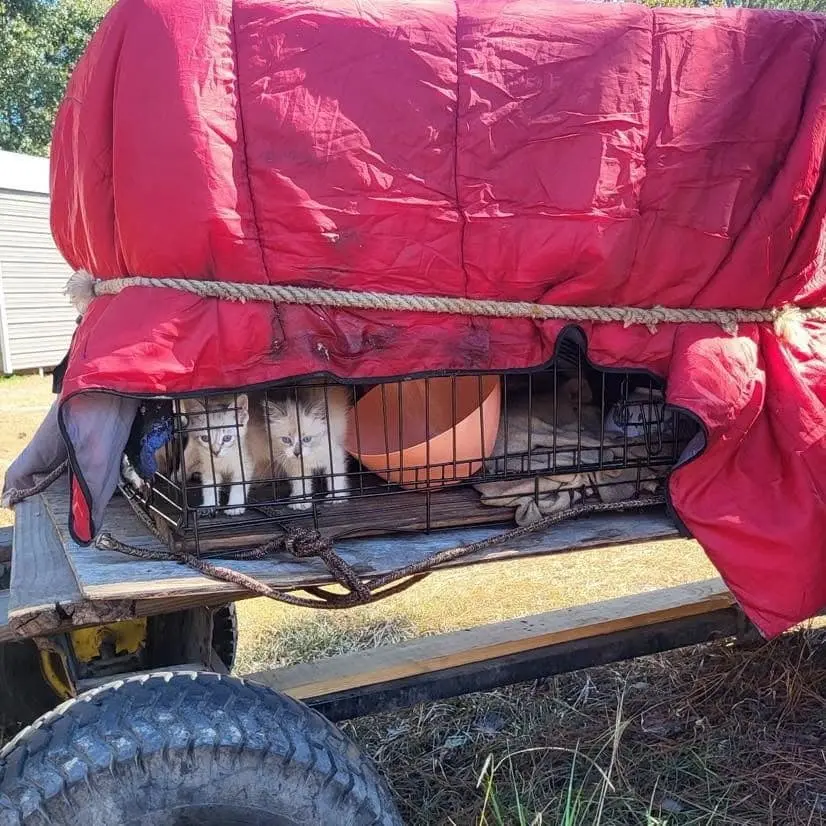
The sequence of events began when a property owner or visitor noticed a trailer that had been dropped off uninvited on private land. To the untrained eye, the object appeared to be nothing more than a standard utility or cargo trailer draped in a weather-resistant tarp—a common sight in rural and semi-rural areas. There was no immediate indication that the structure harbored life. Trailers are frequently left parked temporarily for storage, construction, or transport purposes, making them easy to overlook as potential hazards to animal welfare.
However, an observant woman walking the property sensed something amiss. Whether it was a subtle sound, an instinctual hunch, or a lingering curiosity, she decided to approach the tarp-covered vehicle rather than dismiss it.
Lifting the Tarp
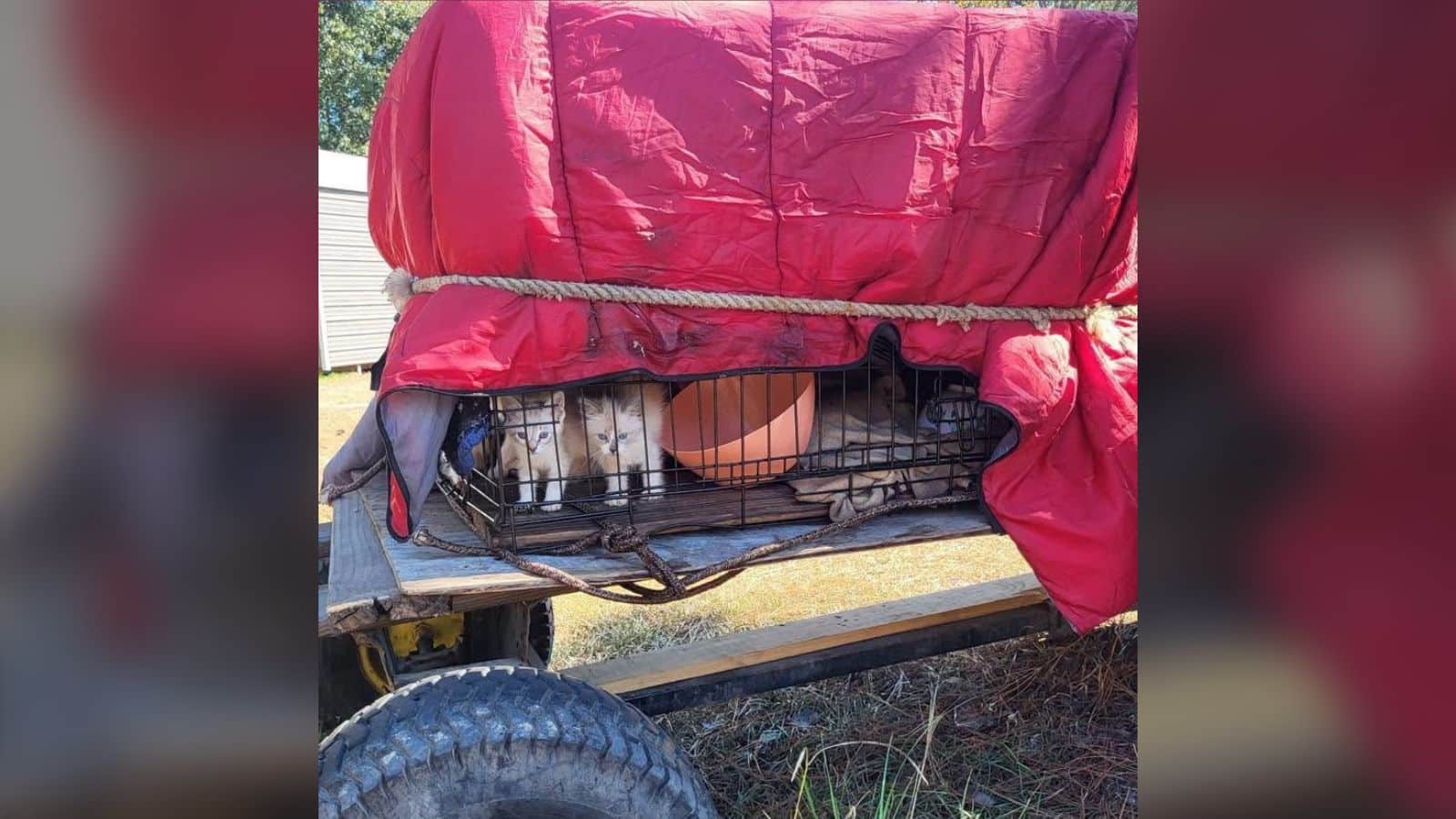
As the woman drew closer, she realized that a standard pet crate had been placed on the bed of the trailer and deliberately concealed beneath the heavy protective covering. This intentional act of masking the crate suggests an effort to keep the contents hidden from view—whether to protect them from the elements or, more likely, to avoid detection by anyone passing by.
Driven by concern, she lifted the tarp to inspect the crate. Peeking out from the confines of the plastic enclosure were multiple pairs of wide, innocent eyes. Eight tiny kittens, huddled together for warmth and security, looked back at her. Abandoned in an isolated spot without access to fresh water, food, or proper ventilation, the litter was entirely dependent on pure coincidence for their survival.
Intervention by River Cities Humane Society for Cats
Recognizing the urgency of the situation, the woman immediately contacted local animal welfare authorities. The call was answered by the River Cities Humane Society for Cats, a well-established regional shelter specializing in feline rescue, rehabilitation, and placement.
Rescue workers mobilized quickly to retrieve the abandoned litter. Upon arrival, shelter staff assessed the kittens, who were frightened, exhausted, but miraculously unharmed by their ordeal. Transporting the octet back to the facility, the rescue team immediately placed them in a safe, climate-controlled environment equipped with proper nutrition, bedding, and veterinary oversight.
Supporting Context & Metrics: The Crisis of Unwanted Litters
The rescue of these eight kittens is not an isolated incident; rather, it is a glaring symptom of a larger, systemic crisis facing animal rescue organizations across the country. Unwanted litters, unplanned pregnancies, and pet abandonment place an immense, continuous burden on shelters, foster networks, and municipal agencies.
The Mathematics of Feline Overpopulation
Feline reproductive biology makes unchecked populations explode in remarkably short periods. A single female cat can become pregnant as young as four months of age and can produce multiple litters per year, averaging four to six kittens per litter. Without proactive spaying and neutering interventions, two unsterilized cats and their offspring can theoretically result in the birth of hundreds of thousands of kittens within a span of just a few years.
When pet owners fail to sterilize their animals, the resulting surplus often ends up abandoned, surrendered to overcrowded shelters, or left to fend for themselves outdoors. This dynamic fuels several critical challenges for animal welfare infrastructure:
Resource Depletion: Shelters operate on tight budgets, relying heavily on donations, grants, and volunteer labor. An influx of eight unexpected kittens demands immediate outlays for formula, specialized food, deworming medications, vaccinations, and enclosure space.
Foster Network Strain: Neonatal kittens—those under four to five weeks of age—cannot regulate their own body temperature and require around-the-clock bottle-feeding every two to three hours. Finding foster volunteers with the time, experience, and dedication to handle large neonatal litters is an ongoing logistical challenge.
Veterinary Backlogs: Medical teams within rescue organizations face immense pressure to process incoming animals swiftly, balancing routine wellness exams and surgeries with emergency intakes.
The Role of Spay/Neuter Programs
In the wake of the discovery, River Cities Humane Society for Cats leveraged the public attention generated by the rescue to address the root cause of the crisis. Through social media outreach and community announcements, the organization emphasized that the abandonment of these eight kittens was entirely preventable through responsible pet ownership.
Public education campaigns increasingly point to accessible, low-cost spay and neuter services as the definitive solution to shelter overcrowding. Many communities feature subsidized programs, mobile clinics, and voucher systems designed to assist low-income pet owners or caretakers of community cat colonies. By reinforcing these resources, shelters hope to curb the tide of abandoned litters before they reach crisis levels.
Official Statements and Community Response
The story of the eight rescued kittens struck a powerful chord online, generating widespread engagement after River Cities Humane Society for Cats shared the details and photographs of the litter on their official Facebook page.
The Shelter’s Perspective
In their social media communications, shelter representatives expressed profound gratitude toward the woman whose vigilance saved the day. They highlighted that without her decision to investigate beneath the tarp, the kittens’ cries might have been muffled, leading to a tragic outcome.
At the same time, the rescue organization used the platform to educate the public on the broader realities of animal rescue. Staff noted:
"While we are thrilled to give these eight little lives a second chance, their story serves as a sobering reminder of the constant battle against pet overpopulation. Unwanted litters continue to test our capacity, but through community awareness and accessible spay-and-neuter programs, we can work together to change these outcomes."
Public Reaction and Adoption Inquiries
The response from the animal-loving community was swift and overwhelming. Within hours of the post going live, scores of users flooded the comments section with messages of support, expressions of outrage over the abandonment, and eager inquiries regarding adoption.
Potential adopters from across the region reached out to stake an early claim on a new pet. Specific queries ranged from families looking for a particular aesthetic—such as a long-haired kitten requested by a relative—to individuals simply eager to open their homes to any member of the rescued octet.
However, shelter protocol dictates a rigorous, methodical approach to animal placement. River Cities was careful to temper public enthusiasm with realistic expectations regarding the timeline and requirements for adoption.
Future Outlook: Rehabilitation and Adoption Timeline
While the public’s eagerness to adopt is a testament to compassion, animal welfare standards require that rescued kittens meet specific developmental and medical benchmarks before leaving the shelter environment.
The Road to Readiness
The eight kittens are currently undergoing comprehensive veterinary evaluations. Their path to permanent homes involves several non-negotiable milestones:
Medical Clearance: Ensuring each kitten is free from parasites, upper respiratory infections, and other common ailments associated with early exposure to the elements.
Vaccination Protocols: Administering age-appropriate core vaccinations to protect against feline distemper, calicivirus, and rhinotracheitis.
Sterilization Surgery: Spaying or neutering each kitten once they reach the appropriate age and weight threshold—typically around eight weeks or two pounds.
Socialization and Observation: Monitoring behavioral development to ensure the kittens are well-adjusted, confident, and ready to thrive in domestic household environments.
Adoption Guidelines for Interested Families
River Cities Humane Society for Cats has estimated that the kittens will not be ready for adoption placement for at least two months following their initial rescue announcement.
Rather than maintaining a reserve list through social media comments, the shelter has directed prospective adopters to monitor its official website. Interested families are encouraged to review adoption criteria, submit formal applications, and check regular inventory updates to find cats currently eligible for placement.
A Brighter Horizon
The journey of these eight kittens—from concealed prisoners beneath a forgotten tarp to celebrated ambassadors for feline welfare—illustrates the profound difference that human empathy can make. Though their beginning was marked by carelessness and abandonment, their future is now illuminated by professional care, passionate advocacy, and the eager anticipation of loving forever homes.
As River Cities Humane Society for Cats continues to nurse the litter back to robust health, their story remains a powerful reminder: a watchful eye, a willingness to investigate, and a commitment to animal welfare can rewrite the destiny of the most vulnerable among us.