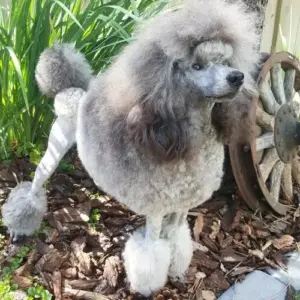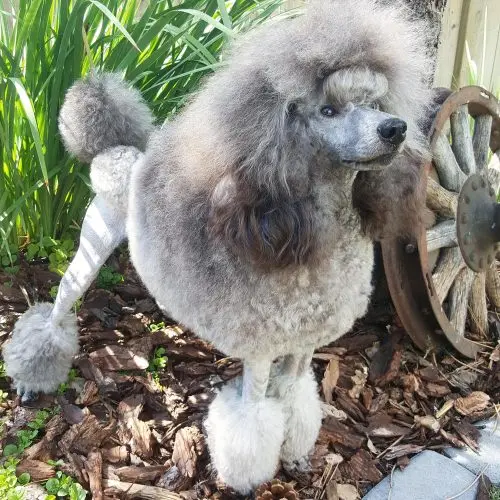

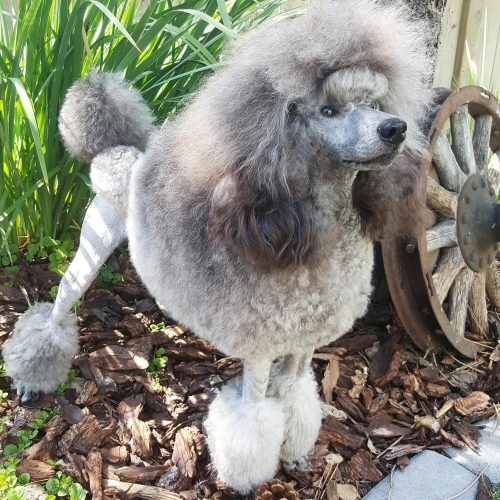
For pet owners navigating the complex landscape of commercial aviation, traveling with an in-cabin animal companion frequently presents a daunting logistical puzzle. The challenge grows exponentially when the animal in question deviates from the diminutive dimensions typically accommodated by airline regulations. Meet Flint, a tall miniature poodle boasting a voluminous coat and long legs—a canine traveler whose physical stature threatened to ground his flying ambitions before they even began.
When pet owner Keri set out to arrange a multi-leg journey across Canada aboard Air Canada, she was repeatedly warned that Flint’s height would disqualify him from standard in-cabin pet carrier dimensions. Undeterred, Keri embarked on an extensive research, acquisition, and engineering campaign to design a custom travel solution. Rather than accepting the limitations of off-the-shelf equipment, she engineered a radical, hands-on modification of a budget-friendly expandable pet carrier.
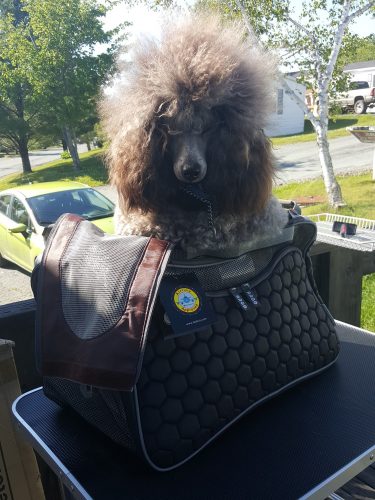
Keri’s ingenious adaptation—which involved surgically altering the internal wire frames of a large Pettom Expandable Foldable Travel Carrier—allowed her to successfully navigate four distinct aircraft types: the Embraer 175, Embraer 190, Airbus A320-200, and the Bombardier Q400. This investigative report chronicles Keri and Flint’s journey, detailing the meticulous pre-trip preparation, the structural modifications required to conquer strict airline under-seat clearances, and an in-depth breakdown of how the modified carrier performed across various cabin layouts. The findings offer an authoritative blueprint for owners of long-legged dogs seeking to travel safely and comfortably in the airline cabin.
Detailed Chronology: From Selection to Skies
The journey to orchestrating Flint’s maiden voyage began months in advance, requiring a disciplined timeline of product sourcing, behavioral acclimation, and precise structural engineering.
Phase 1: The Carrier Selection Process
Keri faced a strict one-month deadline to procure, test, and approve a carrier that could comfortably accommodate Flint’s distinct anatomy. Initial in-store evaluations of industry mainstays—including the large Sherpa (19” long x 11.75” wide x 11.5” high) and the large Bergan (19” L x 10” W x 13” H)—proved unsatisfactory, as both models lacked the requisite internal volume for a fully coated miniature poodle.
Turning to online specialty options, Keri ordered two heavy contenders:
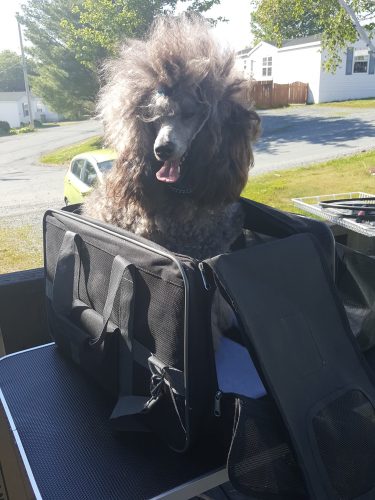
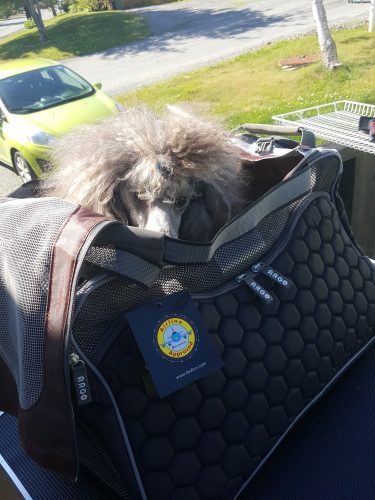
- The Argo by Teafco Petagon Carrier (21”L x 12”W x 13”H): Universally praised for its high-end manufacturing, reflective safety tape, multiple storage pockets, and superior materials. However, its built-in cooling tray insert compromised vital interior height, and its rigid structure made it difficult to zip shut quickly over Flint’s dense, voluminous hair. Ultimately, Flint himself registered his disapproval, showing clear reluctance to enter the unit.
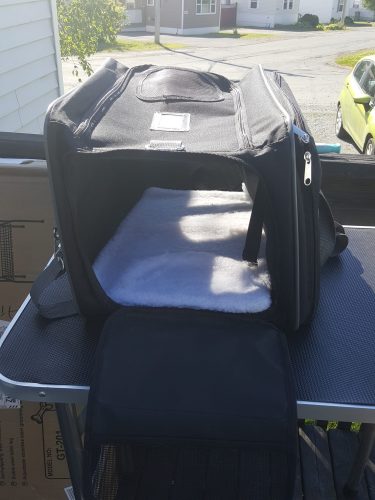
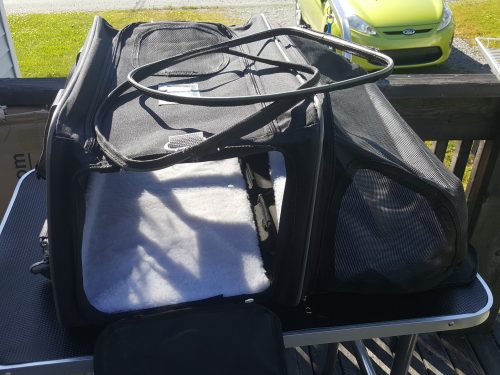
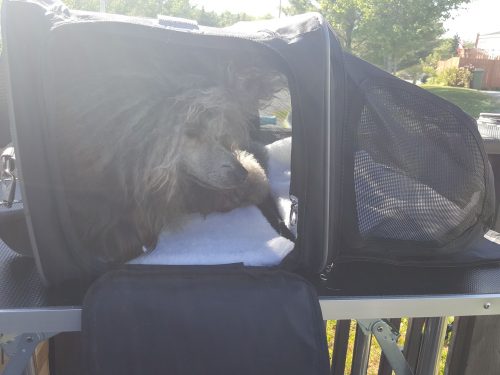
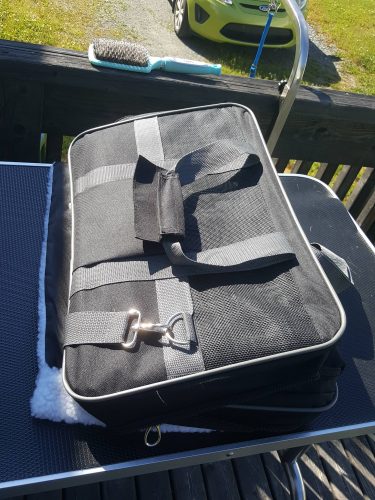
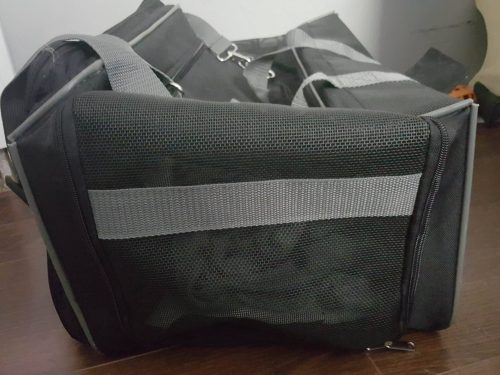
- The Large Pettom Expandable Foldable Travel Carrier (19” x 12” x 12” base, expanding to 22.5” wide): Though manufactured from cheaper, less luxurious materials than the Argo, the Pettom emerged as the clear winner. Its dual zippered end-panels allowed Flint to walk in unassisted. Most importantly, its side-expandable mesh compartment ("pup tent") promised nearly double the floor space when deployed, addressing the critical need for long-legged stretching room.
Phase 2: Radical Engineering and Modification
Recognizing that the Pettom’s rigid wire framing could prevent the carrier from flexing under cramped airline seats, Keri executed a series of calculated, high-stakes modifications:
- Removal of Removable Stiffeners: The zippered-in plastic rods designed to support the expandable section were immediately discarded to prevent a dog’s foot from becoming trapped during movement.
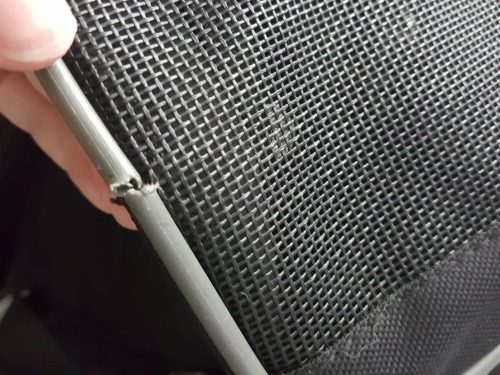
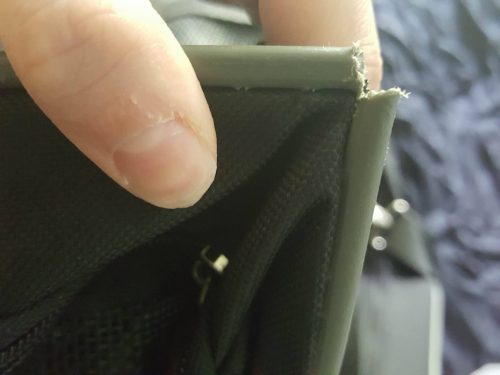
- Structural Wire Cutting: Using heavy-duty bolt cutters, Keri painstakingly snipped the four primary wire frame supports surrounding the kennel at a height of 9 inches, ensuring absolute care to preserve the surrounding mesh and fabric.
- Safety Precautions: Although the cuts successfully allowed the side panels to fold inward and flex into a sloped profile under seat pressure, the exposed wire ends presented a minor hazard. Subsequent travelers attempting this modification are strongly advised to file, sand, or tape the cut metal ends to prevent injury to human limbs or interior vehicle/aircraft finishes.
Phase 3: Behavioral Desensitization and Veterinary Clearance
A high-tech carrier is useless if the occupant panics inside it. Keri implemented a rigorous, multi-week conditioning program:
- Week 1: The carrier was left open in the living space with treats regularly tossed inside, encouraging Flint to view it as a safe haven.
- Week 2: Short, incremental crating sessions with the zippers fully closed were introduced.
- Week 3: Flint was placed inside the carrier during his afternoon naps (approximately one-hour intervals) while kept directly at Keri’s feet, paired with positive reinforcement.
- Cues and Commands: Keri established physical signals—such as a gentle tap on the bag or a light downward pressure on Flint’s head paired with a tap on his rear—to prompt him to curl up and lower his profile on command.
To preempt potential pushback from airline check-in agents regarding Flint’s height, Keri brought the modified carrier to her veterinarian during a routine wellness check. She secured an official veterinary letter and referral approving the carrier’s suitability for Flint’s specific dimensions, providing undeniable third-party backing during gate checks.
Supporting Context & Metrics: Aircraft Layouts and Performance
Navigating Air Canada’s diverse regional and mainline fleet required dynamic adaptation. Below is a detailed breakdown of the four aircraft models encountered during the trip, cross-referenced with seating metrics and performance metrics.
| Aircraft Model | Seat Pitch | Seat Width | Configuration | Carrier Performance & Deployment Strategy |
|---|---|---|---|---|
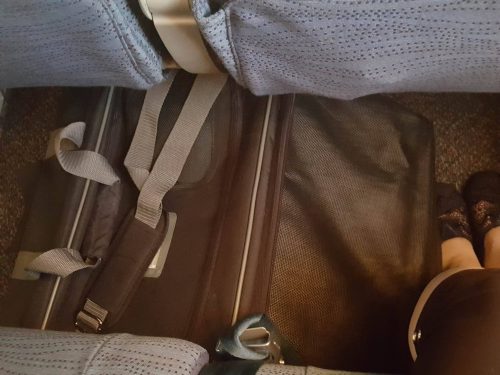
| Embraer 175 | 32"–34" | 18" | 2 x 2 Economy | Flew for ~2 hours in an economy window seat with an empty adjacent seat. Post-takeoff, the carrier was pulled into the leg space and fully expanded, giving Flint maximum room. |
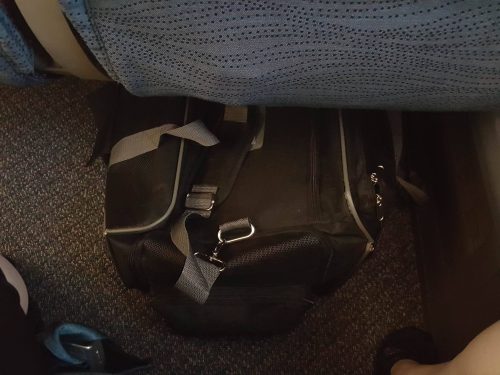
| Airbus A320-200 | 35" (Preferred) | 17.8" | 3 x 3 Mainline | Flew for ~5 hours. Upgraded to a Preferred Seating window seat for extra pitch. Carrier pushed fully back and tilted slightly to accommodate the aircraft’s under-seat architecture, with the mesh expansion partially deployed. |
| Embraer 190 | 31"–33" | 18" | 2 x 2 Economy | Flew for ~4 hours. Carrier positioned horizontally to leverage a neighbor’s shared under-seat clearance (which lacked blocking support bars). Mesh tent unzipped post-takeoff over Keri’s feet. |
| Bombardier Q400 | 31" | 17" | Turboprop | Flew for ~2 hours. The most spatially restrictive cabin. The carrier remained fully zipped and unexpanded beneath the seat due to tight structural limitations, requiring close monitoring during the short flight. |
Airport Logistics and In-Flight Observations
Throughout the journey, Keri noted consistent behavioral patterns from Flint. On every flight, the miniature poodle voiced his displeasure through crying during the boarding and taxi phases. However, the moment the aircraft achieved airborne status, Flint invariably settled into a calm, silent state for the duration of the flight.
Navigating terminal infrastructure presented classic challenges: airports notoriously lack dedicated animal relief areas past security checkpoints. Keri utilized human restroom facilities during layovers to manage basic sanitary needs, underscoring the lack of standardized pet infrastructure in major Canadian terminals.
Official Guidelines & Regulatory Considerations
Commercial air carriers maintain strict, non-negotiable parameters regarding in-cabin animal transport. While airlines such as Air Canada publish specific maximum dimensions for hard- and soft-sided containers (typically revolving around soft-sided flexibility to fit under the seat directly in front of the passenger), enforcement at the gate can vary wildly based on individual agent discretion.
Key regulatory principles highlighted by this case study include:
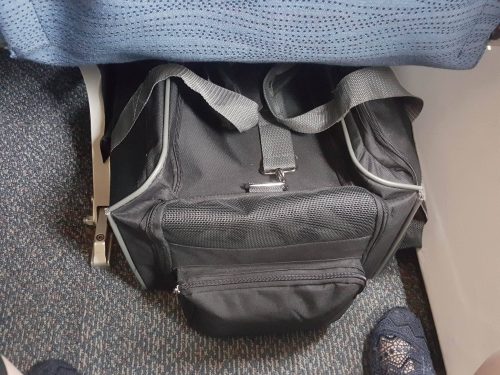
- The Under-Seat Rule: The carrier must fit entirely under the seat ahead of the passenger without blocking emergency egress or protruding into aisle spaces during taxi, takeoff, and landing.
- Ventilation and Animal Welfare: Regulations mandate that pet carriers must provide adequate ventilation on a minimum of three sides (or all sides for soft-sided mesh bags) and offer enough room for the animal to stand up, turn around, and lie down naturally—a standard that becomes exceptionally nuanced when accommodating taller breeds like miniature poodles.
- Documentation: Proof of rabies vaccination, health certificates (when crossing international borders), and explicit compliance with carrier-specific reservation caps are mandatory. Keri’s proactive step of acquiring a formal veterinary endorsement letter serves as an exemplary gold standard for owners of borderline-sized pets.
Future Outlook: The Evolution of Pet Travel Gear
Keri’s successful cross-country excursion on Air Canada marks a significant milestone in DIY pet gear engineering. It exposes a persistent gap in the commercial pet product market: manufacturers frequently design carriers that adhere to rigid geometric boxes, failing to account for the organic flexibility required by modern aircraft under-seat frames.
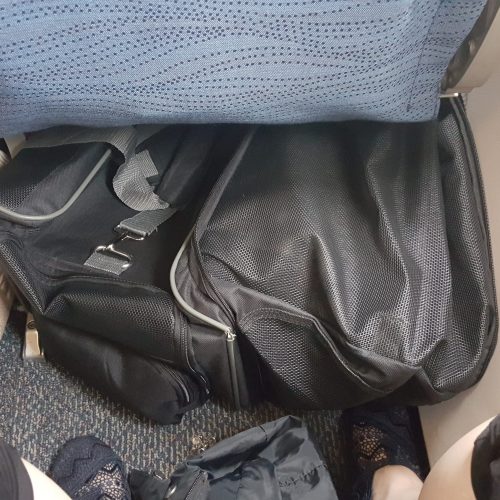
As commercial airlines continue to tighten seat pitches and maximize passenger densities, the demand for adaptable, lightweight, and modular travel accessories will soar. Keri’s bold decision to employ bolt cutters on a Pettom carrier highlights the ingenuity required by everyday pet owners in the absence of specialized manufacturing.
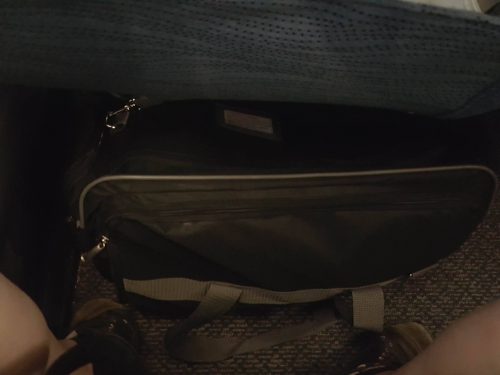
For travelers inspired by this account, the methodology is clear: choose a structurally sound foundation with expansion capabilities, tailor the internal framing to match specific aircraft clearance tolerances, desensitize your companion rigorously well in advance, and always secure official veterinary documentation. With preparation, moxie, and a touch of structural engineering, the friendly skies remain open to long-legged canines everywhere.