In the high-stakes domain of aviation security, few defensive assets are as effective—or as publicly revered—as the Transportation Security Administration (TSA) National Explosives Detection Canine Team Program. In June 2020, Indianapolis International Airport (IND) witnessed the conclusion of a distinguished eight-year career as TTirado, a veteran TSA explosive detection canine, officially entered retirement.
Graduating in 2012 from the TSA Canine Training Center at Joint Base San Antonio-Lackland, TTirado served as one of the agency’s longest-tenured passenger screening canines. Throughout his career, TTirado conducted thousands of routine and specialized sweeps across terminal spaces, security checkpoints, and baggage handling facilities, safeguarding millions of traveling citizens.
Beyond his operational achievements, TTirado carries a profound legacy reflected in his distinct name. The double first letter "TT" signifies a solemn honorific within the agency, commemorating Hector Luis Tirado, Jr., a New York City firefighter who lost his life in the line of duty during the September 11, 2001 terrorist attacks.
Upon concluding his active service, TTirado was formally adopted by his long-time handler, TSA Canine Handler Keith Gray, ensuring a seamless transition from critical national defense infrastructure to a well-earned civilian retirement. A final operational search exercise—staged by his colleagues and captured on camera—went viral across social media platforms, garnering over one million views and drawing national attention to the vital role working dogs play in national security.
Detailed Chronology
+-----------------------------------------------------------------------------------+
|                            TTIRADO'S SERVICE TIMELINE                             |
+-----------------------------------------------------------------------------------+
|  2012        | Enrolls & graduates from TSA Canine Training Center (Lackland AFB) |
|  2012–2020   | Active Deployment at Indianapolis International Airport (IND)     |
|  June 2020   | Final operational sweep & surprise retirement bag search          |
|  June 2020   | Official retirement & adoption by Handler Keith Gray             |
+-----------------------------------------------------------------------------------+
2012: Inception and Rigorous Training
TTirado’s service began in 2012 at the TSA Canine Training Center at Joint Base San Antonio-Lackland in San Antonio, Texas. Enrolled in one of the early specialized classes for Passenger Screening Canines (PSC), TTirado underwent months of intensive conditioning. The curriculum focused on:
Advanced explosive scent identification,
Decoupled odor tracking in high-density human environments,
Environmental habituation to negotiate noisy, fast-moving airport terminals without distraction.
Upon completing the program, TTirado was paired with TSA Handler Keith Gray and permanently assigned to Indianapolis International Airport (IND).
2012–2020: Operational Deployment at IND
For more than eight years, TTirado and Handler Gray maintained a constant presence at IND. Their daily routine encompassed sweeping ticket counters, TSA PreCheck lines, main terminal concourses, cargo holds, and baggage sorting areas. During this period, TTirado maintained an impeccable service record, consistently passing unannounced proficiency evaluations and re-certification exams required by federal aviation security mandates.
June 2020: The Final Bag Search and Retirement Announcement
On June 17, 2020, TSA Regional Spokesperson Mark Howell publicly announced TTirado’s retirement via official communications channels. To commemorate his final day on duty, IND security staff arranged a customized "final search" scenario.
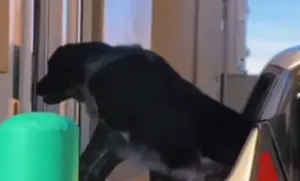
As Handler Gray guided TTirado through his standard search protocol toward a designated piece of luggage, TTirado performed his trained alert sequence. Upon unzipping the target bag, rather than revealing a training scent or explosive simulant, a cascade of tennis balls and dog toys spilled onto the terminal floor—marking the end of his active duty service and the commencement of his retirement.
A lesser-known aspect of the TSA Canine Program is its memorial naming convention. Working dogs whose names begin with a repeated initial letter (e.g., TTirado, AKron, MMatt) are named in honor of victims who perished during the September 11, 2001 terror attacks.
TTirado was named after Hector Luis Tirado, Jr., an FDNY firefighter assigned to Engine Company 23, who gave his life attempting to rescue individuals from the World Trade Center towers. This naming framework serves as an enduring reminder to agency personnel and the public of the foundational event that led to the creation of the TSA and the modern transportation security architecture.
+--------------------------------------------------------------------------+
|                  TSA CANINE MEMORIAL NAMING PROTOCOL                     |
+--------------------------------------------------------------------------+
|  Standard Canine Naming  |  Single initial letter (e.g., "Max", "Duke")  |
|  9/11 Memorial Honorific |  Double initial letter (e.g., "TTirado")     |
|  In Remembrance Of       |  Hector Luis Tirado, Jr. (FDNY, Engine 23)   |
+--------------------------------------------------------------------------+
Program Scope and Metrics
The TSA National Explosives Detection Canine Team Program represents one of the largest mobile explosive detection assets in the United States Department of Homeland Security.
Operational Metric
Program Standard / TTirado Record
Active Service Duration
8+ Years (Exceeding the 5–7 year agency average)
Primary Base of Operations
Indianapolis International Airport (IND)
Training Facility
TSA Canine Training Center (JBSA-Lackland, TX)
Public Engagement Impact
1,000,000+ views on retirement footage
Total Program Teams Nationwide
~1,000 active canine teams across US airports
Canines in the PSC program undergo rigorous continuous assessment. Unlike traditional static explosive detection dogs that search stationary objects, Passenger Screening Canines are trained to detect minute vapor plumes emanating from moving individuals, making their training regime significantly more complex.
Official Statements
The official public announcement was spearheaded by TSA Regional Spokesperson Mark Howell, who documented TTirado’s final operational moments and facilitated the media release across federal and public platforms.
"After more than 8 years of service @INDairport, @TSA explosive detection canine TTirado has officially retired," stated Mark Howell, TSA Regional Spokesperson. "He was adopted by his handler Keith Gray and will spend retirement at home with his family."
Addressing the public response to TTirado’s transition from federal service to household pet, Howell added:
"Happy Friday! Any weekend plans? Asking for a friend (who has lots of free time now)."
Handler-Canine Adoption Protocols
Under federal working dog disposal guidelines (enacted under the Federal Law Enforcement Animal Retirement Act), handlers are granted the primary right of refusal to adopt their assigned working animals upon the dog’s medical or age-related retirement. Because handlers and working dogs operate as dedicated teams for years, the adoption rate among handlers exceeds 90%.
Handler Keith Gray exercised this right immediately upon TTirado’s official retirement from federal service, transitioning TTirado from an active-duty government asset to a permanent family companion.
Future Outlook
Life Post-Service
For working dogs trained to maintain high levels of focus and physical activity, retirement requires a period of decompression. Facilities and handlers carefully manage the transition from structured daily shifts to domestic life. For TTirado, post-retirement life focuses on rest, recreation, and family integration—a stark contrast to the regimented environment of international airport terminals.
TTirado’s retirement underscores the ongoing generational shift within the TSA National Explosives Detection Canine Team Program. As older canines reach retirement age, the agency continues to deploy next-generation working dogs trained not only in conventional explosive detection, but also in adapting to evolving threat landscapes, biosecurity integration, and advanced passenger flow management.
TTirado leaves behind an operational legacy defined by over eight years of uninterrupted security operations, serving as both a vital line of defense for the traveling public and a living tribute to a fallen 9/11 hero.