
Executive Overview
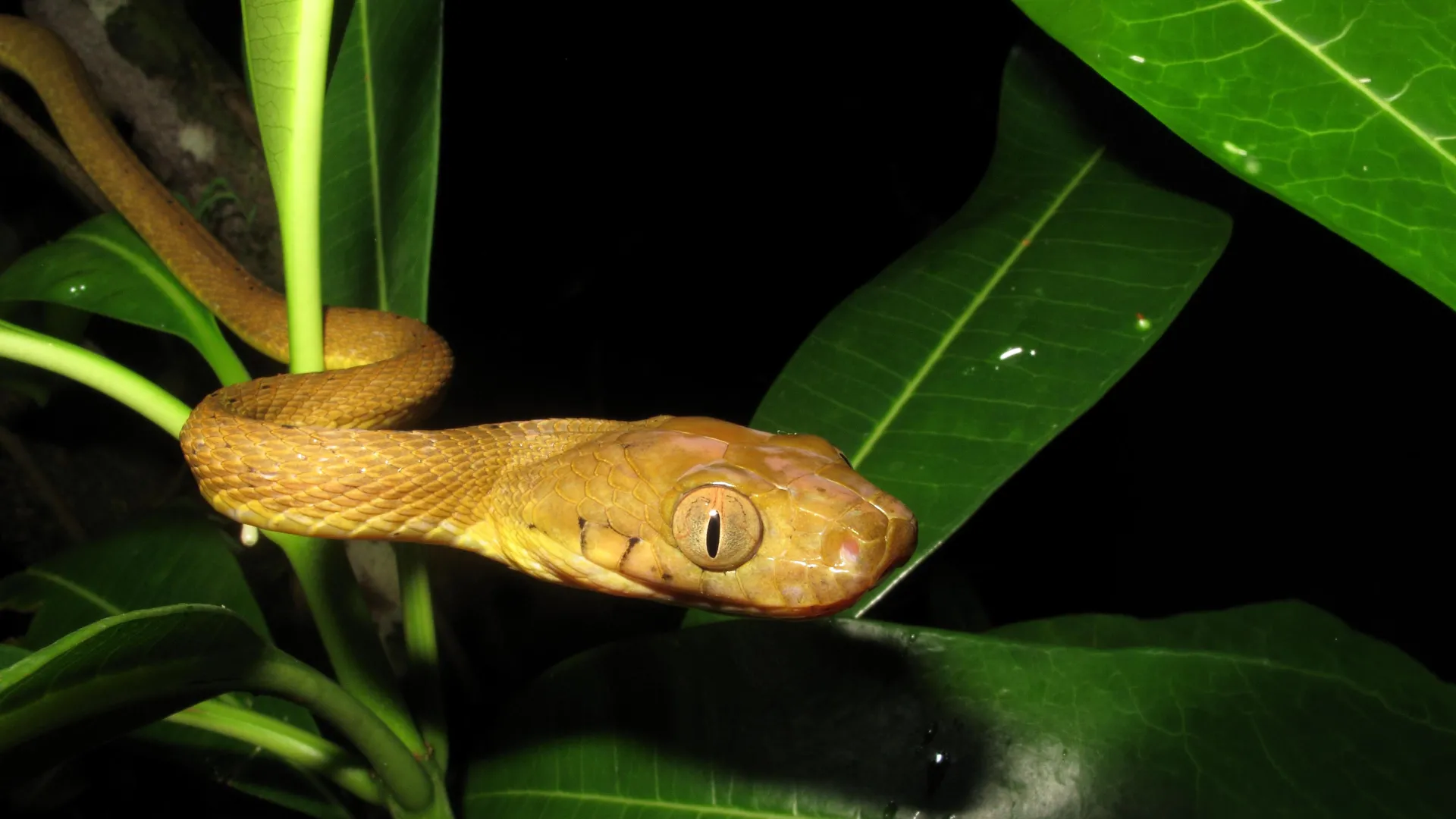
The brown tree snake (Boiga irregularis) stands as a grim cautionary tale in the annals of conservation biology. Native to the coastal forests and woodlands of Australia and the South Pacific, this nocturnal, mildly venomous predator achieved global notoriety following its accidental introduction to the United States territory of Guam shortly after World War II. Likely hitching a ride in the wheel wells or cargo holds of military transport aircraft, the snake encountered an island paradise utterly devoid of evolutionary defenses against it.
The consequences were immediate and catastrophic. Unchecked by natural predators, diseases, or environmental competitors, the brown tree snake population exploded. In the decades since its arrival, the serpent has driven nearly all of Guam’s native forest bird species to local extinction, fundamentally altering the island’s seed dispersal systems and forest regeneration. Beyond ecological devastation, the snakes wreak economic havoc, climbing utility poles and electrical infrastructure to trigger hundreds of disruptive power outages annually. In localized pockets of the island, population densities have surged to an astonishing, unprecedented 30,000 snakes per square mile.
For decades, this biological takeover baffled evolutionary biologists. Traditional population genetics dictates that an invasion originating from a mere handful of founders—as Guam’s population is believed to have done—should trigger a severe genetic bottleneck. Such a bottleneck strips a population of its genetic diversity, leaving it crippled by inbreeding depression, vulnerable to disease, and poorly equipped to adapt to novel environmental pressures. By all theoretical models, the Guam brown tree snake invasion should have stalled out or collapsed entirely.
Instead, the population thrived with terrifying resilience.
A groundbreaking, collaborative study published on July 24 in the prestigious journal Science Advances, led by researchers at the University at Buffalo (UB) in partnership with the U.S. Geological Survey (USGS), has finally solved this evolutionary paradox. Utilizing cutting-edge long-read DNA sequencing technologies, the research team discovered that brown tree snakes harbor a vast, previously invisible reservoir of structural genetic variation. Far from being genetically impoverished, these invaders possess tens of thousands of complex DNA alterations—duplications, deletions, and rearrangements—concentrated heavily in vital survival genes governing immunity and olfaction.
This deep, unappreciated well of genetic flexibility not only rewrites our understanding of how invasive species overcome severe bottlenecks, but it also casts a long shadow over ongoing eradication efforts in the Pacific, while simultaneously offering a glimmer of unexpected hope for the world’s most critically endangered, highly inbred species.
Detailed Chronology and Scientific Breakthrough
To appreciate the significance of the recent findings, one must trace the timeline of both the invasion and the technological evolution that allowed scientists to finally decode it.
The Post-War Colonization of Guam
Sometime in the late 1940s, likely amidst the chaotic redeployment of military hardware following the conclusion of World War II, a small cohort of brown tree snakes crossed the Pacific ocean. Dropped onto the isolated island of Guam, these pioneers found a pristine ecosystem. Guam’s endemic fauna had evolved in total isolation from advanced mammalian or reptilian land predators.
By the 1960s, the snakes had established a permanent, sprawling foothold across the northern plateau of the island. By the 1980s, populations had saturated nearly every available habitat niche, from dense jungle canopies to suburban backyards. The decimation of forest birds—including the Guam rail and the Micronesian kingfisher—was swift and near-total.
The Theoretical Paradox
As ecologists scrambled to manage the crisis, geneticists looked at the invasion through the lens of classical population genetics. The "founder effect" dictates that when a new population is established by a tiny number of individuals, a massive loss of genetic variation occurs.
Consider a library of a million books reduced to just five random volumes. If those five books lack certain chapters, the entire colony built upon them will be missing that information. In genetics, this manifests as a bottleneck. Inbreeding leads to the expression of deleterious recessive mutations, lowering fertility, reducing disease resistance, and stalling evolutionary adaptation. Standard genetic assays—which historically looked at single-nucleotide polymorphisms (SNPs), or single letter changes in the DNA code (such as an A swapping for a G)—confirmed that Guam’s snakes had low overall diversity at these individual base-pair sites.
For years, scientists were left scratching their heads: How could a population built from the genetic equivalent of a shipwreck crew conquer an entire island and maintain such ruthless fitness?
The Technological Leap: Long-Read Sequencing
The answer lay not in the snakes’ biology changing, but in science’s ability to observe it. Traditional sequencing tools were essentially magnifying glasses designed to read individual letters of the genetic text. They were fundamentally blind to larger structural rearrangements—such as entire paragraphs or chapters being duplicated, deleted, inverted, or moved to entirely different chromosomes.
To bypass this limitation, researchers from UB and the USGS turned to advanced long-read sequencing. This state-of-the-art technology allows scientists to sequence continuous, massive stretches of a genome, enabling the detection of structural variants (SVs) affecting 50 base pairs or more.
When the research team analyzed DNA samples provided by the USGS Brown Tree Snake Rapid Response Team (RRT)—an elite unit tasked with intercepting stowaway snakes before they can leapfrog to other Pacific islands like Hawaii—the results were revolutionary. The team uncovered more than 19,000 structural variants scattered throughout the brown tree snake genome.
These structural modifications account for nearly eight times more altered genomic real estate than all single base-pair mutations combined. The hidden architecture of the snake’s genome had finally been brought to light.
Supporting Context and Metrics: Decoding the Genome
The discovery of over 19,000 structural variants fundamentally shifts how biologists must view invasive species biology. However, the location of these genetic modifications proved to be just as startling as their sheer quantity.
The Architecture of Resilience: Immunity and Olfaction
The structural variants identified by the UB-led team were not distributed randomly across the chromosomes. Instead, they were heavily concentrated in two specific functional categories of genes:
- Immune System Function: Genes responsible for pathogen defense and immunological response showed elevated levels of structural variation. For an invasive species dumped into a novel tropical environment laden with unfamiliar parasites and pathogens, robust and flexible immune genes provide an immediate survival advantage.
- Olfaction (The Sense of Smell): Brown tree snakes are sensory specialists. They rely heavily on their forked tongues to sample chemical cues from the environment, delivering those scents to the vomeronasal (Jacobson’s) organ to track prey, navigate territory, and detect conspecifics.
The profound diversity found within the olfactory genes of Guam’s snakes illuminates a fascinating behavioral mystery that has long puzzled field biologists. In their native Australian and South Pacific ranges, brown tree snakes frequently engage in cannibalism, occasionally preying upon one another. Yet, on Guam—despite densities reaching 30,000 snakes per square mile—cannibalism is remarkably rare.
Dr. Levi Gray, a postdoctoral researcher in the Krabbenhoft lab and former USGS researcher who worked directly on the Guam snake problem, offers an elegant hypothesis rooted in these genetic findings:
"The snakes’ heightened sense of smell may allow them to recognize one another as something more like siblings—especially given the high levels of inbreeding—than as prey."
By chemically recognizing close kin through specialized olfactory receptors modified by structural variants, the snakes effectively suppress intraspecific predation, allowing populations to reach densities that would otherwise trigger self-regulation through cannibalism.
Quantifying the Impact: By the Numbers
- 30,000: The peak population density of brown tree snakes per square mile in certain areas of Guam.
- July 24: The date the landmark study was published in the journal Science Advances.
- 19,000+: The total number of structural variants identified in the brown tree snake genome by the research team.
- 8x: The multiplier demonstrating how much more of the genome is altered by structural variants compared to traditional single base-pair mutations.
- 50: The minimum base-pair length required for a genomic alteration to be classified as a structural variant detectable by long-read sequencing.
Official Statements and Expert Insights
The implications of this study ripple far beyond the jungles of Guam, offering profound insights into evolutionary biology, invasive species management, and wildlife conservation.
Dr. Trevor Krabbenhoft, associate professor in the UB Department of Biological Sciences and the corresponding author of the study, emphasizes that the scientific community has historically underestimated the complexity of genetic diversity in populations that appear homogenous on the surface.
"The brown tree snake is maybe not wildly diverse, but it has important sources of genetic diversity that have been underappreciated," Krabbenhoft states. Traditional metrics failed because they were looking in the wrong place with the wrong tools. "How we define genetic diversity and how we actually measure it is shaped largely by the technology of the day," adds Levi Gray.
To illustrate this paradigm shift, Gray uses a compelling literary metaphor:
"It’s like looking at portions of two books letter by letter with a magnifying glass and thinking they’re the same, but not realizing entire paragraphs have been moved around or duplicated. Older sequencing technology didn’t allow us to easily see that DNA in one individual might be in a completely different place on the chromosome than in another."
A Dual-Edged Sword for Conservation and Control
For government agencies and conservation biologists tasked with containing the brown tree snake, the findings present a sobering reality check. For decades, eradication programs have operated under the assumption that the snakes’ low single-nucleotide diversity made them potentially fragile or evolutionarily cornered. Discovering that they possess vast hidden reservoirs of structural genetic flexibility suggests that these invasive predators are far more resilient—and potentially more adaptable to control measures or changing climates—than previously assumed.
Conversely, this exact same mechanism offers a radical ray of hope for the world’s most vulnerable creatures. Conservation biologists frequently struggle to save endangered species whose populations have dwindled to perilous lows, trapping them in genetic bottlenecks that mirror the founding of Guam’s snake population.
Dr. Christopher Osborne, lead author of the study, former PhD student in Krabbenhoft’s lab, and now an aquatic biologist at SUNY Oswego, highlights this silver lining:
"It’s possible that endangered species may have more flexibility in their genes than we realize. We’re now getting a better understanding of unappreciated sources of genetic diversity that may explain how some inbred species can still respond to their environment."
If endangered rhinos, birds, or island-dwelling mammals harbor the same hidden structural variants, they may possess a far greater capacity to endure inbreeding depression and adapt to anthropogenic environmental stressors than conservationists dared to hope.
Future Outlook: Unanswered Questions and Next Steps
As the scientific community digests the revelations published in Science Advances, the UB and USGS research collaborative is already eyeing the horizon for their next investigative steps.
The most pressing evolutionary question remains: When and how did these 19,000 structural variants emerge?
Did the founding snakes arrive on Guam already carrying this complex genomic architecture, or did the severe environmental pressures and population bottleneck accelerate the generation of structural variants after the invasion began? While classical evolutionary theory holds that genomic changes accumulate slowly over countless generations, emerging research hints that extreme population bottlenecks can sometimes act as a catalytic shock, triggering rapid structural reorganization in genomes as a desperate survival mechanism.
To solve this mystery, the research team must cast their net backward—literally.
"Is it possible some of this diversity emerged after the invasion? It is, but we would have to sequence snakes from the native populations to know for sure," says Levi Gray.
Future phases of the research will involve comprehensive genomic sequencing of brown tree snakes across their native Australian and South Pacific ranges. By comparing the structural variants of native populations against those of the Guam invaders, scientists can determine whether the snake’s genetic resilience was a pre-existing winning hand or a miraculous evolutionary adaptation forged in the crucible of the Guam invasion.
In the meantime, the war for Guam’s ecosystem continues. Armed with a deeper understanding of the enemy’s genetic playbook, wildlife managers and geneticists must now adapt their strategies to counter an invasive species that has proven itself to be far more evolutionarily sophisticated than science ever imagined.