
NEW LONDON, WISC. (October 21, 2026) — In the heart of central Wisconsin’s agricultural landscape, a quiet revolution is taking root. Bouressa Family Farm—steeped in a deep, generational history of working the land—has officially earned the National Audubon Society’s prestigious Bird-Friendly Land Certification. Spearheaded by fifth-generation farmer Rachel Bouressa, this milestone is more than just an operational achievement; it is a profound testament to how modern agriculture can successfully pivot from extraction to regeneration, nurturing local biodiversity while maintaining a thriving, productive farm business.
Achieved through the rigorous science-based frameworks of the Audubon Conservation Ranching (ACR) program, the certification acknowledges Bouressa’s pioneering efforts to restore, enhance, and protect vital grassland ecosystems. By shifting her focus toward ecological resilience, Bouressa is proving that the economic viability of a family farm and the preservation of declining wildlife populations are not mutually exclusive pursuits—they are deeply, inextricably linked.
Executive Overview
North America’s grassland birds are currently facing an unprecedented ecological crisis. According to tracking data from State of the Birds, grassland avifauna have suffered the most severe population declines of any terrestrial biome since 1970. This staggering drop-off is driven by a compounding matrix of threats: relentless habitat loss and fragmentation, the aggressive march of woody encroachment, and the heavy reliance on intensive chemical inputs in modern agronomy.
Enter the Audubon Conservation Ranching initiative—a market-driven, science-backed conservation model designed to reverse these trends. By partnering directly with farmers and ranchers, the program co-develops tailored habitat management plans, integrates regenerative practices directly onto working lands, monitors ecological metrics, and helps unlock vital funding for on-the-ground improvements.
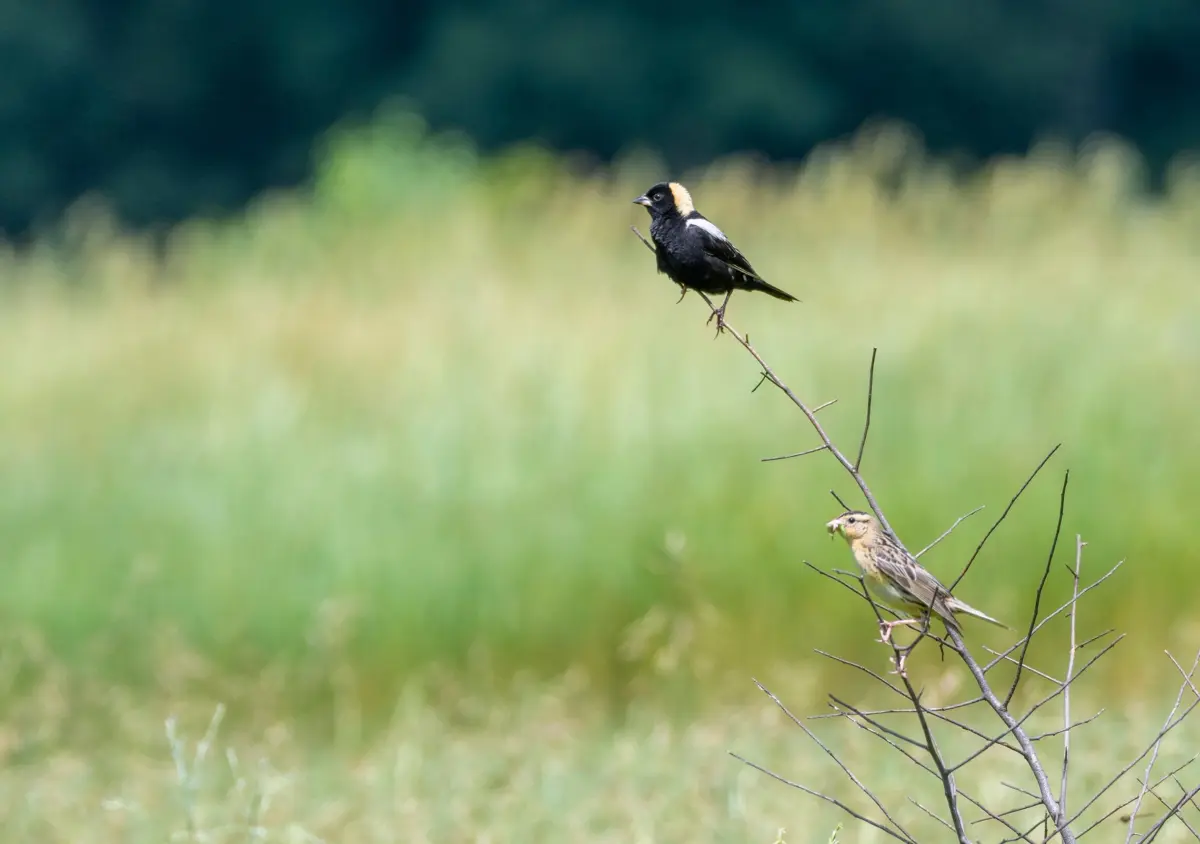
The Bouressa Family Farm represents the vanguard of this movement in Wisconsin. Spanning 360 acres within the state’s ecologically unique Forest Transition Zone, the farm has transformed into a vibrant, biodiverse sanctuary. Through adaptive rotational grazing, wetland restorations, and the strategic removal of old tree rows to heal fragmented landscapes, Bouressa has cultivated an "emerald oasis." Here, priority grassland species—including the Bobolink, Eastern Meadowlark, Savannah Sparrow, Grasshopper Sparrow, and Dickcissel—find a safe haven amidst a broader matrix of intensive row-crop agriculture.
Detailed Chronology: From Dairy Barns to Regenerative Stewardship
The path to achieving Audubon’s Bird-Friendly Land Certification is deeply rooted in the history, resilience, and adaptability of the Bouressa family.
The Early Dairy Era and the 1990s Transition
For nearly two decades, the land near New London operated as a traditional dairy farm managed by Rachel Bouressa’s parents. In the 1990s, recognizing the shifting economic and environmental landscapes of dairy production, her parents made an innovative early pivot toward managed grazing, utilizing dairy cows to harvest perennial forages and reducing reliance on confined feeding systems.
The 2014 Turning Point
For generations, the rhythm of the farm was dictated by traditional infrastructure. However, a catastrophic barn fire in 2014 threatened to wipe out the family’s agricultural legacy entirely. Instead of viewing the tragedy as a terminal endpoint, Rachel Bouressa—armed with a formal background in agronomy and environmental science from the University of Wisconsin-Madison—stepped in to chart a bold new trajectory for the property.
Returning to her roots, Bouressa completely reimagined the farm’s operating model. She transitioned the land into a cow-calf and grass-finishing beef operation. Rather than relying on off-farm feed, she leaned heavily into her academic training to embrace "soil-first farming." This approach utilized high-density, short-duration rotational grazing to mimic the natural migratory patterns of historic herbivores, stimulating deep root growth, capturing carbon, and vastly improving water infiltration.
The Path to Audubon Certification
As Bouressa’s management practices evolved to prioritize soil health, the overlap between her agricultural goals and wildlife conservation became increasingly apparent. Engaging with Audubon’s Wisconsin field staff, she subjected her land to a rigorous, third-party audited evaluation process. By meeting stringent standards for environmental sustainability, animal welfare, and habitat management, Bouressa Family Farm successfully crossed the finish line in October 2026, joining an elite national network of certified producers. Today, visitors to the farm can not only purchase grass-finished beef directly from the farm store but can also experience the landscape firsthand through eco-friendly farm-stay camping hosted via Hipcamp.
Supporting Context & Metrics: The Scale of the Movement
To fully grasp the significance of Bouressa’s certification, it is essential to examine the broader numerical and ecological landscape of the Audubon Conservation Ranching program.
National and Regional Expansion
- National Footprint: More than 160 farms and ranches across 15 states have earned the Audubon Conservation Ranching certification.
- Acreage Protected: This network encompasses approximately 4.7 million acres of land managed under strict bird-friendly protocols.
- Wisconsin Impact: Within Wisconsin, the program has scaled to encompass 2,000 acres distributed across seven certified agricultural operations.
- Market Reach: Beef and bison products carrying the coveted Audubon Certified Bird-Friendly Land seal are now stocked in more than 2,000 retail stores nationwide, giving conscious consumers a direct mechanism to vote with their wallets for habitat preservation.
Ecological Mechanics in the Forest Transition Zone
Wisconsin’s Forest Transition Zone is a dynamic ecotone where historical northern forests naturally grade into southern prairies and savannas. Historically maintained by fire and large herds of native grazers, these areas have largely been converted into row crops and fragmented woodlots.
When farms in this zone are managed through the lens of grass-based agriculture, they provide critical surrogate habitat for grassland-dependent birds. Unlike row-crop fields—which are frequently disturbed by tillage and heavy machinery during peak nesting seasons—managed perennial pastures offer undisturbed nesting cover, abundant insect populations for brooding, and structural diversity in grass heights.
By strategically reconnecting fragmented grassland patches and re-hydrating previously drained wetlands, Bouressa has maximized this habitat mosaic, turning a working cattle farm into a vital biological stepping stone for migratory species.
Official Statements and Perspectives
The transition of Bouressa Family Farm has garnered high praise from regional conservationists and agricultural leaders alike, highlighting the harmonious intersection of ecology and economics.
"Rachel is the epitome of a rancher who makes decisions based not only on farm economics, but also pertaining to her environment and her community," noted Ashly Steinke, Range Ecologist for the Audubon Conservation Ranching program in Wisconsin. "It has been a pleasure working with Rachel to increase biodiversity on her farm—from restoring wetlands and native prairies to removing tree rows to de-fragment the grassland ecosystems found on the property."
For Bouressa herself, the certification validates a philosophy of farming that refuses to view nature as an adversary.
"Since working with Audubon, I’ve added a wildlife lens to all my habitat management decisions, managing for a mosaic of different grass heights that different bird species need to thrive," said Rachel Bouressa. "I’ve seen the impact and success of managed grazing and tree line removal on my farm with the return of nesting Bobolinks. Now I see birds across the whole farm, my emerald oasis surrounded by cropland."
Bouressa’s commitment extends well beyond her property lines. As a recognized leader in the regional regenerative agriculture community, she actively shares her insights with fellow producers, emphasizing that conservation does not require the complete abandonment of agricultural productivity.
"I am lucky to have enough land that I don’t need to max out production at the expense of habitat," Bouressa reflected. "I want to demonstrate that we can have productive agricultural systems while also protecting and prioritizing our natural resources."
Her dedication to community leadership is further evidenced by her service on the Wisconsin Natural Resources Board and her role as a director-at-large on the Wisconsin Farmers Union Board, where she consistently champions policies that support working lands and ecological integrity.
Future Outlook: The Intersection of Markets and Conservation
As Bouressa Family Farm integrates its new certification into its daily operations, the farm points toward a promising horizon for sustainable agriculture in the Upper Midwest. The model championed by Rachel Bouressa and the Audubon Conservation Ranching program signals a fundamental shift in how consumers, farmers, and conservationists view rural landscapes.
By bridging the gap between ecological health and commercial agriculture, bird-friendly certification programs offer a scalable blueprint for the future. They provide independent farmers with market differentiation, assuring consumers that their food purchases are actively healing—rather than harming—fragrant prairies, vital watersheds, and fragile bird populations.
For central Wisconsin, the emerald oasis at Bouressa Family Farm stands as a living proof-of-concept. It demonstrates that with visionary leadership, scientific collaboration, and a deep respect for the rhythms of the natural world, the future of farming can be as rich, resilient, and melodiously alive as the grassland birds soaring above it.