
Executive Overview
The Great Salt Lake—the largest saline lake in the Western Hemisphere and a cornerstone of the North American Pacific Flyway—stands at a critical ecological and hydrological crossroads. Long plagued by historic water deficits, industrial extraction, agricultural diversions, and the compounding pressures of severe regional drought, the lake and its vital surrounding wetlands have faced unprecedented environmental degradation. In response to these escalating crises, conservation strategies have traditionally struggled to scale effectively, frequently lacking the granular, science-driven data required to target interventions where they are needed most.
Enter the Great Salt Lake Birds and Habitat Assessment, a landmark scientific undertaking spearheaded by the National Audubon Society. Released in late June 2026, this comprehensive framework has rapidly evolved from a diagnostic research document into an active operational blueprint for state agencies, academic institutions, agricultural leaders, and conservation groups alike.
The national prominence of this initiative was recently underscored in the October issue of The Water Report—a premier, peer-reviewed monthly publication renowned for its rigorous analysis of complex water sectors across the United States. The feature article examines how Audubon’s Assessment bridges the historic gap between broad ecological monitoring and targeted management. By mapping critical avian habitat dependencies against dynamic hydrological realities, the Assessment has provided an indispensable roadmap for identifying conservation priorities, filling critical data gaps, and illuminating collaborative pathways forward.
Crucially, the impact of the Assessment has transcended theoretical planning. In the months surrounding its publication, Audubon staff orchestrated a sweeping series of stakeholder briefings, technical workshops, and cross-sector dialogues. These engagements brought together an unprecedented coalition of Utah’s water managers, agricultural representatives, state policymakers, and academic researchers. Today, the Assessment’s findings are actively reshaping how institutions across the Great Salt Lake Basin allocate resources, model water flows, and evaluate wetland health.
As climate volatility continues to threaten the American West, Audubon’s framework offers a replicable model for ecosystem recovery—proving that data-backed collaboration can successfully mobilize diverse stakeholders around a shared ecological imperative.
Detailed Chronology: From Concept to Collaborative Implementation
To understand the transformative impact of the Great Salt Lake Birds and Habitat Assessment, one must examine the meticulous timeline of its development, release, and subsequent operational integration across the Utah landscape.
Phase I: Conception, Research, and Data Synthesis (2023–2026)
For years, conservationists recognized that protecting the Great Salt Lake required more than simply advocating for higher lake levels; it demanded a hyper-specific understanding of where water and habitat mattered most to the millions of migratory and resident birds that rely on the ecosystem. Initiated by the National Audubon Society, the Assessment project was designed to synthesize decades of avian monitoring data, hydrological modeling, and geospatial wetland analyses. Researchers worked tirelessly to correlate bird population distributions with specific wetland typologies, salinity gradients, and seasonal water availability metrics. The objective was to create a dynamic prioritization framework that could pinpoint high-value habitats vulnerable to drying and degradation.
Phase II: Stakeholder Engagement and Pre-Release Briefings (Spring 2026)
Recognizing that scientific reports often gather dust unless coupled with aggressive outreach, Audubon leadership adopted a proactive engagement strategy in the weeks leading up to the official June 2026 publication. Rather than presenting the findings as a finished product from an external organization, Audubon initiated closed-door technical briefings and collaborative roundtables with key state and local entities.
These early consultations included high-level dialogues with:
- The Great Salt Lake Commissioner and the Great Salt Lake Advisory Council
- Researchers at Utah State University’s (USU) esteemed Water Research Laboratory
- Leadership from the Utah Department of Agriculture and Food (UDAF) and the Utah Farm Bureau
- Geologists and ecologists at the Utah Geological Survey (UGS)
- Resource managers within the Utah Department of Natural Resources (UDNR)
- Specialists from the Utah Division of Wildlife Resources (UDWR) and the Utah Division of Forestry, Fire and State Lands (DFFSL)
These pre-release sessions fostered an environment of co-ownership, allowing prospective end-users to provide feedback on the framework’s utility and ensure the data formats aligned with their existing operational software and regulatory mandates.
Phase III: The Official Launch and National Recognition (June–October 2026)
The Assessment was officially unveiled to the public and scientific communities at the end of June 2026, drawing immediate praise from environmental groups, state leaders, and media outlets. The timing coincided with a growing public consciousness regarding the ecological health of the Great Salt Lake basin.
By October 2026, the ripple effects of the launch reached national prominence when The Water Report featured the Assessment in its monthly issue. This prominent placement introduced Audubon’s methodology to a wider audience of water attorneys, engineers, policy analysts, and municipal leaders across the country, establishing the Great Salt Lake framework as a case study in modern watershed management.
Phase IV: Active Integration and Institutional Uptake (Late 2026 and Beyond)
In the months following its release, the Assessment transitioned rapidly from publication to practice. Far from being a static report, its metrics and spatial data layers were immediately integrated into the active workflows of multiple state and academic institutions.
Utah State University leveraged the data to calibrate research into tributary inflows, the Utah Geological Survey incorporated the findings into wetland health scoring models, and agricultural stakeholders began utilizing the insights to optimize water-sharing agreements. Audubon continues to steward this living document, working hand-in-hand with basin stakeholders to refine the prioritization framework, expand research boundaries, and secure the ecological future of the lake.
Supporting Context & Metrics: The Ecological Imperative
The Ecological Significance of the Great Salt Lake
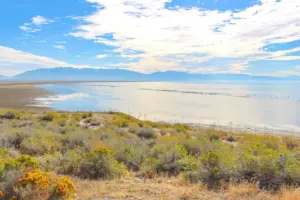
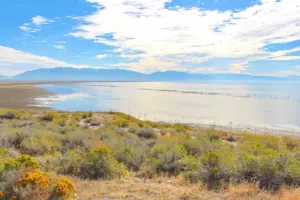
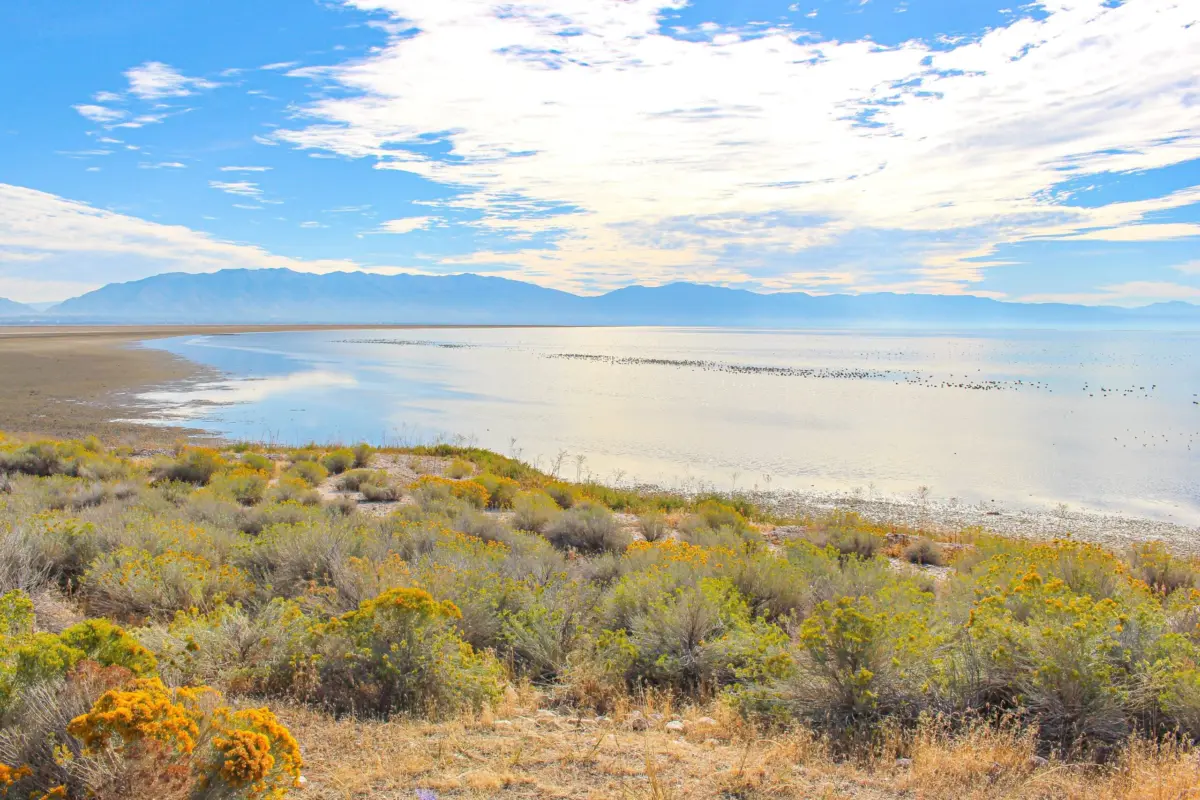
The Great Salt Lake is not merely a body of water; it is a hyper-connected biological nexus. Spanning roughly 1,700 square miles under average conditions, the lake ecosystem supports over 10 million migratory birds representing upwards of 330 species. For shorebirds such as the Wilson’s Phalarope, American Avocet, and Eared Grebe, the lake serves as an irreplaceable staging ground where birds double their body weight on brine shrimp and brine flies before completing grueling transcontinental migrations. Furthermore, the surrounding freshwater and brackish wetlands provide crucial breeding and nesting habitats for waterfowl, raptors, and neo-tropical migratory songbirds.
The Threat Matrix: Salinity, Water Deficits, and Ecosystem Collapse
Despite its ecological gravity, the lake has faced existential threats over the past decade. Decades of upstream agricultural and municipal water diversions—compounded by prolonged regional megadroughts exacerbated by anthropogenic climate change—have caused lake levels to plummet toward historic lows.
When lake levels drop precipitously, several compounding crises emerge:
- Salinity Disruption: As water volume decreases, salinity in the South Arm reaches hypersaline thresholds that can disrupt the life cycles of brine shrimp and brine flies, starving the entire avian food web.
- Habitat Fragmentation: Receding waters disconnect crucial wetland complexes from the main body of the lake, stranding nesting areas and leaving birds vulnerable to mammalian predators.
- Dust and Public Health Hazards: Exposed lakebeds release toxic dust containing heavy metals (such as arsenic and lead) into the airshed of the Wasatch Front, threatening the health of over two and a half million Utah residents.
How the Assessment Addresses the Crisis
Audubon’s Great Salt Lake Birds and Habitat Assessment was engineered specifically to combat these threats through precision conservation. Rather than advocating for diffuse, generalized water delivery, the Assessment utilizes advanced geospatial modeling to rank wetlands based on their ecological resilience, bird usage density, and hydrological connectivity.
By quantifying which wetland zones provide the highest ecological return on investment, water managers can strategically direct scarce water resources—whether through environmental water trusts, agricultural leasing agreements, or managed delivery canals—to the habitats that need them most urgently. This data-driven targeting maximizes the conservation impact of every single acre-foot of water saved, providing a vital lifeline to the basin during periods of acute scarcity.
Official Statements and Institutional Perspectives
The success of Audubon’s Assessment lies largely in its unprecedented embrace by a diverse coalition of stakeholders who historically have often found themselves at odds over water rights and environmental regulations. The alignment of agricultural, academic, and state interests marks a profound cultural shift in the Great Salt Lake Basin.
Academic Integration: Utah State University’s Water Research Laboratory
Academic partners have quickly recognized the technical rigor of the Assessment. Researchers at Utah State University’s Water Research Laboratory have integrated the report’s spatial datasets into their ongoing hydrological investigations.
"The data provided in Audubon’s Assessment has given our hydrological models a level of ecological context we previously lacked," notes a lead researcher at the USU Water Research Laboratory. "By cross-referencing bird habitat priorities with our models tracking the sources and timing of tributary flows, we can now pinpoint study sites that capture both hydrological dynamics and critical biological needs. This synergy is vital for designing smart water delivery systems that serve both human communities and wildlife."
Geological and Environmental Monitoring: The Utah Geological Survey
State scientific agencies are similarly leveraging the Assessment to refine their monitoring protocols. The Utah Geological Survey (UGS) has formally indicated that the framework’s findings will play a foundational role in updating state wetland health metrics.
"Assessing the health of Utah’s expansive wetlands is a complex, resource-intensive undertaking," a representative from the UGS stated following the rollout. "Audubon’s Assessment provides a robust framework that helps us prioritize wetland scoring. It allows our field scientists to focus assessment resources on high-priority areas identified in the report, ensuring our state health assessments are as accurate, timely, and impactful as possible."
Bridging Agriculture and Conservation: The Utah Agricultural Community
Perhaps the most encouraging development is the enthusiastic reception the Assessment has received from Utah’s agricultural sector—a group that controls a vast majority of the state’s water rights. Through dialogues facilitated by Audubon with the Utah Department of Agriculture and Food and the Utah Farm Bureau, farmers and ranchers have begun exploring how agricultural stewardship intersects with wetland health.
"Agriculture and wildlife have coexisted in the Great Salt Lake Basin for generations, but modern water scarcity requires us to be much more strategic," remarked a representative close to the Utah agricultural community. "Producers are increasingly interested in understanding how specific irrigation practices, tailwater management, and temporary fallowing agreements directly support wetland health and bird populations. The Assessment gives our growers a clear window into those connections, helping us be part of the solution without compromising agricultural viability."
State Management and Regulatory Alignment
State resource agencies—including the Utah Department of Natural Resources, the Division of Wildlife Resources, and the Division of Forestry, Fire and State Lands—have woven the Assessment into their internal planning documents. By utilizing a shared baseline dataset, these agencies are reducing bureaucratic silos and aligning their regulatory and restoration efforts toward common, quantifiable benchmarks for the basin’s recovery.
Future Outlook: Sustaining Momentum and Expanding Horizons
As the Great Salt Lake Basin looks toward the future, the challenge ahead lies in sustaining the momentum generated by the release and early adoption of Audubon’s Assessment. The framework is not viewed by its creators as a static milestone, but rather as an evolving, adaptive tool designed to meet the dynamic challenges of a changing climate.
Refining the Habitat Prioritization Framework
In the coming years, Audubon plans to collaborate closely with its institutional partners to update and refine the underlying data models of the Assessment. As climate projections shift and new hydrological data flows in from USU’s water laboratories and state monitoring stations, the prioritization framework will be continuously recalibrated. This iterative process ensures that conservation dollars and water rights acquisitions are always directed to the most ecologically strategic areas, even as drought patterns and snowpack volumes fluctuate.
Scaling Inter-Agency Collaboration
The cross-sector partnerships forged during the pre-release and implementation phases have laid a durable foundation for future basin-wide governance. State agencies, agricultural federations, tribal nations, and conservation non-profits are increasingly viewing the Great Salt Lake through an integrated watershed lens. Future initiatives will likely focus on formalizing water-sharing agreements, expanding voluntary conservation easements on agricultural lands adjacent to key wetlands, and securing dedicated instream flow rights for the lake’s primary tributaries (the Bear, Jordan, and Weber rivers).
A National Blueprint for Saline Lake Conservation
Beyond the borders of Utah, the success of Audubon’s Great Salt Lake initiative is drawing national attention. As highlighted by The Water Report, the challenges facing the Great Salt Lake—over-allocation, agricultural pressures, and climate-induced drying—are mirrored in saline lakes across the Great Basin and the American West, from Mono Lake in California to the Salton Sea and Walker Lake in Nevada. The collaborative model pioneered in Utah—combining rigorous scientific assessment with proactive, multi-stakeholder engagement—offers a scalable blueprint for reviving imperiled terminal lakes nationwide.
Conclusion
The journey to rescue the Great Salt Lake is far from over, and significant hydrological and political hurdles remain. However, through the convergence of rigorous science, transparent stakeholder engagement, and unprecedented cross-sector cooperation catalyzed by Audubon’s Birds and Habitat Assessment, the path forward has never been clearer. By uniting state regulators, academic researchers, agricultural producers, and conservationists around a shared, data-driven vision, the Great Salt Lake Basin is proving that collaborative environmental stewardship can turn the tide even against seemingly insurmountable ecological odds.