
Executive Overview
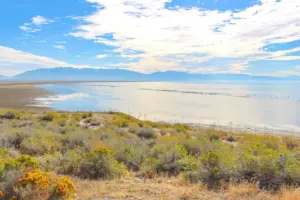
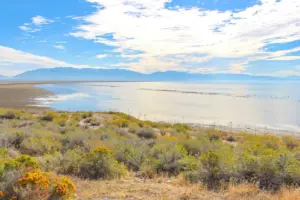
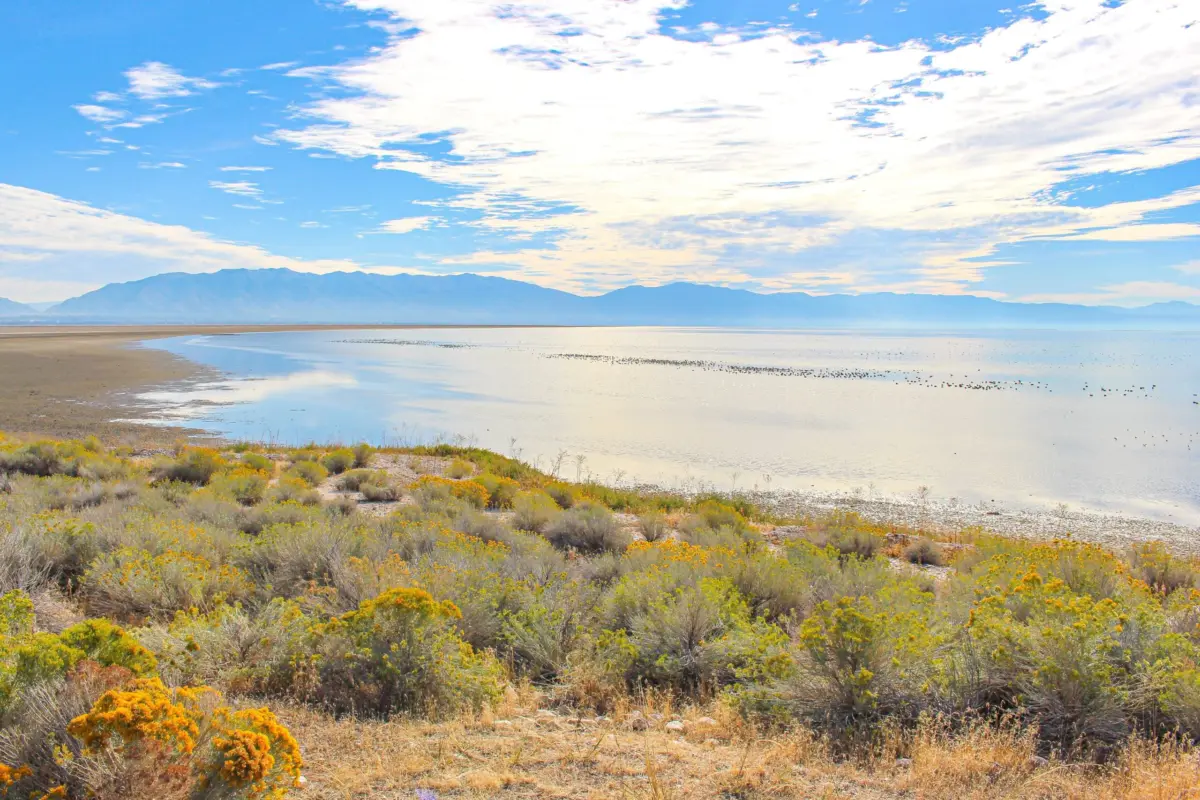
The Great Salt Lake, the largest saltwater lake in the Western Hemisphere and a vital node in the Pacific Flyway, has reached a critical ecological inflection point. Years of persistent drought, agricultural diversions, municipal growth, and a changing climate have severely depleted water inflows, threatening the lake’s ecosystem, the regional economy, and public health. Amid this multi-faceted crisis, a powerful new tool has emerged to guide recovery efforts: Audubon’s Great Salt Lake Birds and Habitat Assessment.
Formally released in late June 2026, the Assessment is far more than a traditional ecological survey. It serves as a comprehensive operational framework, synthesizing avian population dynamics, wetland hydrology, and habitat requirements into actionable intelligence. The authoritative publication The Water Report featured the Assessment in its October issue, signaling its national relevance to water resource managers, legal scholars, and conservationists.
Crucially, the Assessment is not sitting on a shelf. In the months leading up to and following its publication, Audubon staff engaged in rigorous, cross-sectoral consultations with state agencies, academic institutions, agricultural leaders, and conservation stakeholders. The goal has been clear: translate complex ecological data into practical, collaborative water management strategies. Already, the findings are being integrated into research at Utah State University, shaping wetland health indexing at the Utah Geological Survey, and engaging Utah’s agricultural community in proactive watershed stewardship.
This article provides an in-depth examination of the Assessment, exploring its genesis, its immediate real-world applications across Utah’s water and agricultural sectors, and its role in forging a resilient future for the Great Salt Lake Basin.
Detailed Chronology: From Data Collection to Cross-Sector Integration
The trajectory of the Great Salt Lake Birds and Habitat Assessment reflects a multi-year commitment to rigorous science and stakeholder engagement. Understanding the timeline of this initiative highlights how conservation science can rapidly transition from theoretical research to applied public policy.
Phase I: Research and Synthesis (2023–Early 2026)
For years, conservation scientists recognized a critical gap in Great Salt Lake management: while the macro-level crisis—falling lake levels—was well-documented, localized, species-specific habitat data remained fragmented. Audubon’s science teams, working alongside regional ecologists, embarked on a comprehensive synthesis of avian data, water quality metrics, and wetland typologies. The objective was to map out exact ecological tipping points for millions of migratory and resident birds that rely on the lake’s hyper-saline ecosystem and surrounding freshwater wetlands.
Phase II: Stakeholder Briefings and Strategic Alignment (Spring–June 2026)
Recognizing that ecological data is only as valuable as its application, Audubon adopted an outreach-first strategy. In the weeks leading up to the official public release in late June 2026, Audubon staff initiated confidential and collaborative briefings with key Utah stakeholders. These sessions were designed to test the applicability of the data against the operational realities of state agencies, agricultural producers, and academic researchers.
Stakeholders engaged during this critical window included:
- The Great Salt Lake Commissioner and the Great Salt Lake Advisory Council.
- The Utah Department of Natural Resources (DNR).
- The Utah Division of Wildlife Resources (UDWR).
- The Utah Division of Forestry, Fire and State Lands (FFSL).
- The Utah Department of Agriculture and Food (UDAF).
- The Utah Geological Survey (UGS).
- Utah State University’s Water Research Laboratory (UWRL).
- The Utah Farm Bureau.
Phase III: Public Launch and National Recognition (June–October 2026)
Following its late-June release, the Assessment immediately caught the attention of regional water managers. By October 2026, the influence of the report expanded to a national audience when The Water Report—a premier monthly publication known for deep-dive analyses across the water sector—spotlighted the Assessment. The feature validated Audubon’s methodology, drawing a direct line between the report’s identification of conservation priorities and the pressing need for data-driven water allocation policies across the American West.
Phase IV: Active Implementation and Regional Adoption (Fall 2026 and Beyond)
Today, the Assessment functions as a living document. Rather than serving merely as an educational resource, its spatial layers and ecological metrics are being actively deployed by academic researchers, state geologists, and agricultural water users to refine how water is monitored, measured, and managed throughout the basin.
Supporting Context & Metrics: The Ecological and Agricultural Landscape
To understand why the Audubon Assessment is proving so transformative, one must examine the complex interplay between hydrology, ecology, and human enterprise within the Great Salt Lake Basin.
The Avian Crossroads of the Pacific Flyway
The Great Salt Lake is an ecological anchor of international significance. More than 10 million birds representing over 330 species utilize the lake and its adjacent wetlands annually. For species such as the Eared Grebe, Wilson’s Phalarope, and American White Pelican, the lake serves as an irreplaceable staging ground where birds double their body weight on abundant brine shrimp and alkali flies before continuing long-distance migrations.
However, as water levels drop, hypersalinity spikes beyond biological tolerances, collapsing the food web. Furthermore, receding shorelines expose vast acreage of lakebed (playa) while simultaneously disconnecting freshwater wetlands from the main body of the lake. The Assessment provides high-resolution mapping of these vulnerabilities, identifying precisely which wetland complexes remain viable and which require emergency water deliveries or structural restoration.
Bridging Agriculture and Conservation
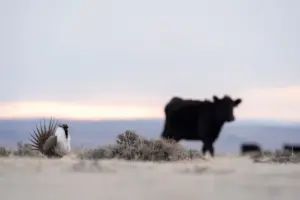
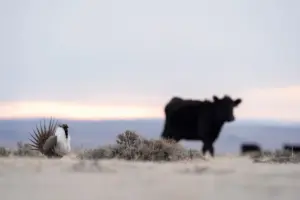
Historically, agricultural interests and environmental advocates in the Intermountain West have occasionally found themselves at odds over water rights. The Great Salt Lake Basin is heavily agricultural, with alfalfa, pasture, and livestock operations consuming a significant percentage of diverted surface and groundwater.
A breakthrough of the Audubon Assessment has been its ability to bridge this divide. Utah’s agricultural community—represented by organizations like the Utah Farm Bureau and guided by the Utah Department of Agriculture and Food—has shown a keen, proactive interest in the data. Agricultural producers recognize that long-term farming viability in the basin is inextricably linked to regional hydrology and atmospheric stability (as a shrinking lake threatens agricultural snowpack and increases dust storms that damage crops).
By utilizing the Assessment, farmers and ranchers are gaining a clearer picture of how localized irrigation practices, tailwater management, and soil health initiatives intersect with wetland vitality and bird populations. This cross-pollination of data opens the door for voluntary, market-based water-sharing agreements, split-season leases, and optimized irrigation efficiency that benefit both farm bottom lines and migratory birds.
Institutional Integration: From USU to the Utah Geological Survey
The utility of the Assessment is further amplified by its adoption across scientific institutions:
- Utah State University’s Water Research Laboratory (UWRL): Researchers are utilizing the Assessment’s spatial datasets to pinpoint optimal study sites. By cross-referencing habitat priority zones with hydrological data, UWRL is conducting cutting-edge research into the sources, pathways, and timing of surface flows entering the Great Salt Lake, ensuring that restoration water reaches critical habitats precisely when biological demand peaks.
- The Utah Geological Survey (UGS): UGS has integrated the report’s findings into its ongoing geological and hydrological evaluations. Specifically, the data is being used to refine wetland scoring methodologies and improve the accuracy of baseline wetland health assessments across state-managed lands.
Official Statements and Stakeholder Perspectives
The resonance of the Assessment across diverse sectors underscores a unified realization: saving the Great Salt Lake requires unprecedented cross-sectoral collaboration backed by unimpeachable science.
The Conservation Perspective: Bridging Science and Action
Audubon representatives have consistently emphasized that the Assessment was designed from the ground up to be a practical tool rather than an academic exercise.
"The challenges facing the Great Salt Lake are too vast for any single entity to solve in isolation," notes leadership within Audubon’s Western water conservation network. "By mapping avian habitat needs against hydrological realities, we have provided a shared baseline. When state agencies, academic researchers, and agricultural producers are all looking at the same high-resolution data, collaborative problem-solving becomes not only possible, but remarkably efficient."
The Regulatory and Legislative View
The active participation of the Great Salt Lake Commissioner’s office and the Great Salt Lake Advisory Council highlights the state’s commitment to science-based management. State officials have noted that as Utah implements its comprehensive strategic plan for lake restoration, having third-party, scientifically rigorous frameworks like Audubon’s Assessment helps validate state investments in water acquisition, wetland restoration, and infrastructure modernization.
The Agricultural Stakeholder Voice
Reflecting a pragmatic shift in rural Utah, agricultural leaders have leaned into the findings to safeguard both generational farming traditions and environmental health.
"Farmers and ranchers are the original stewards of the land, and nobody has a greater stake in the health of Utah’s watersheds than those who work the soil every day," representatives from the agricultural sector have observed during stakeholder roundtables. "The Audubon Assessment provides valuable insights that help us understand how our operations connect to the broader ecosystem. Working collaboratively ensures we can protect agricultural viability while supporting healthy wetlands."
Future Outlook: Refining Frameworks and Sustaining the Basin
As the Great Salt Lake enters a critical decade of recovery, the work detailed in The Water Report’s October feature is only the beginning. The path forward demands sustained partnership, adaptive management, and continuous refinement of conservation tools.
Refining the Habitat Prioritization Framework
Audubon, in close coordination with its diverse partners—ranging from the Utah Department of Natural Resources to the Division of Wildlife Resources and Forestry, Fire and State Lands—will continue to update and refine the habitat prioritization framework established by the Assessment. As hydrological conditions fluctuate and new climate data emerges, the framework will evolve to remain responsive to on-the-ground realities.
Expanding Research and Monitoring
The integration of Audubon’s spatial data into academic pipelines, such as those at Utah State University, guarantees that future water research will remain tightly coupled with ecological imperatives. By continuously tracking the sources and timing of tributary flows, researchers can model various management scenarios, helping water masters optimize delivery schedules to maximize ecological benefit with every cubic foot of water secured for the lake.
Sustaining Momentum Through Collaborative Policy
Ultimately, the success of the Great Salt Lake Basin will not be determined by science alone, but by how effectively that science informs policy, legal frameworks, and water administration. The early success of the Audubon Assessment—highlighted by its cross-sector adoption among state regulators, academic institutions, and agricultural producers—serves as a hopeful model for Western water conservation.
By grounding complex debates in rigorous, shared data, stakeholders across Utah are proving that even the most daunting environmental challenges can be met with collective resolve, strategic planning, and enduring collaboration.