
Executive Overview
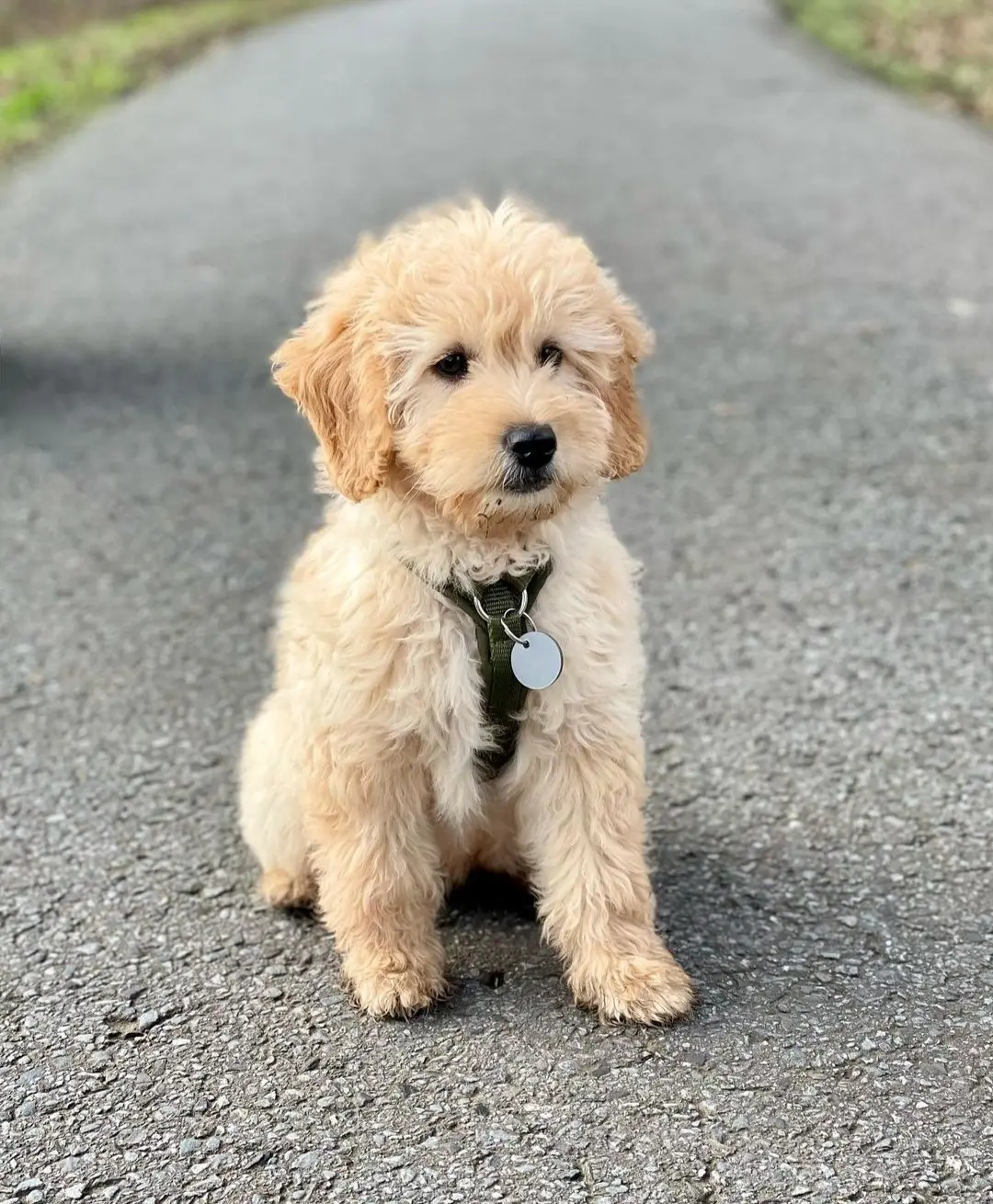
To the uninitiated, the alphabet soup of the canine breeding world—terms like F1, F1B, F2, and Multigen—can feel entirely impenetrable. Yet, for prospective pet owners navigating the booming market of designer dogs, understanding these alphanumeric designations is the single most critical step in choosing the right companion. At the heart of this nomenclature is the Goldendoodle, a crossbreed that has captured the public imagination and cemented its status as an American household staple.
Combining the intelligence and low-shedding coat of the Standard, Miniature, or Toy Poodle with the legendary friendliness and loyalty of the Golden Retriever, the Goldendoodle appears to be the ultimate canine compromise. However, beneath their teddy-bear appearance lies a complex genetic tapestry.
This investigation explores the scientific distinctions between various Goldendoodle generations. It clarifies persistent misconceptions surrounding hypoallergenic claims, analyzes health and temperament variances, and provides an authoritative framework for prospective owners. Whether you are eyeing an energetic F1 puppy or a predictable F1BB generation, understanding the biology behind the breed is essential for responsible pet ownership.
Detailed Chronology: Decoding the Generations
The terminology used by ethical breeders is not arbitrary marketing jargon; it is a direct reflection of a puppy’s lineage, genetic makeup, and generational distance from its purebred ancestors. To fully grasp what an "F" designates, one must trace the chronological lineage of these designer mixes.
The F1 Generation: The Foundation Cross
The journey typically begins with the F1 Goldendoodle. The "F" stands for filial, denoting a hybrid offspring, while the "1" signifies the first generation. An F1 Goldendoodle is the direct progeny of a purebred Golden Retriever and a purebred Poodle, resulting in an exact 50-50 genetic split.
Regarded by geneticists as the baseline for "hybrid vigor"—a phenomenon where the first cross of two purebred lines exhibits superior health and vitality—F1s benefit from a broad gene pool that minimizes the immediate risk of inherited inbreeding defects. Physically, they generally weigh between 50 and 90 pounds for standard sizes, or 15 to 35 pounds for miniatures, and typically sport wavy or loose-curl coats.
The F1B Generation: The Backcross for Allergy Sufferers
As demand grew for dogs less likely to trigger human allergies, breeders sought to increase the genetic contribution of the Poodle. This gave rise to the F1B generation, where the "B" stands for "backcross."
An F1B Goldendoodle is produced by breeding an F1 Goldendoodle back to a purebred Poodle. This results in a genetic breakdown of 75% Poodle and 25% Golden Retriever. By heavily tilting the genetic scale toward the Poodle, breeders gain heightened predictability regarding coat type, size, and shedding tendencies. Consequently, F1B pups are far more likely to feature the dense, curly coats demanded by allergy sufferers. (Though rare, an F1B "reverse" backcross—crossing an F1 with a Golden Retriever—also exists, though it is largely dismissed by allergy-conscious buyers due to its higher shedding profile).

The F1BB Generation: Maximum Poodle Influence
Pushing the Poodle genetics even further, the F1BB generation is created by crossing an F1B Goldendoodle with a purebred Poodle. This yields an impressive 87.5% Poodle and 12.5% Golden Retriever genetic makeup.
The F1BB is arguably the most reliable choice for individuals with severe dander sensitivities. These dogs retain the affable, sweet-natured temperament of the Goldendoodle while closely mimicking the non-shedding coat structure of a purebred Poodle. They typically scale out to a moderate size, balancing apartment adaptability with robust energy levels.
The F2 and F3 Multigenerational Crosses
Moving beyond the backcross, the F2 generation is produced by breeding two F1 Goldendoodles together, maintaining a theoretical 50-50 split. However, because both parents carry a diverse range of hidden recessive genes from both the Poodle and Golden Retriever, F2 litters exhibit the highest degree of unpredictability. Coat types can range from wiry and straight to tightly curled, and shedding levels vary widely within the same litter.
To stabilize these traits, breeders advance to F3 and Multigenerational (Multigen) lines by breeding F2 dogs together or incorporating other generational crosses. While these lines require immense expertise to manage predictability, they allow experienced breeders to lock in desirable physical and behavioral characteristics across successive litters.
Supporting Context & Metrics: Shedding, Health, and Maintenance
Navigating the world of Goldendoodles requires a hard look at the biological data governing their coats, energy requirements, and medical profiles.
The Hypoallergenic Myth
A persistent misconception in the pet industry is that certain dog breeds or mixes are "100% hypoallergenic." Canine researchers and allergists emphasize that no dog is entirely allergen-free. Human allergies are typically triggered by proteins found in a dog’s dander (dead skin cells), saliva, and urine, rather than the hair itself.
However, Goldendoodles—particularly F1B, F1BB, and select Multigen generations—are functionally better suited for allergy sufferers because their hair traps loose dander rather than dispersing it into the household environment. Poodle-heavy mixes shed significantly less hair, reducing the airborne spread of allergens, provided they are maintained with rigorous grooming regimens.
Exercise and Behavioral Metrics
Beneath their cuddly exterior, Goldendoodles are high-energy sporting and working dogs.

- Daily Exertion: Standard and F1 generations require a minimum of 30 to 60 minutes of moderate-to-vigorous daily activity, such as brisk walking, running, or retrieving games.
- Mental Stimulation: Because both parent breeds were bred for complex tasks (retrieving waterfowl and assisting hunters), Goldendoodles possess sharp intellects. Without puzzle toys, obedience training, or interactive play, boredom can manifest as destructive chewing or separation anxiety.
- Lifespan: The average lifespan spans 10 to 15 years, heavily contingent upon preventative veterinary care, balanced nutrition, and weight management.
Expert Perspectives and Professional Guidance
Veterinarians, canine behavioral specialists, and professional groomers offer a unified consensus regarding the management of Goldendoodle lineages: understanding your dog’s exact generation is vital for anticipating its long-term needs.
Dr. Eleanor Vance, a canine geneticist specializing in hybrid breeds, notes:
"When consumers purchase an F1 versus an F1B, they aren’t just buying a different look; they are buying an entirely different genetic probability curve. F1s offer robust hybrid vigor, but unpredictable coats. F1Bs offer predictable coat maintenance at the cost of narrowing the gene pool slightly. Buyers must align their lifestyle with the specific generation they bring home."
Furthermore, professional groomers emphasize that high-poodle-content mixes (such as F1Bs and F1BBs) require intensive coat maintenance. Curly coats easily trap debris, burrs, and shed hair. Without professional clipping every 6 to 8 weeks and consistent at-home brushing several times a week, these dogs are highly susceptible to painful matting, which can lead to severe skin infections.
Future Outlook: The Evolution of the Designer Breed Market
As the pet industry matures, the paradigm surrounding Goldendoodles is shifting. Once viewed skeptically by traditional kennel clubs as a passing fad, designer crosses are increasingly scrutinized through the lens of formal health testing and ethical breeding standards.
The future of Goldendoodle breeding relies on transparency and health clearance screenings. Ethical breeders are moving away from casual backyard mixology and toward rigorous genetic testing for common hereditary ailments shared by both parent breeds—such as hip and elbow dysplasia, progressive retinal atrophy (PRA), and von Willebrand’s disease.
As breed registries and independent organizations work to establish standardized breed clubs for Multigenerational Goldendoodles, the focus is shifting from novelty to standardization. For prospective owners, this means that while the alphabet soup of generations may initially seem complex, the future holds greater predictability, better health outcomes, and a deeper appreciation for the nuanced science of canine genetics.