
Executive Overview
Long before the advent of agriculture, the establishment of permanent settlements, or the written word, humanity forged its most consequential biological and cultural alliance. The bond between humans and dogs—frequently summarized by the colloquialism "man’s best friend"—is far more than a sentimental footnote in natural history. Archaeological discoveries featuring canine skeletons interred respectfully alongside human remains in 14,000-year-old graves confirm a deep-seated, ancient kinship. Across virtually every continent, dogs occupy a storied place in the artwork, mythology, religion, and folklore of diverse civilizations.
Yet, the sheer physical and behavioral diversity of the modern canine population—ranging from the diminutive, pocket-sized Chihuahua to the towering, waist-high Great Dane—raises profound evolutionary questions. How did such extraordinary divergence arise over roughly 15,000 years of shared history?
In his landmark book, First Dogs: Hunter-Gatherers and their Canine Companions from Prehistory to the Present (Routledge), archaeologist Professor Peter Mitchell challenges traditional narratives of canine domestication. Rather than depicting early humans as absolute masters imposing their will upon passive wolves, Mitchell frames domestication as a gradual, reciprocal, and multifaceted process. Humans and ancestral canids likely entered into this partnership as relatively equal participants. Hunter-gatherer communities catalyzed this transformation millennia before other flora and fauna were brought under deliberate human control. As these relationships matured across divergent geographical landscapes, dogs acquired specialized biological and behavioral characteristics tailored precisely to the environments, lifestyles, and socio-economic needs of their human counterparts.
Detailed Chronology: From Ancient Canids to Global Companions
To understand how a wild, forest-dwelling carnivore evolved into a ubiquitous human companion, science must look backward through the strata of archaeology, anthropology, and genetics. The chronology of human-canine co-evolution is marked by adaptive leaps, geographical expansion, and intense selective pressures.
Phase 1: The Threshold of Domestication (Prehistoric Origins)
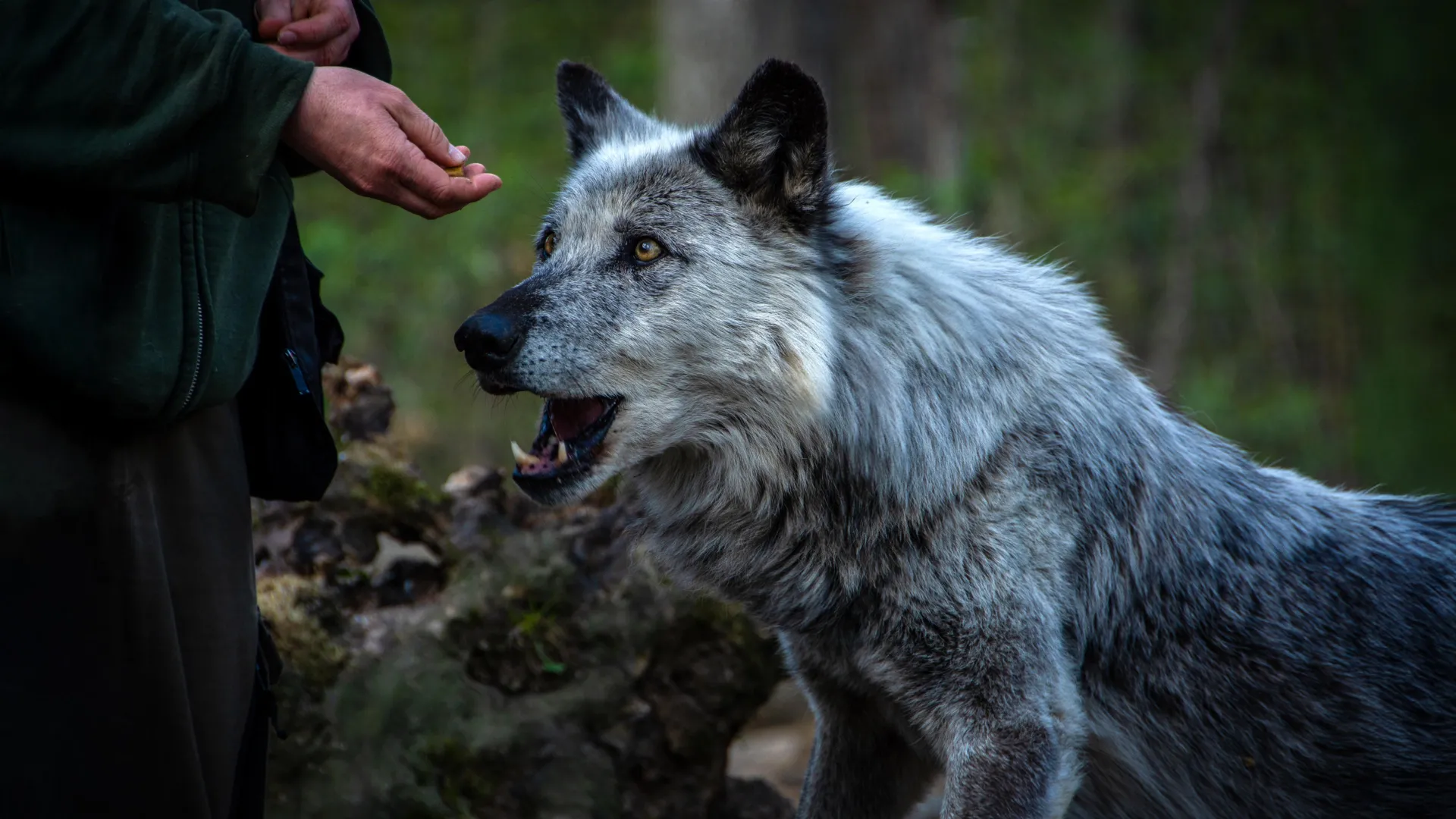
The divergence of dogs from ancestral wolf populations was not a singular, instantaneous event. As Professor Mitchell emphasizes, the transformation of grey wolves into domestic dogs was an ongoing, drawn-out process spanning generations.
In ancient hunter-gatherer societies, interactions between humans and canids began opportunistically. Scavenging around human camps provided canids with reliable food sources, while their acute senses of hearing and smell offered humans an early-warning system against predators and competing hominids. Over millennia, this mutualistic interaction crossed a threshold into true domestication. Crucially, this occurred long before the Neolithic agricultural revolution, meaning humans and dogs built their foundational relationship while navigating wild plant and animal resources together.
Phase 2: Environmental Radiation and Specialized Adaptation
As human populations migrated across the globe, their canine companions accompanied them, undergoing rapid evolutionary divergence driven by extreme climatic and ecological pressures.
- Arctic and Sub-Arctic Adaptations: In the unforgiving northern latitudes, Indigenous communities engineered sophisticated survival strategies anchored by dog sledding. Archaeological remains from the Arctic reveal profound skeletal modifications: robust limb bones designed to withstand severe mechanical strain, and distinct stress patterns in the vertebrae indicative of heavy pulling loads. Furthermore, stable isotope analyses of ancient canine and human bones demonstrate overlapping diets, frequently dominated by marine resources, underscoring the deep integration of dogs into northern subsistence models.
- Equatorial and Tropical Specializations: Conversely, dogs accompanying hunter-gatherers into the dense rainforests of South America and Southeast Asia followed a distinctly different developmental pathway. Retaining smaller, more agile frames, these tropical dogs evolved into expert hunting companions capable of navigating dense undergrowth and uneven terrain. Ethnographic records show that Indigenous groups carefully managed breeding practices—occasionally introducing wild canid stock—to optimize these specific hunting phenotypes.
- High-Altitude Physiological Convergence: On the Tibetan Plateau, the evolutionary stakes were a matter of cellular survival. Researchers have identified specific genetic variants in Tibetan dogs that mirror adaptations found in human populations native to the region. These genes enable normal biological functioning in oxygen-depleted environments. As Professor Mitchell notes, hypoxia served as a strict environmental constraint on canine expansion until these complex genetic adaptations were successfully acquired.
Phase 3: Cultural Selection and Economic Diversification
As human societies grew more complex, dogs were bred not merely for utilitarian survival tasks, but for cultural, economic, and spiritual purposes.
On the Northwest Coast of North America, certain Indigenous communities selectively bred small, woolly-coated dogs explicitly for their hair. This fiber was harvested and woven into ceremonial textiles, assigning dogs a foundational role in textile production rather than tracking or transport. Elsewhere, dogs became integral components of religious ceremonies and mortuary practices, with their physical appearances and temperaments molded by cultural preferences.
Phase 4: Pathogens, Colonialism, and Genetic Legacy
Environmental adaptation and human culture were not the sole architects of canine evolution. Emerging research highlights the critical role of vector-borne diseases in shaping canine biogeography. In sub-Saharan Africa, pathogens such as trypanosomiasis and ehrlichiosis presented formidable biological barriers. These diseases help explain why temperate-adapted northern canids reached southern and tropical latitudes later, or maintained smaller populations there compared to temperate zones.
In more recent centuries, the globalization of European breeds during colonial expansion severely disrupted ancient lineages, replacing many indigenous dog populations worldwide. Nevertheless, genetic echoes of these ancient dogs persist, preserved within the DNA of modern regional populations and archaeological specimens.
Supporting Context & Metrics: The Science of Co-Evolution
The sheer scope of human-canine evolution is illuminated by converging lines of empirical evidence drawn from paleontology, genetics, and anthropology.
- Chronological Depth: Archaeological data places intentional dog burials alongside humans as far back as 14,000 years, though genetic divergence models suggest the initial split between dogs and extinct wolf ancestors may have begun upwards of 20,000 to 30,000 years ago.
- Morphological Extremes: Through artificial and natural selection, modern canines span a massive biological spectrum. Weight differentials between extreme breeds—such as a 2-pound Chihuahua and a 180-pound Great Dane—exceed a factor of nearly 90 times, representing one of the most extreme variations in body size observed within any single terrestrial mammal species.
- Genetic Convergence: Studies on high-altitude canine populations on the Tibetan Plateau reveal parallel evolutionary trajectories with humans, where identical hypoxic-response pathways were independently unlocked by both species to conquer low-oxygen thresholds.
- Dietary Integration: Stable isotope analyses of ancient Arctic canine collagen indicate that in coastal marine-foraging societies, up to 80% to 90% of a dog’s dietary protein derived from marine mammals and fish—mirroring the exact nutritional intake of their human companions.
Official Statements & Expert Insights
The paradigm shift in how scientists view animal domestication is driven by leading scholars working at the intersection of archaeology and evolutionary biology.
Reflecting on the foundational nature of the human-canine bond, Professor Peter Mitchell states:
"The connections between dogs on the one paw and people dependent on wild plant and animal resources on the other are ancient, diverse, and profound."
Elaborating on the mechanics of how this relationship was established across prehistoric landscapes, Mitchell notes:
"The process whereby grey wolves became dogs is ongoing, not one marked by a single threshold event. It was likely both long and drawn out.
The relationship thus constructed has been a joint effort, if one where, especially in the West and over recent centuries, humans have increasingly come to dominate in determining its shape and direction.
Nevertheless, the way dogs and humans relate—and have related—to each other has value precisely because of their mutual, complex entwinement with each other."
Addressing the severe environmental barriers faced by early canines expanding into high-altitude or tropical niches, Mitchell explains the interplay between genetics and ecology:
"We do not know when dogs first joined them, and the genetic variants needed to thrive there may have been quickly acquired, but until that was achieved hypoxia presumably acted as a constraint on canine presence."
Future Outlook: The Next Chapter in a 15,000-Year Partnership
As we look toward the future, the study of canine evolution continues to accelerate, driven by rapid advancements in paleogenomics, ancient DNA (aDNA) extraction, and high-resolution isotopic analysis. Researchers are increasingly capable of sequencing the genomes of ancient archaeological specimens, allowing science to map the precise migratory routes of dogs alongside human diaspora events.
Yet, this ongoing evolutionary story faces modern challenges. While historical pressures were dominated by climate, terrain, and natural pathogens, contemporary canine biology is heavily shaped by intensive human-mediated breeding practices, urbanization, and veterinary medicine. Modern purebred populations, heavily bottlenecked by selective breeding for aesthetic standards over the past two centuries, frequently grapple with genetic disorders that contrast sharply with the robust, hardy landrace dogs of prehistory.
Ultimately, revisiting the deep history of dogs reminds us that civilization was never a solo human enterprise. The dog is a living archive of human migration, technological adaptation, and cultural expression. As genomic tools continue to unearth the hidden chapters of our shared past, they reinforce a timeless truth: human history cannot be fully understood without accounting for the loyal, adaptive, and resilient canids who walked beside us every step of the way.