
Executive Overview
As the global agricultural sector grapples with tightening operational margins, unpredictable weather patterns, and the perpetual challenge of maximizing field efficiency, input manufacturers are under immense pressure to deliver innovative solutions. Fertilizers and traditional crop inputs alone are no longer enough to secure the high yields modern farmers require. Entering this evolving landscape is The Mosaic Company, a global fertilizer titan that is aggressively expanding its footprint in the biologicals sector.
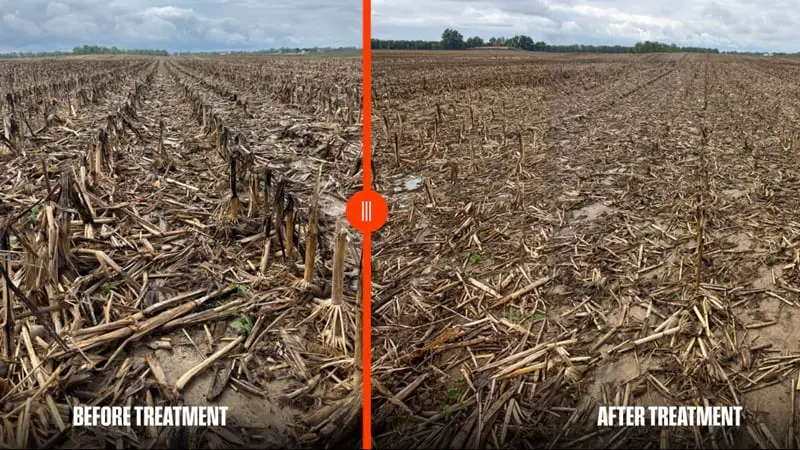
Marking its sixth major product rollout under the Mosaic Biosciences banner, the company has officially launched Renuvis Enzara, an advanced, enzyme-based crop residue treatment engineered to revolutionize post-harvest management. Designed for deployment ahead of both fall and spring fertilizer applications, Renuvis Enzara addresses one of the most stubborn agronomic bottlenecks facing modern grain producers: the massive accumulation of tough, structural carbohydrates left behind after harvest.
By leveraging an isolated and purified endoglucanase enzyme, Renuvis Enzara targets the complex lignin and cellulose structures of crop stubble, breaking them down into digestible sugars that accelerate the natural decomposition process driven by native soil microorganisms. In doing so, the biological treatment tackles multiple farm-level pain points simultaneously. It enhances spring field readiness, improves nutrient cycling, optimizes operational efficiency, and offers a timely answer to the residue management challenges introduced by high-yielding modern agronomic systems—most notably, the rapid adoption of short-stature corn.
The launch of Renuvis Enzara arrives at a fascinating financial and strategic juncture for Mosaic. While traditional fertilizer markets have experienced notable volatility—underscored by a recent $273 million net loss in the second quarter of 2026—the company’s bioscience division has emerged as a resilient, high-growth bright spot. With bioscience net sales tracking toward a projected doubling in 2026, Mosaic is proving that its future lies not merely in pushing higher volumes of synthetic fertilizers, but in a holistic philosophy centered on nutrient use efficiency (NUE) and sustainable agronomic stewardship.
This comprehensive report examines the science behind Renuvis Enzara, explores its operational integration for growers, analyzes trial data and performance metrics, and contextualizes Mosaic’s broader corporate pivot toward biological innovation amidst macroeconomic headwinds.
Detailed Chronology: The Evolution and Rollout of Renuvis Enzara
To understand the significance of Renuvis Enzara, it is helpful to trace the timeline of Mosaic’s strategic pivot toward biological crop inputs and the path that led to the development of this specialized enzyme treatment.
The Rise of Mosaic Biosciences
Over the past several years, Mosaic has methodically built out its bioscience portfolio to complement its traditional granular fertilizer giants, such as MicroEssentials and Aspire. Recognizing that farmers need targeted tools to solve specific field-level problems rather than blanket chemical applications, the company established Mosaic Biosciences to house its emerging biological and biocatalyst technologies.
By early 2026, the strategy gained significant momentum. Renuvis Enzara entered the market as the sixth dedicated bioscience product launched by the company within the calendar year. This rapid-fire commercialization schedule reflects a concerted corporate effort to accelerate research and development pipelines, bringing lab-tested biochemical solutions to commercial acreage faster than ever before.
From Lab to Field: Formulating the Enzyme
The genesis of Renuvis Enzara lies in isolating biochemical mechanisms that occur naturally in the soil, but supercharging them to work on an agricultural timeline. Traditional crop residue breakdown relies entirely on native soil microbes to consume tough corn stalks, wheat straw, and soybean stubble. However, in colder climates or conventional systems with heavy residue loads, this natural decay is often painfully slow, tying up vital nutrients and creating a physical barrier that complicates spring seedbed preparation.
Mosaic’s field solutions agronomists and research teams spent years evaluating various enzymatic pathways before settling on a purified endoglucanase enzyme. Unlike whole-organism microbial inoculants—which can struggle to survive changes in soil temperature, pH, or chemical tank-mixes—a purified enzyme functions as a direct catalyst. Once sprayed onto the field, it immediately attacks the glycosidic bonds in structural carbohydrates, bypassing the slow initial colonization phase required by standard microbial products.
Commercial Launch and Seasonal Positioning
Unveiled ahead of the fall 2026 application window, Renuvis Enzara was engineered for maximum operational flexibility. Mosaic structured the product rollout to accommodate the realities of modern farming schedules. Whether a grower prefers to tackle residue management during post-harvest fall operations or during early-season spring burndown and fertilizer passes, Renuvis Enzara was designed to integrate seamlessly into existing workflows.
Furthermore, the product’s formulation engineers ensured it could be tank-mixed directly with standard liquid fertilizers and broad-spectrum herbicides. This capability allows commercial grain producers and large-scale operations to eliminate an extra pass across the field, saving precious time, labor, and fuel during the busiest windows of the agricultural calendar. By positioning Renuvis Enzara as a drop-in component of existing spray regimens, Mosaic minimized adoption friction, ensuring that growers could test the biological technology without overhauling their standard operational practices.
Supporting Context & Metrics: Science, Trials, and Field Performance
To validate the efficacy of Renuvis Enzara before bringing it to market, Mosaic subjected the enzyme treatment to rigorous agronomic trials. Understanding the biochemical mechanics and quantifiable metrics of the product reveals why the company is betting heavily on its success.
The Biochemical Mechanism: Breaking Down the Indigestible
Crop residue—particularly from high-yielding corn crops—is rich in complex structural carbohydrates such as cellulose, hemicellulose, and lignin. These polymers create a tough, fibrous matrix that shields the plant material from rapid microbial degradation.
According to Kip Jacobs, field solutions agronomist for Mosaic, Renuvis Enzara operates as an isolated and purified endoglucanase enzyme. Its singular biochemical mission is to target these massive structural carbohydrate chains and cleave them into smaller, more manageable units.
[Complex Structural Carbohydrates: Cellulose & Hemicellulose]
                           │
                           ▼ (Renuvis Enzara: Endoglucanase Enzyme)
[Smaller Chain Molecules & Readily Available Sugars]
                           │
                           ▼ (Accelerated Native Microorganism Consumption)
[Rapid Residue Breakdown & Nutrients Released Back to Soil]
"Its specific role is to break down those very large structural carbohydrates in residue, converting them into smaller chains [and] more readily available sugars that actually allow native microorganisms to break down residue faster," Jacobs explained during an interview with AgNavigator.
By converting complex matter into simple sugars, Renuvis Enzara effectively provides an immediate energy source for the beneficial microbes already living in the soil. This triggers a localized microbial bloom centered directly on the crop residue, accelerating the natural decay cycle by weeks or even months.
Quantifying the Results: Ash Content and Digestibility
In scientific field evaluations, quantifying residue breakdown can be notoriously difficult. Mosaic utilized precise laboratory analyses—specifically measuring ash content and total digestible nutrients (TDN) before and after treatment—to prove that Renuvis Enzara was actively transforming the physical composition of the field litter.
Through these trials, Mosaic quantified a 5% reduction in organic material (the physical mass of the crop residue) alongside a roughly 5% increase in total digestible nutrients within the treated stubble.
While a 5% mass reduction may sound modest at first glance, agronomists note that even a slight breakdown of the outer waxy cuticle and internal structural matrix dramatically alters how residue behaves in the spring. It softens the stalks, prevents matting that can harbor fungal pathogens like Gibberella or Fusarium, and ensures that the physical trash does not interfere with seed placement or emergence during no-till planting.
Environmental Flexibility: Working at 32°F
One of the primary historical limitations of biological crop treatments has been their sensitivity to environmental conditions. Many biologicals require warm, moist soils to function effectively, rendering late-fall applications in northern latitudes largely ineffective.
Mosaic designed Renuvis Enzara to break this mold. The enzyme remains active in ambient temperatures as low as 32°F (0°C). This low-temperature functionality dramatically widens the operational application window for growers operating in the Corn Belt and Upper Midwest, where harvest often extends late into freezing autumn evenings.
"If you’re comfortable getting the sprayer out of the shed, the enzyme is going to work," Jacobs emphasized, highlighting the robustness of the formulation under chilly field conditions.
The Short-Stature Corn Revolution
Perhaps the most compelling use case for Renuvis Enzara lies in its ability to solve a brand-new problem created by the latest advancements in seed genetics: short-stature corn.
Over the past few years, major agricultural seed developers—including Bayer, Corteva, and Stine Seed Company—have commercialized or raced to launch short-stature corn hybrids. These varieties feature shorter internodes, stronger stalks, and enhanced resistance to lodging (falling over) during high winds and severe storms. This allows farmers to plant populations at higher densities and apply management practices more aggressively.
However, higher plant populations and dense canopies create an unintended consequence: massive volumes of post-harvest residue.
"On average, we see that 250 bushels of [short-stature] corn produces about five and a half tons of residue… anywhere from 8,000 pounds to 11,000 pounds of residue that needs to be managed per acre," Jacobs elaborated. "And the direct answer to that problem is Renuvis Enzara."
Without effective chemical or biological intervention, managing over five tons of corn stalks per acre requires intensive mechanical tillage—which destroys soil structure, burns diesel, and risks moisture loss. Renuvis Enzara provides a biological shortcut, allowing no-till and reduced-till farmers to manage high-yield residue loads without relying exclusively on heavy tillage equipment.
Official Statements & Industry Perspectives
To gain a deeper appreciation of Mosaic’s overarching vision, it is instructive to examine the philosophical shift articulated by the company’s agronomic leadership. The launch of Renuvis Enzara is not merely a product launch; it represents a fundamental re-imagining of how a traditional fertilizer giant interacts with the farm gate.
Redefining Nutrient Use Efficiency (NUE)
For decades, the standard business model for legacy fertilizer manufacturers was simple: sell more synthetic nutrients (nitrogen, phosphorus, and potassium) to drive yield. While macro-nutrients remain foundational to global food production, modern agronomic realities demand a more sophisticated approach. Soil health, nutrient tie-up, and economic pressures mean that simply applying higher rates of fertilizer is no longer environmentally sustainable or economically viable for growers facing compressed margins.
Kip Jacobs articulated this philosophical pivot clearly:
"Everything that we do at Mosaic is directly associated with increasing nutrient use efficiency. As a fertilizer producer, it would be very easy for us to just come out and say, ‘Well, you need to put more fertilizer on.’ That’s not the avenue that we’re taking, and that’s not the most responsible thing for us to do at any point, especially now in the economic situations."
This statement underscores a broader maturation within the ag-input sector. Companies are realizing that long-term customer loyalty and stewardship depend on helping growers extract maximum value from every single pound of nutrient already present in their soil and previous crop residue.
A Integrated Portfolio Approach
Renuvis Enzara does not exist in a vacuum within Mosaic’s catalog. It fits neatly into a meticulously designed ecosystem of crop nutrition and biological enhancement tools aimed at optimizing every phase of the crop lifecycle.
Jacobs summarized this integrated product hierarchy:
"Whether it’s MicroEssentials or Aspire on the crop nutrition side, BioPath and PowerCoat for our fertilizer complements, and now Renuvis Enzara for biological crop residue management, every one of those directly associates with a problem at the farm gate. Whether that’s nutrient use efficiency [or] operational efficiency, everything that we’re trying to do is to get that crop off to a better start and give it season-long availability of nutrients to give it the best probability of success."
By pairing traditional granular fertilizers with targeted biological coatings and residue-digesting enzymes, Mosaic is positioning itself as a full-spectrum agronomic partner rather than a single-commodity supplier.
Future Outlook: Financial Resilience and the Future of Biosciences
The introduction of Renuvis Enzara occurs against a backdrop of financial turbulence and dynamic market evolution for The Mosaic Company. Analyzing the intersection of these macroeconomic realities with the explosive growth of the bioscience division provides a clear window into where the agricultural input industry is heading.
Navigating Market Volatility
In its second-quarter 2026 earnings reports, Mosaic made headlines by posting a $273 million net loss, a stark illustration of the severe price volatility and supply chain shocks affecting traditional global fertilizer markets. Geopolitical shifts, fluctuating raw material costs, and volatile commodity pricing have created a challenging operating environment for major agricultural manufacturers.
Yet, amid this broader financial pressure, Mosaic’s bioscience division stood out as a beacon of high-margin growth. The company reported $25 million in net sales specifically for its bioscience portfolio during the quarter—a figure management expects to double over the course of the year.
This divergence tells a powerful story: while legacy fertilizer markets are cyclical and prone to extreme price swings, demand for biological innovations, efficiency-enhancing seed treatments, and biochemical residue managers is structurally insulated and rapidly expanding. Growers facing tight operational margins are actively searching for biological tools that protect their return on investment, making products like Renuvis Enzara essential components of modern farm economics.
What Lies Ahead for Biologicals in Agronomy
As agriculture looks toward the remainder of the 2020s and beyond, several key trends will dictate the trajectory of biological crop inputs:
- Mainstreaming of Biologicals: Once viewed as niche products for organic or alternative agriculture, biological enzymes and microbial inoculants are now firmly established in mainstream, high-yield conventional farming systems.
- The Imperative of Residue Management: With corn yields continuing to climb—and the rapid commercialization of high-density short-stature corn hybrids—the sheer volume of crop residue will continue to escalate. Mechanical tillage is increasingly recognized as environmentally and economically costly, paving the way for biochemical solutions like Renuvis Enzara to dominate post-harvest management.
- Synergy Between Synthetic and Biological: The most successful input companies will not force growers to choose between chemistry and biology. Instead, as demonstrated by Mosaic’s tank-mix flexibility with fertilizers and herbicides, the future belongs to integrated solutions that enhance synthetic efficiency through biological mechanisms.
Conclusion
With the launch of Renuvis Enzara, The Mosaic Company has reinforced its commitment to biological innovation while offering a practical, scientifically validated solution to one of farming’s most persistent physical hurdles. By converting tough structural carbohydrates into readily available sugars, functioning efficiently in near-freezing temperatures, and seamlessly integrating with standard farm sprays, Renuvis Enzara exemplifies the next generation of agricultural tools.
As Mosaic navigates broader commodity market volatility, its burgeoning bioscience division—anchored by products designed to maximize nutrient use efficiency and operational readiness—is proving to be a vital engine for future growth. For grain producers striving to balance high yields, tight margins, and sustainable land stewardship, tools like Renuvis Enzara offer a clear pathway to unlocking the hidden value resting right beneath their feet.