
As the global agricultural sector faces an unprecedented convergence of climate volatility, escalating labor shortages, and stringent environmental regulations, innovation has transitioned from a competitive advantage to an existential necessity. Recognizing this paradigm shift, TIME magazine has unveiled the agriculture category of its prestigious annual Best Inventions list for 2026.
Highlighting six groundbreaking technologies that span advanced crop genetics, autonomous field robotics, precision pollinator management, circular bio-economy platforms, and nutrient recycling, this year’s selection underscores a singular theme: the future of farming is smarter, more sustainable, and deeply integrated with artificial intelligence. Selected from a rigorous global pool of nominations evaluated on originality, efficacy, ambition, and impact, these six inventions form a vital subset of TIME’s broader ranking of 300 products and ideas transforming the modern world.
Executive Overview: A Paradigm Shift in Global Food Production
The technologies honored in the 2026 TIME Best Inventions list are more than incremental improvements; they represent systemic corrections to some of agriculture’s most stubborn vulnerabilities. For decades, modern high-yield farming has relied heavily on broad-spectrum chemical inputs, intensive manual labor, and linear resource models that extract, consume, and discard.
The 2026 cohort turns those traditional models on their heads. By utilizing ultraviolet light to combat resilient crop diseases, harnessing AI to decode agricultural waste streams, transforming human wastewater into high-grade crop nutrients, and deploying autonomous robotic fleets that alleviate crippling workforce deficits, these innovations redefine what is possible across farms, vineyards, and orchards.
Furthermore, these accolades validate the accelerating shift toward precision agriculture—a movement where biotechnology and digital engineering converge to maximize output while shrinking the environmental footprint. As global food systems work to feed a projected population of nearly 10 billion by mid-century under increasingly erratic weather patterns, the breakthroughs highlighted by TIME offer a clear, technologically sound roadmap forward.
Detailed Breakdown of the 2026 Agricultural Innovators
The six category winners showcase the incredible diversity of modern agtech, touching nearly every vertical of the primary production and processing value chain.
1. BioLumic: Light-Activated Seed Traits
- The Innovation: The xTraits platform, which enhances crop performance and climate resilience through light-activated trait development in seeds.
- The Impact: Giving crops a stronger start right out of the ground.
Crop genetics have long been dominated by traditional breeding cycles and genetically modified organism (GMO) development—processes that can take decades and face steep regulatory and public hurdles. BioLumic approaches seed enhancement from an entirely different angle: photomorphogenic stimulation. By applying specific, precision light treatments to seeds before planting, the company’s xTraits platform triggers epigenetic changes that activate the plant’s natural defenses, root development, and metabolic efficiency.
TIME recognized BioLumic for offering a revolutionary way to give crops a stronger start without altering the core genetic code. This technology arrives at a crucial juncture, as seed companies globally seek rapid, scalable solutions to boost plant productivity and drought resilience amid compounding climate pressures.
2. Burro Grande 44: The All-Purpose Farm Robot
- The Innovation: An autonomous, heavy-duty utility robot designed to shoulder the logistical burdens of specialty crop harvesting and field transport.
- The Impact: Drastically mitigating global agricultural labor shortages and supercharging workforce productivity.
Labor scarcity remains the single greatest bottleneck for specialty crop producers across North America, Europe, and parts of the developing world. Enter the Burro Grande 44, a heavy-payload, autonomous mobile robot engineered to navigate complex terrain alongside human field crews.
Unlike single-function automated harvesters, the Burro Grande acts as a versatile field utility platform. It primarily functions by trailing human pickers and autonomously hauling harvested fruit and vegetables back to central collection stations. As Charlie Andersen, CEO of Burro, explained to TIME: "When you have a robot running around carrying the fruit people pick back to central points, each person is 30% more productive." By eliminating the dead-time walking and hauling associated with manual harvesting, the robot stretches scarce labor pools significantly further.
3. Beewise Robi: AI-Powered Apiculture
- The Innovation: Autonomous, AI-driven beehive management systems designed to protect and optimize pollinator colonies.
- The Impact: Securing the fragile pollination networks that underpin global fruit, nut, and vegetable supply chains.
Pollinators—most notably the European honeybee—are the invisible engine of the global food system, responsible for roughly one-third of the human diet. Yet, modern apiculture faces devastating colony collapse rates driven by disease, pests, pesticides, and habitat loss.
Beewise Robi addresses this crisis head-on by integrating robotics and artificial intelligence into commercial beekeeping. The system continuously monitors hive internal conditions, temperature, humidity, pest pressures, and forage availability in real time. When anomalies or threats like varroa mites are detected, the system deploys automated interventions. TIME selected Robi to highlight the growing urgency of safeguarding pollination services through high-tech, preventative hive management.
4. 2nd Nature AgWaste Portal: Unlocking Value from Side Streams
- The Innovation: An artificial intelligence platform designed to identify, analyze, and unlock commercial value from agricultural and food processing waste streams.
- The Impact: Pioneering a true circular economy by giving agricultural "scraps" a profitable second life.
Agriculture has traditionally operated on a linear "take-make-dispose" model, generating millions of tons of organic side streams, husks, stems, peels, and processing byproducts annually. Managing this waste is costly, and letting it decompose improperly releases significant greenhouse gases.
The 2nd Nature AgWaste Portal changes the equation by deploying advanced machine learning to map out and analyze the chemical and physical composition of agricultural waste in real time. The platform matches industrial-scale side streams with buyers who can upcycle them into valuable biomaterials, animal feed additives, biochemicals, or bio-energy feedstocks. TIME lauded the platform for successfully turning industrial agricultural liabilities into economic assets.
5. Saga Robotics: Thorvald and UV-C Disease Control
- The Innovation: An autonomous ultraviolet light (UV-C) treatment robot designed to suppress fungal pathogens like powdery mildew in specialty crops.
- The Impact: Dramatically reducing reliance on chemical fungicides in vineyards and strawberry fields.
Chemical dependency in crop protection is facing mounting pressure from tightening regulatory frameworks, consumer demand for pesticide-free produce, and the rapid evolution of resistant pathogen strains. Saga Robotics’ flagship autonomous robot, Thorvald, offers a compelling biological alternative.
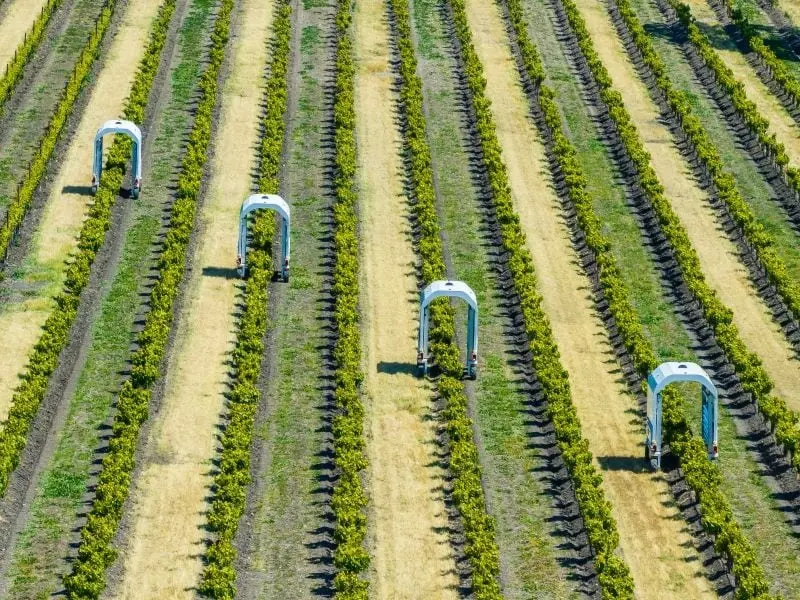
Navigating autonomously through vineyards and high-tunnel strawberry systems, Thorvald bathes crops in carefully calibrated doses of UV-C light during the night. This process disrupts the DNA of powdery mildew and other fungal spores, effectively neutralizing them without leaving chemical residues or harming the crop. The technology has scaled rapidly; by 2026, Thorvald is actively treating approximately 30% of the United Kingdom’s tabletop strawberry production and managing disease suppression across 2,500 acres of prime California vineyards.
6. VunaNexus Aurin: Circular Nutrient Recovery
- The Innovation: A high-grade, commercially viable fertilizer product derived from safely recycled human urine.
- The Impact: Pioneering closed-loop nutrient cycling to reduce agriculture’s heavy reliance on mined mineral fertilizers.
Synthetic nitrogen and phosphorus fertilizers are foundational to modern crop yields, but their production is carbon-intensive, and agricultural runoff frequently triggers catastrophic aquatic eutrophication. At the same time, the human body expels the vast majority of consumed nitrogen, phosphorus, and potassium—nutrients that are traditionally flushed away as waste.
VunaNexus Aurin flips this paradigm by extracting, stabilizing, and purifying nutrients from source-separated human urine to produce Aurin, a clean, high-grade liquid fertilizer. TIME recognized the innovation as a bold step toward true circularity, tapping into an infinite, decentralized nutrient source that helps decouple food production from finite mined reserves and energy-heavy Haber-Bosch synthesis.
Supporting Context & Industry Metrics
The recognition of these six technologies by TIME reflects broader macroeconomic and environmental tailwinds sweeping through the agtech sector:
- The Agtech Investment Rebound: Following a period of market correction in 2023–2024, venture capital and corporate strategic investments have gravitated strongly toward technologies with immediate, verifiable return on investment (ROI)—such as labor-saving robotics (Burro) and input-reduction tools (Saga Robotics).
- The Chemical Phase-Out: With the European Union and several U.S. states enacting stricter limits on synthetic fungicides and conventional fertilizers, alternative protection systems like Thorvald and circular nutrient solutions like Aurin are transitioning from niche novelties to mainstream commercial necessities.
- The Labor Deficit Reality: According to recent international agricultural labor indices, farm labor shortages have worsened by over 15% globally over the last five years, driving a massive surge in the adoption of autonomous field transport and harvesting aids.
Official Perspectives and Industry Reception
The inclusion of these technologies on TIME’s Best Inventions list has drawn praise from agricultural economists, sustainability advocates, and industry leaders alike.
Commenting on the broader trend of technological integration, agtech analysts note that the winners share a common trait: they respect the complexity of biological systems while injecting digital precision where human capacity falls short.
Charlie Andersen’s perspective on the Burro Grande encapsulates the industry’s pragmatic philosophy toward automation: the goal is not to replace human agricultural workers entirely, but to elevate their output, reduce physical strain, and make grueling harvest seasons economically sustainable for farm operators. Similarly, the rapid adoption of Saga Robotics in both British berry farms and Californian vineyards demonstrates that growers are increasingly eager to embrace non-chemical, data-driven crop health management when the efficacy matches or exceeds conventional methods.
Future Outlook: The Next Horizon for Farm Innovation
As we look toward the remainder of the decade and beyond, the trajectory established by TIME’s 2026 agricultural winners points toward several critical milestones:
- Autonomous Fleets Integration: Expect to see farm robots move from single-task operations (like carrying bins or applying UV light) to interoperable, multi-agent cooperative fleets where drones, weed-zapping rovers, and harvest haulers communicate seamlessly across entire farm enterprises.
- Mainstreaming Circularity: Innovations like the 2nd Nature AgWaste Portal and VunaNexus Aurin signal the end of the linear farming model. Over the next ten years, regulatory frameworks and corporate Scope 3 emissions targets will force food supply chains to view farm waste and municipal side streams as primary feedstocks for inputs.
- Epigenetic and Photonic Breeding: BioLumic’s success with light-activated seed traits suggests that the future of seed technology will increasingly rely on non-GMO, rapid-response physical priming techniques that instantly adapt crops to localized climate shocks.
Ultimately, the technologies highlighted by TIME remind us that agriculture is undergoing its most profound transformation since the dawn of the green revolution. By marrying ecological stewardship with cutting-edge engineering, these innovators are proving that the future of farming is not about conquering nature, but working intelligently alongside it.