The global pet food industry is undergoing a profound paradigm shift. Driven by the "humanization of pets," modern dog owners are increasingly moving away from highly processed, grain-heavy kibble in favor of diets that closely mimic what canines would eat in the wild. Among these premium options, freeze-dried dog food has emerged as a frontrunner, experiencing exponential market growth.
By combining the convenience and stable shelf life of traditional dry kibble with the nutritional integrity of raw, whole foods, freeze-dried formulations offer a compelling compromise. However, the transformation of fresh, highly perishable meats, fruits, and vegetables into lightweight, shelf-stable nuggets is a highly sophisticated scientific process. This investigative report explores the thermodynamics, biochemical preservation, and industrial mechanics behind freeze-dried pet food, evaluates the market’s leading brands, and analyzes the future trajectory of this high-tech sector of pet nutrition.
Detailed Chronology: The Thermodynamics of Lyophilization
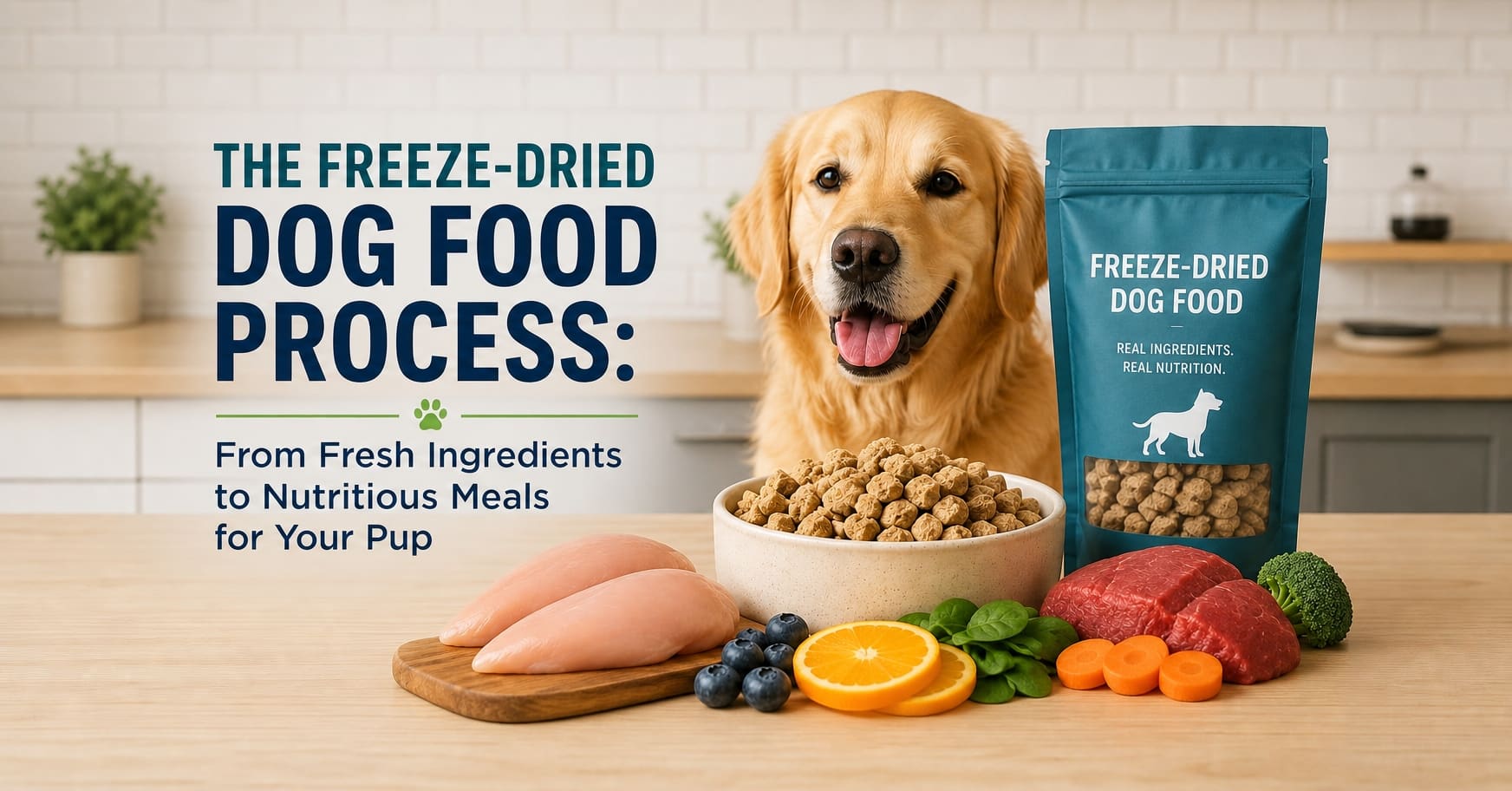
The manufacturing of freeze-dried dog food relies on lyophilization—a low-temperature dehydration process that removes moisture through sublimation. Unlike traditional dehydration, which uses heat to evaporate water, lyophilization bypasses the liquid phase entirely, transitioning water directly from ice to vapor.
Below is the step-by-step industrial chronology of how raw agricultural ingredients are transformed into shelf-stable pet nutrition.
The process begins with strict quality assays of raw agricultural commodities. Manufacturers source fresh skeletal meats, organ meats (such as liver, heart, and kidney), bones, fruits, vegetables, and targeted vitamin-mineral premixes. Because freeze-drying does not use high heat to sterilize ingredients, the microbiological profile of the incoming raw materials must be pristine.
Step 2: Mechanical Processing and Homogenization
Once cleared by quality control, the ingredients are washed, chopped, and blended. Meats are typically ground into a fine paste to ensure even distribution of proteins, fats, and bones. Fruits and vegetables are diced or pureed.
These components are then mixed in precise ratios to meet the nutritional profiles established by the Association of American Feed Control Officials (AAFCO). At this stage, some manufacturers apply High-Pressure Processing (HPP)—a cold pasteurization technique that uses ultra-high hydrostatic pressure to neutralize pathogens like Salmonella and Listeria without cooking the proteins.
Step 3: Flash Freezing (The Solidification Phase)
The homogenized mixture is shaped into patties, nuggets, or small kibble-sized pieces, arranged on metal trays, and introduced to blast freezers. The temperature is rapidly lowered to between $-40^circtextF$ and $-50^circtextF$ ($-40^circtextC$ to $-45^circtextC$).
Speed is critical here. Rapid freezing ensures the formation of micro-crystallized ice. If the freezing process is too slow, large ice crystals form, which puncture and rupture the cellular walls of the meat and vegetables, leading to structural collapse and a loss of nutritional fluids upon eventual rehydration.
Step 4: Primary Drying (Sublimation)
The trays of frozen food are transferred into a sealed vacuum chamber. Once sealed, industrial vacuum pumps evacuate the air, dropping the pressure to a fraction of an atmosphere (typically between 0.05 and 0.5 millibars).
Under these low-pressure conditions, the physical properties of water change. Radiant heating plates within the chamber introduce controlled thermal energy. Because the pressure is below the "triple point" of water, the ice crystals within the food do not melt; instead, they sublimate directly into water vapor.
This vapor is continuously drawn out of the chamber and condenses as ice onto extremely cold condensation plates (operating at temperatures below $-76^circtextF$ or $-60^circtextC$). This primary drying phase removes approximately 90% to 95% of the food’s moisture.
Step 5: Secondary Drying (Desorption)
The remaining moisture consists of bound water molecules chemically ion-linked to the food’s molecular structure. To extract this residual moisture, the chamber pressure is lowered further, and the temperature of the heating plates is gradually raised.
This process, known as desorption, breaks the chemical bonds of the water molecules. Secondary drying continues until the moisture content of the food drops to between 1% and 4%.
Step 6: Analytical Quality Control and Moisture Testing
Before leaving the cleanroom facility, representative samples from each batch undergo rigorous analytical testing. Technicians measure water activity ($a_w$), which is a metric of the unbound water available for microbial growth. Safe shelf-stable food must maintain a water activity level below 0.60. Samples are also cultured to confirm the complete absence of foodborne pathogens.
Step 7: Hermetic Packaging and Oxygen Scavenging
Because freeze-dried food is highly porous, it is incredibly hygroscopic—meaning it will rapidly absorb moisture and oxygen from the surrounding air if left exposed.
To prevent degradation, the food is immediately packaged in multi-layer, light-blocking, hermetic bags. The packaging process often includes a nitrogen flush to displace oxygen, alongside the insertion of food-safe oxygen absorbers to protect fats from rancidity and prevent aerobic bacterial growth.
Supporting Context & Metrics: Nutritional Science and Market Analysis
Thermodynamic and Nutritional Comparison
To understand why freeze-drying is favored by veterinary nutritionists over traditional kibble extrusion, we must examine how different processing methods impact the molecular structure of pet food.
Highly denatured; often cross-linked with starches
Shelf Life
12 to 24+ months (highly stable)
6 to 12 months
12 to 18 months (preservative-dependent)
Moisture Content
1% to 4%
8% to 12%
8% to 10%
Water Activity ($a_w$)
$< 0.60$
$0.65$ to $0.75$
$0.60$ to $0.70$
Industry Review: Leading Freeze-Dried Formulations
As pet owners seek out freeze-dried options, several brands have developed distinct formulations to meet different dietary needs:
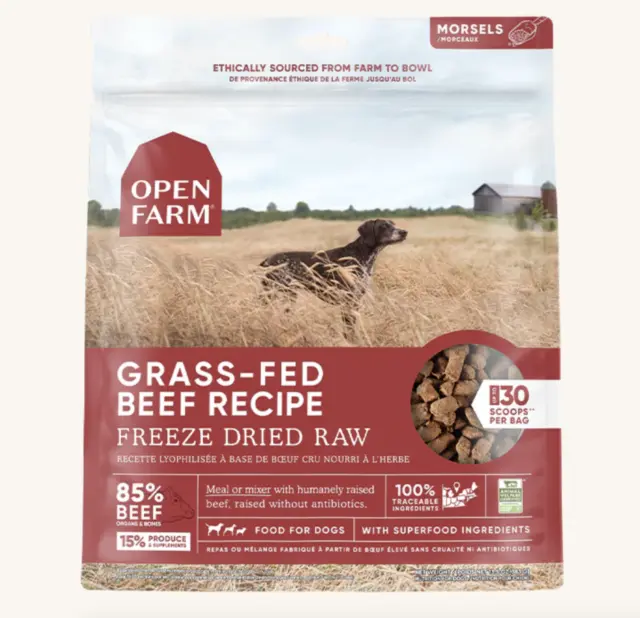
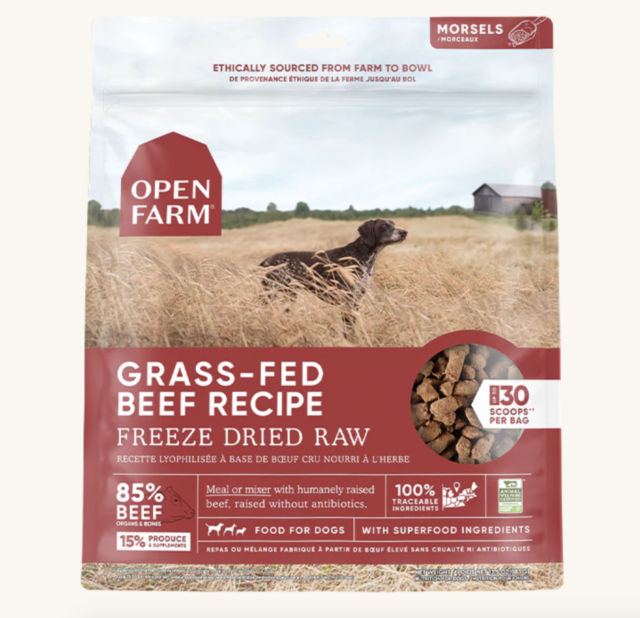
Open Farm Freeze-Dried Raw: Notable for its commitment to ethical sourcing and ingredient transparency. Utilizing 85% meat, organs, and bone, Open Farm integrates certified humane proteins with organic fruits and vegetables. Each package features a lot code allowing consumers to trace every ingredient back to its farm of origin.
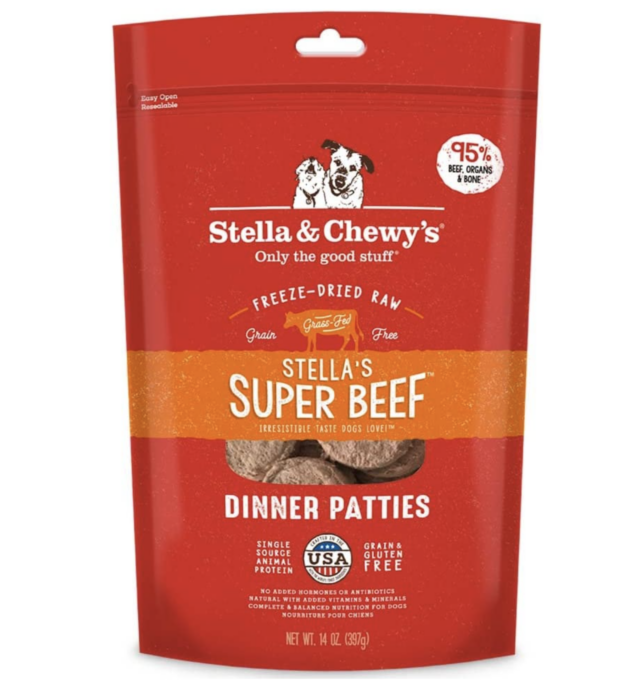
Stella & Chewy’s Freeze-Dried Raw Dinner Patties: Formulated to mimic a canine’s ancestral diet, these patties consist of 95% meat, organs, and bone. They can be fed dry or easily crumbled and rehydrated.
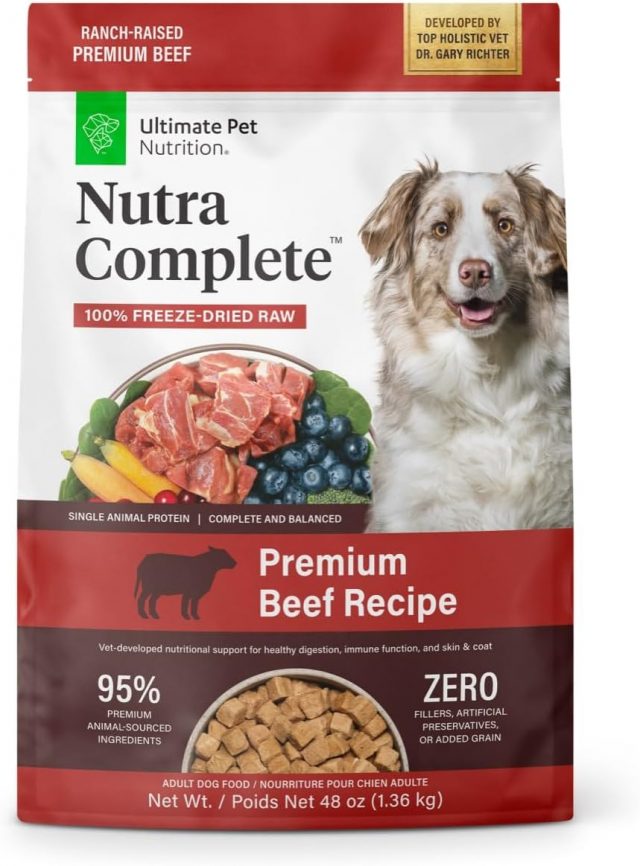
Ultimate Pet Nutrition Nutra Complete: Formulated by veterinarians, this premium blend incorporates 40 freeze-dried ingredients, combining raw beef with antioxidant-rich superfoods like blueberries and spinach to support immune health.
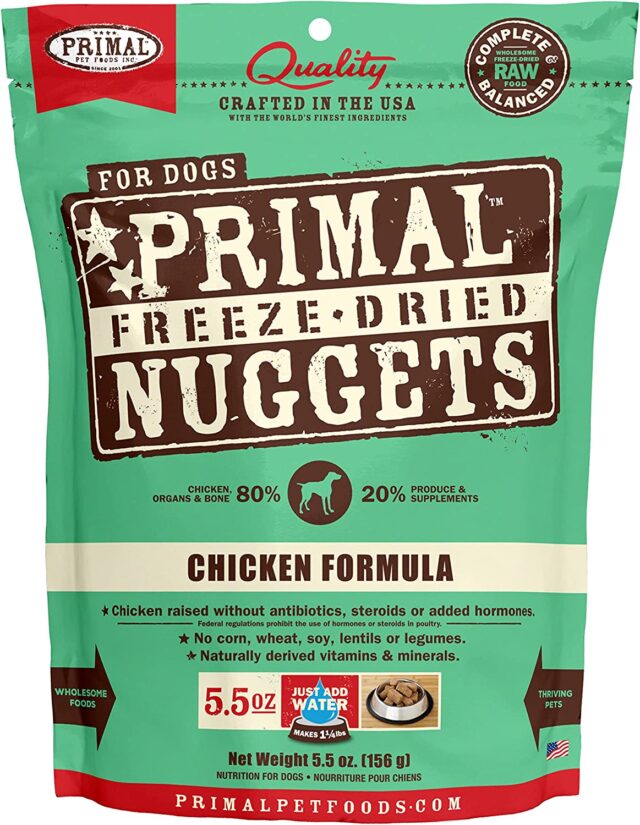
Primal Freeze-Dried Nuggets: These nuggets utilize antibiotic- and hormone-free proteins combined with certified organic produce. Primal emphasizes biological availability by incorporating unrefined vitamins and minerals.
Instinct Freeze-Dried Raw Meals: Featuring a grain-free, high-protein recipe with 85% meat and organs and 15% non-GMO produce, Instinct offers a minimally processed option well-suited for dogs with food sensitivities.
BIXBI Rawbble: A limited-ingredient diet composed of 98% meat, organs, and bone. It features a soft, lightweight texture that makes it highly versatile as a complete meal or a flavor-enhancing topper.
Vital Essentials Freeze-Dried Mini Nibs: Sourced and manufactured in the USA, this single-source protein line avoids fillers, synthetic vitamins, and legumes, making it a reliable option for dogs with severe food allergies.
Sojos Complete Raw Freeze-Dried Mix: When water is added, this formula expands significantly, with a 7-pound bag rehydrating to yield 40 pounds of fresh food.
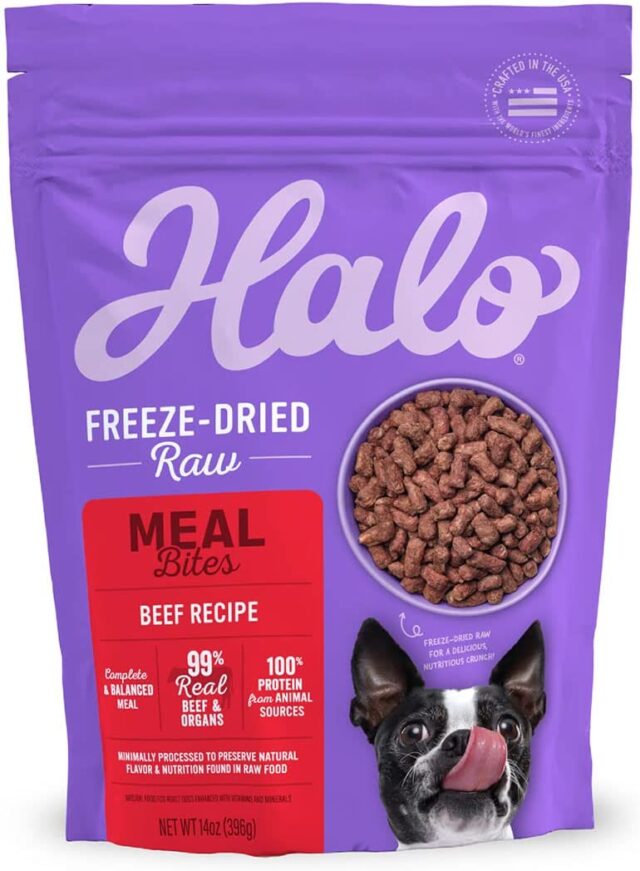
Halo Meal Bites (Formerly TruDog): A meat-focused formula consisting of 99% meat and organs. It is designed to preserve raw nutrients and support dental and skin health.
A Better Treat (Salmon Dry Dog Food): A hybrid option combining high-protein, USA-manufactured kibble with freeze-dried raw salmon pieces to balance raw nutrition with the convenience of dry food.
Official Statements and Expert Perspectives
The Veterinary Perspective: Bioavailability vs. Pathogen Safety
While freeze-dried diets are highly digestible, they remain a subject of active discussion within the veterinary community. Dr. Elizabeth Vance, DVM, a veterinary nutritionist specializing in raw diets, notes:
"The primary benefit of freeze-dried raw food is protein bioavailability. Because the ingredients are never exposed to high-heat extrusion, the delicate amino acids, vitamins, and active enzymes remain intact. This leads to smaller stools, healthier coats, and improved energy levels. However, because the food is raw, safety must be a top priority. Pet parents must treat freeze-dried food with the same sanitary care as raw chicken—washing bowls, hands, and utensils after every feeding."
Regulatory Compliance and Food Safety Technology
To address safety concerns, manufacturers rely on modern food safety technologies. The FDA and AAFCO maintain a strict "zero-tolerance" policy for pathogens like Salmonella in pet foods.
A representative from the Pet Food Institute (PFI) stated:
"The industry has adopted sophisticated safety measures to protect pets and their owners. Technologies like High-Pressure Processing (HPP) utilize up to 87,000 pounds of hydrostatic pressure per square inch to rupture the cellular membranes of harmful pathogens while leaving the nutritional value, flavor, and texture of the raw meat completely unchanged."
Future Outlook: Technology, Sustainability, and Personalization
The freeze-dried pet food market is positioned for continued evolution, driven by technological innovation and shifting consumer values:
Historically, freeze-drying has been an energy-intensive process due to the sustained vacuum and sub-zero temperatures required over 24-to-72-hour cycles. In response, engineering firms are developing advanced micro-chamber freeze-dryers. These systems use intelligent sensors to adjust thermal energy based on real-time moisture readings, promising to reduce energy consumption by up to 30%.
Sourcing Alternative Proteins
As the environmental impact of livestock farming faces greater scrutiny, freeze-dried manufacturers are exploring alternative proteins. Insect proteins (such as black soldier fly larvae) and cultivated, cell-grown meats are highly compatible with freeze-drying technology. These sustainable proteins can be processed into shelf-stable, nutrient-dense formulas that appeal to environmentally conscious pet owners.
Precision Nutrition
The integration of diagnostic pet health data with custom manufacturing is on the horizon. Future pet owners may submit their dog’s genetic, microbiomic, or blood profiles to receive custom-formulated, freeze-dried meals tailored to their dog’s specific health needs. These personalized diets can then be delivered directly to their door, representing the next step in the evolution of pet care.
Through its balance of scientific preservation and natural nutrition, freeze-dried dog food has established itself as a major advancement in pet care—proving that the best way to plan for the future of pet health is to carefully preserve the nutritional integrity of the past.