
The modern pet-owning landscape is defined by a deep tension: the desire to integrate our animal companions into everyday travel juxtaposed with the stark realities of vehicular safety. For years, pet parents have struggled to find car restraint systems that do not force a compromise between crash-test survival and canine comfort. Many popular soft-sided carriers and collapsible beds offer ample space for a dog to stretch out, yet disintegrate or fail catastrophically under the dynamic forces of a sudden collision. Conversely, models that perform exceptionally well in controlled crash tests—such as those administered by the Center for Pet Safety (CPS)—frequently cater exclusively to micro-dogs, leaving owners of mid-sized small dogs (those weighing between 15 and 25 pounds) in a precarious regulatory and functional vacuum.
This investigative review chronicles one pet owner’s exhaustive, high-stakes journey to resolve this dilemma for Chloe, a 15-pound dog whose comfort and security serve as the testing benchmark. Moving away from failed systems like the PetEgo Pet Tube and analyzing the spatial limitations of top-tier CPS-certified alternatives (such as the PetEgo Jet Set Forma Frame and the Sleepypod Mobile Pet Bed), this report pivots toward an independent market contender: the AirPupSaver.
Through a rigorous month-long field test encompassing daily errand runs and extended cross-country road trips across multiple vehicle types—including a Chrysler Town & Country minivan and a station wagon—this evaluation dissects the AirPupSaver’s unique inflatable mechanics, multi-point installation hurdles, ergonomic realities, and overall safety viability. Ultimately, while the AirPupSaver introduces distinct operational friction regarding installation and daily loading, it emerges as a robust, thoughtfully engineered compromise that restores peace of mind to safety-conscious pet owners.
Detailed Chronology: The Quest for the Ultimate Canine Car Bed
Phase I: The Illusion of Security and the Pet Tube Failure
The search began with a straightforward mandate: locate a car bed spacious enough for Chloe to sprawl out naturally during long journeys, yet structurally fortified to withstand high-velocity impact. Years ago, this pursuit culminated in the purchase of the PetEgo Pet Tube. Initially lauded as an innovative, expansive solution that gave the dog a tunnel-like sanctuary to relax in, the Pet Tube maintained favor until it faced empirical stress testing.
When subjected to standardized crash tests, the Pet Tube failed miserably, demonstrating a catastrophic inability to contain or protect its occupant under duress. This sobering discovery initiated a familiar, frustrating cycle: back to the drawing board.
Phase II: Evaluating Center for Pet Safety (CPS) Benchmarks
The subsequent phase of research collided with the stringent findings of the Center for Pet Safety (CPS). Reviewing the 2015 CPS carrier and restraint summaries revealed a disheartening trend: the models that aced safety evaluations were uniformly diminutive.
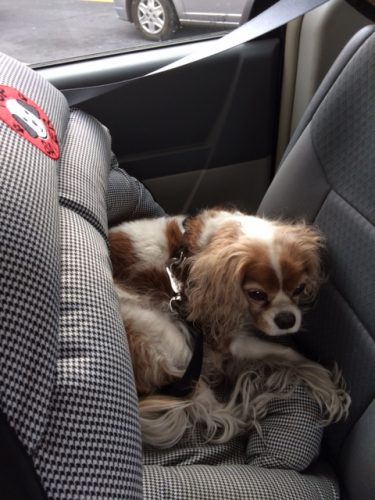
-
PetEgo Jet Set Forma Frame Carrier (with ISOFIX-Latch Connection):
While undeniably handsome and robustly constructed, this carrier presented severe spatial and ergonomic shortcomings. Its largest iteration measures 22 inches in length, 10 inches in width, and 13 inches in height—dimensions marketed by PetEgo as suitable for dogs up to 22 pounds. Practical analysis refutes this claim. Though slightly longer and taller than Chloe’s preferred SturdiBag, it is a full two inches narrower in the main body. For any road trip exceeding a quick trip to the veterinary clinic, stuffing a 22-pound dog into this chassis borders on inhumane. Furthermore, the carrier’s minimalist mesh paneling severely restricts ventilation and external visibility, two vital components for reducing canine travel anxiety. -
Sleepypod Mobile Pet Bed (with PPRS Handilock):
Universally lauded as a masterpiece of pet engineering, the Sleepypod line boasts impeccable ventilation and stellar crash-test credentials. However, spatial constraints strike again. The largest model, the "Sleepypod Medium," measures 13 inches in height with a 17-inch outer circular footprint. Accounting for internal padding and structural walls, the usable interior space shrinks by one to two inches—creating a snug, restrictive environment even for a compliant 15-pound dog. For dogs scaling 10 pounds or under, the Sleepypod remains an unreserved recommendation; for larger small dogs, it simply falls short.
Phase III: Discovering the AirPupSaver and Field Implementation
Prompted by reader recommendations from the Dog Jaunt community, the investigation shifted to an unranked market alternative: the AirPupSaver. Though absent from the official 2015 CPS testing matrix, the manufacturer’s independent crash-test documentation warranted a closer look.
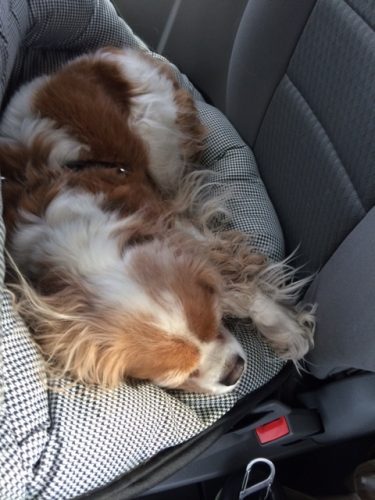
Available in two distinct sizes—the AirPupSaver 25 (engineered for dogs up to 25 pounds) and the AirPupSaver 45 (for dogs up to 45 pounds)—both variants were acquired to test real-world application, portability, and scaling. Over a grueling 30-day trial period, these beds were installed across varied automotive interiors to document performance under operational strain.
Supporting Context & Metrics: Design Mechanics and Comparative Analysis
The "Baseball Mitt" Structural Philosophy
The core engineering of the AirPupSaver diverges sharply from traditional hard-shell carriers or fabric baskets. It operates on a conceptual framework resembling a puffy, oversized baseball mitt:
- The Palm: The dog rests securely within the deep, heavily padded base of the mitt, anchored directly via an integrated harness-and-strap system.
- The Fingers: The raised, forward-facing perimeter acts as an aerodynamic catch-barrier. In the event of a frontal collision or abrupt deceleration, this inflated structure absorbs and cradles the forward-hurtling mass of the animal.
To achieve this kinetic resilience, the "fingers" section incorporates two or three inflatable air chambers (depending on the model size chosen). Using a manufacturer-provided air pump, owners pressurize these chambers to establish a dense, resilient cushion designed to mitigate blunt-force trauma.
Spatial and Ergonomic Performance Metrics
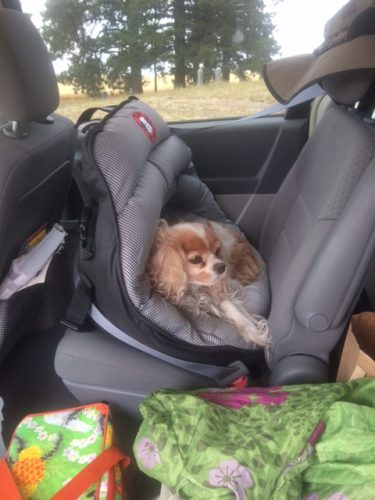
- AirPupSaver 25: Ideal for dogs of Chloe’s precise stature (15 lbs). It provides adequate room for postural adjustments without creating excess dead space that encourages unsafe sliding during sharp turns. It omits top tether straps, simplifying installation.
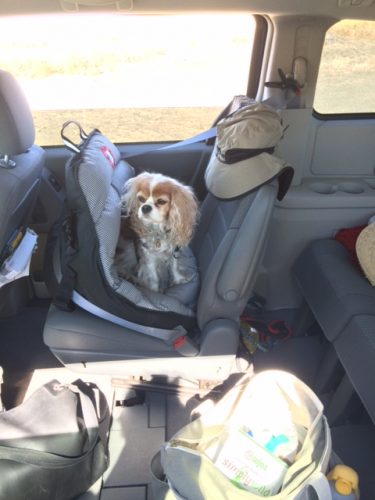
- AirPupSaver 45: Substantially larger, featuring additional overhead tether straps anchoring the top of the "mitt" to seat-back LATCH anchors. While designed to accommodate larger animals, field testing revealed that a 15-pound dog does not utilize the extra volumetric capacity, instead choosing to curl into a tight ball. Furthermore, the larger chassis introduces severe installation complexity and swallows valuable cabin real estate.
| Restraint Model | Max Weight Capacity | Ventilation Rating | Crash Test Validation | Installation Complexity | Best Suited For |
|---|---|---|---|---|---|
| PetEgo Pet Tube | Variable | Moderate | Failed (Tested) | Low | Low-speed transit (Not Recommended) |
| PetEgo Jet Set Forma | 22 lbs (Realistic: 15 lbs) | Poor (Minimal Mesh) | CPS Certified (2015) | Moderate | Toy breeds (<12 lbs) |
| Sleepypod Medium | 15 lbs (Snug) | Excellent | CPS Certified (2015) | Low | Tiny breeds (<10 lbs) |
| AirPupSaver 25 | 25 lbs | Excellent (Open-Air) | Independent Testing | High (First-time) | Small-to-Mid dogs (10–25 lbs) |
| AirPupSaver 45 | 45 lbs | Excellent (Open-Air) | Independent Testing | Very High | Medium dogs (25–45 lbs) |
Operational Realities: Installation Trials and Daily Use
While the safety architecture of the AirPupSaver inspires confidence, the transition from box to operational readiness is fraught with friction. Manufacturer documentation—comprising printed instruction packets, a seatbelt clamp, an inflation pump, and online video tutorials—fails to provide a singular, comprehensive roadmap for seamless installation.
Crucial Installation Insights
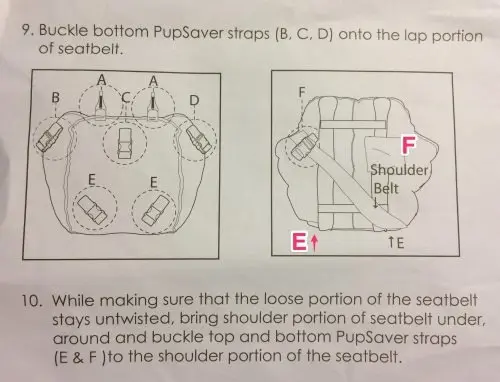
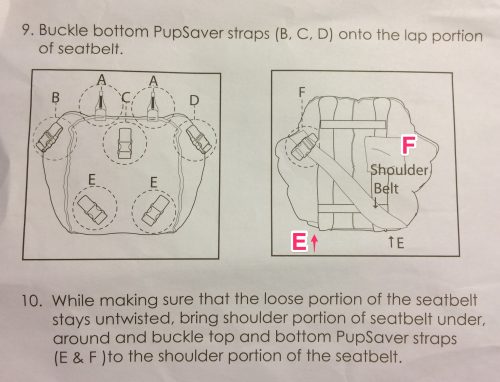
- Anchor Routing Complexity: The AirPupSaver 25 relies on two lower hooks (designated as clips "A" on structural charts) that fasten directly to the vehicle seat’s LATCH bars.
- Seatbelt Taming: Unlike systems with independent top tethers, the AirPupSaver 25 relies primarily on the vehicle’s standard shoulder/lap seatbelt. This belt must be threaded through a plastic guide on the far shoulder, routed through a foreground clip, and secured near the floor buckle using a heavy-duty seatbelt clamp. This clamp is vital: it grants the precise amount of structural play required for the safety system to activate during a crash while preventing the belt from dragging the top of the bed down onto the dog.
- The AirPupSaver 45 Overhead Burden: In contrast, the 45-pound model incorporates two additional overhead straps stretching from the bed’s handle across the seat-back to the rear passenger LATCH anchor. This creates a more rigid installation, but significantly impedes cabin accessibility.
Day-to-Day Operational Friction
Living with the AirPupSaver requires altering daily habits:
- Loading Dynamics: Securing a squirming dog into the internal harness takes approximately 30 seconds. In urban environments (such as street-parking in Seattle), this requires the owner to lean deeply into the vehicle interior, leaving their lower half exposed to passing traffic. The pragmatic workaround involves crawling into the back seat alongside the pet.
- Permanence of Installation: Unlike the Pet Tube—which could be unclipped from a headrest and tossed into the trunk or flattened into a pancake—the AirPupSaver is essentially a permanent cabin fixture. Its intricate routing makes removing and reinstalling it on a whim impractical.
- Pneumatic Maintenance: The inflatable air channels demand vigilant monitoring. If air pressure drops, the "fingers" fold inward like a soft taco, a sight that visibly unnerves an occupant like Chloe. Keeping the air pump permanently stowed in the vehicle glovebox is non-negotiable.
- Harness Sizing Discrepancies: A critical logistical warning emerged regarding the included harness. While promoted as part of the kit, the provided XS harness runs exceptionally large. A 15-pound dog requires maximum strap tightening to achieve a secure fit; smaller dogs will require an aftermarket, heavy-duty crash-tested harness (such as the Solvit small safety harness) featuring a rear-blade attachment point. Note: Buyers must verify whether a harness is bundled with their specific purchase order, as retail packaging variations exist.
Future Outlook: The Evolution of Canine Automotive Safety
The journey from the failed PetEgo Pet Tube to the AirPupSaver highlights a broader maturation within the pet travel industry. Consumers are no longer willing to accept aesthetic convenience at the expense of empirical safety. Independent testing regimens, consumer advocacy groups, and transparent manufacturer crash-data disclosures are slowly reshaping the market.
However, significant hurdles remain for manufacturers aiming to capture the "larger small dog" demographic. Future iterations of canine car restraints must prioritize:
- Simplified Quick-Release Latch Systems: Reducing the multi-step belt-clamping and hook-routing process to enable effortless transfer between family vehicles.
- Integrated Pneumatic Auto-Inflation: Moving away from manual hand pumps toward self-inflating smart chambers that maintain optimal structural rigidity automatically.
- Ergonomic Visibility: Designing perimeter barriers that maintain high-impact crash protection without entirely blocking the dog’s external field of view or the driver’s rear-view monitoring lines.
Until a universally praised, CPS-certified soft carrier accommodates the 15-to-25-pound weight class with uncompromised internal volume, the AirPupSaver stands out as a highly viable, rigorously tested alternative. For pet parents plagued by anxiety after viewing catastrophic crash test footage of inferior beds, the AirPupSaver delivers a priceless commodity: the verifiable, reassuring knowledge that our most vulnerable traveling companions are truly secure.