
Executive Overview
Across the vast expanse of the United States’ maritime territories lies a hidden network of blue frontiers: a collection of marine national monuments and national marine sanctuaries that serve as the nation’s ultimate line of defense for oceanic preservation. From the immense, remote coral atolls of the Northwest Hawaiian Islands to the bustling, tidepool-rich coastlines of California, these protected waters embody a critical intersection of ecological stewardship, historical preservation, and sustainable economic vitality.
Altogether, the United States boasts five marine national monuments and 18 national marine sanctuaries. This sprawling network welcomes upwards of 42 million visitors annually, balancing public recreation, scientific research, and traditional cultural uses with strict conservation protocols. Yet, beyond their recreational and aesthetic appeal, these aquatic preserves represent indispensable habitats for vulnerable marine wildlife—most notably, plummeting global seabird populations—while acting as powerful economic engines that pump hundreds of billions of dollars into the national economy.
As global oceans face unprecedented stressors, including climate change, warming temperatures, acidification, and overfishing, the role of marine sanctuaries and monuments has shifted from a localized conservation strategy to an urgent global necessity. This comprehensive report examines the historical foundations of these protected areas, explores their vital role in shielding migratory seabirds and marine ecosystems, details the economic and cultural frameworks sustaining them, and outlines the critical future outlook for America’s aquatic heritage.
Detailed Chronology: The Evolution of Marine Conservation in the United States
The safeguarding of America’s marine and coastal treasures did not happen overnight; it is the product of more than a century of legislative foresight, executive action, and evolving ecological awareness.
1906: The Foundation of Presidential Protection
The legal bedrock for America’s most remote and awe-inspiring marine monuments was established with the passage of the Antiquities Act of 1906. Originally signed into law by President Theodore Roosevelt to combat the looting of Native American ruins and artifacts in the American Southwest, the Act granted the president sweeping unilateral authority to designate public lands and waters featuring historic landmarks, historic and prehistoric structures, and other objects of historic or scientific interest as national monuments. Decades later, visionary conservationists and forward-thinking executives realized that this statute applied equally to submerged lands and pelagic ecosystems, paving the way for the creation of massive offshore marine monuments.
The Late 20th Century: The Rise of Marine Sanctuaries
While the Antiquities Act allowed for rapid executive protection, a complementary legislative framework emerged to manage coastal and oceanic regions through public participation. The creation of the National Marine Sanctuary system established a longer, more deliberate public and legislative process. Unlike monuments—which are frequently designated swiftly via executive order to avert immediate ecological threats—sanctuaries are carefully vetted through extensive public hearings, environmental impact reviews, and congressional consultations. Once established, these waters remain public property, managed collaboratively to harmonize human activities with long-term ecological health.
2006: The Birth of Papahānaumokuākea
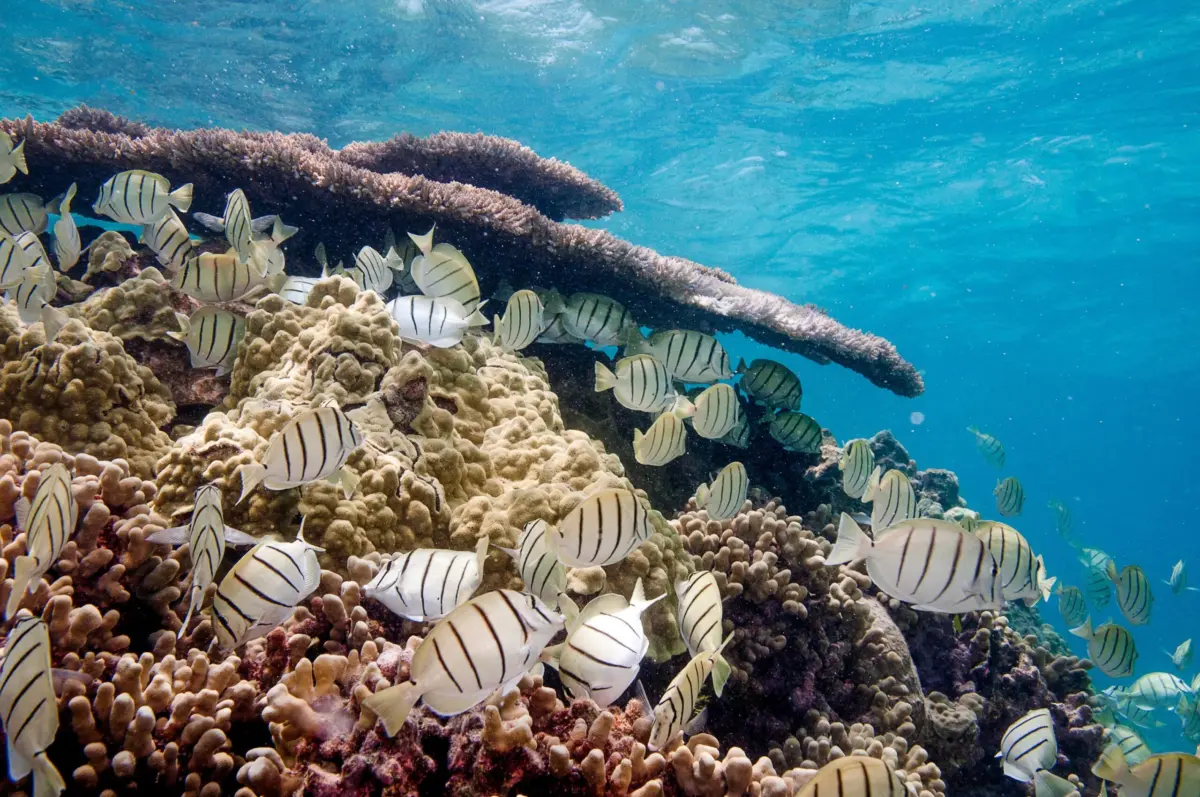
A monumental milestone in global conservation occurred in June 2006, when President George W. Bush established the Northwestern Hawaiian Islands Marine National Monument (later renamed Papahānaumokuākea Marine National Monument). Spanning an incomprehensible expanse of ocean, the monument initially protected nearly 140,000 square miles of pristine coral reefs, seamounts, and deep-sea habitats. Later expanded under the Obama administration, Papahānaumokuākea became one of the largest ecologically protected areas on the planet. To put its scale into perspective, if laid out across the continental United States, Papahānaumokuākea would stretch all the way from Manhattan, New York, to Omaha, Nebraska.
2008–Present: Expansion and Diversification
In the years following Papahānaumokuākea’s designation, successive administrations utilized the Antiquities Act to protect other vital marine spaces, including the Marianas Trench National Monument—protecting the deepest known location on Earth—and the Flower Garden Banks National Marine Sanctuary off the coasts of Texas and Louisiana. Concurrently, historical preservation took center stage with the establishment and expansion of sites like Maryland’s Mallows Bay-Potomac River National Marine Sanctuary, which preserves the eerie, sunken skeletal remains of over 100 World War I wooden steamships. Today, this federal network spans from the frigid waters of the Arctic approaches to the tropical reefs of the Pacific and Caribbean, reflecting a maturing national commitment to holistic ocean management.
Supporting Context & Metrics: The Ecological and Economic Pillars
To truly grasp the significance of America’s marine monuments and sanctuaries, one must evaluate the hard data regarding biodiversity loss, economic contribution, and ecological interdependency.
The Seabird Crisis: A Global Barometer of Ocean Health
While whales, dolphins, and sea turtles often capture the public imagination, marine protected areas serve a particularly vital function for an endangered group of animals: seabirds.
Seabirds are widely recognized by marine biologists as apex bio-indicators; their health directly reflects the overall productivity and stability of the marine food web. However, these avian populations are suffering a catastrophic, systemic collapse. A landmark study published by the University of British Columbia revealed that the global seabird population plummeted by a staggering 70 percent between 1950 and the mid-2010s—representing a loss of more than 230 million individual birds.
Cold-climate and Arctic species, such as the Arctic Tern and the Arctic Skua, have experienced some of the steepest population crashes. Meanwhile, pelagic wanderers like petrels, penguins, and albatrosses continue on a downward trajectory driven by three primary anthropogenic stressors:
- Climate Change: Shifting ocean currents, warming water temperatures, and extreme weather events disrupt the traditional migration patterns and prey availability of foraging seabirds.
- Overfishing and Industrial Forage Fishing: Commercial extraction of small pelagic fish (such as sardines, anchovies, and krill) starves seabirds and their nestlings of the high-energy lipids necessary for survival.
- Fisheries Bycatch: Longline fishing and gillnets inadvertently ensnare and drown millions of seabirds annually.
Marine protected areas act as crucial, localized shock absorbers against these global crises. By shielding critical nesting grounds, foraging hot spots, and migratory stopovers from commercial exploitation, sanctuaries ensure that seabirds have safe havens to reproduce, rest, and rebuild their resilient populations.
Economic Engines of the Blue Economy
Far from being locked-away wildernesses devoid of human interaction, national marine sanctuaries and monuments are dynamic economic powerhouses that sustain coastal communities. According to data compiled by the National Oceanic and Atmospheric Administration (NOAA) and the U.S. Bureau of Economic Analysis, the broader American marine economy supported 2.6 million jobs nationwide and contributed a massive $511 billion to the national GDP.
Sanctuaries draw millions of eco-tourists, scuba divers, recreational fishers, surfers, and wildlife photographers every year. These visitors patronize local hotels, charter boat operators, dive shops, and restaurants, proving that conservation and economic vitality are not mutually exclusive, but rather mutually reinforcing.
Co-Management and Indigenous Stewardship
The ecological resilience of these waters is deeply intertwined with human history. Many national marine sanctuaries and monuments are managed in close coordination with Native American tribes, Indigenous communities, and Native Hawaiians. These groups contribute centuries of generational ecological knowledge, traditional management practices, and deep spiritual reverence for the sea. Integrating Indigenous leadership into modern marine management ensures that these waters are treated not merely as natural resources to be managed, but as ancestral homelands deserving of profound respect and protection.
Official Statements and Perspectives
The governance and philosophical underpinning of marine monuments and sanctuaries rely on a collaborative framework between federal agencies, conservation scientists, and local stakeholders.
Federal oversight is primarily shared between the U.S. Fish and Wildlife Service (USFWS) and the National Oceanic and Atmospheric Administration (NOAA). In joint mission statements regarding these spaces, agency leadership continually emphasizes the delicate balance required to protect irreplaceable national assets while encouraging public access and scientific inquiry.
- Balancing Access and Protection: NOAA administrators frequently highlight that marine sanctuaries are not "no-touch" zones, but rather "multiple-use" environments. Sustainable recreational diving, catch-and-release fishing, and educational excursions are actively encouraged, provided they do not compromise the integrity of the underlying ecosystems.
- The Scientific Mandate: Marine biologists and researchers view national monuments as living laboratories. Because these areas are shielded from intensive industrial fishing and seabed mining, they provide baseline data on how healthy, unperturbed ecosystems function—offering scientists an invaluable control group against which to measure the impacts of global climate change on unprotected waters.
- Cultural Preservation Voices: Indigenous leaders and cultural practitioners stress that marine conservation must acknowledge human history. Representatives from Native Hawaiian cultural councils have repeatedly emphasized that protecting places like Papahānaumokuākea is an act of honoring genealogy and ancestral ties to the ocean, noting that the health of the coral reefs and the abundance of pelagic life reflect the spiritual well-being of the human communities connected to them.
Future Outlook: Challenges and Horizons for America’s Waters
As we look toward the mid-21st century, America’s marine sanctuaries and national monuments stand at a pivotal crossroads. The decisions made today regarding the expansion, funding, and enforcement of these protected areas will dictate the trajectory of ocean health for generations.
1. Scaling Up Protection: The 30×30 Initiative
Driven by international scientific consensus, the United States—alongside dozens of global partners—has committed to the 30×30 goal, aiming to protect at least 30 percent of the nation’s lands and coastal waters by the year 2030. Achieving this ambitious target will require identifying and designating new marine sanctuaries and expanding existing monuments. Proposals to protect culturally and ecologically rich waters off various U.S. coasts are currently moving through public review processes, signaling a growing public appetite for blue-water conservation.
2. Mitigating Climate Change Impacts
Warming seas, ocean acidification, and sea-level rise present existential threats to coral atolls, mangrove forests, and kelp ecosystems. Future management of marine monuments must incorporate climate-resilient strategies, such as creating migratory corridors that allow species to shift their ranges poleward as waters warm. Furthermore, safeguarding carbon-sink habitats—such as seagrass beds and deep-sea sediment reserves—within protected boundaries will play an increasingly vital role in national carbon-mitigation portfolios.
3. Enhancing Enforcement and Technological Surveillance
Spanning thousands of square miles of open ocean, marine monuments face significant vulnerabilities to illegal, unreported, and unregulated (IUU) fishing. Moving forward, the effectiveness of these protected areas will depend heavily on technological modernization. The integration of satellite-based vessel monitoring systems (VMS), autonomous drone surveillance, and artificial intelligence-driven data analysis will allow federal authorities to monitor vast maritime territories in real-time, deterring poachers and safeguarding vulnerable wildlife from illicit extraction.
Conclusion
America’s marine national monuments and national marine sanctuaries are far more than lines drawn on a nautical map; they are the life-support systems of our oceans, the guardians of our maritime history, and the anchors of thriving coastal economies. From the soaring albatrosses of Papahānaumokuākea to the sunken steel-and-wood hulls of the Potomac River, these blue frontiers remind us of our profound connection to the sea. By fiercely defending these aquatic sanctuaries against modern threats, the United States secures not only a resilient ecological future, but a lasting legacy for all who depend on the health of the global ocean.