
Executive Overview
In the high-stakes, fast-paced environment of professional pet grooming, emergencies can strike without warning. For most pet care professionals, the greatest fear is encountering a life-threatening medical crisis on the salon floor. However, preparedness transforms panic into precision. On August 3, 2020, a dramatic incident at a local pet styling salon underscored the vital importance of certified emergency response training when a small dog suddenly lost consciousness mid-groom.
Thanks to the immediate, textbook application of Pet Tech CPR and First Aid protocols, a potential tragedy was averted. The harrowing event, captured entirely on newly installed security cameras, highlights how rigorous, hands-on training empowers pet care specialists to take decisive, life-saving action. This report details the sequence of events, examines the medical findings following the incident, explores the reactions of the pet parents and veterinary staff, and emphasizes the broader industry implications regarding pet safety education, staff accountability, and the absolute necessity of professional emergency preparedness in the pet care sector.
Detailed Chronology: The Incident Unfolds
The day began like any other at the busy grooming salon. Staff members were attending to their scheduled appointments, moving through the routine tasks of washing, drying, and styling various breeds. Among the canine clients that day was Max, a dog with a history of behavioral challenges that had previously resulted in him being dismissed from multiple other grooming facilities in the local area.
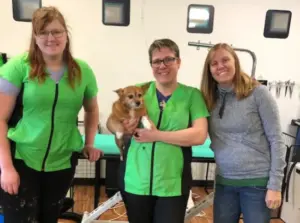
Max was under the care of Elizabeth, one of the salon’s resident groomers. Without warning, while the grooming session was underway, Max suffered a sudden medical crisis, losing consciousness and becoming unresponsive. In high-stress situations like this, seconds mean the difference between life and death. Fortunately, the salon’s leadership and staff were equipped with the knowledge and muscle memory instilled by professional training programs.
Upon realizing Max was unresponsive, immediate action was taken. Trained personnel quickly stepped in to initiate emergency protocols, including pet CPR and airway management. The dramatic intervention was captured on video, showing the precise moment staff members mobilized to save the animal’s life.
As the emergency measures were applied, a critical turning point occurred. While attempting to clear and check the dog’s airway—specifically pulling his tongue out past his canines—Max showed his first sign of a response: he flinched. That small muscular reaction signaled that the emergency measures were working and that the dog was beginning to regain neurological function.
"When you see me pick him up and say ‘get my keys,’ it’s because when I went to pull his tongue out past the canines, he flinched," recalled Lara, the salon owner, recounting the tense moments on camera. "He started coming to after that and was totally awake en route" to the veterinary clinic.
The prompt intervention prevented an irreversible outcome. By the time Max and the staff arrived at the local veterinary hospital, the dog was fully conscious and alert, showcasing a miraculous recovery directly attributable to the swift, composed response of the grooming team.
Supporting Context & Metrics: Unraveling the Cause
Following the incident, Max was immediately transported to a veterinary facility for a comprehensive medical evaluation. While emergency CPR and chest compressions are vital for restoring circulation, they also carry the risk of physical trauma, necessitating a thorough post-crisis examination.
Veterinary Findings and Diagnostics
The attending veterinary team performed a series of diagnostic tests, including chest and rib X-rays to assess any potential skeletal or internal soft-tissue damage resulting from the chest compressions administered during the emergency response. Remarkably, the X-rays revealed that Max’s ribs and internal structures were entirely normal, a testament to the precision and controlled force used during the CPR administration.
However, the diagnostics uncovered a significant underlying medical anomaly. Upon examining the airway and thoracic inlet, the veterinarian discovered that Max’s trachea appeared abnormally small as it descended toward the lungs. This congenital or structural narrowing of the windpipe is believed to have been the primary contributing factor and underlying root cause of Max’s sudden loss of consciousness. The physical stress of the grooming environment, combined with his anatomical predisposition, likely triggered the sudden respiratory compromise.
The Role of Salon Surveillance
An intriguing element of the incident was the presence of newly installed closed-circuit security cameras. Having been installed just one week prior to the event, the surveillance system served an entirely unexpected purpose. While salon owners typically install cameras to monitor property, ensure general security, and protect against unfounded liability claims, this system provided an objective, frame-by-frame record of the medical emergency.
Upon reviewing the footage, salon management was able to conduct a thorough internal review. "We had just installed cameras the week before, and upon review, I can say 100% she did nothing wrong," Lara stated, defending her co-worker Elizabeth. "I’m SO glad I had the cameras, if only for me to be able to know what took place. I got the cameras mainly to protect the salon, but this showed another reason to have them."
This objective review protected a staff member from unwarranted blame, validated the salon’s operational integrity, and provided a clear educational tool for analyzing how the team handled the crisis.
Official Statements and Stakeholder Reactions
An incident of this magnitude ripples through everyone involved—from the grooming staff and the business owner to the veterinary professionals and the pet parents themselves. Each stakeholder’s perspective sheds light on the broader ecosystem of pet care and emergency response.
The Salon Owner and Staff
For Lara, the owner who spearheaded the emergency response, the event was a validation of her commitment to continuous education. Her primary concern throughout the ordeal was the well-being of the dog and the emotional state of her team. Elizabeth, the groomer who was working on Max when he collapsed, was understandably shaken by the experience. However, working in an environment that values knowledge, composure, and mutual support prevented panic from turning into workplace toxicity.
Regarding Max’s future grooming care, Lara noted a practical boundary to ensure safety moving forward: "In the future, only I will be grooming him, just to be on the safe side."
The Veterinary Perspective
The interaction with the veterinary office highlighted the initial misunderstandings that can occur when emergency cases arrive at a clinic unexpectedly. Initially, the examining veterinarian—who was not Lara’s primary, long-term veterinary partner—was skeptical and confused by the chaotic arrival.
However, the dynamic shifted dramatically once Lara’s regular veterinarian arrived at the clinic. The primary veterinarian, who frequently refers difficult-to-handle or special-needs dogs to Lara’s salon because of her professional capabilities, immediately recognized the gravity of the situation. She embraced Lara, validated her actions, and discussed several other challenging clients she had previously entrusted to the salon. Once the full context was explained, the examining veterinarian’s demeanor shifted to one of appreciation and respect.
The Pet Parents’ Reaction
One of the most remarkable aspects of the ordeal was the reaction of Max’s owners. Knowing that their dog had behavioral challenges and had previously been “fired” from multiple other grooming facilities across town, they approached the incident with pragmatism and immense gratitude.
When informed of the emergency, the owners’ immediate, telling question was: "Did he bite someone?" This reflects their awareness of his difficult temperament. Upon learning the truth—that their dog had suffered a medical collapse and was saved by the quick thinking of the grooming staff—they were entirely understanding. Not only were they profoundly glad that the staff knew how to respond, but they also insisted on paying for the grooming work that had been completed, demonstrating deep appreciation for the salon’s professionalism.
Future Outlook: The Imperative of Hands-On Pet Safety Training
The miraculous survival of Max serves as a powerful case study for the entire pet care industry. It highlights a fundamental truth: emergencies do not schedule appointments. Whether in a veterinary clinic, a boarding facility, a mobile grooming van, or a bustling salon, pet care professionals are often the first line of defense when a companion animal experiences a medical crisis.
The Superiority of Hands-On Learning
In the commentary provided by Thom Somes—known as "The Pet Safety Guy," President, and Co-Founder of Pet Tech—the incident validates the core philosophy of professional pet safety instruction. Somes emphasizes that digital courses and reading materials alone are insufficient for mastering life-saving interventions.
"This is a perfect example of why a hands-on, in-person training (skill practice with coaching) has always been the ideal way to learn the skills and techniques of pet CPR & First Aid," Somes noted. Programs like those offered by Pet Tech are specifically designed to build muscle memory and situational awareness, ensuring that when panic threatens to take over, trained professionals can instinctively access their skills and jump into action.
Raising Industry Standards
As the pet care industry continues to expand, consumer expectations regarding safety and professionalism are rising. Pet parents are increasingly looking for facilities where staff hold active certifications in pet CPR and first aid. Incidents like the one involving Max demonstrate that having certified personnel on-site is not merely a marketing resume-builder, but an essential operational safeguard.
Moving forward, industry advocates are pushing for widespread adoption of mandatory emergency response training for all commercial pet care workers. By bridging the gap between routine grooming and emergency medical intervention, salons can drastically reduce risk, protect animals with underlying health conditions, and provide total peace of mind to pet parents.
Ultimately, Max’s story is a triumphant reminder that preparation saves lives. Through certified training, calm leadership, and a steadfast dedication to animal welfare, pet care professionals can transform potential tragedies into stories of hope, resilience, and survival.