
Executive Overview
Veterinary medicine stands at a transformative crossroads. With approximately one in four dogs developing cancer during their lifetime, the pressure for earlier, more precise diagnosis has never been more urgent. Over the past two decades, the veterinary field has evolved at a dizzying pace. The advent of advanced laboratory testing, artificial intelligence (AI), and high-resolution, multi-modal imaging promises a future where diseases are intercepted before clinical signs even manifest, and treatments are tailored down to the individual metabolic profile of a patient.
Yet, as Peter S. Chapman, BVetMed, DECVIM-CA, DACVIM, MRCVS—medical director at Red Bank Veterinary Hospital in Tinton Falls, N.J.—points out, technology alone does not eliminate clinical uncertainty. The hardest question facing modern practitioners is not whether a new test can detect an abnormality, but whether uncovering that information will meaningfully improve the life of the patient sitting in front of them.
This comprehensive examination explores how cutting-edge tools, such as Positron Emission Tomography combined with Computed Tomography (PET/CT) and AI-driven diagnostic platforms, are reshaping small animal practice. By examining real-world clinical scenarios, the integration of artificial intelligence, and the vital role of human mentorship, this report underscores a central thesis: the true measure of veterinary advancement lies not in the sophistication of the machinery, but in how skillfully human judgment, empathy, and collaboration direct it.
Detailed Chronology: The Evolution of Diagnostic Precision
To understand the weight of contemporary veterinary tools, one must trace how diagnostic capabilities have shifted from reactive symptom management to proactive surveillance.
The Era of Anatomical Limitation
Historically, veterinary diagnostics relied heavily on baseline blood panels, survey radiography, and exploratory surgery. While these methods successfully identified advanced diseases, they frequently fell short in the early stages of pathology. A radiograph could reveal an enlarged organ, but it could rarely differentiate between inflammation, benign hyperplasia, and early-stage malignancy without an invasive biopsy. Consequently, veterinarians often intervened late in a disease’s progression, when therapeutic options were narrower and systemic burdens were higher.
The Rise of Multi-Modal Imaging
The turn of the 21st century marked a paradigm shift. Ultrasound and standard Computed Tomography (CT) became standard fixtures in specialty referral hospitals, offering detailed anatomical views that revolutionized surgical planning and localized disease. However, anatomy alone tells only half the story. A tumor’s physical size does not always correlate with its biological aggressiveness or metabolic activity.
Enter PET/CT: Merging Structure with Function
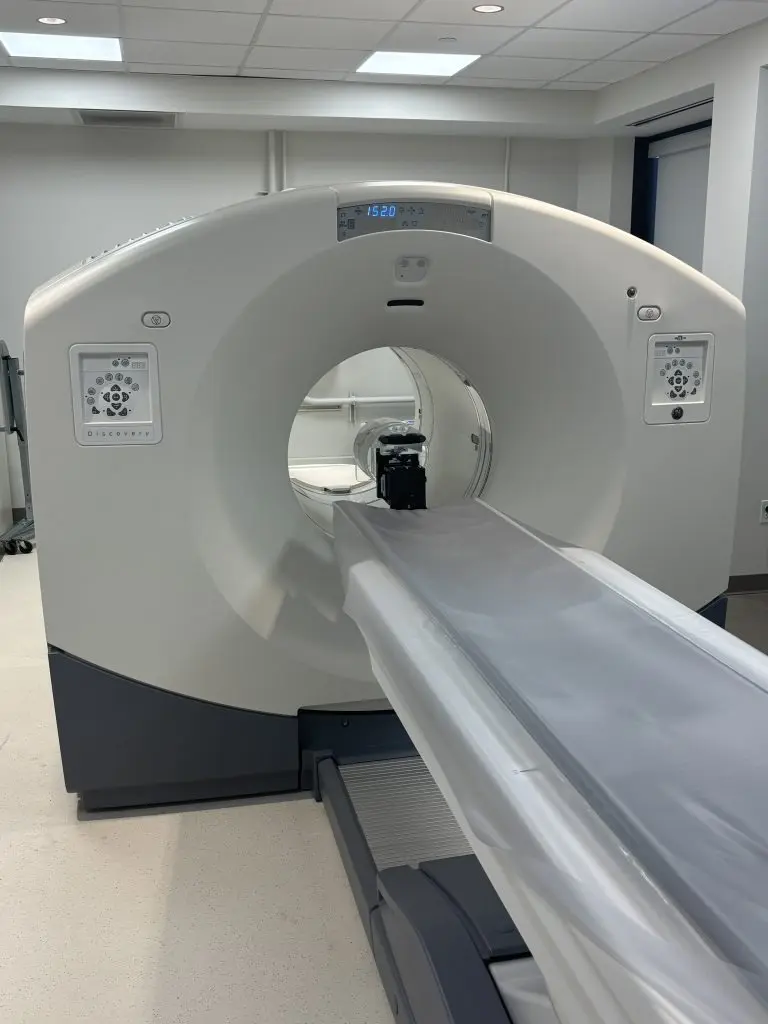
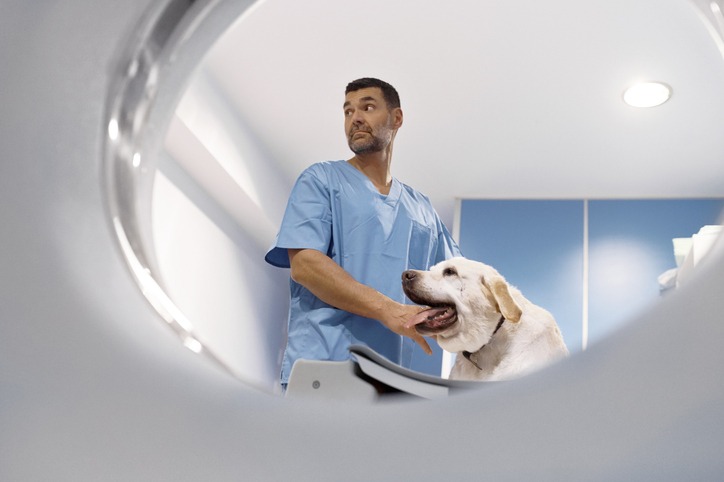
The integration of PET/CT into veterinary oncology bridges the gap between anatomy and physiology. CT scans provide high-resolution structural maps detailing the exact size and location of an abnormality. Simultaneously, PET scans utilize radiopharmaceutical tracers to detect cellular metabolic activity.
In recent years, this technology has trickled down from human medicine into advanced veterinary centers like Red Bank Veterinary Hospital. No longer confined to academic research, PET/CT is actively redefining staging, clarifying ambiguous lesions, and—crucially—preventing unnecessary interventions.
Supporting Context & Metrics: Case Studies in Clinical Decision-Making
The value of advanced diagnostics is best illustrated through real-world application. Two recent patient profiles at Red Bank Veterinary Hospital highlight how PET/CT can steer clinicians in radically different directions based on metabolic findings.
Case One: The Incidental Discovery and Early Intervention
An older dog underwent a PET/CT imaging study for an unrelated clinical indication. While the scan successfully investigated the primary issue, it also captured a small, entirely unsuspected subcutaneous lesion that had not yet caused clinical signs or physical discomfort.
Prompted by the imaging data, the clinical team performed an excisional biopsy. Histopathology confirmed the abnormality to be a mast cell tumor. Because the lesion was detected in its absolute infancy—before regional metastasis or local tissue invasion could occur—the veterinary team was able to provide a timely, definitive, and ultimately curative intervention. This case exemplifies the ideal promise of early screening: catching pathology at a stage where the therapeutic burden on the patient is minimal, and the prognosis is exceptionally favorable.
Case Two: Avoiding the Trap of Over-Intervention
Conversely, advanced diagnostics can be equally powerful when they tell a clinician not to operate. Another canine patient presented with an atypical cystic liver lesion. Given the visual appearance of the mass on preliminary ultrasounds, clinicians faced a high-stakes decision regarding a potentially invasive, high-risk surgical liver biopsy.
Before committing the patient to the operating table, the team utilized PET/CT to evaluate the metabolic activity of the cyst. The scan revealed a complete absence of radiopharmaceutical uptake within the lesion, indicating a very low likelihood of aggressive or malignant disease.
Armed with this metabolic reassurance, the veterinary team and the pet owner opted to forgo the high-risk surgery in favor of active monitoring. Subsequent, non-invasive ultrasound examinations have shown the lesion to remain entirely stable over time, validating the conservative approach. In this instance, technology successfully protected a patient from an unneeded, hazardous surgical procedure.
Official Perspectives: The Human Element in High-Tech Medicine
Despite the awe-inspiring capabilities of modern equipment, veterinary leaders emphasize that technology must remain a servant to clinical judgment, never its master.
Navigating the Client Conversation
Every veterinary patient exists within a unique family ecosystem. Two dogs may walk through the door with identical diagnoses, yet their treatment plans may diverge drastically based on the animal’s age, temperament, baseline quality of life, and the family’s emotional, physical, and financial circumstances.
Dr. Chapman stresses that advanced diagnostics should serve to empower—not overwhelm—client communication. Before ordering an expensive or high-tech diagnostic workup, veterinary teams must weigh several critical questions:
- Will this test result change the immediate or long-term therapeutic plan?
- Does the information gained justify the financial and emotional cost to the family?
- How will the findings align with the patient’s anticipated quality of life?
- Are we prepared to act on the results once we receive them?
Answering these queries ensures that care remains holistic. The most technologically advanced option is rarely the default correct choice; rather, technology should facilitate shared decision-making between the veterinary team and the pet owner.
Artificial Intelligence: Assistance, Not Replacement
As AI infiltrates veterinary medicine—assisting with diagnostic imaging support, medical record documentation, client communication, and administrative triage—it brings both immense efficiency and notable caveats.
By streamlining administrative burdens, AI frees up clinicians to spend more direct, quality time with patients and their human families. However, artificial intelligence is not infallible. AI outputs can be incomplete, systemically biased, or outright incorrect. Veterinary professionals must evaluate every algorithmic suggestion through the lens of a complete clinical picture.
Data privacy, human oversight, and rigorous verification are non-negotiable. This highlights an urgent educational gap within the industry. A landmark 2026 study surveying 673 veterinary workers revealed a striking dichotomy: while 72.3 percent of respondents correctly believed that AI would fundamentally reshape the profession, 90.5 percent reported receiving little to no formal training on how to utilize these systems responsibly.
The data makes it clear: while AI will redefine how veterinary professionals work, accountability, empathy, and clinical judgment must remain firmly anchored in human hands.
Future Outlook: Investing in People, Not Just Hardware
Equipment ages, software updates become obsolete, and yesterday’s state-of-the-art scanner inevitably gives way to tomorrow’s model. Physical infrastructure has a finite shelf life. Therefore, the long-term health of the veterinary profession relies entirely on an investment in human capital.
The Imperative of Mentorship and Education
To harness the power of advanced diagnostics without falling prey to over-testing or misinterpretation, veterinary practices must prioritize mentorship, structured internships, residency programs, and continuous education. Young professionals need dedicated spaces to learn not only how to operate sophisticated machinery, but also when to question its limitations.
Furthermore, robust training strengthens collaborative networks outside the hospital walls. Primary care veterinarians need absolute confidence that when they refer a complex case to a specialty center, the patient will receive collaborative, transparent care. Ultimately, even the most sophisticated PET/CT scanner or AI diagnostic suite holds zero value if the team utilizing it fails to understand the underlying pathophysiology or the human context of the patient.
Conclusion: The Timeless Core of Veterinary Practice
The next major breakthrough in veterinary medicine may very well take the form of a hyper-sensitive liquid biopsy, a quantum-enhanced imaging modality, or a fully autonomous AI diagnostic platform. Yet, the core challenge facing the profession will remain unchanged: knowing when to deploy a tool, when to hold back, and how to guide a devoted pet owner through the labyrinth of difficult medical decisions.
Advanced technology does not replace the veterinarian; it equips them. Its true worth lies in providing clearer data, fostering deeper collaboration, and illuminating a path toward compassionate, individualized care that honors both the science of medicine and the bond between humans and animals.