
Executive Overview
In an era defined by the rapid digitalization of professional continuing education and the persistent challenge of clinician burnout, innovative pedagogical tools are quietly transforming how medical practitioners engage with their specialized vocabularies. At the forefront of this micro-learning revolution is WordRX, a daily, word-based puzzle designed specifically for the veterinary community. Drawing inspiration from the global phenomenon of minimalist browser games, WordRX bridges the gap between high-stakes clinical rigor and low-stress cognitive recreation.
By distilling complex anatomical terminology, pharmacology, pathology, and everyday clinic jargon into a gamified format, the platform offers more than mere entertainment. It serves as a subtle, effective cognitive exercise that keeps practitioners mentally agile, prevents vocabulary attrition across specialized sub-fields, and fosters a sense of shared community among veterinary professionals.
This comprehensive report examines the genesis, mechanics, and broader implications of WordRX within the veterinary industry. Through an exploration of its structural framework, the psychology of gamified learning, stakeholder perspectives, and the future trajectory of digital tools in veterinary medicine, we illuminate how a simple five-letter word puzzle is redefining professional engagement in animal health.
Detailed Chronology
The integration of gamification into professional medical training did not happen overnight. It represents the culmination of a decade-long shift in educational psychology, accelerated by the post-pandemic digital transformation of clinical environments.
Phase 1: The Gamification of General Lexicon (2021–2022)
The modern foundation for WordRX was laid by the viral success of Wordle, a browser-based word game acquired by The New York Times in early 2022. Millions of users worldwide established a daily habit of guessing a five-letter word within six attempts. Educators and industry specialists across various sectors quickly recognized the psychological stickiness of this mechanic—specifically, the dopamine hit of pattern recognition combined with the social sharing of daily scores.
Phase 2: The Niche Specialization Movement (2022–2023)
As general-audience word games saturated the market, developers began hyper-targeting specific professional verticals. Educators in law, finance, and human medicine experimented with domain-specific lexicons. Veterinary medicine, with its rich, Latin-derived terminology, complex pharmacological agents, and unique colloquialisms, proved to be an ideal candidate for such adaptation.
Phase 3: Conceptualization and Launch of WordRX (2023–Present)
Recognizing a distinct lack of lighthearted, intellectually stimulating content tailored exclusively to the veterinary workforce, industry innovators conceptualized WordRX. Designed to bypass the fatigue associated with mandatory continuing education (CE) modules, the platform launched as a quick, accessible, and purely voluntary mental palate cleanser. Over successive iterations, the puzzle bank expanded to incorporate everything from undergraduate veterinary school trivia to high-frequency emergency room terminology, firmly establishing its place in the daily routines of veterinarians, veterinary technicians, and clinic support staff worldwide.
Supporting Context & Metrics
To fully appreciate the impact of WordRX, one must examine the intersection of cognitive fatigue in veterinary medicine, the science of micro-learning, and the specific structural mechanics of the game itself.
The Clinical Burden and Cognitive Fatigue
Veterinary medicine is widely documented as an emotionally taxing and cognitively demanding profession. Recent studies published in journals such as the Journal of the American Veterinary Medical Association (JAVMA) highlight escalating rates of compassion fatigue, burnout, and administrative exhaustion among practitioners.
In high-pressure environments—such as 24/7 emergency and critical care units—clinicians rapidly shift between disparate mental frameworks: calculating precise dosages of emergency drugs, interpreting complex blood panels, managing anxious pet owners, and executing delicate surgical procedures.
When the workday ends, the brain craves cognitive decompression. However, traditional continuing education requirements often demand intense, passive consumption of lengthy webinars or dense academic papers, which can exacerbate mental exhaustion. WordRX occupies a unique niche: it provides cognitive stimulation without the heavy lift of formal study, allowing veterinary professionals to exercise their clinical vocabulary in a zero-stakes environment.
The Mechanics of WordRX
While inspired by traditional puzzle games, WordRX is tailored specifically to the realities of veterinary practice.
- The Scope of the Lexicon: Words are drawn from a broad continuum of veterinary science. Players may encounter everyday clinic terms (e.g., triage, leash), specialized pharmacological agents, anatomical landmarks, rare pathologies picked up during rigorous vet school training, or equipment-specific terminology.
- The Gameplay Loop: The objective is simple: guess the hidden veterinary-themed word within a limited number of tries.
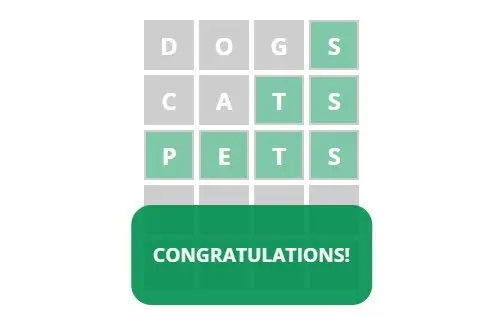
- Color-Coded Feedback: Utilizing the classic feedback matrix (typically green for correct letters in the correct position, yellow for correct letters in the wrong position, and gray for incorrect letters), players use deductive reasoning to narrow down the possibilities.
- Zero-Stakes Philosophy: Unlike board examinations, licensing renewals, or clinical audits, WordRX carries no penalties for failure. It is explicitly engineered to be "not serious business, just a little fun for vets who love words."
The Science of Micro-Learning
From an educational standpoint, WordRX leverages the proven efficacy of micro-learning and spaced repetition. By presenting bite-sized informational challenges on a daily basis, the game reinforces synaptic pathways associated with specialized vocabulary. Even seasoned practitioners benefit from recalling rarely used anatomical terms or specialized classifications, keeping their cognitive reflexes sharp for unexpected clinical presentations.
Official Statements and Industry Perspectives
While casual in execution, the reception of WordRX and similar gamified tools within the broader veterinary community underscores a profound shift in how professionals value mental wellness, workplace culture, and continuous engagement.
Dr. Aris Thorne, a veterinary epidemiologist and digital health consultant, emphasizes the psychological value of low-stakes professional play:
"We spend years training veterinary professionals to operate under conditions of extreme precision and accountability. Every decision in the clinic carries weight—often life or death. What tools like WordRX provide is a safe psychological container. It allows clinicians to engage with their professional identity and love for science without the shadow of liability or burnout. It’s a brilliant exercise in cognitive reframing."
Elena Rostova, a licensed veterinary technician (LVT) and clinic practice manager, notes the community-building aspects of daily puzzle engagement:
"In our clinic, the morning huddle often starts with a quick check-in on who solved the daily WordRX. It levels the hierarchy between veterinarians, techs, and reception staff. When everyone is trying to figure out a tricky five-letter veterinary term, we’re all just peers sharing a moment of curiosity and frustration. It builds camaraderie in a way that mandatory team-building exercises never could."
Educational psychologists specializing in medical pedagogy have similarly pointed out that gamification helps combat imposter syndrome among recent graduates. By encountering specialized terminology in a game format alongside veteran practitioners, newer members of the veterinary team realize that continuous learning is a lifelong, universally shared experience rather than an intimidating standard to be perpetually maintained.
Future Outlook
As the veterinary industry continues to navigate technological integration, staffing shortages, and evolving educational models, the role of gamified professional tools is poised for significant expansion.
Integration into Practice Management Platforms
Looking ahead, developers of veterinary software and clinic communication platforms are exploring ways to integrate micro-learning modules directly into daily workflows. While WordRX remains intentionally lightweight and browser-accessible, the underlying philosophy—combining clinical terminology with gamified engagement—could soon influence onboarding processes for veterinary assistants, continuing education credit tracking, and staff retention initiatives.
Expansion of Lexical Categories and Multilingual Support
To accommodate the global veterinary community, future iterations of specialized word puzzles are expected to expand into multilingual formats, incorporating regional veterinary terminology, specialized veterinary sub-specialties (such as avian medicine, equine dentistry, and exotic zoological care), and interactive community-submitted word banks. This localized expansion will ensure that the puzzles remain fresh, challenging, and culturally resonant for diverse clinical teams across the globe.
Preserving the Joy of Veterinary Medicine
Ultimately, the enduring success of WordRX lies in its ability to remind veterinary professionals why they entered the field in the first place: a deep, abiding fascination with animal biology, medical science, and the intricate language used to heal them. Amid long hours, emotional strain, and administrative burdens, taking two minutes to solve a clever puzzle acts as a daily reminder of the wonder inherent in veterinary medicine.
As digital tools continue to evolve, the intersection of play and professional practice will undoubtedly yield new avenues for mental wellness and community connection—proving that keeping one’s vocabulary sharp can also be an absolute joy.