
Executive Overview
For decades, the dawn of animal life on Earth has been viewed through a relatively narrow, if fiercely contested, window of time. Traditional paleontological frameworks have relied heavily on the sudden appearance of complex, multicellular organisms in the fossil record just prior to the Cambrian Period, spanning roughly 539 to 487 million years ago. Even as molecular clocks—analytical techniques that measure genetic mutations to estimate evolutionary divergence—pushed potential origins back into the Neoproterozoic Era, scientists faced a stubborn hurdle: the fossil record itself.
The central pillar of this constraint rested on exceptionally preserved fossil deposits, most notably the Weng’an Biota in China. Dated to approximately 590 million years ago during the Ediacaran Period, the Weng’an deposits capture microscopic life with breathtaking, cellular-level fidelity. Because paleontologists found no definitive animal fossils within these pristine rocks, a foundational assumption took root: if animals had already existed at that time, such an extraordinary fossilization environment would have captured them. Consequently, Weng’an and similar sites were deployed as definitive chronological speed bumps, setting a strict maximum age for the origin of the animal kingdom.
Now, groundbreaking research published on October 2 in Science Advances has systematically dismantled that foundational assumption. Led by an international team of scientists from the University of Oxford, alongside researchers from the University of California Berkeley, ETH Zürich, and Yale University, the new study reveals that exceptional preservation does not guarantee the capture of early animal life.
By analyzing newly documented, remarkably preserved microfossils from the Kheseen Biota in Mongolia—a site roughly 40 million years younger than Weng’an—the team discovered an identical paradox. Despite housing exquisite microfossils, including intricate acritarchs and embryo-like cell clusters, the Kheseen deposits contain zero definitive animal remains. Yet, we know with absolute certainty that animals populated the Earth elsewhere on the globe during this timeframe, as evidenced by fossil finds in Namibia and South China.
This revelation shatters the logic that underpinned decades of evolutionary timelines. By neutralizing the argument that the absence of fossils in deposits like Weng’an proves the non-existence of animals, the researchers unlocked older chronological constraints for molecular clock analyses. When recalibrated using deposits dating from 850 to 730 million years ago—such as Norway’s Svanbergfjellet Formation, Australia’s Bitter Springs Group, and Arizona’s Chuar Group—the mathematical models pushed the estimated birth date of the animal kingdom backward by a staggering 200 million years.
If this revised timeline holds true, the earliest animals may have originated between 800 and 700 million years ago. This radical shift places the emergence of animal life either immediately before or directly amidst the catastrophic, planet-wide glaciations of the Cryogenian Period, colloquially known as "Snowball Earth." While direct body fossils from this deep antiquity remain elusive, this study fundamentally reshapes our understanding of deep-time paleontology, challenging assumptions and reopening a profound inquiry into how and when complex life truly began.
Detailed Chronology: From the Cambrian Explosion to the Deep Neoproterozoic
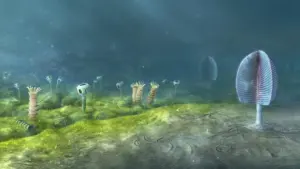
To fully appreciate the magnitude of the recent findings, one must trace the historical timeline of paleontology and evolutionary biology. For generations, the beginning of animal evolution was inextricably linked to the Cambrian Explosion. During this dynamic geological window, nearly all major animal phyla—mollusks, arthropods, chordates, and echinoderms—seemingly burst onto the planetary stage simultaneously.
However, as fossil-hunting techniques evolved and the science of genetics matured in the late 20th and early 21st centuries, evolutionary biologists grew increasingly skeptical of the Cambrian "big bang." Genetic mutations accrue at relatively steady rates over geological timescales. When researchers compared the DNA sequences of living descendants and traced their lineages backward, molecular clocks consistently indicated that the ancestral branches of the animal kingdom (Metazoa) split away from single-celled ancestors hundreds of millions of years before the Cambrian.
This created an enduring friction between two distinct camps: paleontologists pointing to the physical absence of body fossils in pre-Cambrian rocks, and geneticists pointing to the mathematical inevitability of a deeper lineage.
The Ediacaran Anomaly and the Weng’an Biota
As researchers sought physical evidence to bridge this gap, they turned to older Ediacaran rocks. Among these, the Weng’an Biota of South China became a crown jewel of micropaleontology. Formed approximately 590 million years ago, the Weng’an phosphorites preserve fragile biological materials in extreme detail, capturing microscopic algae, bacteria, and complex cellular structures that would normally decay within hours of death.
Because scientists meticulously combed through the Weng’an assemblage and found no trace of animal embryos, sponges, or primitive worms, a consensus emerged: Weng’an served as an evolutionary boundary marker. The governing premise was elegantly simple: absence of evidence is evidence of absence, provided the preservation window is wide enough and clear enough to show what was there. If animals had been roaming the ancient seas 590 million years ago, Weng’an’s exceptionally clear microscopic snapshot should have caught them.
The Kheseen Biota Test
To test the validity of this premise, the international team led by Oxford University turned their attention to Central Asia. The Kheseen Biota in Mongolia represents an exceptional window into Earth’s history, sitting roughly 40 million years younger than the Weng’an Biota.
The research team collected more than 140 samples across multiple strata, including newly discovered, pristine localities. Utilizing high-resolution scanning electron microscopy, the scientists subjected the material to exhaustive morphological analyses. The results were astounding in their preservation quality: the samples yielded exquisite acritarchs—spherical, single-celled microfossils adorned with delicate spines and branching projections—alongside spherical clusters of cells that uncannily mimic modern embryonic development.
Despite this astonishing level of preservation, not a single microfossil could be definitively tied to the animal kingdom.
This finding proved decisive. By the time the Kheseen Biota formed, independent geological and fossil evidence confirms that animals were already alive and swimming or crawling in other marine environments around the world, such as those recorded in Namibia and South China. Yet, the Kheseen deposits remained stubbornly devoid of them.
This paradox dismantled the core defensive wall of the Weng’an argument. If a fossil deposit can be as exquisitely preserved as Kheseen and still miss existing animal populations, then the absence of animal fossils in the older Weng’an deposit can no longer be used as proof that animals had not yet evolved.
Supporting Context & Metrics: Unlocking the 200-Million-Year Shift
With the Weng’an constraint invalidated, the research team was forced to re-evaluate how molecular clock calculations are anchored. Molecular clocks are powerful analytical instruments, but they require calibration points drawn from the physical fossil record to set minimum and maximum boundaries for when lineages diverged.
Re-calibrating the Molecular Clock
Previously, because researchers trusted that Weng’an (590 million years old) marked the absolute dawn of animal life, they restricted their molecular clock models accordingly, forcing the origin of animals to fit neatly into the late Ediacaran framework.
Freed from this artificial boundary, the Oxford-led team looked deeper into the geological record, turning to significantly older sedimentary deposits dating from roughly 850 to 730 million years ago. These included:
- The Svanbergfjellet Formation in Spitsbergen, Norway.
- The Bitter Springs Group in the Amadeus Basin, Australia.
- The Chuar Group of the Grand Canyon in Arizona, USA.
These ancient geological formations are renowned for preserving rich organic-walled microfossils and possess the precise chemical and physical properties required to fossilize delicate biological structures, should they be present. Crucially, no confirmed animal fossils have ever been discovered in these strata. However, because they are no longer viewed as definitive "pre-animal" cutoffs in the same absolute sense, they can serve as older geological constraints for molecular modeling.
By feeding these deeper geological constraints into advanced molecular clock software—which integrates genetic divergence data, fossil dates, and statistical models of evolutionary rates—the mathematical output shifted dramatically. The estimated origin of the animal kingdom cascaded backward by approximately 200 million years, placing the birth of Metazoa firmly in the window between 800 and 700 million years ago.
The Chemical Biomarker Dilemma
This expanded timeframe aligns far more comfortably with other, independent lines of proxy evidence that have long baffled traditional paleontologists. Chief among these are chemical fossils, or biomarkers.
Biomarkers are stable organic molecules derived from the biological tissues of once-living organisms. These chemical signatures can endure in sedimentary rocks long after the soft tissues that produced them have vanished. Organic geochemists have repeatedly identified specific lipid molecules—such as 24-isopropylcholestane—in ancient rocks dating back at least 650 million years. These specific molecular structures are widely considered diagnostic fingerprints of demosponges, some of the most primitive multicellular animals on Earth.
The presence of sponge biomarkers at 650 million years ago created an uncomfortable chronological gap when constrained by the old Ediacaran limits: how could complex chemical signatures of sponges exist if the entire animal kingdom supposedly only burst onto the scene shortly before? The new 800-to-700-million-year timeline neatly resolves this tension, providing a comfortable runway for sponges and other soft-bodied precursors to evolve, diversify, and leave their chemical footprints in deep-time marine sediments long before they ever grew hard skeletons capable of fossilizing into body parts.
The Snowball Earth Connection
Pushing the origin of animals back to this interval introduces a provocative, planet-shaping context: the Cryogenian Period.
Beginning roughly 720 million years ago, Earth plunged into a series of extreme, globally extensive ice ages collectively known as "Snowball Earth." During these episodes, glacial ice sheets marched all the way to the equator, and the global oceans may have been largely capped by thick sea ice, interspersed with hyper-arid landmasses and extreme volcanic activity.
If animals genuinely originated between 800 and 700 million years ago, it means they either predated these planet-wide climatic upheavals or evolved through them. This realization forces scientists to reconsider the relationship between environmental extremity and evolutionary innovation. Rather than acting strictly as an evolutionary bottleneck that sterilized the planet, the environmental stresses of Snowball Earth may have acted as a crucible, driving the early adaptations, cellular signaling mechanisms, and metabolic pathways that allowed complex multicellular life to survive, adapt, and eventually flourish in the aftermath of the thaw.
Official Statements and Academic Insights
The implications of this study reach far beyond a simple recalibration of geological dates; they represent a fundamental shift in how paleobiologists approach the gaps in our planet’s archives.
Senior author Associate Professor Ross Anderson, based at the Museum of Natural History at the University of Oxford, emphasized how thoroughly the Mongolian findings upend previous dogmas.
"The Kheseen Biota breaks the argument that the exceptional microfossils of Weng’an mean we would have seen animal fossils in the assemblage had they existed at the time," Dr. Anderson stated. "The Kheseen microfossils are just as well-preserved, yet animals continue to be absent—despite the fact we know at that point they existed."
Dr. Anderson explained that this absence is likely a product of ecological partitioning or micro-environmental taphonomy—meaning that early animals may simply have lived in habitats distinct from those represented by the specific sedimentary facies preserved at Kheseen and Weng’an, or that the localized post-mortem chemical conditions were hostile to preserving animal tissue.
First author Orin Lole Durbin, who initiated the research as an undergraduate student at Oxford and is now pursuing his PhD at Virginia Tech, struck a note of disciplined scientific caution while acknowledging the revolutionary nature of the findings.
"Pre-Ediacaran body fossils still elude us, and this analysis does not prove that animals existed 800 million years ago," Durbin noted. "However, our new fossil evidence from Mongolia undermines one of the main arguments for restricting animal origins to the Ediacaran interval. Meanwhile, our molecular-clock analyses show how much further back their evolutionary history could extend."
The collaborative effort required input from specialists across continents, uniting sedimentologists, molecular biologists, and electron-microscopy experts. By systematically evaluating over 140 individual rock samples from obscure, poorly charted outcrops in Mongolia, the team set a new methodological standard for testing the limits of microfossil preservation.
Future Outlook: The Ongoing Quest for the First Animals
As the scientific community digests the conclusions published in Science Advances, the hunt for the elusive "first animal" enters an exciting new phase. The old rules of thumb are gone, and paleontologists can no longer rely on clean, convenient fossil cutoffs to neatly demarcate the dawn of complex life.
Multidisciplinary Integration
Moving forward, researchers stress that the search for early animal evolution must transcend traditional fossil-hunting. Unlocking the true history of life on Earth will require a rigorous, multidisciplinary synthesis of multiple independent lines of evidence:
- Exquisite Body Fossils: Continued exploration of under-sampled, pre-Ediacaran sedimentary basins around the globe using advanced imaging technologies.
- Trace Fossils: Looking beyond skeletal remains to find early burrows, trackways, or microbial mat disruptions that indicate active, motile organisms interacting with their environment.
- Biomarkers and Geochemistry: Refining techniques to isolate ancient lipid and isotopic signatures from deep-time rocks without modern contamination, tracing the metabolic footprints of ancient life.
- Ecological Modeling: Reconstructing the paleo-environments of the Tonian and Cryogenian periods to understand where early, soft-bodied organisms were most likely to live and, crucially, under what rare chemical conditions they might have stood a chance at preservation.
As Professor Anderson aptly concluded, until physical body fossils from the pre-Ediacaran period are finally discovered and documented, the exact birth date of the animal kingdom remains wrapped in a veil of scientific uncertainty. Yet, thanks to the pristine microfossils of Mongolia and the rigorous recalibration of molecular clocks, we now know that our planet’s animal history is vastly deeper, richer, and more resilient than we ever dared to imagine.