
Executive Overview
Long before a puppy learns to navigate a crosswalk, walk gracefully on a leash, or guide an individual through a complex and bustling world, an intricate biological and neurological foundation is being laid behind the scenes. In the specialized realm of guide and service dog training, preparation begins not at months of age, but during the earliest, most delicate days of neonatal life. At organizations like Dogs Inc, the journey toward producing confident, resilient, and life-changing service animals starts from day one.
Modern canine science confirms that the first few weeks of a puppy’s life represent a critical window of rapid growth and neural wiring. During this neonatal stage, long before their eyes or ears have even opened, puppies are experiencing profound physiological developments. To harness this window constructively, specialized organizations employ science-based protocols such as Early Neurological Stimulation (ENS). Far from being formal obedience training, ENS introduces mild, controlled sensory and physical challenges designed to stimulate the developing nervous system, kickstarting a lifetime of adaptability, emotional stability, and stress resilience.
While genetics, health, and eventual socialization play massive roles in determining a dog’s temperament, early neurological priming provides an invaluable head start. This in-depth investigative feature explores the science of Early Neurological Stimulation, the chronological milestones of puppy development, the differences between neonatal stimulation and later socialization, and how these foundational weeks forge the ultimate service partners for individuals in need.
Detailed Chronology: From Neonatal Beginnings to Adolescent Maturity
Understanding how a service dog is forged requires tracing their development through distinct, scientifically recognized life stages. Each phase presents unique neurological milestones, behavioral shifts, and developmental opportunities.

The Neonatal Stage (Birth to 2 Weeks)
During the first fortnight of life, puppies exist in a vulnerable, highly dependent state. Completely reliant on their mother and littermates, neonates spend the vast majority of their time sleeping and nursing. At this stage, they cannot see or hear, and they lack the physiological ability to regulate their own body temperature.
Despite their apparent fragility, monumental biological shifts are occurring beneath the surface. The brain and central nervous system are experiencing explosive growth. This is the exclusive window during which Early Neurological Stimulation (ENS) is applied. Because puppies at this age are exceptionally delicate, ENS exercises must be performed strictly by trained professionals or puppy raisers following rigorous, established protocols, ensuring that stress levels remain minimal while neurological benefits are maximized.
The Transitional Stage (2 to 4 Weeks)
As puppies cross the two-week threshold, a dramatic transformation occurs. Their eyes and ears finally open, granting them their first sensory perceptions of the physical world. By approximately four weeks of age, puppies begin to walk, bark, and interact actively with their littermates.
Simultaneously, their primary teeth begin to emerge, marking a physiological transition from exclusive nursing toward soft gruel and, eventually, solid food. This stage broadens their horizons, allowing them to process sights and sounds for the very first time and preparing them for the active exploration of their immediate environment.

The Socialization Period (3 to 12 Weeks)
Often considered the most crucial behavioral window in a dog’s life, the socialization period overlaps with the transitional phase and extends through the third month. During this timeframe, young puppies begin actively engaging with humans, novel sounds, varied surfaces, and other dogs.
By the time a puppy reaches 12 weeks of age, structured exposure to diverse stimuli is vital. Meeting unfamiliar people, traversing different flooring textures, and exploring new environments build profound confidence. Positive associations formed during this window help prevent the onset of fear, anxiety, and reactive behaviors in adulthood, laying the foundation for a friendly, well-adjusted adult dog.
The Adolescent Stage and Fear Periods (6 Months and Beyond)
As puppies mature into adolescence—a phase that can begin as early as six months—they frequently test boundaries, mirroring human teenagers. Between six and 12 months, reproductive maturity is reached. Female dogs typically experience their first heat cycle, while males undergo hormone-driven behavioral shifts.
Crucially, throughout their development, most puppies experience an average of four distinct "fear periods." During these temporary developmental milestones, even familiar objects or sounds may trigger sudden apprehension. Recognizing these predictable phases allows handlers and trainers to introduce novel experiences thoughtfully, utilizing positive reinforcement to guide the dog through potential anxiety triggers without causing lasting trauma.

Supporting Context & Metrics: Decoding Early Neurological Stimulation (ENS)
Originally developed for military canine programs and later adopted by elite guide and service dog organizations, Early Neurological Stimulation involves a series of five distinct, gentle handling exercises performed daily from the third day of life through the sixteenth day.
The Five Core ENS Exercises
Each exercise lasts only three to five seconds per puppy, per day, ensuring that the animal is never overwhelmed:
- Tactile Stimulation: Using a cotton-tip applicator, the handler gently tickles the skin between the puppy’s toes on each foot.
- Head Erect: The puppy is held vertically, supporting its body with both hands so that its head is pointed straight up.
- Head Down: The puppy is held securely with its head pointed downward toward the ground.
- Supine Position: The puppy is held gently on its back, sleeping-position style, with its muzzle pointing toward the ceiling.
- Thermal Stimulation: A damp towel is placed inside a refrigerator or chilled container, and the puppy is placed upon it (feet down) for a brief, mild thermal shift.
The Physiological Impact
The rationale behind these exercises lies in the fact that neonatal canines are primarily responsive to thermal, tactile, and gravitational stimulation. By introducing these mild, controlled stresses during a period of rapid neurological growth, the puppy’s physiological systems are gently challenged.
Documented benefits of this early intervention include:

- Improved Cardiovascular Performance: Enhanced heart rate efficiency and cardiovascular output.
- Stronger Stress Tolerance: Greater resilience when faced with unfamiliar, high-stress environments later in life.
- Enhanced Adrenal System: Improved hormonal responses to everyday environmental challenges.
- Greater Immune System Resistance: Anecdotal and observational data suggest improved overall health resilience.
ENS vs. Socialization: Understanding the Distinction
A common misconception among new puppy raisers is that ENS and socialization are interchangeable terms. In reality, they serve entirely different purposes at entirely different life stages.
ENS is a biochemical and neurological priming mechanism deployed during the neonatal stage when the puppy’s eyes and ears are still sealed. Socialization, conversely, is an active, experiential learning process that unfolds from three to twelve weeks of age and beyond. While ENS primes the hardware of the nervous system, socialization populates that system with real-world data, teaching the puppy how to interpret and interact safely with human society.
Official Statements and Organizational Philosophy
The rigorous application of early development protocols underscores a broader philosophy held by premier working dog institutions. Organizations dedicated to breeding and training elite assistance animals view every stage of a puppy’s maturation as an interconnected link in an unbroken chain of success.
Industry experts emphasize that early puppy development is not an attempt to manufacture a "perfect" or robotically compliant dog. Rather, it is a deliberate strategy to cultivate emotional maturity, innate curiosity, and profound adaptability. Because a service dog’s ultimate mandate is to remain a calm, focused, and discerning partner in unpredictable human environments—ranging from crowded airports to chaotic downtown city streets—their baseline stress threshold must be carefully cultivated from birth.
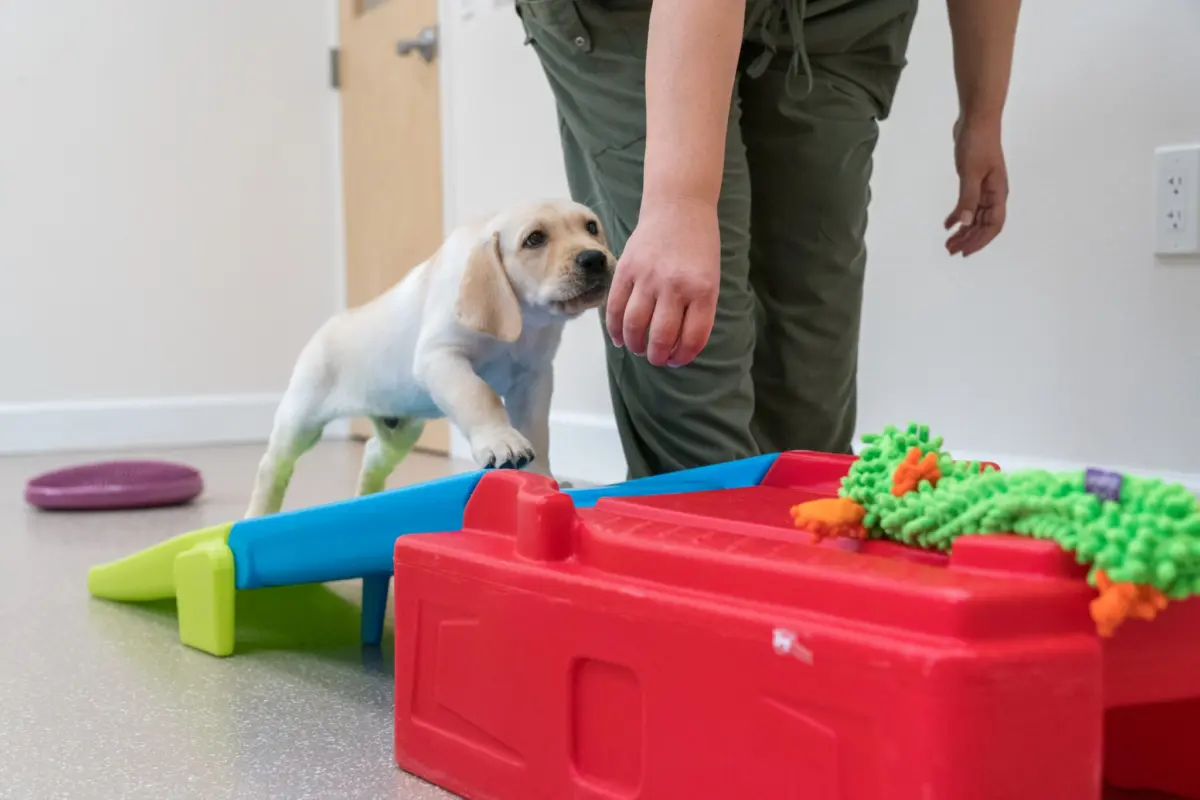
Genetics establish the raw potential of a working dog, but early environment, structured ENS, deliberate socialization, and science-based positive reinforcement unlock that potential. By investing time, care, and scientific rigor into the neonatal and transitional stages, organizations ensure that future guide dogs possess the psychological fortitude required for their life-changing vocations.
Future Outlook: A Lifetime of Continuous Learning
The developmental journey of a service dog does not conclude when the neonatal and transitional stages draw to a close; rather, it evolves.
Once puppies cross the three-month milestone, structured short training sessions featuring positive reinforcement become a daily routine. Crate training is introduced to foster independence and establish healthy daily rhythms. As the dog matures, gentle exposure to other species, public access training, and specialized task instruction take center stage. Formal puppy classes, often beginning around 16 weeks of age, further solidify the animal’s obedience and self-control.
For organizations like Dogs Inc, this holistic continuum of care—beginning with the first gentle touch of Early Neurological Stimulation and culminating in the placement of a fully trained guide or service dog—represents a lifelong commitment to excellence. As canine science continues to advance, the integration of early developmental strategies will undoubtedly continue to refine how we prepare the next generation of four-legged heroes, ensuring they are more than ready to meet the world with confidence, courage, and unconditional loyalty.