
Executive Overview
When bird enthusiasts across North America envision the continent’s vibrant avifauna, images of flashing yellow goldfinches, fiery northern cardinals, and iridescent blue jays often come to mind. Yet, true pink birds are surprisingly scarce. Even when expanding the definition to include rare vagrants, peripheral visitors, and species with minimal pink plumage, the roster comprises fewer than a dozen species.
Fact-checked and curated with insights from Kenn Kaufman, field editor for Audubon magazine, this comprehensive guide explores the biological mechanisms, distinct behaviors, and specialized geographies of North America’s pink-hued birds. From the iconic, long-legged waders of the southern estuaries to elusive mountain finches and electric-hued hummingbirds, these species derive their coloration through vastly different evolutionary pathways—ranging from dietary carotenoids and genomic programming to microscopic feather structures. This feature investigates how these avian gems color the North American landscape, where to find them, and what it takes to invite select species into your own backyard.
Detailed Chronology and Biological Diversity: How North America’s Birds Turn Pink
The manifestation of pink plumage across North America’s avifauna is a masterclass in evolutionary adaptation. Nature employs three distinct mechanisms to paint these birds in shades of rose, magenta, and electric pink: diet, structural physics, and genetics.
The Dietary Palette: Waders of the Wetlands
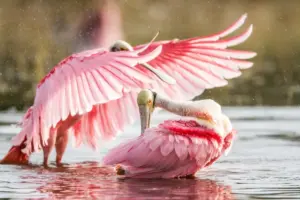
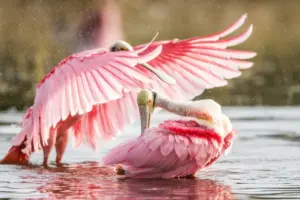
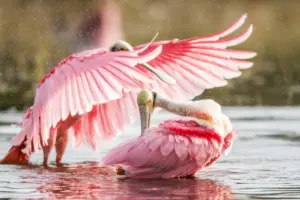
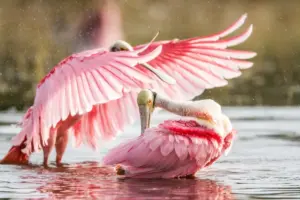
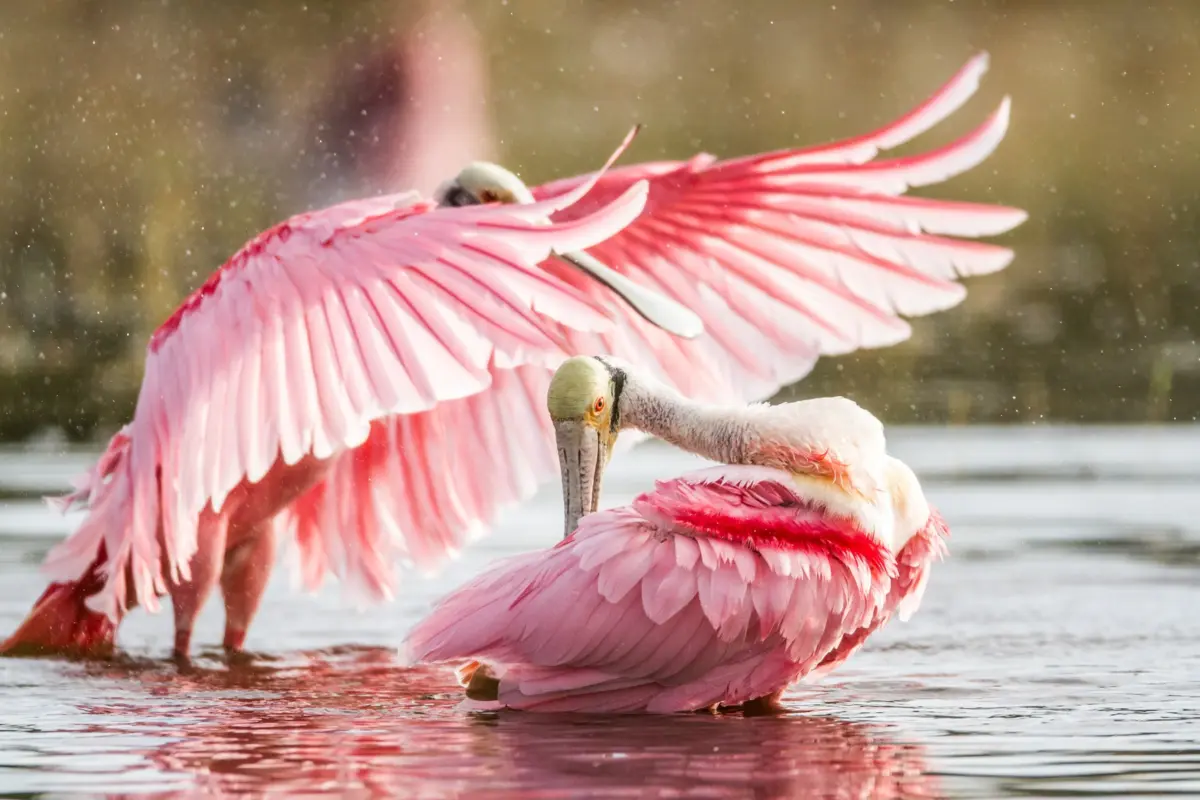
For iconic waders like the American Flamingo (Phoenicopterus ruber) and the Roseate Spoonbill (Platalea ajaja), the intensity of their pink coloration is directly linked to their dinner plate.
- The Science: These species consume diets rich in carotenoid pigments found in microscopic algae, which are then passed up the food chain via brine shrimp, copepods, crabs, crayfish, and small fish. As the birds digest these organisms, the fat-soluble pigments deposit into their growing feathers.
- The Historical Shift: Historically, American Flamingos were rarely considered a stable, native breeding population in Florida, though recent meteorological events—specifically, wild birds blown inland by intense hurricanes—have established year-round residency and sparked renewed scientific interest in whether breeding colonies are re-establishing in the Sunshine State. Meanwhile, Roseate Spoonbills maintain a healthier, year-round footing along the Gulf Coast and southern Florida, steadily expanding their range northward as coastal ecosystems shift.
Structural Iridescence: The Hummingbird’s Mirror
North America’s smallest pink-bearing birds—the Anna’s Hummingbird (Calypte anna), Calliope Hummingbird (Selasphorus calliope), and Broad-tailed Hummingbird (Selasphorus platycercus)—do not rely on pigments at all.
- The Science: Their striking pink and magenta crowns and gorgets are the result of physics. Microscopic, air-bubble-filled platelet structures within their feather barbules refract and reflect light. When the light hits these nano-structures at just the right angle, it produces an electric, iridescent flash of pink that dazzles potential mates and deters rivals.
Genomic Pigmentation: The Finches
Among North America’s perching birds, the Purple Finch (Haemorhous purpureus) and Cassin’s Finch (Haemorhous cassinii), alongside the specialized Rosy-Finches, display hues ranging from soft rose to deep maroon.
- The Science: Unlike dietary or structural coloration, these reddish-pink and rosy tones are hardwired at the genomic level. Carotenoid metabolism pathways dictate how these finches process dietary pigments into distinct red and pink plumage during their annual molts, turning them into highly sought-after backyard feeder guests—particularly during dramatic winter "irruption" years when food scarcity pushes them far south of their boreal breeding grounds.
Supporting Context & Metrics: Field Identification and Behavioral Ecology
To fully appreciate North America’s pink bird population, one must understand how their distinct physical traits match their ecological niches.
| Species Name | Primary Coloration Source | Geographic Stronghold | Distinct Morphological Feature |
|---|---|---|---|
| American Flamingo | Dietary Carotenoids | Florida Keys, Everglades, Caribbean | Heavily curved, black-tipped inverted beak |
| Roseate Spoonbill | Dietary Carotenoids | Gulf Coast, Southern Florida | Flat, widened, sensor-rimmed spatula bill |
| Anna’s Hummingbird | Microscopic Feather Structures | Pacific Coast, Southern Arizona | Full iridescent pink crown and gorget |
| Calliope Hummingbird | Microscopic Feather Structures | Pacific Northwest, Intermountain West | Tiny stature with patchy, flared magenta gorget |
| Broad-tailed Hummingbird | Microscopic Feather Structures | Mountain West, Southwest | Rose-pink gorget; metallic wing buzz in flight |
| Purple Finch | Genomic Pigmentation | Northeast, Great Lakes, West Coast | Raspberry-pink plumage, notched tail |
| Cassin’s Finch | Genomic Pigmentation | Western Coniferous Forests | Soft pink breast with a bright red spiky cap |
| Black Rosy-Finch | Genomic & Melanin Pigmentation | Great Basin High Elevations | Black/gray body with bold pink wing/belly panels |
| Brown-capped Rosy-Finch | Genomic & Melanin Pigmentation | Rocky Mountains (Wyoming to NM) | Brown body with subdued pink highlights |
| Gray-crowned Rosy-Finch | Genomic & Melanin Pigmentation | Alaska, Western High Elevations | Gray crown, brown body, pink wing/belly panels |
Foraging Mechanics: Form Follows Function
The two premier pink waders possess specialized tools designed for optimal feeding efficiency:
- The Flamingo: Employs "inverted foraging." By turning its specialized hook-billed head upside down, it pumps water through lamellae (comb-like plates) to filter out small aquatic organisms.
- The Spoonbill: Sweeps its sensor-rimmed, spatulate bill in a wide lateral arc through shallow water and estuarine muck. Loaded with delicate nerve endings, the bill instantly snaps shut the moment it contacts small fish or aquatic invertebrates.
Official Insights and Expert Perspectives
According to field ornithologists and conservation experts, tracking pink bird populations serves as a vital ecological barometer for North American habitats.
"The return and residency of wild flamingos in Florida, alongside the northward expansion of Roseate Spoonbills, tell us a compelling story about environmental shifts in the Everglades and surrounding coastal ecosystems," notes avian field research data compiled by conservation networks. “Changes in water management, wetland restoration, and climate patterns directly dictate the expansion and contraction of these specialized carotenoid-driven species.”
Furthermore, experts emphasize that backyard birders play an instrumental role in monitoring genomic-colored finch populations. Through citizen science platforms like eBird, enthusiasts tracking winter irruptions of Purple and Cassin’s finches provide researchers with critical demographic data. These fluctuations mirror seed crop availability in the vast Canadian boreal forests and western high-elevation coniferous zones.
Future Outlook: Conservation, Birding Hotspots, and Backyard Habitats
For birders hoping to check these rosy species off their life lists, strategic planning is essential. Because North America’s pink birds are distributed unevenly across specialized habitats, knowing where and when to look—or how to attract them—makes all the difference.
Prime Hotspots Across the Continent
- For Waders: To observe Roseate Spoonbills with absolute reliability, visit Florida’s J.N. "Ding" Darling National Wildlife Refuge or Texas’s Smith Oaks Rookery. For American Flamingos, historical vagrant patterns and recent sightings point toward Everglades National Park, Biscayne Bay, and the Florida Keys.
- For Hummingbirds: Mountain trails throughout the Intermountain West and Pacific Northwest during peak spring and summer months offer prime viewing for Calliope and Broad-tailed hummingbirds, while Pacific Coast gardens host Anna’s Hummingbirds year-round.
- For Rare Rosy-Finches: While birders must typically consult localized eBird reports to track elusive flocks of Black, Brown-capped, and Gray-crowned Rosy-Finches, the holy grail for western birding exists at Sandia Crest, New Mexico. It remains the only known location in North America where a dedicated birder can regularly observe all three rosy-finch species frequenting a single feeding station.
Cultivating a Pink-Friendly Backyard
While transforming an urban backyard into a coastal wetland to attract flamingos is impractical, homeowners outside of wetland zones can readily attract five of North America’s common pink species:
- For Hummingbirds: Hang standard, easily cleaned nectar feeders filled with a simple 4-to-1 ratio of water to refined white sugar. Avoid red dyes, which are unnecessary and potentially harmful.
- For Finches: Install hopper or tube feeders stocked with high-energy black oil sunflower seeds and safflower seeds. Purple and Cassin’s finches will readily abandon wild perches to frequent yards offering these high-fat nutritional sources during migration and winter months.
As environmental conditions evolve, keeping a watchful eye on North America’s pink birds offers both an aesthetic thrill and a front-row seat to the ecological health of our continent’s most dynamic ecosystems.