
Executive Overview
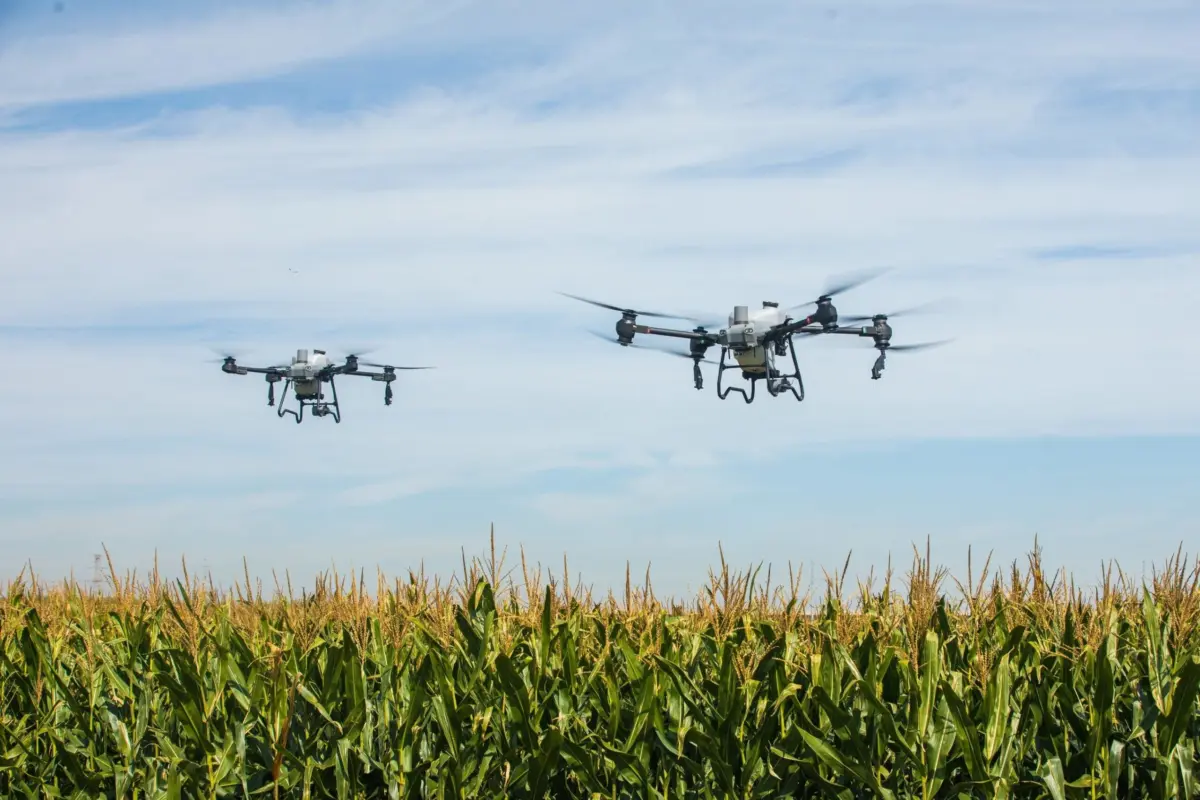
Australia’s vast, geographically dispersed, and often unforgiving agricultural landscape has long presented a unique paradox. While the sheer scale of the nation’s farming operations creates an immense demand for automated oversight and labor-saving technologies, the regulatory frameworks governing advanced aerial operations have historically struggled to keep pace. For years, the deployment of agricultural drones has been tethered to restrictive visual line of sight (VLOS) limitations, capping the efficiency gains that unmanned aerial vehicles (UAVs) could theoretically deliver to broadacre cropping, extensive livestock management, and remote paddock inspections.
However, a tectonic shift is underway. According to industry heavyweight DJI Agriculture, a progressive policy pivot by the Civil Aviation Safety Authority (CASA)—epitomized by the Temporary Management Instruction (TMI) 2025-03 framework—has positioned Australia as one of the most promising and forward-thinking markets for Beyond Visual Line of Sight (BVLOS) drone technology anywhere in the world.
By streamlining approval processes, empowering eligible Remote Operator Certificate (ReOC) holders to self-assess operational areas, and slashing deployment timelines from months to mere days, regulatory authorities have effectively removed the administrative bottleneck that once choked large-scale ag-tech integration. With the bureaucratic red tape gradually giving way to streamlined pathways, DJI Agriculture reports that the national conversation has fundamentally evolved. The primary challenge is no longer about driving basic technology adoption or proving regulatory viability; rather, it has shifted squarely toward operational scaling. As Australian agriculture stands on the precipice of a new technological era, the focus is now on navigating extreme terrain, cultivating a specialized workforce, integrating complex aerial data streams into existing farm management software, and building robust commercial models. This comprehensive analysis explores how progressive regulation, cutting-edge hardware, and massive landholdings are converging to transform Australian farming into a fully automated, sky-enabled enterprise.
Detailed Chronology: The Regulatory Evolution Enabling Australian BVLOS
To understand the magnitude of the current opportunity for Australian agriculture, one must trace the winding regulatory path that preceded it. For decades, commercial drone operations globally were stifled by a rigid regulatory philosophy. Aviation authorities, tasked primarily with safeguarding national airspace shared by commercial airliners, regional turboprops, and recreational flyers, viewed uncrewed aircraft systems (UAS) through an inherently conservative lens.
The Era of Hyper-Cautious VLOS Restrictions
In the early days of agricultural drone integration—roughly spanning the mid-2010s to the early 2020s—farmers and service providers faced immense hurdles just to legally fly a drone over their own crops. Operators were legally bound to keep their UAVs within the direct, unaided visual line of sight of the pilot in command. For a small orchard or a compact vegetable farm, these rules were manageable. But for Australian broadacre grain growers, cotton farmers, and pastoralists managing stations the size of small European nations, VLOS restrictions rendered drones little more than expensive toys.
Every time a drone crossed a property boundary or ventured beyond the pilot’s line of sight to inspect a distant water trough or a sprawling herd of cattle, it crossed into regulatory non-compliance. Obtaining exemptions required months of painstaking paperwork, detailed risk assessments, and costly consultations with aviation regulators. Consequently, drone use remained sporadic, localized, and heavily constrained.
The Mining Sector as a Regulatory Laboratory
Interestingly, the breakthrough that would ultimately benefit Australian agriculture did not originate in the paddock; it was forged in the dust and remote expanses of the nation’s mining sector. Mining operations—characterized by massive open pits, expansive tailings dams, and remote infrastructure spread across hundreds of square kilometers—faced the exact same operational friction as agriculture. Routine pit monitoring, volumetric surveying, and emergency response protocols traditionally demanded massive on-site human resourcing and frequent, hazardous helicopter deployments.
Recognizing the economic and safety imperative to unlock remote operations, CASA began experimenting with more flexible oversight models for industrial sectors. The mining industry served as a vital testing ground, proving that advanced safety management systems (SMS) and standardized risk matrices could safely replace the cumbersome, site-by-site approval bottlenecks of the past. The lessons learned in the Pilbara and the Bowen Basin laid the structural groundwork for what would eventually become a cross-sector regulatory revolution.
The Watershed Moment: CASA’s TMI 2025-03 Framework
The defining turning point for Australian agricultural aviation arrived with the introduction of CASA’s Temporary Management Instruction (TMI) 2025-03 framework. Hailed by DJI Agriculture and other global technology leaders as a masterclass in progressive aviation policy, TMI 2025-03 fundamentally re-engineered how broad-area approvals are granted.
Under this modernised framework, eligible ReOC holders can apply for broad-area approvals that grant them the legal authority to self-assess operational areas within a pre-approved region. Rather than petitioning the regulator for a bespoke authorization every time a drone is deployed to a new paddock, farm, or district, certified operators can now rely on standardized, performance-based pathways. These pathways evaluate operational risk based on objective criteria, including:
- The physical size and kinetic energy profile of the drone platform.
- The population density of the underlying terrain.
- The presence of surrounding airspace users and infrastructure.
When a planned flight profile meets these prescribed safety thresholds, the operator has the autonomy to authorize the deployment internally. The administrative timeline—historically measured in agonizing cycles of 3 to 6 months—has been compressed to a matter of days. For an industry intimately tied to the rapid, seasonal imperatives of planting, spraying, and harvesting, this speed-to-deployment is nothing short of revolutionary.
Supporting Context & Metrics: The Scale of Australia’s Ag-Tech Opportunity
To fully appreciate why DJI Agriculture views Australia as a prime candidate for global leadership in BVLOS adoption, one must examine the macro-economic and structural realities of the nation’s agricultural sector.
The Tyranny of Distance and Landholdings
Australia is home to some of the largest continuous farming and pastoral operations on Earth. While the average farm size globally is often measured in hectares, many Australian agricultural enterprises span multiple distinct properties scattered across vast regional landscapes.
- Extensive Grazing: Pastoral leases in regions like western Queensland, outback New South Wales, and the Kimberley region of Western Australia can encompass hundreds of thousands—sometimes millions—of hectares.
- Broadacre Cropping: Grain and cotton enterprises in the Wheatbelt of Western Australia or the Murray-Darling Basin frequently manage disparate parcels of land separated by hours of driving time.
This geographic dispersion creates an acute labor and logistics challenge. Inspecting miles of perimeter fencing, checking remote stock water points, scouting for feral animal incursions, and monitoring crop health across sprawling acreages consumes immense amounts of fuel, time, and manpower.
Economic Pressures and Labor Productivity
Compounding the challenge of scale is Australia’s persistent structural labor shortage in regional and rural areas. Finding skilled agricultural workers willing to live and work in remote areas has become increasingly difficult and expensive. Farm managers are forced to do more with less, driving an urgent economic imperative to automate repetitive, time-consuming tasks.
Automated agricultural drones represent a direct solution to this productivity crisis. By removing the human element from routine surveillance and targeted application tasks, farms can achieve higher operational tempos without expanding their workforce. According to industry analyses, transitioning from manual field scouting to automated BVLOS drone infrastructure can yield exponential savings in labor costs, while simultaneously reducing the carbon footprint of farm vehicles navigating muddy or sensitive soils.
The Global Regulatory Comparison
While countries like the United States (under the Federal Aviation Administration’s Part 107 waivers) and various European Union member states (under EASA’s Specific Operations Risk Assessment framework) have made strides toward BVLOS integration, many jurisdictions remain bogged down by fragmented local laws or risk-averse interpretations.
CASA’s TMI 2025-03 framework stands out internationally because it bridges the gap between high-level safety assurance and operational scalability. By empowering trusted, certified operators to self-assess within defined parameters, Australia has sidestepped the micromanagement trap that plagues aviation regulators elsewhere. This makes the Australian market an ideal testbed for global manufacturers looking to refine hardware and software designed for hyper-scale agricultural automation.
Official Statements and Industry Insights: Inside the DJI Agriculture Perspective
To gain a deeper understanding of how these regulatory shifts are translating into commercial reality, industry stakeholders have closely monitored the insights shared by DJI Agriculture representatives.
A Global Benchmark for Operational Scalability
Reflecting on the impact of CASA’s recent policy adjustments, a senior DJI Agriculture representative did not mince words regarding Australia’s standing on the world stage:
"From an operational scalability perspective, we view CASA’s framework as one of the more forward-looking BVLOS approaches globally, and a strong foundation for scaling agricultural drone operations."
The representative emphasized that the historic bottleneck for agricultural drone deployment was never a lack of hardware capability or software intelligence. Modern agricultural drones are fully capable of autonomous flight, precision payload delivery, and high-resolution multispectral mapping. The limiting factor has always been the legal permission to let those aircraft fly beyond the immediate eyesight of the operator, particularly across complex, multi-property farming enterprises.
"The ability to operate across a broader area under a single approval can significantly reduce a constraint that has historically limited large-scale agricultural drone deployment," the representative noted.
Crossing Sectors: From Mining Pits to Fertile Paddocks
Drawing parallels with the industrial successes seen in mining, DJI highlighted how the cross-pollination of regulatory frameworks is accelerating innovation. In the mining sector, BVLOS operations have transitioned from experimental trials to standard operating procedures for pit monitoring, volumetric stockpile surveying, and rapid emergency asset inspection.
The company expects agriculture to capture similar efficiencies on an even broader canvas:
"We expect agriculture to be one of the important sectors to benefit significantly from this shift. Whether it’s monitoring crops, checking livestock or inspecting paddocks, being able to fly BVLOS over larger areas removes a barrier that has long held back large-scale drone use in farming."
Shifting the Mission: From Adoption to Scaling
With regulatory barriers systematically dismantling, DJI reveals that its corporate strategy in Australia has undergone a profound evolution. The mission is no longer about convincing skeptical farmers that drones work; it is about solving the structural and operational engineering required to run fleets of autonomous aircraft at national scale.
"With the regulatory path now clearer, the main barriers are operational: Australia’s vast, remote and harsh terrain makes reliable, repeatable operations at scale the real demand. Add to that the need for more skilled pilots and operators, better integration of drone data into farm workflows, and commercial models that make routine BVLOS cost-effective. These are all areas for potential development in the future."
Despite these operational hurdles, the long-term outlook remains bullish. The fundamental value proposition—driven by massive landholdings and an unyielding demand for labor efficiency—makes the Australian agricultural sector a natural testing ground for the future of farming.
"The biggest opportunity is scale. The opportunity or the development direction could be to help Australian agriculture move from occasional drone use to drone infrastructure as a standard operating layer — and to do so safely, within CASA’s framework."
To validate these concepts, DJI is actively collaborating with a diverse cohort of pioneering Australian agricultural drone operators, with comprehensive real-world case studies slated for release in the coming months.
Future Outlook: Building the Autonomous Farm of Tomorrow
As Australia transitions from a regime of cautious experimentation to aggressive operational scaling, what does the future hold for agricultural aviation over the next decade? The journey from occasional drone deployment to fully integrated "drone infrastructure" will require deliberate collaboration across the entire ag-tech ecosystem.
1. Evolution of the Pilot Workforce
While BVLOS operations reduce the need for pilots to be physically present at every inch of a flight path, they paradoxically increase the demand for highly skilled remote operations managers. Flying an aircraft miles away from a ground control station requires advanced situational awareness, deep understanding of meteorological patterns, proficiency in airspace management software, and rigorous adherence to safety management systems. Australia’s vocational education and agricultural colleges will need to rapidly expand training pathways to produce a new generation of certified aerospace-agronomists.
2. Seamless Data Integration and Farm Management Software (FMS)
Drones generate terabytes of high-resolution data—from multispectral crop vigor maps and thermal livestock counts to digital elevation models and weed infestation heatmaps. However, data collected from the sky is only as valuable as its integration into everyday farm decision-making.
The next frontier for DJI Agriculture and its software partners lies in seamless, real-time data pipelines. Farmers do not want to download raw image files and manually stitch maps together. They want automated systems where a drone completes a BVLOS patrol of a 5,000-hectare wheat crop, processes the multispectral data via cloud computing, and automatically populates the farm manager’s tablet with a targeted variable-rate fertilizer prescription or a livestock health alert—all before breakfast.
3. Maturation of Commercial As-a-Service Models
For many individual family farms, investing in enterprise-grade BVLOS drone hardware, specialized software licenses, and maintaining dedicated ReOC accreditation may not pencil out financially. Consequently, the Australian market is likely to see explosive growth in specialized agricultural drone service providers (AgSPs).
These professional operators will function much like aerial agricultural contractors of the past, but with advanced technological capabilities. Operating under broad-area ReOC approvals, these service providers will offer routine, subscription-based BVLOS monitoring and spraying packages to clusters of surrounding farms. By spreading the capital expenditure across multiple enterprises, commercial service models will make routine BVLOS data collection cost-effective and accessible to operations of all sizes.
4. Hardware Resilience and Beyond-Visual-Line-of-Sight Infrastructure
Australia’s harsh climate—marked by searing heat, choking dust storms, torrential wet seasons, and cyclonic coastal winds—will push drone hardware to its absolute limits. Manufacturers will need to engineer platforms with enhanced thermal tolerance, advanced obstacle sensing, redundant power systems, and robust satellite communication backups (such as Starlink integration) to maintain telemetry and control links across remote interior regions. Furthermore, the development of automated docking stations and remote battery-swapping hubs will eventually enable true "zero-touch" drone operations, where aircraft launch, execute missions, recharge, and land without human intervention on-site.
Conclusion
The convergence of progressive regulatory reform through CASA’s TMI 2025-03 framework, massive and geographically dispersed farming enterprises, and rapidly maturing UAV technology has placed Australia at the vanguard of global agricultural aviation.
As DJI Agriculture and its industry partners navigate the transition from regulatory compliance to operational scaling, the traditional contours of Australian farming are being redrawn from above. By removing the long-standing physical and administrative tethers of visual line of sight restrictions, Australia is proving that the tyranny of distance can be conquered by the precision of flight. In doing so, the nation is not merely adopting a new tool; it is laying the foundational infrastructure for the autonomous, highly productive, and resilient agricultural enterprise of the 21st century.