
Executive Overview
In the upper echelons of behavioral science, academic snobbery remains a persistent and corrosive force. To study the exotic, the rare, or the purely theoretical is to achieve intellectual prestige; to apply those exact same principles to domestic, everyday creatures is often dismissed as pedestrian.
This dichotomy forms the core of a long-standing cultural and scientific irony explored by renowned applied animal behaviorist Dr. Patricia McConnell. Decades after winning the prestigious Allee Award for “Best Student Paper” at the 1988 Animal Behavior Society (ABS) Annual Meeting, McConnell found herself on the receiving end of an academic slight that crystalized the deeply ingrained hierarchy of the sciences: she was written off as a "failure" simply because she chose to dedicate her life’s work to companion dogs.
This article investigates the profound disconnect between humanity’s intense, life-altering emotional attachments to domestic dogs (Canis lupus familiaris) and the systemic trivialization of canine science in academic and cultural spheres. By examining psychological phenomena such as the "familiarity breeds contempt" effect, the economic and sociological metrics of pet ownership, and historical perspectives, we unpack why Western society struggles to validate its most profound interspecies relationships. Finally, we step away from the academic seminar room and onto McConnell’s Wisconsin farm, where theory meets reality through sheepdog trials, pastoral community, and the simple, grounding beauty of nature.
Detailed Chronology: From the Allee Award to the Hallways of Academia
The trajectory of an academic career is rarely a straight line, but it is frequently governed by rigid, unwritten caste systems.
The 1988 Accolade and the "Heisman Curse"
In 1988, McConnell’s academic promise was formally recognized when she received the Animal Behavior Society’s coveted Allee Award for her exemplary student research. At the time, the achievement positioned her at the bleeding edge of behavioral science. However, institutional memory can be fickle, and academic subcultures love a cautionary tale.
Years later, during a routine hallway conversation at another ABS conference, the discussion drifted toward the career trajectories of past Allee Award winners. Standing nearby, McConnell was forced to overhear a peer compare winning the award to the infamous "Heisman Trophy curse"—a phenomenon where early collegiate athletic stardom fails to translate into professional dominance.
The conversation culminated in a rhetorical and deeply personal sting: "Just look at Trisha, for example. What has she done since?"

The Anatomy of a Silent Retreat
In retrospect, McConnell admits she wishes she possessed the cinematic instinct to turn around, flash a brilliant smile, and announce, "Hello, I’m standing right here."
Instead, bound by the universal human reaction of stunned vulnerability, she froze. The realization that her life’s work—saving families, resolving behavioral crises, and applying rigorous ethological principles to domestic dogs—was perceived by her peers as professional obscurity hit like physical trauma. Details of the surrounding environment vanished. The only sensation that remained was the heat of her burning face as she retreated in silence to her hotel room, staring into space for hours.
Over the ensuing decades, McConnell grew accustomed to this academic prejudice, recognizing that it is symptomatic of a much larger, systemic bias deeply embedded across multiple disciplines.
Supporting Context & Metrics: The Scientific Hierarchy and the Familiarity Trap
To understand why applied canine science is frequently marginalized, one must look closely at how society values novelty versus ubiquity, and theoretical abstraction versus practical application.
The Caste System of Knowledge
Every academic and creative field maintains an implicit hierarchy:
- In Literature: Literary fiction commands far more cultural capital than non-fiction, which in turn vastly outweighs sci-fi or children’s literature.
- In Physics: Theoretical physicists—those who draft equations and ponder the cosmos—attract significantly more funding, media attention, and prestige than experimental physicists or, heaven forbid, engineers (a dynamic famously lampooned in The Big Bang Theory through the rivalry between Sheldon Cooper and Howard Wolowitz).
- In Animal Behavior: Studying a rare maned wolf (Chrysocyon brachyurus) in the remote grasslands of Argentina carries an undeniable "cool factor" that studying a suburban Golden Retriever simply cannot match.
Applied science is routinely viewed as inferior because it utilizes existing discoveries to solve mundane, everyday problems rather than breaking entirely new conceptual ground.
Familiarity Breeds Contempt: The Psychology of Ubiquity
The old adage "familiarity breeds contempt" carries genuine psychological teeth. While psychological intimacy and social support rely on sustained contact, behavioral research consistently demonstrates that the human brain prioritizes novel stimuli over the "same old, same old."

In a landmark study by Harvard researchers investigating the lure of ambiguity, findings revealed that becoming intimately familiar with another person can paradoxically lead to liking them less.
Apply this cognitive bias to the domestic dog, and the professional prejudice against canine behaviorists becomes glaringly clear. According to statistics compiled by the American Veterinary Medical Association (AVMA), approximately 90 million dogs resided in roughly 45% of American households. Globally, the domestic dog population is staggering, with estimates placing hundreds of millions of canines everywhere from American suburbs to African villages and metropolitan landfills.
By contrast, the wild maned wolf population of South America hovers around a mere 17,000 individuals. In a market economy driven by scarcity—where diamonds command astronomical prices while quartz is overlooked—dogs suffer from the ultimate economic curse: they are hyper-abundant.
Official Statements, Cultural Icons, and the Interspecies Bond
Despite the intellectual snobbery that categorizes dogs as mere "pets" (a term historically used as a derogatory descriptor for spoiled children), humanity’s emotional reality tells an entirely different story.
The Unbreakable, Wordless Bond
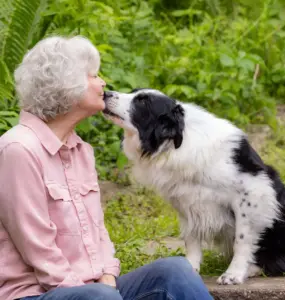
For millions of people, dogs are not peripheral accessories; they are foundational pillars of emotional survival. Writing about her Border Collie, Cool Hand Luke, Dr. McConnell once captured this existential dependency with brutal clarity:
"I imagine his death as if all the oxygen is sucked out of the air and I am expected to live without it."
This sentiment is echoed across literary and historical canons. In her seminal book Pack of Two: The Intricate Bond Between People and Dogs, the late author Caroline Knapp pinpointed the precise nature of this attachment:

"It’s about attachment that’s mutual and unambiguous and exceptionally private and it’s about a kind of connection that’s virtually unknowable in human relationships because it’s essentially wordless."
Iconic literary figures have long drawn inspiration from their canine companions. Gertrude Stein credited her dog Basket with helping her distinguish between sentences and paragraphs simply by listening to the rhythm of the animal drinking ("…paragraphs are emotional and sentences are not…"). Similarly, poet Mary Oliver observed, "Because of a dog’s joyfulness, our own is increased. It is no small gift."
Historical Precedents of Devotion
This profound emotional tether is far from a modern, millennial invention born of urban isolation. History is rich with towering figures utterly devoted to their dogs:
- Alexander the Great was so devastated by the death of his beloved dog, Peritas, that he founded an entire city named in his honor.
- Winston Churchill ensured his standard poodles—including Rufus II, whose breath was famously described as resembling a flamethrower—were treated as full family members, dining alongside humans in the formal dining room served by the household butler.
Future Outlook: Reclaiming the "Companion Dog"
The central paradox remains: society simultaneously adores dogs with fierce, family-level devotion while systematically trivializing the professional study and care of them.
To combat this linguistic and cultural demeaning, behaviorists and trainers increasingly reject the term "pet dog" in favor of "companion dog." This intentional shift seeks to elevate public perception, recognizing that the emotional labor involved in bridging the behavioral gap between two entirely different species is a sophisticated, highly critical science.
Ultimately, the friction between academic elitism and grassroots canine devotion stems from Western culture’s historical discomfort with acknowledging profound, non-human emotional attachments. As the scientific community slowly modernizes, bridging the gap between theoretical ethology and applied behavioral intervention will be essential to honoring the species that anchors modern human sanity.
Meanwhile, Back on the Farm: Life, Laughter, and Zinnias
Away from the sterile conference halls and academic debates, life on Dr. McConnell’s Wisconsin farm offers a vivid, grounding reminder of why this work matters in the first place.

When a Sheepdog Trial Met a Wedding
Recently, the local agricultural community bore witness to a delightfully unorthodox event: friends Samantha and Jeff decided that hosting a massive, inaugural sheepdog trial at the Wisconsin Sheep and Wool Festival simply wasn’t complicated enough. Mid-event, during the Saturday lunch break right out on the competition field, the couple tied the knot—complete with a diligent working dog serving proudly as the official ring bearer. It stands as the ultimate definition of a modern, multi-species blended family.
+-------------------------------------------------------------+
|              THE WISCONSIN FARM SNAPSHOT                    |
|                                                             |
|  [ Sheepdog Trial Field ] ---> [ Surprise Midday Wedding ]  |
|                                           |                 |
|                                           v                 |
|                                 [ Dog as Ring Bearer ]      |
+-------------------------------------------------------------+
Pastoral Afternoons Under the Walnut Tree
Farm life also provides the necessary pauses for genuine human connection. Following rigorous working sessions, McConnell and visiting friends (including Liesle, Denise, and Donna) retreated to the shade of a towering walnut tree in a pasture affectionately dubbed "The Moors." While the sheep enjoyed a well-earned rest, the working dogs—ranging from Else and Skip to Kai and Wisp—alternated between productive farm labor and lounging with their human companions over cold drinks.
The Fritillary Butterflies of Summer
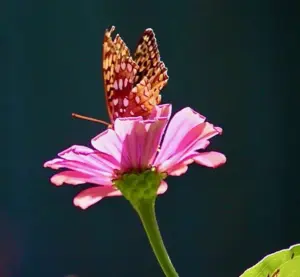
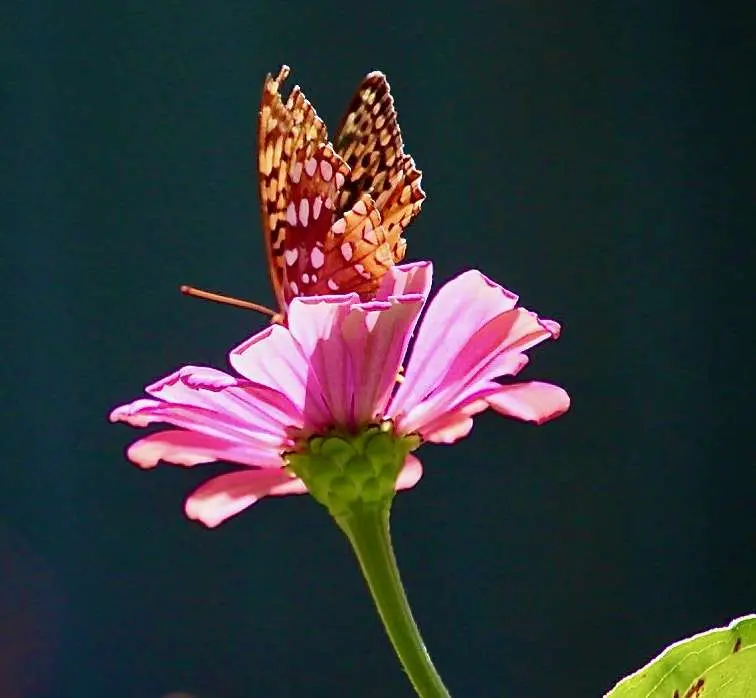
Amidst the pastoral chaos, the farm’s garden continues to thrive. Rows of vibrant zinnias—the indisputable champions of summer cheer—have become a localized sanctuary for beneficial insects. Among them, battered but resilient Fritillary butterflies dance across the blossoms, serving as a quiet, natural reminder of endurance, beauty, and the simple pleasures of the physical world.
As we continue to dissect the intellectual irony of how society views our canine counterparts, one truth remains self-evident: whether viewed through the lens of elite behavioral science or a quiet afternoon under a walnut tree, the dog remains humanity’s most loyal, challenging, and irreplaceable mirror.