
Executive Overview
As pet owners increasingly seek out dynamic outdoor adventures to share with their companion animals, water sports have emerged as a premier summer activity. While hiking and camping remain classic staples of the adventure-dog lifestyle, paddle sports—specifically kayaking and stand-up paddleboarding (SUP)—offer a unique way to bond with a canine companion while beating the summer heat. However, transitioning a land-loving animal onto the open water introduces a distinct set of logistical, behavioral, and safety challenges.
This comprehensive report examines the nuances of introducing dogs to paddle sports, drawing firsthand insights from seasoned canine adventurers and pet safety experts. We explore the structural differences between sit-on-top kayaks and paddleboards, evaluate essential gear requirements—such as life jacket selection and leash safety—and outline behavioral milestones necessary for a safe voyage. Ultimately, introducing a dog to the water requires a careful balance of patience, positive reinforcement, and rigorous safety protocols to ensure that both human and hound return safely to dry land.
Detailed Chronology: From Shelter Pup to Water Enthusiast
The journey of introducing a dog to water sports is rarely instantaneous; it is an evolutionary process built on trust, gradual exposure, and positive reinforcement. To understand how a non-traditional water dog transforms into a confident aquatic explorer, one can examine the trajectory of Robin, an 18-pound, two-and-a-half-year-old Basenji mix adopted from a local shelter in Los Angeles by adventurer Katherine (widely known via her Instagram handle, @robinventures).
Phase 1: Land-Based Foundations and Early Exposure
Despite his diminutive stature and a regional scarcity of accessible natural water bodies in the Los Angeles area, Robin established his credentials as an adventure dog early on through hiking and camping. However, transitioning from solid ground to floating vessels required a methodical approach.
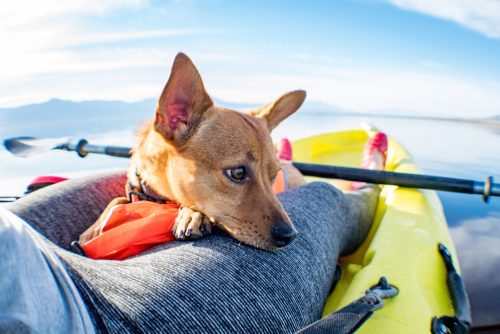
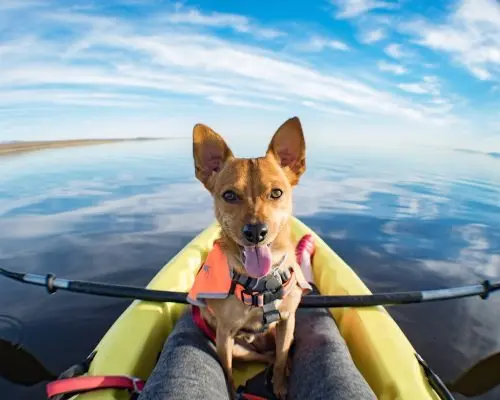
The initial introduction to paddle sports began in controlled, calm environments. Robin’s early kayaking experiences took place at unique regional bodies of water, including the Salton Sea and Sausalito, California. Because water sports can induce sensory overload in novice animals, the early stages focused heavily on acclimating the dog to the motion and confined space of the watercraft rather than long-distance travel.
Phase 2: Expanding Horizons to Paddleboarding
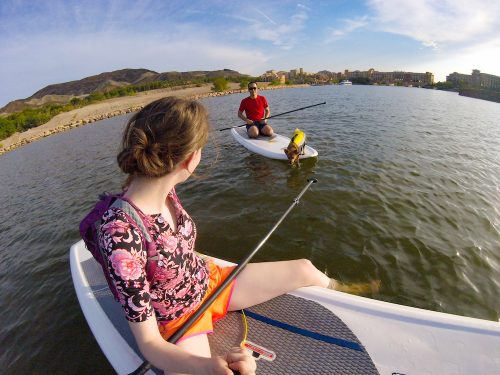
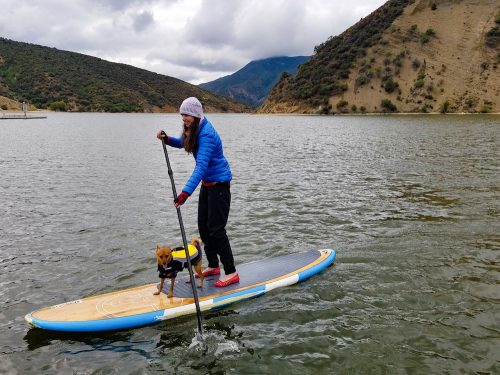
Once Robin demonstrated tolerance—and eventual comfort—in a kayak, his adventures expanded into stand-up paddleboarding at Pyramid Lake, California, and Lake Las Vegas. Paddleboarding introduced new physical dynamics: a wider, more exposed platform with variable surface traction.
During these formative trips, human handlers learned critical management lessons. On early excursions, premature attempts by the dog to jump ashore resulted in unexpected capsizes, sending both human and hound into the water. These early missteps served as vital learning experiences, highlighting the necessity of impulse control, reliable commands like a stationary "stay," and proper board-weight distribution.
Phase 3: Achieving Aquatic Confidence
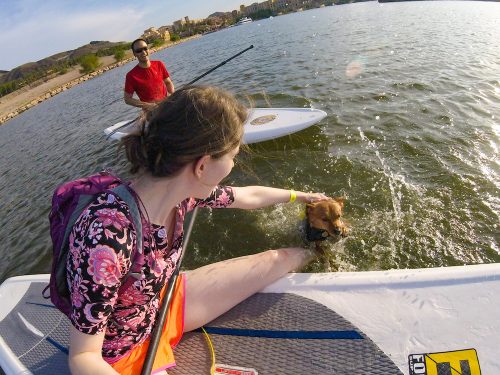
Over successive months of sustained exposure, Robin’s relationship with the water shifted dramatically. What began as cautious tolerance evolved into enthusiastic participation. On recent excursions at Lake Las Vegas, Robin transitioned from a passive passenger sitting near the bow or lap of his handler to an active swimmer. Displaying newfound confidence, he began willingly plunging off paddleboards to swim between companion watercrafts, illustrating the potential for non-water-loving breeds to develop a genuine affinity for aquatic environments under the right guidance.
Supporting Context & Metrics: Choosing the Right Watercraft and Gear
Preparing for a day on the water with a dog demands meticulous equipment selection. The choice of watercraft, flotation devices, and safety gear can mean the difference between an idyllic afternoon and a dangerous emergency.
Kayaking vs. Paddleboarding: Structural Comparisons
| Feature | Sit-On-Top Kayak | Stand-Up Paddleboard (SUP) |
|---|---|---|
| Stability | Exceptionally high; ideal for beginners and nervous dogs. | Moderate to high; requires balance and core stability from human and dog. |
| Space & Traction | Foot wells provide enclosed spaces; slick plastic surfaces may require added grip. | Expansive deck space, but front halves can be slick and require strategic positioning. |
| Maneuverability | Generally fixed turning radius; wider models track straight easily. | Highly maneuverable, though larger, more stable boards turn with more resistance. |
| Risk of Capsizing | Low, provided the dog remains reasonably centered. | Higher, especially if a dog makes sudden, unannounced leaps from the edge. |
Kayaking Mechanics
For beginners—both human and canine—kayaking is widely recommended as the safer entry point. Sit-on-top kayaks, commonly found at rental kiosks near recreational lakes and marinas, offer exceptional lateral stability. Their wide hulls and open cockpits provide designated foot wells where most small-to-medium dogs can comfortably settle.
However, slick plastic surfaces can unnerve anxious dogs. Experienced handlers recommend placing a stable item, such as a dry bag or a rubberized mat, in the foot well to give the dog traction and a defined boundary. As the dog gains confidence, they naturally learn to shift positions between the handler’s lap and the prow depending on the vessel’s speed and water conditions. Conversely, traditional sit-inside kayaks are generally unsuited for dogs unless explicitly modified with non-slip traction pads, as they prioritize speed and hydrodynamic efficiency over deck space.
Paddleboarding Dynamics
Paddleboards offer an expansive platform that accommodates dogs of all sizes, making them particularly attractive for larger breeds. However, the open nature of a SUP removes the physical containment walls found in kayaks. Depending on the construction material and deck pad quality, the forward portion of a board can become slippery when wet.
Handlers often find it safer to have nervous or large dogs sit directly behind them rather than at the front tip. This positioning not only improves the board’s trim and makes paddling more efficient, but it also places the dog closer to the handler’s center of gravity, minimizing sudden shifts in balance. When selecting a board, owners must weigh stability against maneuverability: wider, thicker boards float higher and resist tipping, but they require more physical effort to turn.
Essential Safety Equipment and PFDs
The most critical rule of canine water sports is absolute adherence to personal flotation device (PFD) protocols—for both the dog and the human.
- The Canine Life Jacket: Even dogs that excel at swimming can experience panic when suddenly unseated into deep, open water. Treading water is an unnatural motion for canines, and the shock of immersion can cause disorientation. A properly fitted dog life jacket is non-negotiable.
- Key Features: Look for a PFD featuring a durable, low-profile rescue handle on the back, which allows handlers to lift the dog back onto the watercraft or pull them to safety.
- Fit Considerations: Poorly fitted life jackets can ride up during frantic panic-paddling, trapping the dog’s front legs and transforming a safety device into a physical hindrance. Brands like Alcott (noted for flexible neoprene belly panels that enhance comfort during lifting) and Ruffwear provide reliable options. If a dedicated canine PFD is unavailable, a sturdy, handle-equipped harness can serve as a temporary alternative.
- The Human PFD: Human handlers must wear their life jackets—not merely stow them—especially during initial outings. In the event of a capsize, a handler’s immediate instinct and priority will be managing a distressed or climbing dog. Attempting to retrieve a floating PFD while simultaneously managing a panicked animal in open water creates an unnecessary hazard. Furthermore, a dog attempting to climb onto its human for safety makes treading water exponentially more difficult without the buoyancy of a personal life jacket.
Official Guidelines and Expert Recommendations
To ensure safety and maximize enjoyment, canine outdoor recreation specialists and experienced handlers have established a clear set of operational guidelines for aquatic adventures.
Behavioral Prerequisites
- Mastery of the "Stay" Command: Before launching any watercraft, a dog must possess a reliable, rock-solid "stay" command. Unannounced leaps from a floating board or kayak generate sudden shifts in momentum that can easily destabilize the vessel and flip both occupants.
- Gradual Desensitization: Forcing an anxious dog into a watercraft against its will damages trust and exacerbates water phobia. Introduce the boat on dry land first, allowing the animal to explore the hull or deck voluntarily.
- Targeted Swimming Training: If a dog shows an inclination to swim, handlers should train the animal to swim directly toward the human or the center of the watercraft rather than the nearest shoreline. Because most dogs cannot hoist themselves back onto a kayak or SUP independently, directing them toward the handler ensures they receive immediate assistance.
Environmental and Health Precautions
- Hydration Management: Natural freshwater bodies frequently harbor parasites, bacteria, and agricultural runoff. Dogs should never be allowed to drink stagnant lake or river water. Handlers must pack fresh, potable drinking water and a portable travel bowl for the duration of the trip.
- Toxic Algae Awareness: Warm summer months frequently spawn blue-green algae (cyanobacteria) blooms in freshwater lakes and reservoirs. These blooms produce potent neurotoxins and hepatotoxins that can be fatal to dogs within minutes of ingestion or skin contact. Handlers must check local environmental advisories before launching.
- Leash Protocols: The use of leashes on the water requires extreme caution. Never attach a leash to a dog’s collar while on a watercraft. If the vessel capsizes, a collar-bound leash can easily wrap around the dog’s neck or snag on the hull, trapping the animal underwater. If tethering is necessary, attach a short leash exclusively to the dorsal handle or D-ring of the dog’s PFD. Many experienced handlers prefer utilizing waist leashes or discarding the tether entirely, relying instead on the dog’s natural instinct to swim toward the human or board during a spill.
Future Outlook: The Growing Intersection of Pet Lifestyle and Adventure Tourism
As the pet humanization trend continues to shape consumer markets, the demand for pet-inclusive outdoor recreation infrastructure is projected to expand significantly over the next decade. Municipalities, parks departments, and outdoor outfitters are increasingly recognizing the economic and social value of accommodating adventure dogs.
Emerging Trends in Pet-Centric Outdoor Recreation
- Dedicated Canine Water Parks and Rental Fleets: Forward-thinking marinas and lakeside resorts are beginning to offer specialized pet-friendly watercraft rentals equipped with non-slip deck traction, complementary canine life jacket rentals, and designated dog-friendly launch ramps.
- Advanced Gear Engineering: The outdoor gear sector is investing heavily in ergonomic canine equipment. Future innovations are expected to feature smart-sensor PFDs integrated with GPS tracking, thermal-regulation fabrics for hot-weather paddling, and modular seating inserts designed specifically to stabilize dogs within various watercraft models.
- Training and Certification Programs: As water sports grow in popularity, canine training facilities are introducing specialized water-acclimation classes. These courses focus on water safety, swimming mechanics, and obedience training tailored specifically to marine environments.
Conclusion
Kayaking and paddleboarding with a dog represent the pinnacle of collaborative outdoor recreation. While the initial learning curve demands patience, situational awareness, and a commitment to safety gear, the long-term rewards are profound. By prioritizing the animal’s comfort, respecting environmental hazards, and adhering to strict safety protocols—as demonstrated by dedicated adventure duos like Katherine and Robin—owners can unlock a world of aquatic exploration that strengthens the bond between human and hound for years to come.