
Executive Overview
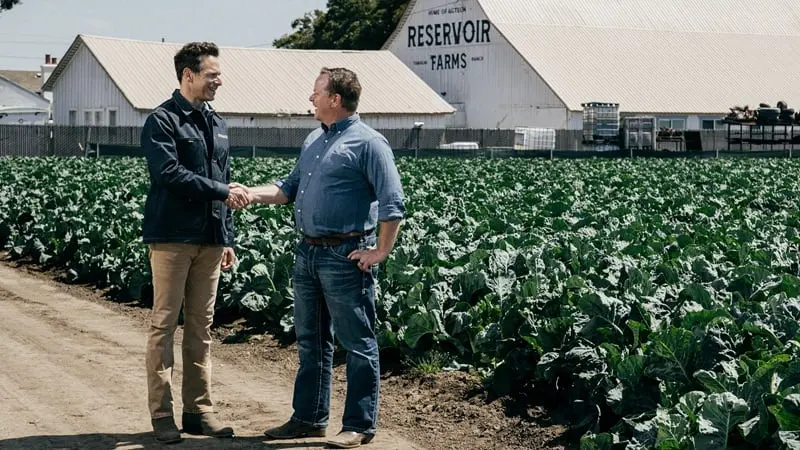
In a significant validation of the agricultural technology sector’s maturation, agricultural equipment titan John Deere has committed a substantial $10 million over the next three years to accelerate the growth of agtech incubator Reservoir Farms. Announced during the inaugural annual Ruggedize agricultural artificial intelligence (AI) conference in Salinas, California, this multi-million-dollar infusion marks a major escalation in a partnership that began last year when John Deere signed on as Reservoir’s official Original Equipment Manufacturer (OEM) partner.
The renewed collaboration is engineered to supercharge the development, testing, and commercialization of "physical AI"—often referred to as rugged AI—specifically tailored for specialty crops. By supplying vital machinery, deep technical expertise, and operational capital, the initiative aims to bridge the persistent gap between early-stage agtech concepts and scalable, market-ready commercial solutions.
For Reservoir Farms, which operates a thriving ecosystem for agricultural startups, the John Deere funding provides the financial runway necessary to maintain robust farm operations, expand geographical footprints across the United States, and solidify its standing as a profitable model within a historically capital-constrained agtech venture market. For John Deere, the partnership offers a strategic, front-row seat to the bleeding edge of precision agriculture, positioning the machinery giant to observe, learn from, and potentially integrate the most disruptive technological advancements emerging from the startup community.
Detailed Chronology and Partnership Evolution
The Genesis of the OEM Partnership
The relationship between John Deere and Reservoir Farms formally took root last year when the agricultural machinery manufacturer established itself as the incubator’s official OEM partner. This initial alliance was structured to provide incubator-housed startups with direct access to heavy agricultural equipment, technical support, and engineering expertise. Rather than operating as a traditional, tightly controlled corporate accelerator, the partnership was built on a foundation of milestone-driven trust.
According to Sean Sundberg, business integration manager at John Deere, the machinery giant laid out specific, rigorous performance metrics and developmental goals for Reservoir Farms to meet in order to secure subsequent funding tiers. The incubator not only met these benchmarks but exceeded them across the board, paving the way for the newly announced $10 million, three-year financial commitment.
"It’s not like we are here every day policing everything or anything like that," Sundberg explained during the Salinas conference. "We have goals that we’ve aligned to, and then it’s really hands-off where we say, ‘Danny, go do the work that you need to do,’ and it’s been fantastic to see the growth from opening up Salinas to also having a site in Sonoma County, and now looking at Yuma, Arizona."
Scaling Footprints and Operational Growth
Under the leadership of CEO Danny Bernstein, Reservoir Farms has scaled its physical infrastructure to meet the surging demand from innovators attempting to deploy AI and robotics in real-world agricultural environments. Currently, the incubator houses 22 startups that pay between $3,000 and $6,000 monthly to rent active farmland across multiple locations, including Salinas and Sonoma, California. These plots serve as living laboratories where entrepreneurs can test, refine, and stress-test their agtech solutions under authentic agricultural conditions.
The injection of capital from John Deere—alongside a similar $1.5 million, three-year partnership established earlier this year with Western Growers—goes directly toward shoring up farm operations, covering property rentals, acquiring specialized equipment, and deploying technical expertise. Buoyed by these strategic corporate alignments and steady startup rental revenues, Reservoir Farms has achieved profitability.
Looking forward, the incubator is aggressively charting its next phase of expansion. In addition to cementing its presence in California’s agricultural hubs, Reservoir is actively laying the groundwork for sites in Central Valley, California, Yuma, Arizona, and is in the exploratory stages of establishing operations in Washington state.
Supporting Context & Metrics: The Mechanics of the Reservoir Ecosystem
To understand the weight of John Deere’s investment, one must examine the unique economic engine powering Reservoir Farms. The incubator operates on a dual-revenue framework designed to insulate its community from the cyclical volatility typical of venture capital markets.
The Dual-Revenue Operating Model
- Startup Community Contributions: Emerging agtech companies pay recurring fees (ranging from $3,000 to $6,000 per month) for access to arable land, testing grounds, and peer networks. This provides a baseline of operational revenue.
- Corporate Partnerships: Strategic investments from foundational entities like John Deere and Western Growers provide the heavy-lifting capital required to subsidize advanced equipment, scale acreage, and offer high-level technical mentorship.
"We have two primary sources of core operating revenue," Bernstein elaborated. "One is from the startups to participate in our community, and the other is from corporate partners like John Deere and Western Growers to support and lift the community. Having Western Growers and John Deere as the foundational partners… it really does support our core offerings."
Complementary Business Structures
Beyond the incubator space, the broader Reservoir ecosystem features an active venture capital arm launched in October 2025. This VC wing operates as a legally distinct entity, completely separate from the incubator’s books, yet highly synergistic. The fund has been active in deploying capital, participating in seed rounds such as TerraBlaster’s $12.5 million raise for its LIBS-based precision fertilizer technology, and acquiring financial and indoor agriculture expertise through the buyout of Contain in June 2025.
Reservoir is currently in the process of raising its second dedicated venture fund. Bernstein pitches this dual structure to prospective investors as a unique value proposition: an early-stage venture fund coupled with an operational incubator that maintains direct ties to the most influential OEM in the global agricultural sector.
Official Statements and Industry Insights
John Deere’s Strategic Intentions
John Deere is no stranger to aggressive corporate development and inorganic growth. The company has a robust track record of internal innovation—exemplified by products like the See & Spray technology and recent advancements in hands-free baling—complemented by strategic acquisitions. Key past transactions include the August 2025 purchase of GUSS Automation (specialists in autonomous orchard spraying), the June 2025 acquisition of remote imaging firm Sentera, and the landmark 2017 buyout of computer vision pioneer Blue River Technology.
While industry watchers frequently speculate on whether incubator partnerships are merely pipelines for future mergers and acquisitions, Sundberg maintains that John Deere’s primary motivation with Reservoir Farms is observational and educational. The partnership provides an unobstructed lens into how independent startups identify and solve acute marketplace gaps that major corporations might miss.
"We kind of underestimated the breadth of work that would be ongoing here, and the different means in which [startups are] doing it—the different avenues that they’re pursuing to address some of the gaps in the marketplace—has really been eye-opening to us," Sundberg noted. He emphasized that watching startups evolve from infancy to commercial viability—reaching a stage where products are validated through paid pilots or recurring service fees—provides invaluable insights into modern farming demands.
Furthermore, Sundberg highlights a symbiotic economic loop: when agtech startups successfully deliver tools that help growers save money and optimize operational efficiency, those growers free up capital that can subsequently be reinvested into heavy machinery, benefiting OEMs like Deere.
Future Outlook: A Renaissance for AgTech?
For the past several years, the broader agricultural technology sector has battled headwinds characterized by constrained exit environments, depressed venture capital valuations, and cautious grower adoption. However, leaders at both John Deere and Reservoir Farms suggest that the industry may be standing on the precipice of a transformative turnaround.
Transitioning to Multi-Capability Solutions
Bernstein points to a technological evolution moving away from single-crop, single-task applications toward sophisticated, multi-crop, multi-task, and multi-machine platforms. As hardware and software mature, the industry is entering an era of heightened value creation and trust-building.
"We do anticipate with the technology improving and going from one crop/one task to multi-crop, multi-task, multi-machine, multi-industry, that we’re entering into an era of significant value creation and trust building coming from agtech that will lead to more exits," Bernstein asserted. "There’s just no question, and Deere and others will end up being acquisitive because you have robotic form factors with dozens of degrees of freedom that are able to address new opportunities in precision ag that are complementary to the existing form factors in the market."
The Road Ahead
As Reservoir Farms deploys John Deere’s $10 million commitment across its expanding network of farms in California, Arizona, and potentially Washington, the incubator serves as a vital stress test for the future of farming. By pairing venture capital discipline with physical agricultural testing grounds—and backing it with the manufacturing might of John Deere—the initiative is helping to clear the path toward a fully integrated, technologically advanced agricultural future where physical AI is no longer a futuristic concept, but a daily operational reality.