
Executive Overview
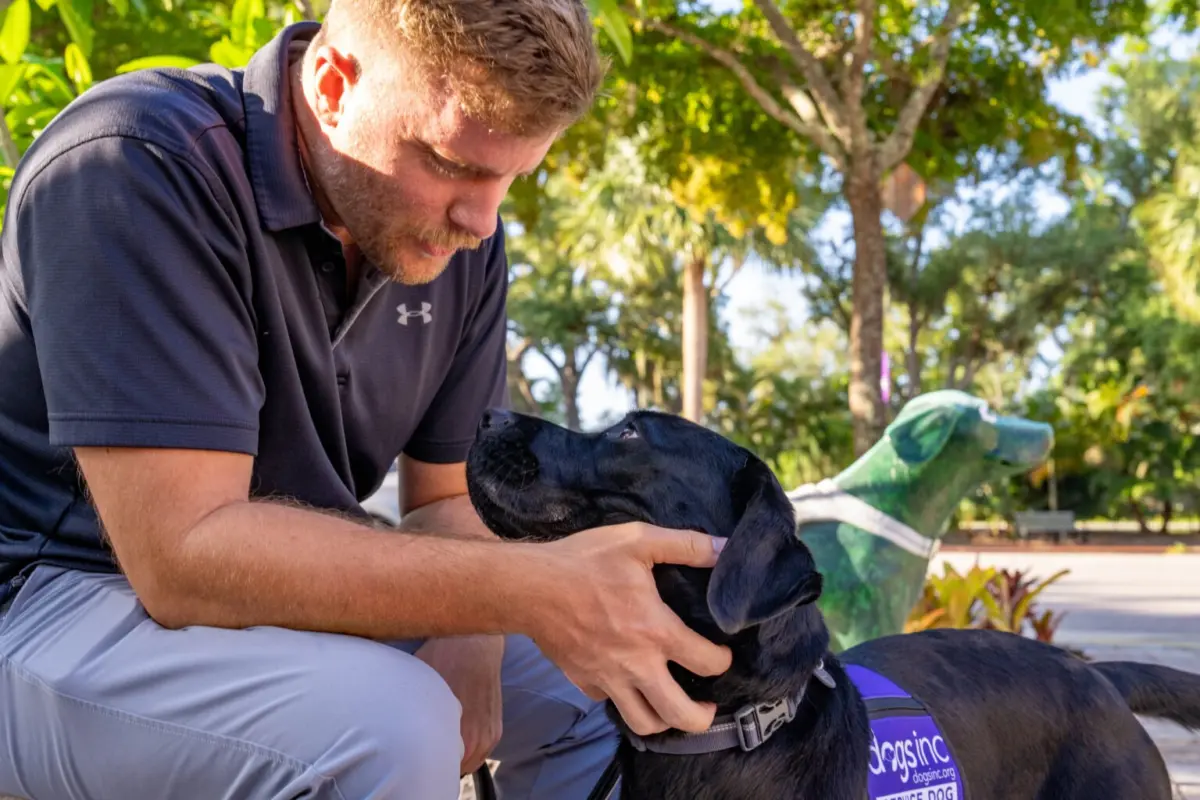
Raising a future service dog is frequently romanticized as an idyllic journey filled with playful puppies, heartwarming public outings, and the ultimate satisfaction of performing a profound civic good. Across social media feeds and promotional brochures, volunteer puppy raisers are often depicted smiling alongside impeccably behaved golden retrievers and Labrador retrievers, basking in the glow of community praise.
However, beneath this polished veneer lies a rigorous, demanding, and emotionally complex undertaking that tests the limits of human patience, household synchronization, and personal discipline.
Service dog organizations—such as Dogs Inc—depend entirely on a network of volunteer puppy raisers to usher eight-week-old puppies through the critical foundational stages of their lives. These volunteers are tasked with instilling house manners, basic obedience, and early socialization before the dogs return for advanced, formal professional training.
Yet, the reality of this commitment extends far beyond casual obedience training. It requires an unyielding, 24/7 dedication to structure, resilience in the face of non-linear developmental setbacks, navigating the unpredictable variables of the public sphere, and enduring the poignant heartbreak of letting go. This exhaustive analysis explores the authentic challenges of puppy raising, the vital support systems that make the endeavor possible, and why—despite the profound difficulties—thousands of individuals continue to answer the call.
Detailed Chronology: The Journey of a Puppy Raiser
The trajectory of raising a working dog follows a carefully calibrated developmental timeline. Understanding this chronology is essential for anyone considering stepping into the role of a volunteer puppy raiser.
Phase 1: Arrival and Home Integration (Weeks 8 to 16)
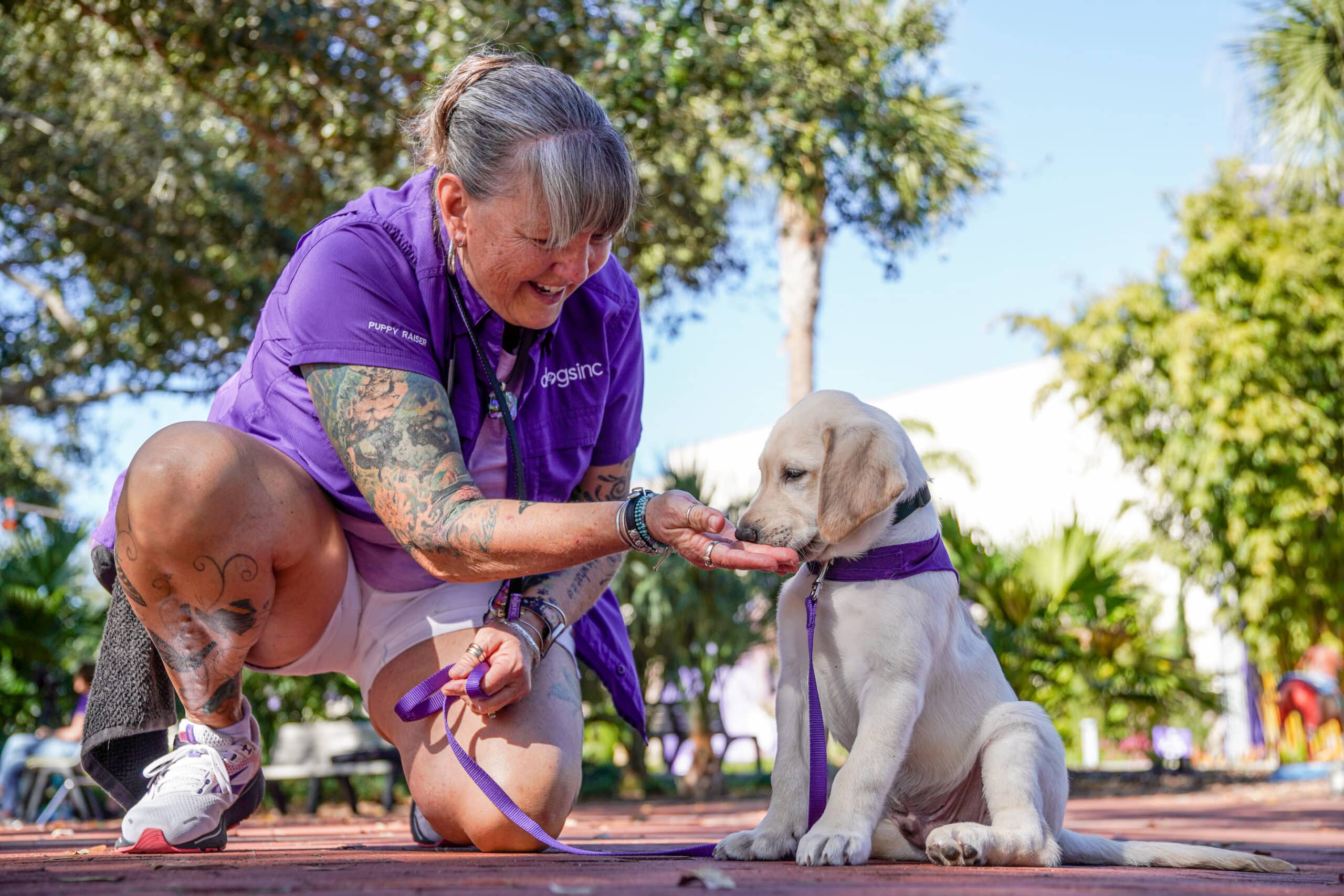
At approximately eight weeks of age, the future service dog leaves its littermates and mother to enter the home of a volunteer raiser. This initial transition is high-stakes. The puppy is introduced to crate training, house-breaking routines, and basic household rules.
During this window, raisers focus on establishing a predictable rhythm. Every interaction serves as a lesson in impulse control, whether it is learning to sit politely before eating, waiting at thresholds, or accepting gentle handling of paws and ears.
Phase 2: Expanding Horizons and Early Socialization (Months 4 to 8)
As the puppy gains physical coordination and cognitive capacity, the scope of training widens dramatically. House manners are no longer enough; the puppy must learn how to function in the wider world.
Raisers introduce their pups to novel sights, sounds, and surfaces. This includes walking on slick floors, navigating elevators, encountering shopping carts, and processing the ambient noise of bustling community spaces. The goal during this phase is to build unshakeable confidence, ensuring that the puppy views the world as a safe, manageable environment rather than a source of fear.
Phase 3: Refining Adolescence and Real-World Testing (Months 8 to 14)
Adolescence in dogs brings hormonal shifts, boundary-pushing, and temporary regressions in focus—a phase remarkably similar to human teenage years. This period is widely considered the ultimate test for volunteer raisers.
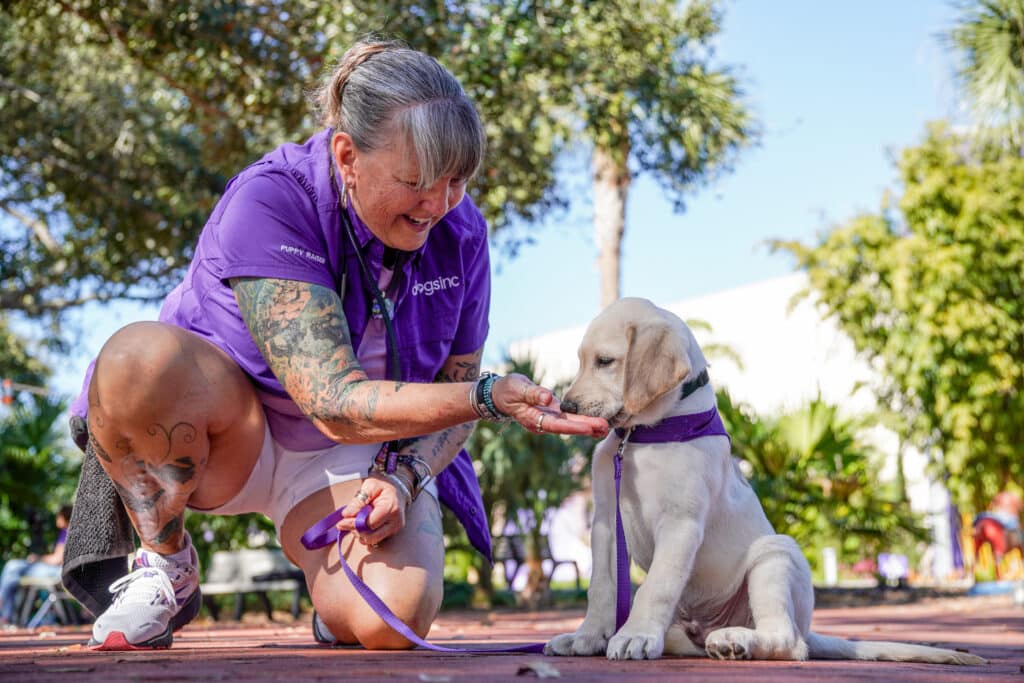
Basic commands that were once reliable may suddenly seem forgotten as the puppy investigates adolescent distractions. Public access training intensifies during this stage, with raisers regularly taking their adolescent dogs into grocery stores, restaurants, public transit, and crowded parks to prove their training against heavy real-world temptations.
Phase 4: Graduation and Recall (Months 14 to 18+)
Culminating the raising period, the adolescent dog reaches maturity and prepares for formal, advanced professional training. The dog is recalled by the service dog organization to begin specialized task training—such as guide work, mobility support, or facility assistance. This marks the end of the volunteer raiser’s direct stewardship and the beginning of the most emotionally challenging milestone of the journey: transition and handover.
The Six Core Challenges of Puppy Raising
To maintain a realistic perspective on service dog cultivation, industry experts outline six primary hurdles that every volunteer must confront.
1. The Burden of Unrelenting Consistency
Consistency is the bedrock of canine learning theory. Dogs do not possess abstract reasoning; they learn through immediate association, repetition, and clear reinforcement patterns.
- What it looks like: Basic cues—such as sit, stay, and loose-leash walking—must be reinforced continuously. The dog’s rules cannot shift depending on the time of day, the location, or who is holding the leash.
- Why it is challenging: Human beings are inherently fallible and prone to fatigue, stress, and convenience. Furthermore, consistency requires absolute alignment across an entire household. If one family member allows the puppy onto the couch while another strictly forbids it, the dog becomes confused, and training stalls. When life gets chaotic, maintaining rigid behavioral standards becomes a test of sheer willpower.
2. Navigating Unpredictable Public Environments
Service dogs-in-training must eventually work seamlessly in complex public environments where chaos is guaranteed.
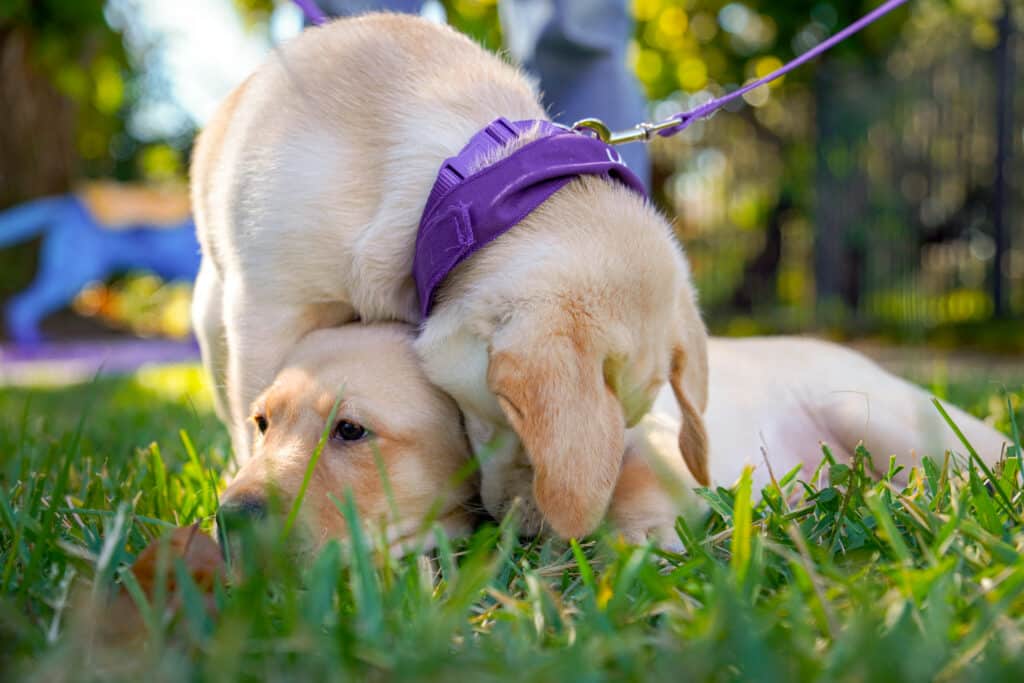
- What it looks like: Raisers intentionally expose their pups to bustling commercial districts, shopping centers, and public gatherings. They must manage the dog’s focus amidst dropped food, sudden loud noises, scurrying animals, and moving machinery.
- Why it is challenging: The public sphere is entirely outside the raiser’s control. Well-meaning strangers constantly approach to pet, coo at, or distract the puppy, violating the cardinal rule of working dog etiquette. Balancing public education, crowd management, and the puppy’s concentration requires immense poise, situational awareness, and diplomacy from the raiser.
3. Managing Distractions and Non-Linear Progress
Behavioral development is rarely a straight upward trajectory; it is marked by plateaus, regressions, and sudden breakthroughs.
- What it looks like: A puppy that executed a flawless heel walk on Tuesday may lunge toward a passing bicycle on Wednesday. Raisers must constantly redirect unwanted impulses and patiently reteach foundational skills.
- Why it is challenging: The psychological toll of stagnation can be draining. Raisers invest physical and emotional energy into a process that occasionally feels two steps forward and one step back. Maintaining a calm, encouraging demeanor during a regression requires deep emotional regulation.
4. The Uncompromising Time Commitment
Raising a future service dog is not a hobby that can be conveniently paused when other life obligations pile up.
- What it looks like: Daily schedules are completely restructured around the puppy’s needs. This encompasses feeding specialized diets, administering preventative healthcare (such as flea, tick, and heartworm medications), scheduling and attending veterinary appointments, and dedicating multiple blocks of time to targeted training and physical exercise.
- Why it is challenging: The sheer operational overhead can overwhelm individuals who underestimate the labor involved. While organizations frequently subsidize veterinary expenses and medical care, the personal time investment is non-negotiable and extends across many months.
5. The Emotional Toll of Letting Go
Perhaps the most universally acknowledged hurdle of puppy raising is the inevitable parting of ways.
- What it looks like: Over the course of more than a year, a deep, unbreakable attachment forms. The puppy sleeps by the raiser’s bed, joins family vacations, and becomes an integral thread in the household fabric. Then, the recall notice arrives, and the dog is returned to the organization for advanced training.
- Why it is challenging: The grief of separation is real and profound. However, experienced raisers learn to reframe this loss through a lens of profound purpose: the dog is graduating to fulfill a life-changing mission for an individual with a disability.
6. Living Within a 24/7 Training Ecosystem
When a future service dog enters a home, the home ceases to be a private sanctuary and becomes a permanent training facility.
- What it looks like: Crate training is utilized strategically to foster independence and safe boundaries, but the raiser’s mental radar is perpetually pinging. Are there dropped items on the floor? Is the puppy displaying stress signals? Are house manners being maintained while cooking dinner?
- Why it is challenging: There is virtually no "off" switch. Even moments of relaxation at home require a baseline level of supervision to ensure the puppy does not practice undesirable behaviors that could jeopardize its working career.
Supporting Context & Operational Metrics
To better understand the scale and scope of service dog development, organizations operate within highly structured frameworks designed to set volunteers up for success.
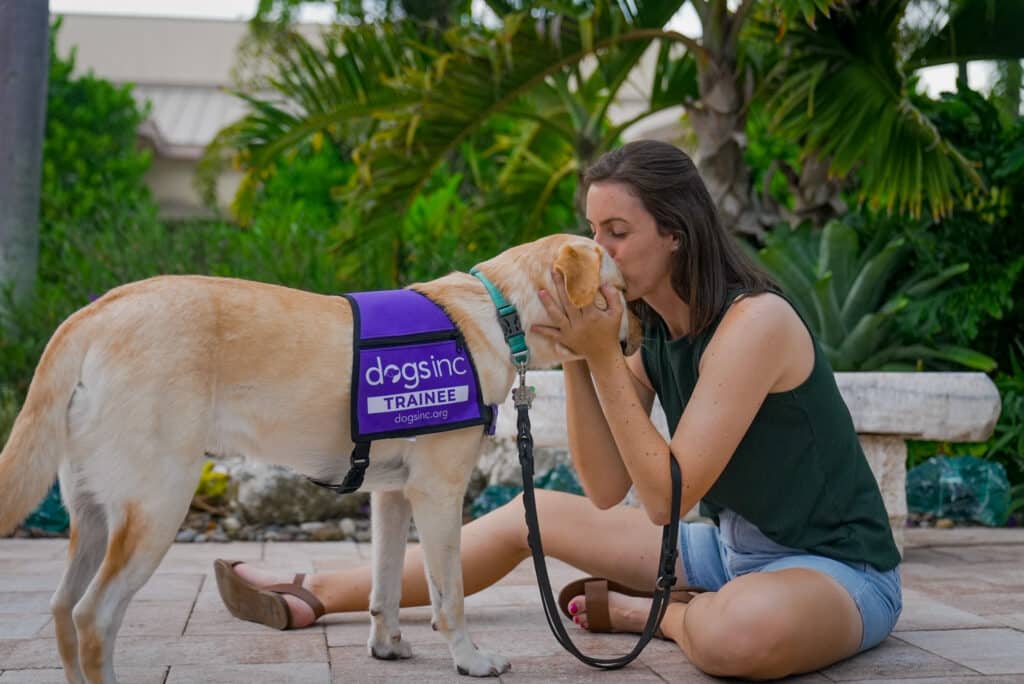
- Institutional Support Systems: Volunteer raisers are never left to navigate the process alone. Reputable organizations provide certified instructors, dedicated area coordinators, and a robust peer network of fellow raisers.
- Relief Networks: Understanding the burnout potential of 24/7 care, programs often facilitate "puppy-sitting" networks. These systems allow raisers to take short breaks, travel for emergencies, or manage medical procedures while ensuring consistency for the puppy in training.
- Demographic Diversity: Service dog puppy raising is not restricted to a single demographic. Successful volunteers span a wide spectrum of society, including active families, university students, working professionals, and retirees who possess the requisite time and emotional bandwidth. The screening process typically involves formal applications, background reviews, and detailed interviews to ensure a viable match between the volunteer and the puppy.
Official Insights and Program Guidance
Organizations at the forefront of working dog breeding and training emphasize that the challenges of puppy raising are directly proportional to the quality of the final working outcome.
Industry professionals note that the foundation laid in the first year of a dog’s life dictates its future efficacy as a guide or service animal. According to senior training directors, the objective during the volunteer phase is not to produce a finished, flawless automaton, but rather a resilient, adaptable, and emotionally secure adolescent.
"We are not asking our volunteer raisers to create a fully operational service dog out of an eight-week-old puppy," notes program literature from leading breeding centers. "We are asking them to build a confident, socially stable learner who possesses the psychological footing necessary to master complex professional tasks later in life. Every hurdle overcome in the home and in public builds that irreplaceable foundation."
Furthermore, organizations stress that community integration is paramount. When local businesses, schools, and civic groups respect service dogs-in-training and understand public access laws, the burden on the individual raiser is significantly lightened, fostering a more collaborative ecosystem of care.
Future Outlook: The Enduring Value of the Mission
Despite the demanding logistics, the erratic progress, and the inevitable heartache of separation, the pipeline of volunteer puppy raisers remains remarkably resilient. This durability stems from the undeniable long-term impact of the work.
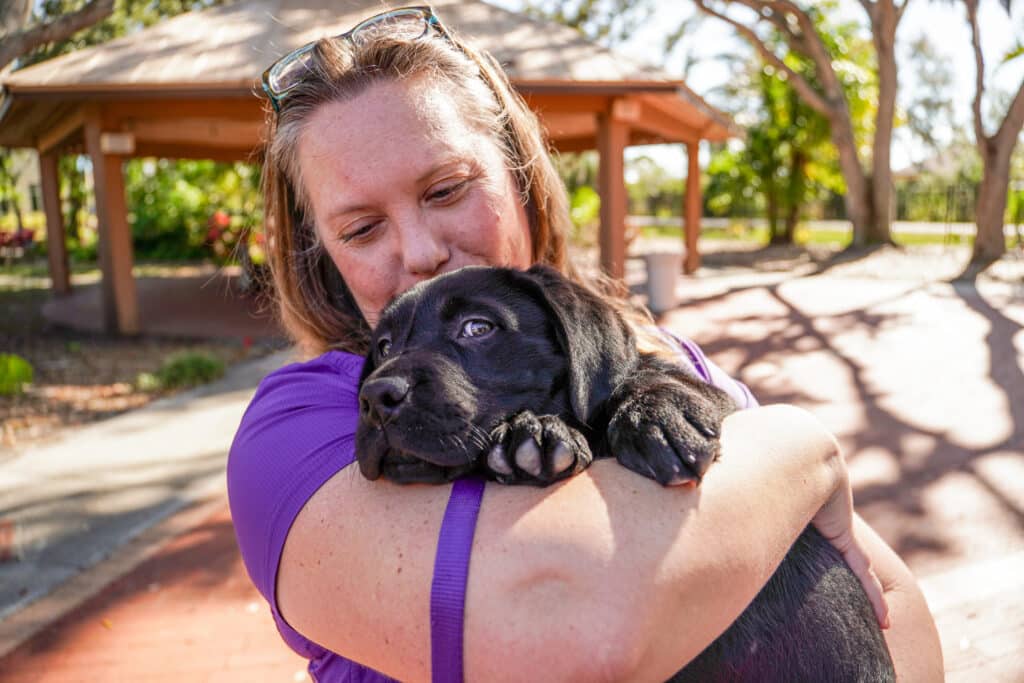
As societal awareness regarding disability rights, mobility independence, and mental health support continues to expand, the demand for highly trained service and guide dogs outpaces supply. Every volunteer who successfully navigates the trials of puppy raising contributes directly to bridging this gap.
The future of service dog breeding and training relies heavily on innovation in volunteer support, digital training resources, and community outreach. By demystifying the hardships and providing transparent, comprehensive education about what truly goes into raising a working dog, organizations can attract dedicated, clear-eyed volunteers who are fully prepared for the journey.
Ultimately, the crucible of puppy raising transforms both canine and human. The puppy evolves from an impulsive, chaotic infant into a poised, life-altering companion capable of restoring freedom and dignity to a person in need. Concurrently, the human raiser gains a profound appreciation for discipline, patience, and the quiet power of showing up—every single day—to shape a better world.