
Executive Overview
In a groundbreaking convergence of entomology, microbiology, and precision agriculture, scientists at the University of Warwick’s Warwick Crop Centre have unlocked a revolutionary method for safeguarding commercial orchards. By transforming native pollinators into targeted biological delivery agents, researchers have demonstrated that bumblebees can successfully defend crops against destructive bacterial pathogens while simultaneously performing their traditional pollination duties.
This innovative approach pairs buff-tailed bumblebees (Bombus terrestris audax) with bacteriophages—naturally occurring viruses that exclusively hunt and destroy harmful bacteria. Deployed via a specialized, non-invasive hive-mounted delivery system, these insects are dusted with a bespoke phage powder as they exit their colonies. As they forage from blossom to blossom, they deposit the therapeutic biologicals directly onto the most vulnerable tissues of the plant.
Published in the peer-reviewed journal Biological Control, the study—titled Bee-mediated delivery of bacteriophage for biocontrol of the cherry canker pathogen Pseudomonas syringae pv. syringae—marks a major milestone in agricultural science. By offering a viable, highly targeted alternative to conventional synthetic pesticides and broad-spectrum agricultural antibiotics, this dual-purpose strategy promises to reshape modern orchard management. With commercial pilots on the horizon and potential applications stretching far beyond stone fruit, this “nature working with nature” paradigm heralds a new era of sustainable, eco-friendly crop protection.
Detailed Chronology: From Concept to Breakthrough
The Genesis of an Idea
The conceptual framework for this pioneering research was born out of necessity. Plant pathologists at the Warwick Crop Centre were deep into field surveys, searching commercial orchards for naturally occurring bacteriophages capable of keeping cherry canker—one of the most economically devastating bacterial afflictions facing cherry production globally—under strict control.
Cherry canker, caused by the bacterium Pseudomonas syringae pv. syringae, enters trees primarily through open blossoms during the spring blooming window. Traditional management strategies have historically relied heavily on copper-based bactericides and agricultural antibiotics. However, these conventional interventions are increasingly plagued by systemic limitations: they can cause phytotoxicity, accumulate in soils, contribute to the growing global crisis of antimicrobial resistance, and often fail to reach the precise micro-locations where infections take root.
Dr. Mojgan Rabiey, a leading plant pathologist at the Warwick Crop Centre spearheading the research, recognized that identifying effective phages in a laboratory setting was only half the battle. The true hurdle lay in logistical delivery: how to coat thousands of delicate, ephemeral blossoms uniformly across vast acreage without resorting to heavy, tractor-mounted spraying equipment that can compact orchard soils and miss vital micro-environments.
The breakthrough struck when Dr. Rabiey observed the routine deployment of commercial bumblebee hives in orchards. "Many cherry growers already use bumblebees to improve pollination," she noted. "I started to wonder whether the bees flying from flower to flower could also carry phages directly to the blossoms we want to protect."
Engineering the Hive-Mounted Delivery System
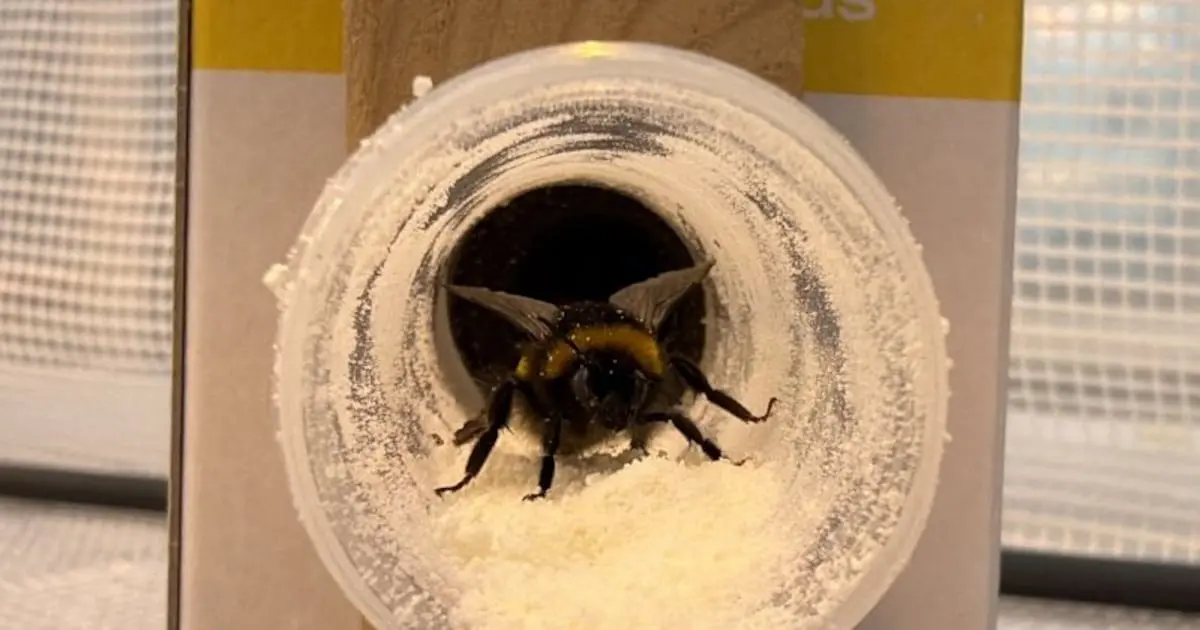
Moving from hypothesis to execution required the creation of a specialized apparatus that could leverage bee behavior without causing harm to the colonies. The research team engineered a bespoke, hive-mounted dispenser system. Positioned at the exit gate of the bumblebee hive, the device is lined with a specially formulated, dry phage powder.
As the worker bees push their way out of the hive to begin their daily foraging runs, they brush past the powder matrix. The microscopic phages adhere electrostatically to the bees’ fuzzy cuticles—the exact same biological adaptations that make them exceptional pollen collectors.
Controlled experiments were subsequently designed to measure the efficacy of this vector system. Using a combination of real cherry blossoms and meticulously constructed artificial flowers to track transfer rates, the team evaluated the foraging patterns and microbial deposition efficiencies of buff-tailed bumblebees.
The results exceeded initial expectations. The bees successfully transferred the viable bacteriophages to an astonishing 88% of all blossoms visited. Once deposited onto the stigmas and petals, the phages immediately set to work, multiplying in the presence of their target bacteria and sharply reducing localized populations of Pseudomonas syringae.
Supporting Context & Metrics: The Science of Phage Biocontrol
Understanding Bacteriophages: Nature’s Precision Weapons
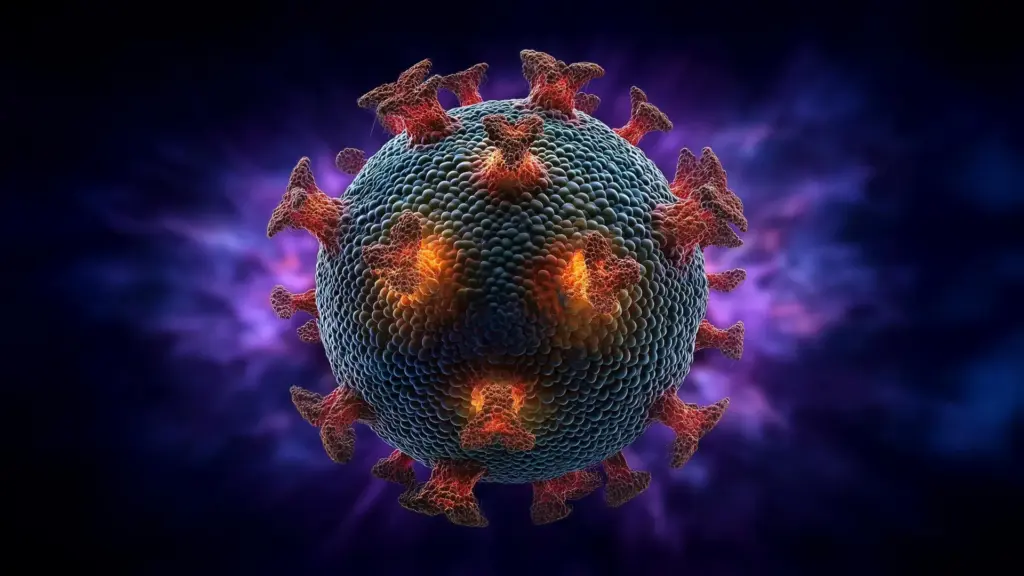
To fully appreciate the significance of the Warwick Crop Centre’s findings, one must examine the unique biology of bacteriophages. Often referred simply as "phages," these entities are the most abundant biological entities on the planet, outnumbering all other life forms combined. They inhabit every ecological niche where bacteria are found, including soil, aquatic systems, and the surfaces of living plants.
Crucially, phages are entirely distinct from human, animal, or plant viruses. They are incapable of infecting eukaryotic cells. Instead, they are obligate bacterial parasites with hyper-specific host ranges.
"Unlike viruses that infect people, animals, or plants, phages only infect and kill bacteria, and individual phages are highly specific about which bacteria they attack," Dr. Rabiey explains. "That means we can select phages that specifically target disease-causing bacteria without harming beneficial microbes around them."
This high degree of specificity represents a monumental advantage over traditional chemical pesticides. Broad-spectrum agrochemicals frequently act as ecological sledgehammers, wiping out beneficial soil microbiomes, pollinators, and non-target organisms alongside the targeted pest. Phages, by contrast, act like a microscopic scalpel—neutralizing the pathogen while preserving the delicate balance of the phyllosphere microbiome.
Key Metrics and Research Findings
- Target Pathogen: Pseudomonas syringae pv. syringae (causative agent of cherry canker).
- Vector Species: Buff-tailed bumblebee (Bombus terrestris audax).
- Delivery Efficacy: Phages successfully transferred to 88% of targeted blossoms during field and laboratory trials.
- Environmental Impact: Zero chemical runoff, zero soil compaction from tractor spraying, and absolute preservation of beneficial non-target microflora.
- Application Mechanism: Passive, dry-powder hive dispenser requiring no external energy sources or heavy machinery.
Official Statements and Expert Insights
The implications of this research extend far beyond academic curiosity, offering immediate, practical solutions for an agricultural sector under mounting regulatory and environmental pressure.
Dr. Shannon Greer, a research fellow at the Warwick Crop Centre working alongside Dr. Rabiey, emphasized the commercial viability and operational simplicity of the system.
"Developing the phages is only useful if we can turn them into something that growers can realistically use," Dr. Greer stated. "Our bumblebee phage delivery doesn’t require specialist equipment to apply. We have shown that the approach works experimentally, and the next step is to begin piloting the treatment with growers."
This sentiment underscores a critical bottleneck in agricultural innovation: many laboratory-proven biologicals fail in the real world because their application methods are too complex, labor-intensive, or expensive for everyday farm operations. By piggybacking on an operational practice already standard in modern horticulture—namely, the introduction of managed bumblebee hives for pollination—the Warwick team has circumvented the distribution hurdle entirely. The bees do the heavy lifting, navigating dense canopies, reaching obscure floral nooks, and timing their visits to peak bloom periods naturally.
Dr. Rabiey encapsulated the philosophical and operational shift inherent in the research by describing it as a masterclass in synergistic ecology:
"Phages are natural enemies of bacteria, and bumblebees are natural pollinators. Bringing those two systems together gives us a completely different way to think about protecting plants."
Future Outlook: Scaling Up and Expanding Horizons
With the foundational science securely validated and published in Biological Control, the Warwick Crop Centre research team is actively looking toward the next phases of development.
Immediate Next Steps: Commercial Pilot Programs
The primary objective for the immediate future is the transition from controlled experimental settings to large-scale commercial pilot programs. Collaborating directly with fruit growers, the team aims to test the hive-mounted delivery systems under real-world weather conditions, diverse orchard layouts, and varying pathogen pressures. These pilots will provide critical data on long-term phage stability within the dispensers, optimal re-application intervals, and overall cost-benefit metrics for commercial producers.
Beyond Cherries: A Multi-Crop Horizon
While the initial proof-of-concept focused tightly on cherry canker, the biological principles underpinning the technology are universally applicable to any agricultural system where flowers serve as the primary infection court for bacterial diseases.
Bacterial pathogens frequently exploit the open architecture of blossoms to colonize host plants before migrating inward to vascular tissues, causing devastating conditions such as fire blight in apples and pears, bacterial spot in stone fruits, and various vascular wilts in vegetable crops.
Consequently, the Warwick team has already initiated preliminary explorations into adapting the bumblebee delivery platform for:
- Apple and Pear Orchards: Targeting fire blight (Erwinia amylovora), a notoriously aggressive bacterial disease capable of wiping out entire orchards in a single season.
- Forestry and Woodland Management: Applying targeted treatments to high-value trees vulnerable to systemic bacterial blights.
- Horticultural Vegetable Crops: Investigating bee-mediated biological controls for field-grown crops that rely on insect pollination.
Toward a Pesticide-Reduced Future
The broader implications of this research align seamlessly with global regulatory trends and consumer demands. Governments worldwide—particularly within the European Union and increasingly in North America—are systematically phasing out older, highly persistent chemical pesticides and restricting the agricultural use of medically important antibiotics.
As regulatory frameworks tighten and consumer preferences pivot decisively toward sustainably produced food, growers are desperately seeking biologically based tools that maintain high crop yields without compromising environmental stewardship.
By weaponizing nature’s own administrative checks and balances—pairing the precision of bacteriophages with the tireless mobility of bumblebees—the University of Warwick has charted a visionary course for modern agriculture. As these pilot programs scale up in the coming years, the iconic hum of the bumblebee in commercial orchards may soon signify not only the promise of a bountiful harvest, but an active, living defense system standing guard over our global food supply.