
Executive Overview
Across the globe, the ground beneath our feet is facing an unprecedented ecological crisis. From the war-torn wheat fields of Ukraine—where years of heavy shelling, landmines, and chemical discharges have transformed once-fertile soil into dangerous agricultural wasteland—to the industrial heartlands of nations burdened by generations of heavy mining, soil degradation has become one of the defining environmental challenges of the 21st century. According to environmental scientists and defense analysts, repairing the physical and chemical damage inflicted on Ukrainian farmland alone will likely take decades and cost upwards of $20 billion.
Yet, conflict is merely the most visible catalyst for a much broader planetary emergency. Industrial operations, intensive agricultural practices, and abandoned mining infrastructure continuously leach billions of tonnes of toxic elements, organic pollutants, and heavy metals into the lithosphere every year. Traditional remediation methods—such as soil washing, chemical neutralization, or the disruptive "dig-and-dump" technique, which physically strips topsoil and relocates it to landfills—are prohibitively expensive, environmentally invasive, and economically unsustainable on a global scale.
Enter RemePhy, an ambitious, high-potential start-up emerging from the laboratories of Imperial College London. Founded by doctoral researchers Franklin Keck and Ion Ioannou, RemePhy is pioneering an advanced biotechnological approach known as enhanced phytoremediation. By introducing specialized bacterial endophytes into plants via targeted genetic and non-genetic modifications, the company claims it can extract heavy metals from contaminated earth up to 17 times more efficiently than conventional phytoremediation methods.
With initial commercialization targeted for the mining sector and long-term sights set on rehabilitating devastated agricultural zones in Europe and beyond, RemePhy’s innovative business model—which encompasses seed distribution, proprietary biomass harvesting, and metal recycling—promises to slash remediation costs by up to 80%. As the company prepares for its first major field trials in Newcastle, the scientific and industrial communities are watching closely to see if biological engineering can successfully clean up the planet’s most toxic legacies.
Detailed Chronology: From Academic Labs to Commercial Realities
The genesis of RemePhy is rooted in rigorous academic research, translational science, and the pressing demand for scalable environmental technologies. The timeline of the company’s evolution highlights how a university laboratory project rapidly transformed into a commercially viable venture poised to disrupt the multi-billion-dollar environmental remediation industry.
The Foundation Years at Imperial College London
When Franklin Keck began his PhD studies at Imperial College London, the directive from his laboratory supervisor was clear: advance the science of phytoremediation. The lab already possessed a patented foundational process focused on extracting heavy metals from harvested plant biomass, but a critical technological bottleneck remained. While plants could theoretically absorb certain minerals, the natural rate of uptake was far too slow to make phytoremediation practical for commercial or industrial applications. The missing link was a mechanism to actively bridge the gap between toxic soil and root systems, accelerating the transport of heavy metals into the plant tissue.
Developing the Breakthrough System
To solve this challenge, Keck engineered a novel biological system utilizing a small, highly targeted number of genes to introduce bacterial endophytes into plants. These endophytes—symbiotic microorganisms that live within plant tissues without causing disease—acted as natural bio-pumps, dramatically enhancing the plant’s ability to mobilize and absorb heavy metals from surrounding soil particles.
Laboratory data quickly validated the concept. Under controlled, contaminated-pot conditions, Keck’s genetically modified plants achieved heavy metal uptake rates roughly 17 times higher than their wild-type (non-modified) counterparts. Recognizing the immense commercial and ecological value of the discovery, the university and researchers secured a patent for the system. Shortly thereafter, the project officially spun out into an independent commercial entity: RemePhy Technologies.
Securing Early-Stage Funding and Strategic Partnerships
Following its spin-out from Imperial College, RemePhy successfully closed its initial round of seed funding, providing the financial runway necessary to transition from benchtop experiments to real-world deployment. Understanding the strict regulatory frameworks governing genetically modified organisms (GMOs)—particularly within the European Union—the founders pursued a dual-track strategy. Alongside their genetically modified strain, they developed a non-GM, wild-type equivalent designed to comply with stringent European agricultural and environmental policies.
Transitioning to Field Trials (Present Day)
With regulatory discussions underway with European Union stakeholders and preliminary explorations into Ukrainian land restoration, RemePhy stands on the cusp of its most critical milestone to date: its inaugural field trial. Scheduled to take place in Newcastle within the coming weeks, this trial will test the non-GM iteration of the company’s remediation crops in open-air conditions for the very first time. The empirical data gathered from this trial will serve as the ultimate proving ground, dictating the timeline for full commercialization, which the founders anticipate will arrive within the next 12 to 18 months.
Supporting Context & Metrics: The Economics and Science of Soil Contamination
To fully appreciate the significance of RemePhy’s technology, one must examine the staggering scale of global soil pollution and the prohibitive economics of legacy remediation techniques.
The Scale of the Crisis
Soil degradation is no longer confined to localized industrial accidents; it is a systemic global crisis.
- The Conflict Impact: In Ukraine, ongoing hostilities have rendered millions of hectares of premier agricultural land unusable. Millions of tonnes of unexploded ordnance, spent ammunition casings, heavy artillery debris, and fuel residues have saturated the soil with lead, cadmium, mercury, and energetic compounds. According to agricultural economists, restoring this soil will require at least $20 billion and decades of intensive biochemical intervention. Similar environmental catastrophes plague Syria, Sudan, and other conflict zones worldwide.
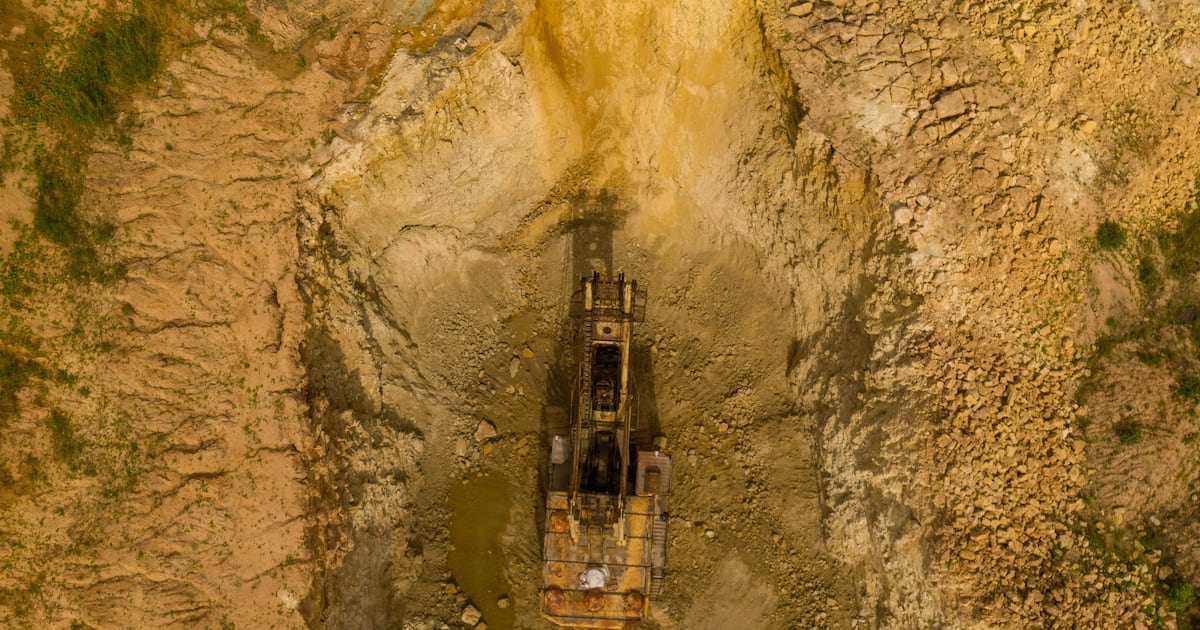
- Industrial and Mining Legacies: Globally, millions of abandoned and active mining sites continue to leak acidic water and heavy metal-laden tailings into surrounding ecosystems. Geological surveys reveal that maps of global mining waste light up nearly universally, demonstrating that virtually every nation harbors neglected industrial scars.
- Agricultural Runoff: Modern industrial farming practices also contribute significantly to soil and water toxicity. Heavy applications of phosphate and nitrate fertilizers accumulate in soils over time. During periods of heavy rainfall, these compounds mobilize residual heavy metals, washing them into vital river systems, aquifers, and oceans, where they disrupt aquatic ecosystems and threaten human health.
| Remediation Method | Average Cost per Acre | Environmental Disruption | Speed & Scalability |
|---|---|---|---|
| Dig and Dump (Landfill Relocation) | £150,000 – £300,000+ | High (Destroys local ecosystem, shifts waste elsewhere) | Fast, but logistically complex |
| Soil Washing & Chemical Treatment | £100,000 – £200,000 | Moderate to High (Requires heavy machinery and chemicals) | Moderate |
| Conventional Phytoremediation | £50,000 – £90,000 | Low (Natural plant growth, but historically slow) | Very Slow (Requires multiple growing seasons) |
| RemePhy Enhanced Phytoremediation | £30,000 – £50,000 | Minimal (Restores soil biology naturally) | Fast (Up to 17x higher uptake efficiency) |
The Economic Advantage
Traditional soil remediation—exemplified by the "dig-and-dump" method—requires heavy excavation equipment to physically dig up hundreds of thousands of tonnes of contaminated earth, load it onto transport trucks, and dump it into specialized hazardous waste landfills. This intrusive process frequently costs between £150,000 and £300,000 per acre.
In contrast, RemePhy’s techno-economic analyses project that its enhanced phytoremediation system will cost between £30,000 and £50,000 per acre—representing a 60% to 80% reduction in capital expenditure for industrial operators. Given that many jurisdictions (such as the UK and EU member states) legally compel mining corporations and heavy industries to remediate land before relinquishing industrial permits, this cost differential creates an irresistible commercial incentive for adoption.
Official Statements and Insider Perspectives
The strategic vision of RemePhy is best understood through the direct insights of its co-founders, whose academic rigor and pragmatic business sense have steered the enterprise through its formative stages.
Discussing the technological hurdles overcome during his doctoral research, co-founder Franklin Keck emphasized the shift from theoretical biology to applied engineering:
"When I started my PhD at Imperial, the lab asked me to work on phytoremediation because it already had a patented process for extracting heavy metals from biomass. What was missing was a way to move those heavy metals from contaminated soil into the plant. I came up with a system that uses a small number of genes to introduce a bacterial endophyte into a plant. It worked well, we secured a patent, and eventually spun the technology out into a company which has recently received funding."
Addressing the delicate balance between genetically modified innovations and strict European regulatory realities, Keck highlighted the company’s dual-product roadmap:
"It’s a GM product but, obviously, the EU has historically been cautious about GM products. That’s why we also have a wild-type version that is non-GM. Within the next couple of weeks, we’re taking these non-GM plants to Newcastle for a field trial… My PhD data showed we could achieve around 17 times greater uptake of heavy metals compared with the wild type. However, all of that work was conducted in laboratory conditions using contaminated pots. Now we have to move from laboratory testing to glasshouse studies and then field trials."
When questioned about target markets and the deliberate decision to prioritize the mining sector over agriculture in the initial commercial phase, Keck explained the strategic reasoning:
"The market we’ve decided to focus on first is mining. There are maps showing both abandoned and active mines worldwide, and it’s quite remarkable. The entire globe lights up. Almost every country has at least one mine that has generated waste that has simply been left behind… Agriculture is more complicated because there are additional regulatory requirements regarding food-chain safety. That’s one reason we’re starting with mining, with agricultural applications following a few years later in 2028 or 2029."
Detailing RemePhy’s vertically integrated business model, Keck highlighted the dual streams of revenue and customer service models available to industrial clients:
"The first option is a seed-based model. Customers purchase either GM or non-GM seeds, we return to harvest the plants, process the biomass, and separate out the heavy metals. That means the entire value chain sits within RemePhy, including remediation, recycling, and the eventual sale of recovered metals. The second option is a licensing model, where customers pay a licence fee, receive the seeds, and manage the remediation process themselves… Many customers don’t have the infrastructure, expertise, or commercial relationships needed to recover and sell the metals. In some cases, the concentration of metal is so low that they’re primarily interested in cleaning up the land rather than monetising the recovered material."
Future Outlook and Strategic Roadmap
As RemePhy prepares to analyze the empirical data from its upcoming Newcastle field trials, the company’s trajectory points toward a transformative impact on global environmental management. The roadmap ahead is defined by calculated scaling, regulatory engagement, and market expansion across multiple high-value sectors.
Phase 1: Commercializing Mining Remediation (2026–2027)
The immediate focus remains on securing empirical validation from open-field trials. If the non-GM crops successfully demonstrate enhanced heavy-metal extraction under unpredictable weather and soil conditions, RemePhy plans to launch its commercial mining remediation services within the next 12 to 18 months. By targeting mining conglomerates burdened by strict environmental closure regulations, the company expects to secure early, high-margin contracts that will fund future operational expansion.
Phase 2: Entering the Agricultural Sector (2028–2029)
Following successful deployment in industrial and mining settings, RemePhy aims to pivot toward the agricultural sector. This phase will involve rigorous testing to verify that heavy-metal concentrations in treated soils can be lowered to thresholds certified as safe for human and animal food production. Given the catastrophic soil pollution documented in agricultural breadbaskets like Ukraine, successful agricultural deployment could position RemePhy as a vital geopolitical partner in post-war reconstruction and global food security initiatives.
Phase 3: Vertical Integration and Circular Economy Leadership
Ultimately, RemePhy’s long-term business model transcends simple agronomy. By maintaining control over the entire value chain—from proprietary seed engineering and specialized cultivation to harvesting, biomass processing, and high-purity metal separation—the company is establishing a circular economy framework. Rather than viewing toxic contaminants as waste to be buried in landfills, RemePhy treats polluted soil as an urban mine, recovering valuable industrial metals and feeding them back into global supply chains.
In an era defined by ecological degradation and industrial exhaustion, RemePhy’s bio-based innovation offers a beacon of hope. By harnessing the innate power of plants and microscopic endophytes, humanity may finally possess the tools needed to heal the damaged earth on a truly global scale.