
Executive Overview
For generations, popular culture and orthodox scientific understanding alike shared a neat, tidy narrative regarding the physical diversity of our canine companions. From the towering, long-legged greyhound to the diminutive, flat-faced French bulldog, the vast spectrum of shapes and sizes seen in modern dogs was widely attributed to the vanity and targeted selection of Victorian-era kennel clubs. According to this traditional framework, centuries of rigorous human-mediated breeding—concentrated heavily within the last few hundred years—sculpted the ancestral dog into the dizzying array of modern breeds recognized today.
Now, a monumental, decade-long international study has blown that historical assumption wide open.
Published in the prestigious journal Science, new archaeological research spearheaded by a collaborative team from the University of Exeter and the French National Centre for Scientific Research (CNRS) demonstrates that the foundation of canine physical diversity was laid far earlier than previously imagined. Far from being a recent, human-engineered phenomenon of the industrial age, distinct variations in dog skull shapes and body sizes were already flourishing at least 11,000 years ago, hot on the heels of their evolutionary split from ancient wolves.
Utilizing advanced geometric morphometrics and cutting-edge 3D modeling on hundreds of ancient and modern canid remains spanning a staggering 50,000-year timeline, the research team has mapped a deep prehistoric narrative. By the time of the Mesolithic and Neolithic periods, early dogs had already achieved a level of physical diversity that reached half the range seen across all modern breeds today. This rapid, early divergence highlights an ancient, deeply intertwined coevolutionary partnership between humans and dogs. As human societies transitioned from nomadic hunter-gatherer bands to settled agricultural communities, dogs took on a myriad of vital roles—ranging from hunters and herders to guardians and companions—driving a rapid and unprecedented explosion in morphological variation.
Yet, even as this study answers long-standing questions about the speed of canine evolution, it reveals a tantalizing archaeological mystery: the exact moment, place, and mechanism of initial dog domestication still elude science, hidden deep within the Pleistocene shadows.
Detailed Chronology: Tracking the Canine Transition Through Time
To understand how dogs transformed from wild canids into the morphologically diverse companions of the ancient world, researchers had to look backward across tens of thousands of years. The resulting chronological picture shatters the notion of static, uniform early dogs and replaces it with a dynamic, rapidly shifting portrait of adaptation.
The Pleistocene Precursors (Prior to ~15,000 Years Ago)
Before the emergence of the domestic dog, the ancestral lineage shared with modern wolves was characterized by relative morphological stability. When researchers analyzed Late Pleistocene canid specimens—including several samples previously championed as "proto-dogs"—they discovered a startling uniformity. None of these ancient, pre-domestication specimens possessed the distinct skull features consistently associated with human-canine integration. Morphologically speaking, these ice-age canids looked and acted very much like wild predators navigating volatile Pleistocene environments.
The Mesolithic Dawn (~11,000 to ~9,000 Years Ago)
The first undeniable signals of domestic dog morphology emerge firmly within the early Holocene. The oldest confirmed domestic dog analyzed in the comprehensive study traces its lineage to the Russian Mesolithic site of Veretye, dating back approximately 11,000 years.
As the ice sheets retreated and human populations expanded, a subtle yet profound anatomical shift began to take place. According to the study’s precise temporal modeling, a measurable reduction in overall skull size for dogs first became detectable between 9,700 and 8,700 years ago. This reduction is widely interpreted by paleozoologists as a classic hallmark of domestication—often referred to as the domestication syndrome—where animals living in closer proximity to human settlements experience relaxed natural selection pressures and shifts in diet.
The Neolithic Expansion (~8,500 to ~7,700 Years Ago)
Following these initial structural adjustments, the pace of canine evolution accelerated dramatically. The research team identified early domestic dogs in the Americas dating back approximately 8,500 years, closely followed by specimens in Asia dating to roughly 7,500 years ago.
Crucially, this era marked a fundamental turning point in variance. Greater variability in skull shape began to emerge around 8,200 years ago. This was quickly compounded, as the data reveals a marked increase in overall body size variance starting from 7,700 years ago onward. By the Neolithic period, early dogs had evolved a degree of morphological diversity that was double that of Pleistocene specimens, achieving half of the total physical variation observed across modern dog breeds today.
By this stage, the multi-faceted relationship between humans and canines was firmly cemented. Early dogs were no longer simply scavengers lingering on the periphery of human camps; they were active participants in human survival, fulfilling specialized roles that required distinct physical attributes.
Supporting Context & Metrics: The Anatomy of a Global Study
The scale of this research is unprecedented in the field of archaeozoology. Initiated in 2014, the project represents a massive collaborative effort involving scientists, anthropologists, and archaeologists from more than 40 prestigious institutions worldwide.
Methodology and Scope
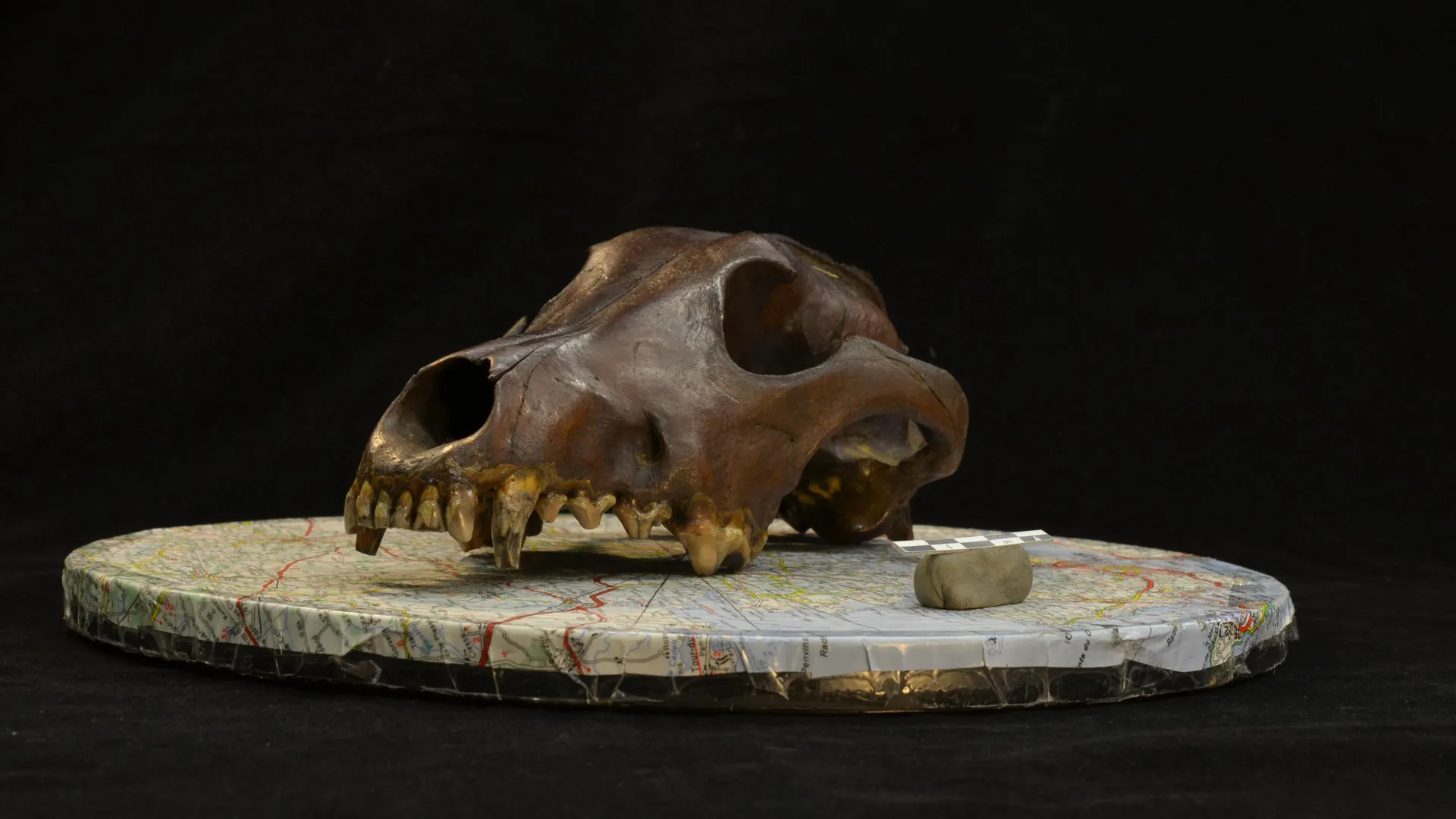
To capture the full scope of canine evolution, the research team assembled and analyzed a dataset comprising 643 canid skulls. This robust sample pool included a wide spectrum of specimens:
- Modern recognized purebred dogs representing extreme morphotypes.
- Free-ranging village and street dogs from various global regions.
- Ancient archaeological dog remains recovered from diverse geographic excavations.
- Wild wolves spanning historical and prehistoric epochs.
Together, these specimens covered an extraordinary chronological breadth of 50,000 years, stretching from the height of the Pleistocene epoch straight through to the modern era.
Rather than relying on traditional, subjective osteological measurements, the researchers pioneered the use of geometric morphometrics. By employing advanced 3D scanning technology, the team generated hyper-detailed three-dimensional digital models of each individual skull. These models allowed for the precise, quantitative mapping of hundreds of homologous landmarks across the cranium. Through this rigorous mathematical lens, researchers could track minute fluctuations in skull length, snout proportions, cranial vault expansion, and jaw structure with unprecedented accuracy.
Key Quantitative Findings
The metrics derived from the geometric morphometric analysis paint a striking picture of rapid evolutionary divergence:
- The Neolithic Baseline: By the Neolithic period, the range of skull shapes and sizes among dogs had already expanded to twice the variability seen in Pleistocene wild canids.
- The Modern Comparison: Remarkably, this Neolithic diversity already accounted for half of the total morphological range seen across the dizzying array of modern dog breeds today.
- Extreme Morphologies Absent: While ancient Neolithic dogs displayed impressive variability, the study confirmed that extreme modern morphologies—such as the hyper-brachycephalic (short-faced) traits of modern bulldogs or the extreme dolichocephalic (long-faced) profiles of borzois—were entirely absent in ancient archaeological specimens. These hyper-specialized forms remain a true product of recent, intensive human breeding practices.
Official Statements and Expert Insights
The implications of this study extend far beyond evolutionary biology, offering a profound philosophical reassessment of how humanity views its oldest animal companion. The project’s co-leads and senior researchers emphasize that these findings rewrite the timeline of human-animal coevolution.
Dr. Carly Ameen, co-lead author of the study from the University of Exeter’s Department of Archaeology and History, underscored the historical weight of the findings:
"These results highlight the deep history of our relationship with dogs. Diversity among dogs isn’t just a product of Victorian breeders, but instead a legacy of thousands of years of coevolution with human societies."
Dr. Allowen Evin, co-lead author based at the CNRS within the Institute of Evolutionary Sciences in Montpellier, France, broke down the intricate timeline of physical change uncovered by the 3D models:
"A reduction in skull size for dogs is first detectable between 9,700 and 8,700 years ago, while an increase in size variance appears from 7,700 years ago. Greater variability in skull shape begins to emerge from around 8,200 years ago onwards.
Modern dogs exhibit more extreme morphologies, such as short-faced bulldogs and long-faced borzois, which are absent in early archaeological specimens. However, there is a large amount of diversity among dogs even as early as the Neolithic; it was double that of Pleistocene specimens and already half the range seen in dogs today."
Despite these granular insights into post-domestication evolution, the study also highlights humbling gaps in the archaeological record regarding the absolute origins of the domestic dog. Professor Greger Larson, senior author of the study from the University of Oxford, reflected on the elusiveness of the very first domestic dogs:
"The earliest phases of dog domestication are still hidden from view, and the first dogs continue to elude us. But what we can now show with confidence is that once dogs emerged, they diversified rapidly. Their early variation reflects both natural ecological pressures and the profound impact of living alongside humans."
Future Outlook: Rethinking Humanity’s Closest Companion
By shattering the long-held dogma that modern dog diversity is primarily a Victorian invention, this landmark study opens exhilarating new avenues for future archaeological and genetic research.
As scientists begin to view early dogs not as uniform, generalized animals, but as rapidly adapting partners shaped by diverse ecological niches and human cultures, new questions arise. Researchers are now positioned to cross-reference these morphological shifts with parallel developments in human history—such as the spread of early agriculture, shifting dietary habits, changes in human settlement patterns, and the rise of specialized labor. Did the emergence of pastoralism prompt the need for larger, more robust guard and herding dogs? Did sedentary agricultural villages foster smaller, more adaptable companion animals?
Furthermore, the elusiveness of the earliest domestication phase serves as a clarion call for continued excavation and advanced paleogenomic sampling. By combining ancient DNA extraction with high-resolution geometric morphometrics, future researchers hope to finally peer behind the Pleistocene curtain and pinpoint the exact geographic and temporal crucible where the wolf first stepped out of the wilderness and into the human hearth.
Ultimately, this comprehensive international study reinforces a humbling and heartwarming truth: the bond between humans and dogs is vastly older, deeper, and more dynamic than we ever realized. The physical diversity that makes our modern canine companions so endlessly fascinating is not merely a modern design project, but the living, breathing legacy of a coevolutionary partnership that has spent over 11,000 years actively shaping the world we share.