
Executive Overview
The safety of companion animals during vehicular transit remains a critical, yet frequently overlooked, facet of modern pet ownership and automotive safety engineering. While human occupants are protected by rigorous federal safety standards, crumple zones, multi-point seatbelt systems, and complex airbag arrays, companion animals have historically been treated as unsecured cargo. This regulatory vacuum exposes pets to lethal projectiles within the cabin during routine collisions or sudden stops.
For pet owners navigating this landscape, the challenge is twofold: finding a restraint system that offers certified crash-test safety while accommodating the behavioral needs of small-to-medium dogs—namely, the desire for comfort, ventilation, and the ability to change positions during long journeys.
This investigative review examines the journey of a dedicated pet owner seeking an optimal automotive safety solution for "Chloe," a 15-pound dog. Following the catastrophic failure of the PetEgo Pet Tube during simulated crash testing, the search expanded to evaluate top-tier alternatives highlighted by independent safety bodies, such as the Center for Pet Safety (CPS). Finding conventional hard-sided carriers and small-scale pods inadequate for Chloe’s physical dimensions and need for spatial freedom, the investigation turned toward a reader-recommended alternative: the AirPupSaver.
Over a rigorous month-long testing period spanning daily urban errands and extended cross-country road trips in both minivans and station wagons, both the AirPupSaver 25 and AirPupSaver 45 models were put through their paces. This report details the ergonomic design, installation intricacies, safety mechanisms, operational friction points, and ultimate verdict on whether inflatable, mitt-style canine car seats represent the future of small-dog vehicular protection.
Detailed Chronology
Phase I: The Illusion of Security and the Pet Tube Failure
The quest for an ideal canine car bed began years prior with a singular mandate: locate a resting space large enough for Chloe to sprawl comfortably yet robust enough to withstand high-impact deceleration forces. The initial choice landed upon PetEgo’s Pet Tube, a popular collapsible fabric tunnel marketed as a secure environment for pets on the move.
For a considerable duration, the Pet Tube appeared to satisfy all criteria. It offered enclosed security, zipped shut easily, and could be collapsed or tossed into the trunk with minimal effort. However, this confidence was shattered upon reviewing empirical crash-test data. Subjected to standardized dynamic crash testing, the Pet Tube failed miserably, demonstrating a catastrophic vulnerability that rendered it an unacceptable safety risk. The realization that a seemingly functional product could offer zero structural protection during an accident initiated a renewed, highly critical search for automotive pet safety gear.
Phase II: Evaluating Industry Standards and Dimensional Mismatches
Returning to the drawing board required examining the elite tier of pet safety products identified in independent evaluations, specifically the 2015 Center for Pet Safety (CPS) carrier study. The CPS certification standards are notoriously rigorous, identifying very few products capable of withstanding the violent forces of a vehicular crash.
Two primary contenders emerged from the CPS testing metrics:
- The Pet Ego Jet Set Forma Frame Carrier (with ISOFIX-Latch Connection): While praised for its structural integrity, this carrier presented critical design limitations. Its mesh panels were sparse, leading to concerns regarding ventilation and outward visibility—crucial factors for preventing canine travel anxiety. Furthermore, the largest available model measured 22”L x 10”W x 13”H, marketed for dogs up to 22 pounds. Dimensional analysis proved this inadequate; while slightly longer and taller than Chloe’s preferred SturdiBag, it was two inches narrower in the body. Putting a 15-pound dog into such restricted quarters for a substantial road trip was deemed untenable.
- The Sleepypod Mobile Pet Bed (with PPRS Handilock): Universally lauded as a magnificent piece of engineering with superior ventilation and robust safety architecture, the Sleepypod fell short purely due to sizing constraints. Even the largest iteration—the Sleepypod Medium—features exterior dimensions of 13” height and a 17” round footprint, yielding an internal usable space 1 to 2 inches smaller. While ideal for toy breeds weighing 10 pounds or less, it offered an uncomfortably snug fit for a 15-pound dog.
Phase III: The Pivot to the AirPupSaver
With standard CPS-certified carriers proving too diminutive for a larger "small dog," consumer intelligence from community readers directed attention toward an alternative product line: the AirPupSaver. Although omitted from the 2015 CPS testing lineup, the manufacturer provided independently conducted crash-test documentation verifying its structural resilience under dynamic loads.
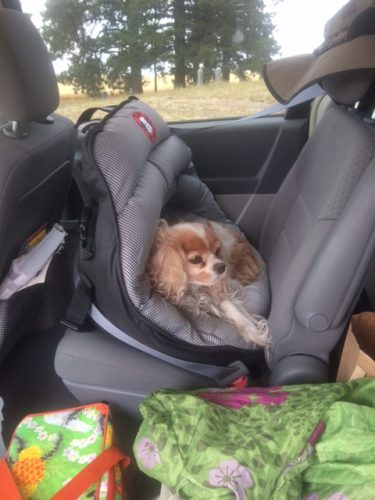
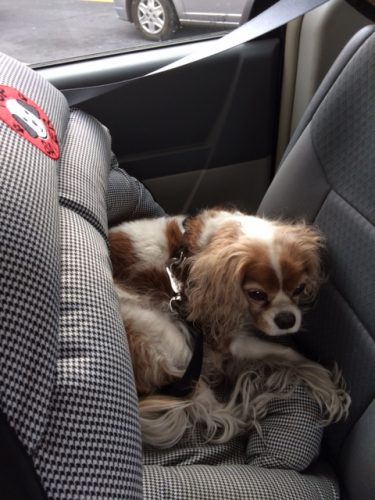
Available in two distinct configurations—the AirPupSaver 25 (rated for dogs up to 25 pounds) and the AirPupSaver 45 (rated for dogs up to 45 pounds)—both units were procured for comparative analysis. The underlying design philosophy of the AirPupSaver diverges sharply from traditional boxes or crates; it mimics the geometry of a puffy, oversized baseball mitt.
Phase IV: One Month of Real-World Testing
The evaluation period spanned four weeks of intensive deployment across diverse vehicular environments, including a Chrysler Town & Country minivan and a domestic station wagon. The testing matrix evaluated ease of entry, animal comfort metrics, driver visibility, spatial footprint, and the day-to-day friction of operating an inflatable restraint system.
Supporting Context & Metrics
Architectural Mechanics of the AirPupSaver
Understanding the AirPupSaver requires analyzing its biomechanical function during a deceleration event. The device is structured around a deep, heavily padded seating base—the "palm" of the mitt—where the animal sits or reclines. This base is anchored directly to the vehicle’s seatbelt and LATCH system.
The perimeter of the bed extends upward into a series of inflated chambers, functioning as the "fingers" of the mitt. These chambers are inflated using an included hand pump to achieve optimal structural rigidity. In the event of a frontal collision, the dog is hurled forward; instead of striking the vehicle dashboard, seatback, or striking a sudden stop against a taut harness, the animal is caught within the yielding, energy-absorbing cushion of the inflated chambers.
[Vehicle Seatbelt / LATCH Anchors]
       │
       ▼
┌──────────────────────────────────────┐
│       AirPupSaver Base ("Palm")      │ <─── [Internal Harness & Tether]
│  (Anchored to Vehicle Frame)         │              │
├──────────────────────────────────────┤              ▼
│  Inflated Perimeter ("Fingers")      │          [Canine Occupant]
│  - Absorbs Forward Kinetic Energy    │
└──────────────────────────────────────┘
Comparative Sizing Metrics
| Specification | AirPupSaver 25 | AirPupSaver 45 |
|---|---|---|
| Max Dog Weight | Up to 25 lbs | Up to 45 lbs |
| Primary Vehicle Use | Tested in Minivan (Chrysler Town & Country) | Tested in Station Wagon |
| Overhead Straps | Seatbelt-integrated clamping system | Seatbelt + 2 Top Tether Anchors |
| Inflated Chambers | 3 Air Channels | Multiple Chambers |
| Suitability for 15-lb Dog | Optimal (Ample room without excess bulk) | Excessive footprint; animal curls rather than sprawls |
Official Insights & Operational Observations
Installation Complexity and Structural Rigidity
A recurring theme in the evaluation of heavy-duty pet restraints is the inverse relationship between absolute safety and user-friendly convenience. The AirPupSaver exemplifies this compromise. Unlike fabric tubes that can be unclipped and tossed aside in seconds, the AirPupSaver is designed as a semi-permanent automotive installation.
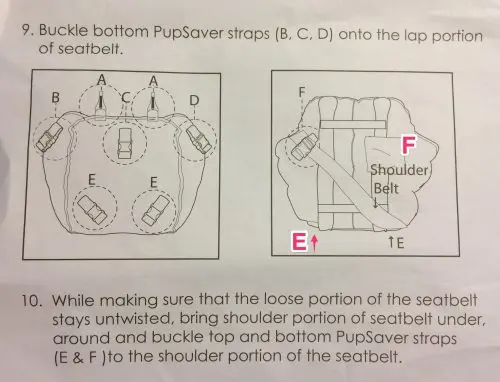
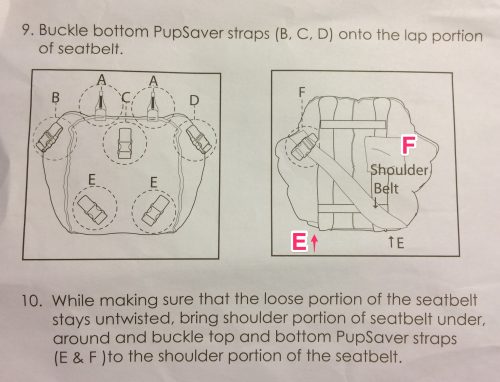
The installation process requires navigating complex manufacturer instructions, cross-referencing printed manual diagrams with online video demonstrations, and executing precise routing of the vehicle’s seatbelt through dedicated plastic clips (designated as points B, C, D, and E in the manufacturer literature).
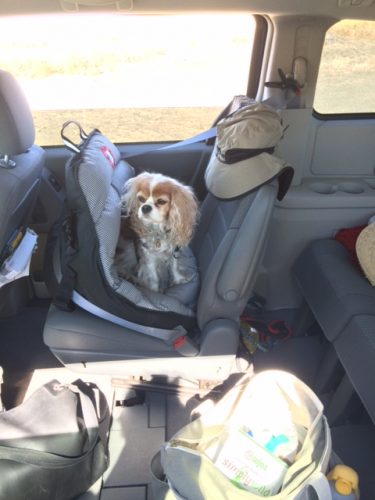
- The AirPupSaver 25 relies on lower LATCH hooks and the vehicle’s standard lap-and-shoulder belt, stabilized by a heavy-duty seatbelt clamp that maintains necessary belt play while preventing the shoulder strap from pressing the top of the bed down onto the animal.
- The AirPupSaver 45 introduces a significantly larger spatial footprint and incorporates two additional overhead top-tether straps extending from the front handle over the vehicle seatback to designated anchor points.
Ergonomic and Behavioral Response
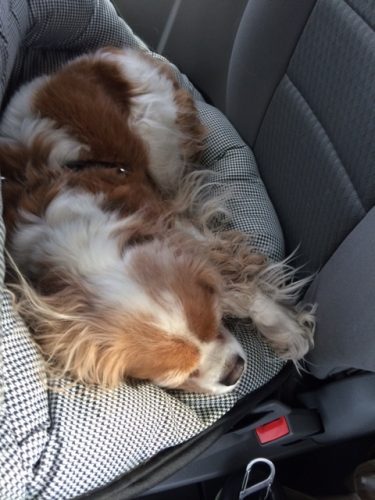
Observing Chloe over the testing period provided critical data regarding canine comfort. In both units, the animal exhibited physical relaxation, readily shifting positions from sitting upright to curling or sprawling across the cushioned base.
However, distinct behavioral and operational nuances emerged:
- The Sizing Dilemma: Although the AirPupSaver 45 was procured with the expectation that a 15-pound dog would fully sprawl out, real-world usage demonstrated that Chloe naturally defaulted to a curled posture, rendering the massive 45-pound unit functionally oversized. It consumed excessive cabin space and proved considerably more difficult to install than the 25 model.
- Line of Sight and Ventilation: Because the inflatable perimeter acts as a protective barrier, the driver’s direct line of sight to the pet is partially obstructed when the animal is resting deep within the bed. Pets must actively peer over the edge to make eye contact. Conversely, because the unit is entirely open-topped, ventilation issues inherent in zippered, fabric-walled carriers are entirely eliminated.
- Entry and Exit Logistics: Securing an animal into the internal harness system requires roughly 30 seconds of engagement. In urban environments—such as parking in busy metropolitan areas like Seattle—this requires the handler to lean deeply into the vehicle cabin, exposing themselves to traffic side conditions. The practical workaround involves entering the vehicle’s rear seating area entirely to manage the harness workflow away from open street traffic.
Maintenance and Maintenance Caveats
Integrity checks are mandatory for inflatable safety devices. If the air chambers lose pressure due to slow leakage or temperature fluctuations, the perimeter "fingers" collapse downward like a soft taco—a state that unnerves the animal occupant. Consequently, keeping the manual air pump stored inside the vehicle is a operational necessity.
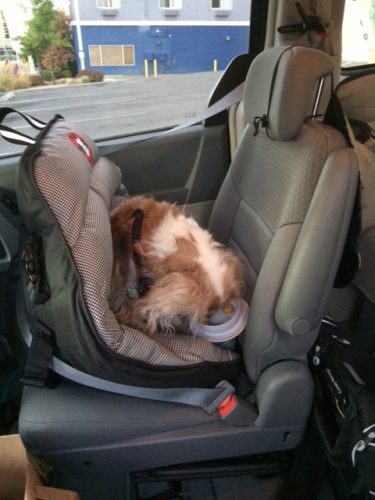
Furthermore, a critical discovery regarding the inclusion of safety harnesses came to light during the procurement process: harnesses are not universally auto-bundled with every retail SKU. Consumers must verify whether a heavy-duty, crash-tested harness (such as the Solvit small safety harness, featuring a rear-blade attachment point rather than a neck collar or front-chest clip) is included in the purchase.
Future Outlook
The evolution of pet automotive safety is at a critical crossroads. As regulatory bodies and consumer advocacy groups increase scrutiny on pet transport safety, manufacturers are forced to move away from aesthetic, comfort-first soft carriers toward engineered crash-mitigation systems.
The AirPupSaver represents an innovative hybrid approach: combining the tactile comfort of a traditional pet bed with the kinetic energy management of inflatable air-chambers. While it demands compromises in terms of installation permanence, cabin spatial economy, and loading routine friction, its performance profile addresses the fatal flaws seen in earlier generations of soft-sided tunnels and uncertified crates.
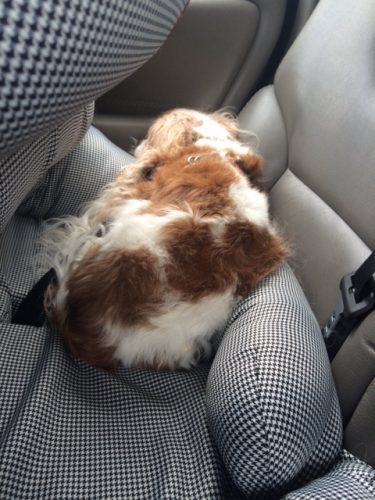
For owners of small-to-medium dogs weighing between 10 and 25 pounds, units like the AirPupSaver 25 bridge the perilous gap between rigid, undersized hard-shell crates and dangerous, unanchored luxury beds. Future developments in this sector must focus on streamlining ISOFIX integration, reducing installation friction, and engineering rapid-deployment mechanisms without compromising the structural integrity required to protect canine passengers during high-speed vehicular impacts. Until universal standardized crash testing becomes mandatory across all pet transport accessories, rigorous consumer investigation remains the primary defense for keeping our animal companions safe on the open road.