
Executive Overview
In a strategic consolidation poised to redefine the landscape of animal health biotechnology, Indiana-based agricultural biotech innovator BiomEdit has officially acquired UK-born Folium Science Technology. This high-stakes merger unites two complementary forces in microbiome science and gene-editing technology, blending BiomEdit’s sophisticated capability to engineer and insert positive biological functions into gut microbes with Folium’s advanced, precision-targeted CRISPR-Cas platform.
Beyond consolidating intellectual property and technical capabilities, the acquisition grants BiomEdit immediate access to a market-ready feed additive primed for the Brazilian agricultural sector: BiomElix One. This revolutionary, non-pathogenic E. coli strain utilizes a CRISPR payload system specifically engineered to neutralize harmful Salmonella populations in livestock.
For Aaron Schacht, Chief Executive Officer of BiomEdit, the acquisition represents a masterclass in technological synergy. By pairing BiomEdit’s "copy-paste-insert" mechanisms with Folium’s targeted "delete" functions, the combined enterprise now possesses a comprehensive, keyboard-like command over the animal gut microbiome. As BiomEdit prepares to secure critical U.S. regulatory approvals for its flagship necrotic enteritis treatment, BE-101, and gears up for a major Series C funding round in early 2026, the company is accelerating toward a dual-product commercial launch in South America. This indepth report explores the strategic imperatives, technological underpinnings, regulatory milestones, and financial horizons defining this pivotal moment in animal biotechnology.
Detailed Chronology: From Startup Inception to Transatlantic Consolidation
To fully appreciate the significance of the BiomEdit-Folium merger, one must examine the rapid, aggressive trajectory of both entities within the burgeoning animal health tech sector.
BiomEdit’s Rapid Ascent (2022–2025)
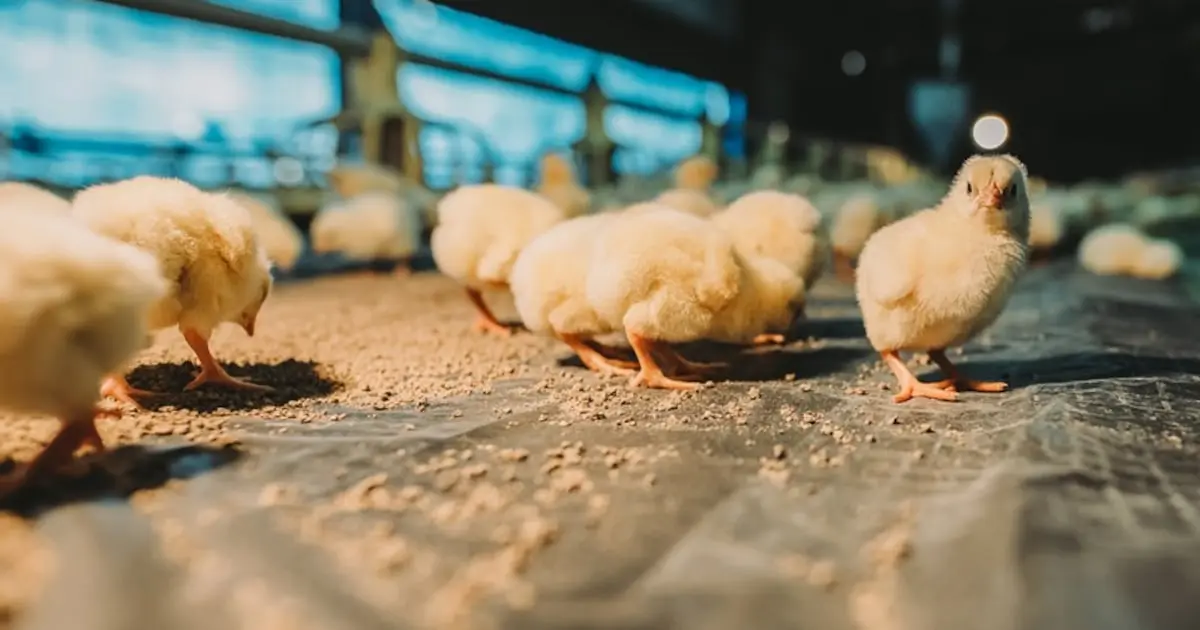
Founded in 2022, BiomEdit emerged from stealth with a clear mission: to harness fermentation and advanced gene-editing tools to create genetically engineered bacterial biologics aimed at treating and preventing animal diseases without traditional antibiotics. The company’s foundational work centered on addressing devastating gastrointestinal conditions in livestock, chief among them being necrotic enteritis in broiler chickens.
Necrotic enteritis, caused by the bacterium Clostridium perfringens, costs the global poultry industry billions of dollars annually in lost productivity and mortality. BiomEdit developed BE-101, a groundbreaking biological treatment designed to express specific molecules that neutralize the toxins produced by C. perfringens.
Financial backing followed quickly behind scientific validation. BiomEdit successfully closed a $36.5 million Series A funding round in 2022, followed by an $18.5 million Series B round in 2025. These capital injections fueled the company’s R&D pipelines, expanded its laboratory infrastructure, and set the stage for impending regulatory submissions in major global agricultural markets.
The Strategic Integration of Folium Science Technology
While BiomEdit was perfecting its bacterial delivery systems in the United States, Folium Science Technology was carving out a specialized niche across the Atlantic. Folium had pioneered Guided Biotics—a proprietary technology leveraging CRISPR-Cas systems to target specific, pathogenic bacteria within a complex microbiome without disrupting the beneficial microbial communities vital to host health.
Recognizing an opportunity to expand its technological moat, BiomEdit approached the acquisition not out of financial distress or capital burn, but as a "purely opportunistic" masterstroke. According to CEO Aaron Schacht, the integration did not materially alter BiomEdit’s cash-burn trajectory or capital requirements. Instead, it instantly acquired a mature, highly specialized platform alongside a fully vetted commercial asset.
To ensure a seamless transition of proprietary knowledge, several key members of the Folium scientific team will remain with BiomEdit in an advisory capacity. Their primary mandate is to embed the CRISPR-Cas platform directly into BiomEdit’s existing development workflows, uniting two distinct schools of microbiome engineering under a single corporate umbrella.
Supporting Context & Metrics: The Mechanics of Microbiome Editing
To understand the profound impact of this acquisition, industry stakeholders must examine the underlying biotechnology. Chief Executive Aaron Schacht employs an intuitive analogy to describe the complementary nature of the two platforms: the QWERTY keyboard.
The "Copy-Paste-Insert" vs. "Delete" Paradigms
- BiomEdit’s Native Framework (Copy, Paste, Insert): BiomEdit’s traditional methodology focuses on constructive genetic augmentation. Scientists isolate a natural microbe from the gut of an animal, engineer it to perform a novel, beneficial function by inserting or pasting specific genetic sequences, and reintroduce the microbe back into the gut ecosystem. Once established, these engineered biologicals perform targeted therapeutic tasks, such as expressing antitoxin molecules against Clostridium perfringens.
- Folium’s CRISPR Framework (Delete): Conversely, Folium’s platform operates on the opposite end of the spectrum, functioning as a genetic "delete" key. Folium utilizes non-pathogenic bacterial strains engineered to carry a CRISPR-Cas payload. Leveraging a natural biological phenomenon known as bacterial conjugation—whereby bacterial species exchange genetic material—the payload is delivered directly to the targeted pathogen, effectively knocking out critical genes and wiping out harmful populations with surgical precision.
The Brazilian Foothold: BiomElix One and Regulatory Triumph
The crown jewel of the Folium acquisition is BiomElix One, an advanced feed additive designed for the Brazilian market. BiomElix One consists of a non-pathogenic E. coli strain equipped with Folium’s CRISPR payload system, custom-built to knock out essential survival genes in Salmonella, a persistent food safety hazard and livestock pathogen.
Significantly, Folium had already navigated the arduous regulatory landscape in Brazil prior to the acquisition, securing formal approval from Brazil’s Ministry of Agriculture and Livestock (MAPA). With regulatory clearance already in hand, BiomEdit acquired an asset that bypassed years of administrative delay.
Financial Metrics and Capital Allocation
- Series A (2022): $36.5 million raised to establish R&D infrastructure and advance foundational biologics.
- Series B (2025): $18.5 million secured to scale clinical trials and prepare for initial commercialization.
- Upcoming Series C (Early 2026): Targeted for launch immediately following the formal announcement of U.S. conditional licensure, aiming to secure commercialization capital within a critical six-month window.
Official Statements and Industry Insights
The merger has generated substantial commentary across the agricultural biotechnology sector, highlighting the paradigm shift away from broad-spectrum antibiotics toward precision biological interventions.
In an exclusive interview, CEO Aaron Schacht elaborated on the precision of the combined technologies:
"You think about the function keys on your keyboard. You have copy and paste and delete and insert. So, what I would say is BiomEdit has copy/paste/insert functionality. We could take a microbe from the gut, for example. We could engineer it to have a new function. So, we’d insert a gene or paste in some biological function, then we put it back in the gut and let it do its job. And that’s how we deliver efficacy relative to the BiomEdit frame."
Contrasting this with the newly acquired Folium platform, Schacht noted:
"The Folium frame was the opposite end of the keyboard in the sense that they have in essence the delete function… They take a non-pathogenic bacterial strain, they engineer it to have this CRISPR-Cas payload, and then there’s a natural phenomenon that you can take advantage of where one species of bacteria conjugates with another, and they exchange genetic materials."
Addressing the tactical rollout of the company’s product portfolio, Schacht emphasized the alignment of international regulatory timelines:
"In essence, the way the timelines potentially line up, we’ll be launching two products in Brazil, simultaneously, sometime next year."
Regarding the upcoming financial milestones, Schacht detailed the strategy behind the Series C capital raise:
"We’ve been waiting on the license and a press release on the license to indicate to folks that we’re now formally raising a Series C, aimed at a target of closing that in the first quarter of next year. And so that gives us that six-month magic window to try to put it all together."
Future Outlook: Commercial Scaling and In-Vivo Testing Horizons
As BiomEdit absorbs Folium Science Technology and integrates its CRISPR assets, the company’s operational roadmap extends across multiple continents and species categories.
The U.S. Regulatory Milestone and the Brazilian Double-Launch
BiomEdit remains firmly on track to receive U.S. conditional licensure for its flagship necrotic enteritis treatment, BE-101, within the current quarter, with full final approval anticipated shortly thereafter. This impending domestic milestone serves as the catalyst for the launch of BiomEdit’s Series C funding round.
Simultaneously, the company is finalizing the commercial formulation of BiomElix One in Brazil. By leveraging the regulatory pathways already cleared by Folium with MAPA, BiomEdit plans to use this established infrastructure to pave the way for the subsequent introduction of BE-101 into the Brazilian market. This synchronization will allow BiomEdit to deploy two distinct, revolutionary biological products simultaneously in South America by next year.
Expanding Beyond Poultry: The Turkey Trials
While broiler chickens have served as the initial proving ground for BiomEdit’s technology, the company is actively expanding its in-vivo testing pipeline into other vital agricultural sectors. BiomEdit is currently conducting extensive turkey studies to investigate whether specific toxins are responsible for gangrenous dermatitis—a necrotic skin and muscle condition that causes severe economic losses and animal welfare concerns for turkey producers.
If these trials prove successful, the potential impact is staggering. Schacht projects that up to one million Thanksgiving turkeys could be treated with BiomEdit’s novel biological products before families gather to enjoy their holiday meals.
Conclusion
The acquisition of Folium Science Technology marks a watershed moment for BiomEdit. By fusing constructive microbial engineering with precision CRISPR-Cas "delete" capabilities, BiomEdit has insulated itself against technological obsolescence while acquiring a turnkey international product launch. As the company moves toward its Series C capital raise in early 2026 and prepares for dual commercial deployments in the Americas, BiomEdit stands at the vanguard of a new era in sustainable, antibiotic-free animal health.