
Executive Overview
For generations, the conventional wisdom of canine evolution pointed to the Victorian era as the crucible of dog diversity. Schoolbooks, historical narratives, and popular science assumed that the wild array of shapes and sizes we see in modern canines—from the towering Great Dane to the pocket-sized Chihuahua—was largely the product of 19th-century selective breeding and intense pedigree curation.
However, a monumental, decade-spanning international study has shattered this long-held paradigm. Published in the prestigious journal Science, new archaeological research reveals that the diverse morphology of domestic dogs began developing thousands of years earlier than previously believed. Clear, undeniable signs of physical variance in skull shape and body size were already flourishing at least 11,000 years ago.
Spearheaded by an expansive coalition of researchers from the University of Exeter and the French CNRS, alongside scientists from more than 40 global institutions, this project represents the most comprehensive analysis of canid skulls ever conducted. By utilizing cutting-edge geometric morphometrics and meticulously crafted 3D models of 643 specimens spanning a staggering 50,000 years, the research team has rewritten the evolutionary timeline of humanity’s oldest animal companion.
The findings demonstrate that early dogs were adapting rapidly, not due to the whims of modern kennel clubs, but as a direct legacy of their deepening, symbiotic relationship with prehistoric human societies. From the Mesolithic and Neolithic periods onward, dogs were already taking on diverse roles—acting as hunters, herders, guardians, and companions—and their physical forms evolved in tandem with these emerging human responsibilities.
While the exact origins of when wolves first crossed the threshold to become "proto-dogs" still elude the archaeological record, this research confirms that once established, the domestic dog exploded into a tapestry of shapes and sizes that laid the groundwork for the modern canine world millennia ahead of schedule.
Detailed Chronology: Tracking the Evolution of Canine Form
To understand how early dogs transformed from uniform, wolf-like ancestors into a morphologically diverse group, researchers had to look backward across deep geological and archaeological time. The study’s temporal scope covers roughly 50,000 years, stretching from the Pleistocene epoch through the Mesolithic and Neolithic eras, right up to the modern day.
The Elusive Origins of Domestication (Late Pleistocene)
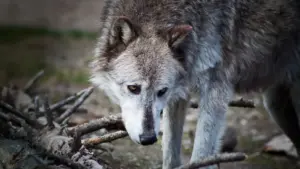
The journey to uncover the first domestic dogs is fraught with archaeological hurdles. One of the most surprising takeaways from the study is that none of the Late Pleistocene specimens examined—including several canine remains that had been previously heralded by scientists as potential "proto-dogs"—displayed the distinct skull features consistently associated with true domestication.
This indicates that the absolute earliest stages of the transition from wild wolf to domestic dog remain shrouded in mystery. The very first steps of this evolutionary divergence took place in environments that have left a fragmented, hard-to-read physical record. Yet, while the inception point remains hidden, the velocity of change after domestication is now crystal clear.
The Mesolithic Milestone: 11,000 Years Ago
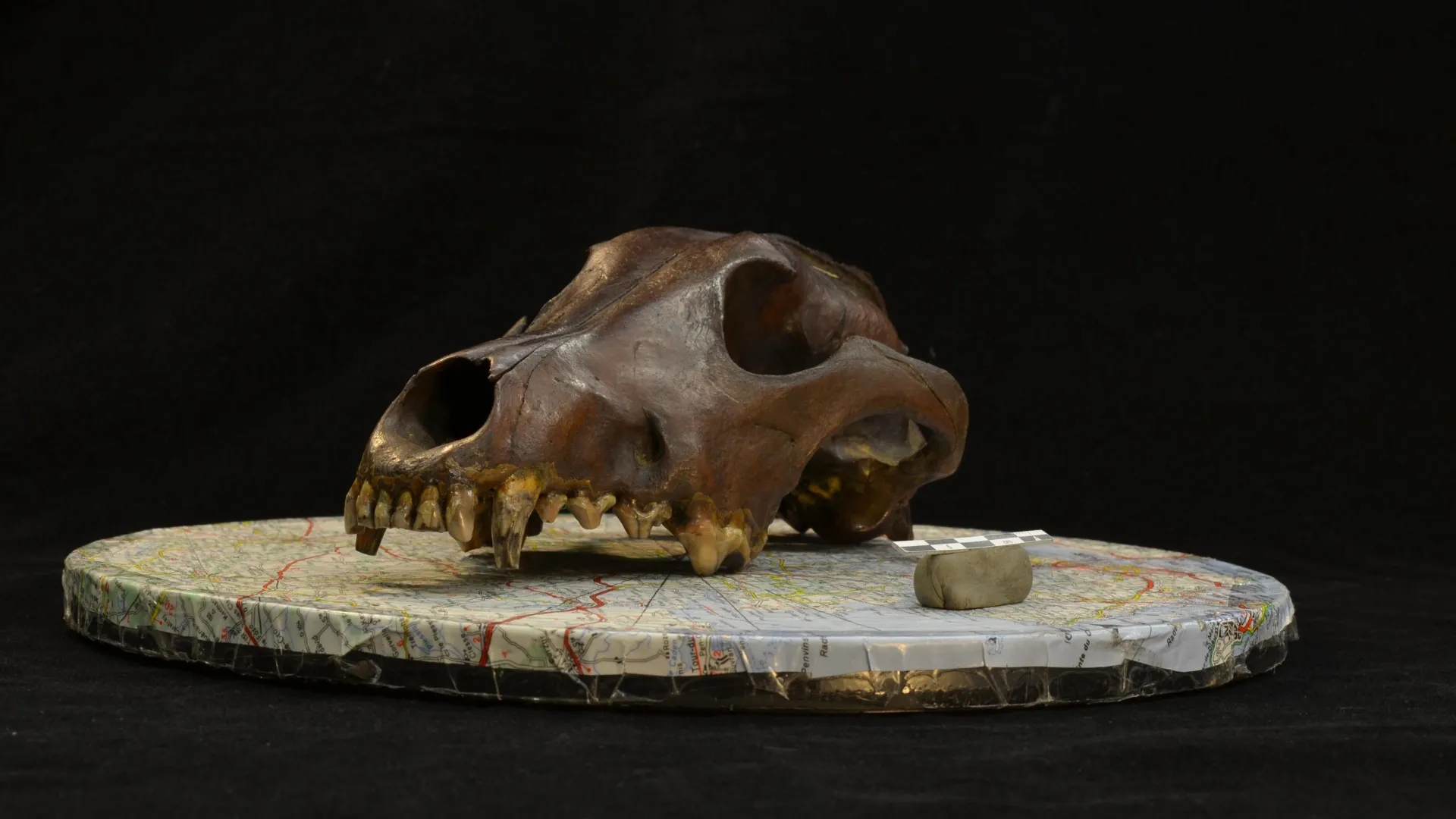
The fog of prehistory begins to clear significantly around 11,000 years ago. The oldest confirmed domestic dog identified in the dataset hails from the Russian Mesolithic site of Veretye. At this juncture, the archaeological record stops whispering and starts shouting about canine variation.
Following the emergence of specimens like the one at Veretye, domestic dogs began appearing in diverse geographical regions with distinct regional variations. Researchers identified early domestic dogs in the Americas dating back roughly 8,500 years, and in Asia dating back approximately 7,500 years. These identifications were cemented by skull shapes that unmistakably signaled a departure from wild canid morphology, shaped by a life intertwined with human settlements.
The Neolithic Expansion: A Burst of Physical Variation
As human societies transitioned from nomadic hunter-gatherer bands to sedentary agricultural communities during the Mesolithic and Neolithic periods, the evolutionary pressure on dogs shifted dramatically.
According to Dr. Allowen Evin, co-lead author from the CNRS at the Institut of Evolutionary Science-Montpellier in France, the timeline of physical changes unfolded in distinct phases:
- 9,700 to 8,700 years ago: The earliest detectable shift occurred in the form of a noticeable reduction in overall skull size among dogs.
- 8,200 years ago onward: Greater variability in overall skull shape began to emerge across populations.
- 7,700 years ago: A measurable increase in size variance across global canine populations became apparent.
By the time the Neolithic period was well underway, the physical diversity among dogs was already staggering. Neolithic dogs displayed a range of skull shapes and body sizes that was double that of Pleistocene specimens, and crucially, already reached half of the total morphological range seen in modern dogs today. While modern breeding has pushed extremes further—yielding specialized forms like the short-faced bulldog or the long-faced borzoi—the foundational variety of the dog family tree was firmly established thousands of years before the Victorian era.
Supporting Context & Metrics: The Anatomy of a Mega-Study
The sheer scale of the research project, which commenced in 2014, sets a new benchmark for paleontological and archaeological collaboration. To arrive at their groundbreaking conclusions, the research team had to combine rigorous anthropological fieldwork with state-of-the-art computational technology.
By the Numbers: Study Metrics and Scope
- Duration: A intensive multi-year research initiative launched in 2014.
- Specimens Analyzed: 643 canid skulls thoroughly examined and digitized.
- Temporal Range: Approximately 50,000 years, stretching from the Pleistocene epoch to modern times.
- Institutional Collaboration: Researchers from more than 40 global institutions working in unison.
- Sample Diversity: A balanced mix of modern recognized breeds, free-ranging village and street dogs, ancient archaeological remains, and wild wolves.
Cutting-Edge Methodology: Geometric Morphometrics
Examining 50,000 years of canid evolution requires more than traditional measuring tape and visual inspection. The research team employed geometric morphometrics, an advanced analytical method that allows scientists to capture the precise geometry of biological forms in three dimensions.
Working across dozens of institutions worldwide, scientists generated highly detailed 3D models of all 643 skulls. These 3D models were mapped using hundreds of coordinate points (landmarks) that trace the contours of the skull, snout, jaw, and cranium. By analyzing these spatial datasets computationally, researchers could quantify minute variations in size and shape across time and geography, removing human bias and revealing macro-evolutionary trends that had previously gone unnoticed.
Ecological Pressures and Human Utility
Why did dogs diversify so rapidly once they entered the human sphere? The answer lies in the concept of ecological and cultural coevolution. As human populations expanded into new ecological niches—from Arctic tundras to dense forests and arid plains—they required diverse tools for survival.
Dogs, serving as the ultimate biological Swiss Army knife for early human societies, were bred, selected, or naturally adapted to perform specialized labor. A dog guarding an agricultural settlement needed a different build and skull structure than a dog used for tracking fleet-footed game in dense woodlands or hauling sledges across frozen expanses. This human-driven utility, combined with access to human food waste and shelter, created a crucible of rapid evolutionary adaptation.
Official Statements and Expert Insights
The implications of this study have reverberated throughout the scientific community, prompting leading researchers to reflect on how this discovery alters our view of human-animal history.
Dr. Carly Ameen, co-lead author of the study from the University of Exeter’s Department of Archaeology and History, emphasized the profound historical bond highlighted by the data:
"These results highlight the deep history of our relationship with dogs. Diversity among dogs isn’t just a product of Victorian breeders, but instead a legacy of thousands of years of coevolution with human societies."
Her perspective challenges the anthropocentric view that modern humans are the sole architects of canine form, placing the credit instead on a multi-millennia partnership between humans and dogs.
Dr. Allowen Evin of the CNRS elaborated on the quantitative reality of ancient canine morphology:
"Modern dogs exhibit more extreme morphologies, such as short-faced bulldogs and long-faced borzoi, which are absent in early archaeological specimens. However, there is a large amount of diversity among dogs even as early as the Neolithic; it was double that of Pleistocene specimens and already half the range seen in dogs today."
Despite these incredible insights, the researchers remain humble about the mysteries that still remain. Professor Greger Larson, senior author of the study from the University of Oxford, pointed out the enduring enigma at the very beginning of the canine story:
"The earliest phases of dog domestication are still hidden from view, and the first dogs continue to elude us. But what we can now show with confidence is that once dogs emerged, they diversified rapidly. Their early variation reflects both natural ecological pressures and the profound impact of living alongside humans."
Future Outlook: Rethinking Humanity’s Closest Companion
By systematically dismantling the myth that modern dog diversity is a recent invention of 19th-century pedigree enthusiasts, this research opens up fertile new ground for future scientific inquiry.
Unanswered Questions and New Horizons
The revelation that half of modern canine morphological variation was already present during the Neolithic period invites a cascade of new research questions:
- Genetic Mapping vs. Phenotypic Shape: How do these ancient skull shape changes correlate with emerging ancient DNA (aDNA) studies tracking the genetic lineages of early dogs?
- Micro-Regional Adaptations: Can localized archaeological sites reveal how specific cultural practices (e.g., specialized pastoralism vs. coastal fishing) shaped distinct regional dog morphotypes?
- The Pre-Domestication Gap: What specific environmental or social triggers finally pushed the first wolves over the edge into domestic companionship during the late Pleistocene?
A Shared Evolutionary Destiny
Ultimately, this landmark study reinforces an emotional and biological truth that dog owners have felt intuitively for generations: our fates have been intertwined for an unimaginably long time. Dogs did not simply witness human history unfold from the sidelines; they were active participants, evolving physical forms tailored to our camps, our work, and our lives.
As archaeologists and geneticists continue to refine their tools and comb through the earth for the elusive first steps of domestication, one thing is now definitively established. The dazzling variety of shapes, sizes, and personalities that make our modern dogs so beloved is not a recent human invention, but an ancient, living monument to thousands of years of shared history between humanity and its most faithful companion.