
Executive Overview
Long before the advent of agriculture, the construction of permanent settlements, or the written word, humanity forged its most enduring alliance with an unlikely partner: the ancestor of the domestic dog. Often colloquially reduced to the title of "man’s best friend," the shared history of Canis lupus familiaris and Homo sapiens is far more complex, profound, and dynamic than popular culture suggests. Far from a simple tale of humans capturing and subjugating wild wolves, recent archaeological, genetic, and ethnographic findings point to a complex, gradual, and mutually beneficial co-evolutionary process that spans at least 15,000 years—and potentially much longer.
In his groundbreaking new book, First Dogs: Hunter-Gatherers and their Canine Companions from Prehistory to the Present (Routledge), archaeologist Professor Peter Mitchell challenges traditional narratives of domestication. Mitchell argues that early humans and ancestral wolves entered into a relationship characterized by relative equality. Operating long before other livestock or crop species were brought under human control, hunter-gatherer communities across the globe integrated these canids into their social structures, survival strategies, and cultural frameworks.
The results of this partnership are etched into the biological diversity of the modern dog. From the pocket-sized Chihuahua to the towering Great Dane, the global canine population represents a masterclass in adaptation. Driven by environmental pressures, cultural practices, and biological challenges such as high-altitude hypoxia and vector-borne diseases, dogs morphed alongside human societies. They became sled-pulling powerhouses in the freezing Arctic, agile forest hunters in the tropics, wool-producers on the Pacific Northwest coast, and sacred participants in global mythologies.
However, this ancient mosaic of canine diversity has faced severe disruptions. The pressures of colonialism and the global expansion of modern European breeds displaced countless ancient lineages, leaving behind only faint genetic traces. Today, as researchers combine paleogenomics with archaeological excavations, a clearer picture is emerging: the story of dogs is inextricably linked to the story of humanity. Each species has profoundly shaped the other’s biology, behavior, and planetary footprint.
Detailed Chronology: The Arc of Canine Domestication
Understanding how the grey wolf transitioned into the domestic dog requires looking back deep into the Pleistocene epoch. The timeline of human-canine interactions is not marked by a single, sudden domestication event, but rather by a protracted, multi-stage convergence.
[Pleistocene Epoch: ~15,000+ Years Ago]
       │
       ├──► Initial Convergence: Mutualistic proximity between hunter-gatherers and ancestral wolves.
       ├──► Archaeological Footprints: Earliest joint burials (e.g., Bonn-Oberkassel, ~14,000 years ago).
       │
[Holocene & Environmental Expansion]
       │
       ├──► Regional Specialization:
       │     ├──► Arctic: Heavy bone density, high-fat diets, sled-pulling physiology.
       │     ├──► Tropics: Agility, heat tolerance, specialized forest hunting.
       │     └──► High Altitudes: Hypoxia-resistant genetic mutations (Tibetan Plateau).
       │
[Historical & Modern Era]
       │
       ├──► Cultural Shifts: Textile production (Northwest Coast woolly dogs), religious roles.
       ├──► Colonial Disruption: Replacement of ancient lineages by modern European breeds.
       └──► Ongoing Evolution: The continuous, albeit human-dominated, co-adaptation of dogs and people.
1. The Prehistoric Convergence (15,000+ Years Ago)
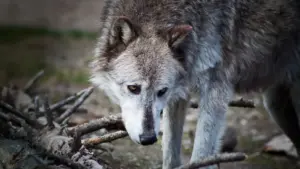
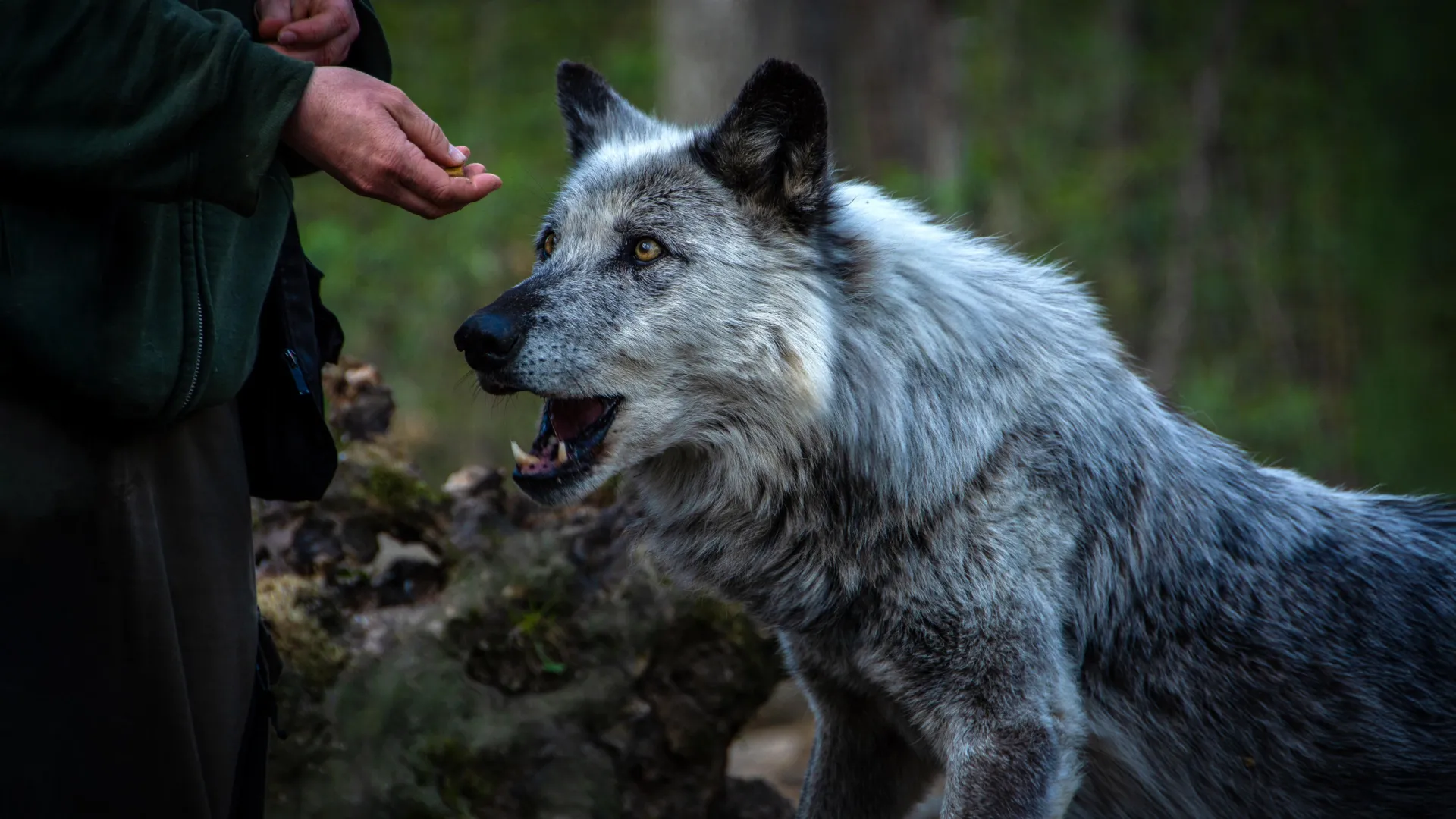
Long before the first wheat seed was planted or the first sheep penned, hunter-gatherer societies interacted regularly with wild canids. Attracted by human campfires, food scraps, and the safety of communal spaces, ancestral wolves began sharing an ecological niche with humans. As Professor Mitchell notes, this was a joint venture. People did not simply take control of wolves; rather, both species found mutual advantage in proximity. Over millennia, this proximity dissolved the boundaries between wild and domestic, giving rise to proto-dogs that traveled alongside human nomadic groups.
2. The Archaeological Record (14,000 Years Ago to Antiquity)
Physical proof of this deep bond is embedded in the earth. Archaeologists have unearthed canine remains buried deliberately alongside humans in graves dating back approximately 14,000 years, such as the famous Bonn-Oberkassel double burial in Germany. These early placements indicate that dogs were not merely treated as tools or food sources, but were recognized as sentient companions holding social and emotional value within their human groups. As human populations expanded across every continent, dogs went with them, appearing in ancient rock art, pottery, folklore, and religious iconography worldwide.
3. Regional Diversification and Adaptation (Holocene Era)
As human societies adapted to radically different global environments—from the oxygen-thin Tibetan Plateau to the dense rainforests of South America and the frozen expanses of the Arctic—their canine companions adapted alongside them. This era of diversification produced specialized phenotypes. Natural selection, paired with intentional and unintentional human breeding practices, shaped dogs to fit local geographical niches.
4. Colonial Disruption and the Modern Era (Recent Centuries)
The centuries marked by European colonial expansion brought radical changes to the canine gene pool. Modern European breeds were exported across the globe, frequently supplanting and absorbing ancient, locally adapted dog lineages. Despite this genetic homogenization, fragments of the ancient dog genome survive today, preserved in isolated populations or detectable through advanced paleogenomics. Today, the relationship is heavily skewed by human dominance, particularly in the West, yet the fundamental drive for mutual connection remains.
Supporting Context & Metrics
The transformation of dogs from wild canids to global companions is supported by a robust body of empirical research spanning osteoarchaeology, stable isotope analysis, and molecular genetics.
Physiological and Skeletal Adaptations
Biological evidence of how dogs worked alongside humans is clearly written in their bones:
- Arctic Skeletal Stress: Excavated remains of Arctic sled dogs reveal specialized bone morphology. Vertebrae display distinctive patterns of stress consistent with pulling heavy loads over long distances, while limb bones show enhanced cortical thickness to withstand the mechanical strain of frozen terrains.
- High-Altitude Genetics: On the Tibetan Plateau, researchers have identified specific genetic variants in native dogs that allow them to thrive in severe, oxygen-poor environments. These genetic adaptations mirror those found in indigenous human populations of the same region, proving that both species confronted and overcame the challenges of hypoxia in tandem.
- Tropical Agility: In contrast to their heavy-boned northern counterparts, tropical dog lineages from Southeast Asian and South American rainforests evolved smaller statures and leaner frames. These traits maximized agility, enabling them to navigate dense undergrowth and track fast-moving prey.
Nutritional and Dietary Alignment
Stable isotope analysis of ancient canine bones provides a window into daily life and diet. In coastal settlements, researchers have found that humans and dogs shared remarkably similar diets, often dominated by marine resources such as fish, seals, and cetaceans. This dietary overlap underscores the integration of dogs into the core domestic economy of ancient coastal communities.
The Barrier of Disease
Environmental factors were not the only forces shaping the global geography of dogs. Pathogens played a critical, often overlooked role. In sub-Saharan Africa, vector-borne diseases such as trypanosomiasis (sleeping sickness) and ehrlichiosis presented severe biological hurdles. Because dogs originated as temperate-to-Arctic species in the Northern Hemisphere, their entry into certain tropical and southern latitudes was severely restricted or delayed until populations could develop localized immunities or adaptive behaviors.
Official Statements & Expert Insights
The release of First Dogs: Hunter-Gatherers and their Canine Companions from Prehistory to the Present has refocused academic and public attention on the nuances of animal domestication. Professor Peter Mitchell’s work synthesizes decades of multidisciplinary research to redefine our understanding of the canine-human interface.
Reflecting on the foundational nature of the relationship, Professor Mitchell observes:
"The connections between dogs on the one paw and people dependent on wild plant and animal resources on the other are ancient, diverse, and profound."
Addressing the mechanics of how these adaptations occurred—particularly in extreme environments like high-altitude regions—Mitchell explains:
"We do not know when dogs first joined them, and the genetic variants needed to thrive there may have been quickly acquired, but until that was achieved hypoxia presumably acted as a constraint on canine presence."
Challenging the conventional top-down model of human domination over nature, Mitchell emphasizes the collaborative nature of the evolutionary journey:
"The process whereby grey wolves became dogs is ongoing, not one marked by a single threshold event. It was likely both long and drawn out.
The relationship thus constructed has been a joint effort, if one where, especially in the West and over recent centuries, humans have increasingly come to dominate in determining its shape and direction.
Nevertheless, the way dogs and humans relate—and have related—to each other has value precisely because of their mutual, complex entwinement with each other."
Future Outlook
As archaeological science and genetic sequencing continue to advance, the study of canine evolution enters a new frontier. Researchers are no longer limited to analyzing morphological traits from visible skeletons; paleogenomics now allows scientists to extract ancient DNA from centuries-old bone fragments, mapping the lost lineages that vanished during the eras of migration and colonization.
This scientific trajectory promises to answer lingering questions:
- Pinpointing Divergence: How many times, and in precisely which geographic locations, did the split between ancestral wolves and proto-dogs occur?
- Mapping Lost Lineages: To what extent do modern indigenous dog breeds carry the genetic legacy of Pleistocene populations?
- Understanding Behavioral Co-Evolution: Beyond physical traits, how did the neurobiology of dogs shift to interpret human social cues, emotional expressions, and vocalizations so effectively?
What remains certain is that the evolutionary partnership between humans and dogs is a living process. While modern pet ownership in industrialized nations has placed humans firmly in the role of caretakers and directors, the evolutionary legacy of the relationship endures. Dogs remain uniquely attuned to human societies, mirroring our movements, adapting to our habitats, and reflecting our cultural values.
As we look to the future, the story of Canis lupus familiaris serves as a powerful reminder that human history has never been a solo endeavor. From the hunter-gatherer campfires of the Pleistocene to the modern urban landscape, our species carved out its place on Earth hand-in-paw with our oldest animal allies.