
Executive Overview
For centuries, anthropologists, evolutionary biologists, and philosophers have debated a fundamental question about human nature: Are humans inherently monogamous, or are we naturally wired for a more diverse array of reproductive partnerships? Historically, attempts to answer this query have relied on fragmented fossil records, archaeological excavations, and modern ethnographic field studies. However, these methods often leave room for interpretation, clouded by the vast complexities of human culture, historical records, and shifting social norms.
A groundbreaking study conducted by Dr. Mark Dyble of the Department of Archaeology at the University of Cambridge breaks new ground by shifting the methodological paradigm. Published in the prestigious journal Proceedings of the Royal Society: Biological Sciences, the research bypasses traditional behavioral observations in favor of a mathematically rigorous, cross-species proxy: the ratio of full siblings to half-siblings.
By analyzing genetic data spanning thousands of years—from Neolithic Anatolian settlements and European Bronze Age burial grounds to contemporary populations—alongside an extensive dataset of 94 human societies worldwide, Dyble’s computational model delivers a compelling conclusion. Humans sit firmly within a "premier league of monogamy," exhibiting reproductive patterns that closely mirror those of socially monogamous mammals like beavers and meerkats, rather than the vastly more promiscuous mating systems typical of our closest living primate relatives, such as chimpanzees and gorillas.
This comprehensive investigation not only redefines how scientists can measure mating systems across wildly different species using standardized metrics, but it also challenges long-held assumptions regarding the evolutionary pathways that shaped human society, cooperation, and social structures.
Detailed Chronology: The Evolution of Mating Research and the New Cambridge Breakthrough
To fully appreciate the significance of Dr. Dyble’s research, it is essential to trace how scientists have historically studied reproductive behavior and how this new approach bridges a long-standing methodological divide between anthropology and evolutionary biology.
The Traditional Divide in Mating Research
For decades, researchers studying human evolution operated largely independently from those studying non-human animal behavior. Anthropologists examining human history relied heavily on:
- Fossil Evidence: Inferences drawn from skeletal dimorphism, pelvic structures, and early burial arrangements.
- Ethnographic Fieldwork: Observations of modern hunter-gatherer and agricultural societies, providing insights into contemporary and historical marriage customs.
- Historical and Legal Records: Documenting the prevalence of monogamy, polygyny (one man with multiple wives), and polyandry (one woman with multiple husbands) across civilizations.
Conversely, behavioral ecologists and zoologists studying non-human animals turned to empirical, high-resolution techniques that were rarely applied to humans on a macro-historical scale:
- Long-Term Field Observations: Tracking the daily social interactions and territorial ranges of specific animal groups.
- Genetic Paternity Testing: Extracting DNA from wild populations to determine biological parentage definitively, which frequently revealed discrepancies between social pairing and actual genetic offspring.
The Innovation: Sibling Ratios as a Mating Proxy
Dr. Dyble recognized that while these disparate methods worked well within their respective domains, they made direct, quantitative comparisons between humans and other mammals nearly impossible. To bridge this gap, Dyble pioneered a novel approach: utilizing the ratio of full siblings (offspring sharing both a mother and a father) to half-siblings (offspring sharing only one parent) as a universal proxy for reproductive exclusivity.
The underlying logic is straightforward yet powerful:
- High Monogamy: Species or societies characterized by strict, long-term pair bonding tend to produce offspring that share both parents. Families remain intact, resulting in a high proportion of full siblings.
- Low Monogamy (Polygamy/Promiscuity): Populations with fluid, overlapping, or multi-partner mating systems naturally generate a much higher proportion of half-siblings over time, as individuals reproduce with multiple partners across their lifespans.
Developing the Computational Model
To operationalize this theory, Dyble developed a sophisticated computational model. This framework successfully links empirical sibling data harvested from recent genetic and anthropological studies with known reproductive strategies observed across a wide spectrum of the animal kingdom.
While acknowledging that any model applied across millions of years of evolutionary history must navigate inherent uncertainties, Dyble designed the framework to offer a tangible, standardized metric. This metric allows researchers to place humans, meerkats, wolves, and primates onto a single, cohesive comparative scale.
Supporting Context & Metrics: Where Humans Stand in the Global Zoo
The results of Dyble’s computational model offer a fascinating hierarchy of mammalian reproductive strategies. When ranked from the most strictly monogamous species to the most promiscuous, humans occupy a surprisingly high tier, outperforming the vast majority of mammals—and nearly all other primates.
The Global Sibling Dataset
To establish the human baseline, Dyble analyzed genetic evidence harvested from major archaeological epochs:
- Neolithic Settlements: Examining DNA from early farming communities in Anatolia.
- Bronze Age Sites: Utilizing genetic samples from ancient European burial grounds.
- Global Ethnography: Incorporating deep datasets from 94 distinct human societies worldwide, ranging from the nomadic Hadza hunter-gatherers of Tanzania to the rice-farming Toraja people of Indonesia.
Across this vast expanse of human history and geography, the overall full sibling rate for human populations was calculated at 66%. This places humans seventh out of eleven major mammalian groups analyzed in detail, solidly within the category of socially monogamous species.
Comparative Mammalian Rankings
To understand what a 66% full-sibling rate means in biological terms, it is helpful to examine how humans stack up against specific animal counterparts:
- California Deermouse (100%): Sitting at the absolute apex of the ranking, these mice famously pair for life once mated, resulting in zero half-siblings under normal conditions.
- African Wild Dogs (85%): Exhibiting exceptionally high social cohesion and cooperative breeding, these canids rank second overall.
- Ethiopian Wolves (76.5%): Demonstrating that canids can evolve high levels of reproductive exclusivity under specific environmental pressures.
- Moustached Tamarins (~78%): A small Amazonian monkey species that serves as an extraordinary outlier among primates. Usually giving birth to twins or triplets, they achieve a high full-sibling rate.
- Beavers (73%): Famed for their lifelong pair bonds, beavers rank slightly higher than humans, showcasing a strong dedication to family units.
- Humans (66%): Positioned comfortably in the upper tier of the index, reflecting a strong historical and biological preference for long-term pair bonding despite significant cultural diversity.
- White-Handed Gibbons (63.5%): The closest non-human primate analogue to humans in terms of sibling ratios and "monotocous" reproduction (typically producing a single offspring per pregnancy).
- Meerkats (60%): Reflecting a strong tendency toward cooperative social structures and pair bonding alongside ecological flexibility.
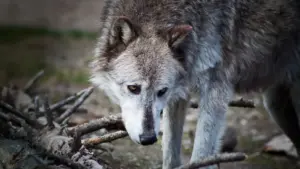
- Grey Wolves (46%) and Red Foxes (45%): Demonstrating moderate levels of social monogamy supported by cooperative rearing.
- Mountain Gorillas (6%) and Chimpanzees (4%): Our closest living evolutionary relatives, both of which practice multi-male, multi-female or polygynous mating systems that generate vast numbers of half-siblings.
- Dolphins (4%): Matching chimpanzees in promiscuous reproductive patterns.
- Macaque Species (1% to 2.3%): Ranging from Japanese macaques to Rhesus macaques, sitting near the bottom of the index due to highly promiscuous group dynamics.
- Soay Sheep (0.6%): The absolute minimum of the ranking, where ewes routinely mate with multiple rams during a single breeding season.
The Primate Anomaly
One of the most striking revelations of the Cambridge study is the evolutionary rarity of the human position. Because humans share a common ancestor with chimpanzees and bonobos—both of which exhibit highly promiscuous, multi-male/multi-female mating dynamics—humanity’s embrace of social monogamy represents a dramatic and highly unusual evolutionary shift.
"Based on the mating patterns of our closest living relatives, such as chimpanzees and gorillas, human monogamy probably evolved from non-monogamous group living, a transition that is highly unusual among mammals," Dr. Dyble noted.
Among primates, only the moustached tamarin joins humans in the upper tier of reproductive exclusivity. All other primates fall drastically lower, making human social structures an evolutionary outlier within our taxonomic order.
Official Statements and Expert Insights
To understand the broader implications of these findings, the academic community has weighed in on how Dyble’s sibling-ratio model transforms the study of evolutionary anthropology.
"There is a premier league of monogamy, in which humans sit comfortably, while the vast majority of other mammals take a far more promiscuous approach to mating," stated Dr. Mark Dyble, lead author of the study from Cambridge’s Department of Archaeology.
He added: "The finding that human rates of full siblings overlap with the range seen in socially monogamous mammals lends further weight to the view that monogamy is the dominant mating pattern for our species."
Addressing the immense cultural variation documented by anthropologists—such as the prevalence of polygyny in historical societies—Dyble emphasized that even the most permissive human cultural frameworks remain far more exclusive than typical non-monogamous animal societies.
"There is a huge amount of cross-cultural diversity in human mating and marriage practices, but even the extremes of the spectrum still sit above what we see in most non-monogamous species," Dyble explained.
Furthermore, Dyble clarified a vital distinction between reproductive monogamy (the biological outcome of who has children with whom) and sexual behavior (the physical acts of mating), pointing out that human culture introduces variables entirely absent in the natural world.
"This study measures reproductive monogamy rather than sexual behavior. In most mammals, mating and reproduction are tightly linked. In humans, birth control methods and cultural practices break that link," Dyble noted.
"Humans have a range of partnerships that create conditions for a mix of full and half-siblings with strong parental investment, from serial monogamy to stable polygamy."
Future Outlook: Implications for Anthropology and Evolutionary Science
The publication of Dr. Dyble’s research in Proceedings of the Royal Society: Biological Sciences opens up exciting new avenues for future research in evolutionary biology, anthropology, and archaeology. By demonstrating that sibling ratios can effectively serve as a universal proxy for mating systems, the study provides scholars with a powerful new tool to analyze populations where behavioral observation is impossible—namely, ancient human ancestors and extinct mammal species.
1. Re-evaluating Hominin Social Evolution
With genetic sequencing technologies advancing at a rapid pace, researchers can increasingly extract DNA from ancient hominin remains, such as Neanderthals and Denisovans. Applying Dyble’s computational model to ancient hominin DNA could eventually allow paleoanthropologists to estimate the sibling ratios—and by extension, the mating systems—of our extinct human cousins. This could shed light on whether Neanderthals practiced pair bonding similar to Homo sapiens, or if their social structures resembled those of modern great apes.
2. Disentangling Culture from Biology
The study underscores the complex interplay between biological predispositions and cultural flexibility. While human biology leans heavily toward long-term pair bonding and high parental investment, human culture permits enormous variation—ranging from lifelong monogamy and serial monogamy to institutionalized polygyny. Future research will likely explore how environmental pressures, resource distribution, and agricultural transitions influenced human societies to shift along the monogamy spectrum throughout history.
3. Broadening Ecological Comparisons
Beyond primates, behavioral ecologists can utilize the sibling-ratio model to study elusive or endangered wild mammal populations. Conservationists often struggle to determine the mating systems of secretive species living in dense forests or remote aquatic environments. By analyzing genetic samples gathered non-invasively (such as from hair, scat, or tissue samples), researchers can rapidly assess the reproductive exclusivity of vulnerable populations, informing more effective wildlife management and conservation strategies.
Conclusion
Dr. Mark Dyble’s research at the University of Cambridge marks a watershed moment in the scientific study of human mating behavior. By ingeniously connecting genetic sibling data with computational modeling, the study cuts through centuries of ideological debate. It demonstrates that beneath the rich, diverse tapestry of human culture and marriage customs lies a deep-seated biological preference for pair bonding—placing humanity shoulder-to-shoulder with beavers, meerkats, and gibbons in the premier league of mammalian monogamy.