
In the realm of animal behavior and rural farm life, adaptation is a continuous requirement. Animal behaviorist and author Dr. Patricia McConnell recently provided a transparent look into the intersection of personal health challenges, extreme seasonal conditions, and the delicate art of canine socialization.
Confined by a diagnosis of de Quervain’s Tenosynovitis—a painful inflammatory condition affecting the tendons of the thumb and wrist—McConnell has been forced to temporarily pivot her content strategy. Rather than generating fresh text-heavy entries on her blog, she revisited a comprehensive archival case study from February 2021 detailing the evolution of her dogs, Skip and Maggie, from mismatched play partners into harmonious companions.
Concurrently, the farm has weathered severe sub-zero winter temperatures, requiring innovative care routines for both livestock and domestic animals. This operational hurdle arrives at a critical juncture: the countdown to the release and promotional tour of her upcoming novel, Away to Me. Facing the logistical nightmare of signing hundreds of books with an immobilized writing hand, McConnell’s update offers a masterclass in resilience, farm management, and the nuanced dynamics of multi-dog households.
![The Evolution of Play [revisited]](https://www.patriciamcconnell.com/wp-content/uploads/2026/01/IMG_1061-1.jpeg)
Detailed Chronology
The Anatomy of an Injury: Navigating de Quervain’s Tenosynovitis
The disruption began with a physical ailment that McConnell jokingly attributes to life’s "never-ending determination to make my life an adventure." Diagnosed with de Quervain’s Tenosynovitis, McConnell describes the condition as two inflamed tendons trapped within the first extensor compartment—effectively, a severe escalation of tendonitis.
The medical prescription for recovery is unequivocal: absolute rest of the affected hand and wrist. Simple, everyday tasks such as turning doorknobs or opening jar lids became impossible, requiring domestic coordination with her husband, Jim. More critically, typing—the primary engine of her career as an author and blogger—triggers acute pain, while handwriting yields semi-illegible scrawls resembling modern art. With a prognosis of two to six months for complete recovery, a splint, and a pending cortisone injection, the physical barrier has temporarily halted her standard writing workflow.
The Skip and Maggie Case Study (Archival Overview)
To maintain reader engagement without aggravating her wrist, McConnell republished a foundational behavioral case study from February 2021. The narrative centers on Skip, a high-energy dog who joined the household with an enthusiastic, albeit overwhelming, play style, and Maggie, a fast and agile dog who initially welcomed a new companion following the loss of a previous dog, Willie.
![The Evolution of Play [revisited]](http://www.patriciamcconnell.com/wp-content/uploads/2026/01/IMG_1102.jpeg)
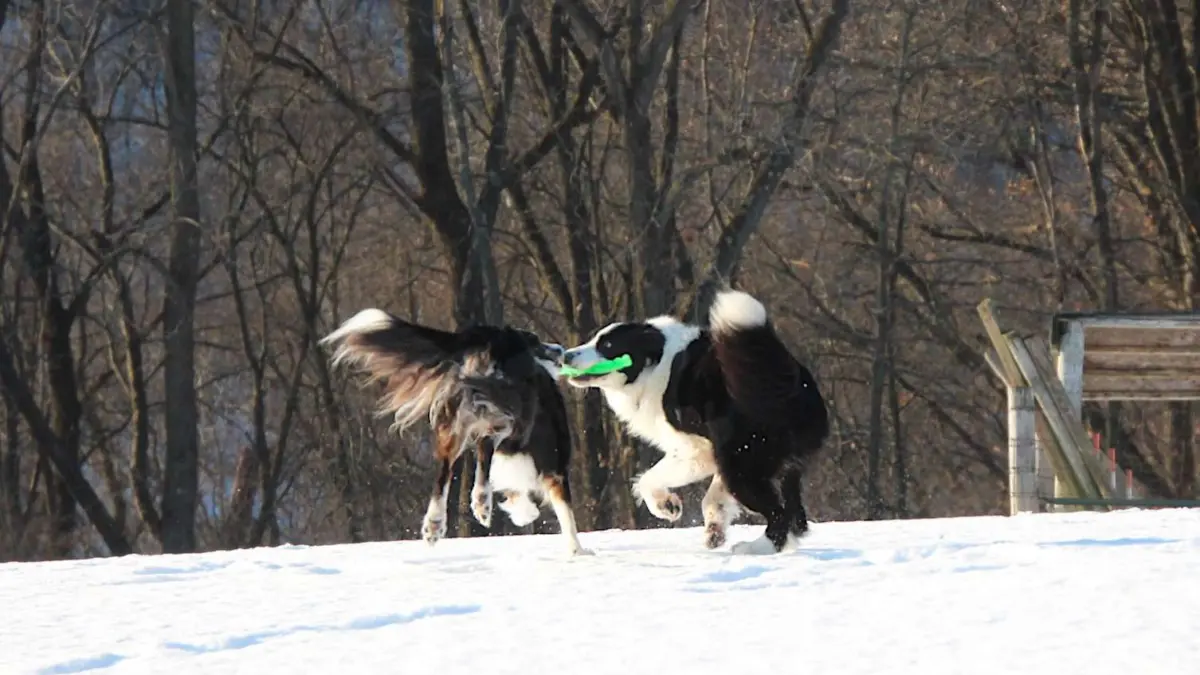
Initially, Skip played "like a linebacker for the Green Bay Packers," launching into a full-speed freight train of muscle and power, executing hip slams that often drove Maggie into fences. Lacking self-handicapping skills—the behavioral mechanism where a stronger animal moderates its power to ensure mutual enjoyment—Skip inadvertently frightened Maggie, causing her to withdraw from social interactions.
The situation was further compounded by a series of physical setbacks:
- April: Skip suffered a severe back leg injury, forcing a two-month hiatus from play.
- The Hill Refusal: Upon recovery, Maggie exhibited deep anxiety, eventually refusing to walk up the farm’s hill—a behavior McConnell attributes to a trauma response triggered by the emotional resonance of Skip’s injury, which mirrored past veterinary griefs involving Maggie’s cruciate tear and Willie’s terminal illness.
Through a systematic conditioning program utilizing positive reinforcement (such as scattering chicken pieces along the path), short intervals of play, and careful resource management, McConnell rehabilitated Maggie’s confidence. Today, Skip and Maggie engage in balanced, joyful play characterized by mutual engagement, toys, and self-regulation.
![The Evolution of Play [revisited]](https://www.patriciamcconnell.com/wp-content/uploads/2021/02/IMG_5898.jpeg)
Navigating the Deep Freeze
Beyond behavioral management, the farm recently faced extreme meteorological challenges. While missing the worst of the regional ice storms, McConnell’s farm endured severe sub-zero nighttime temperatures, plunging to a low of -16°F with windchills reaching -40°F.
Addressing the cold required heavy-duty layering for outdoor chores, including thermal undershirts, wool sweaters, lined pants, down parkas, balaclavas, and YakTracks-equipped boots. The extreme cold also posed risks to the dogs. While Maggie required close monitoring due to past frost-nip vulnerabilities and pad-splitting tendencies, Skip struggled acutely with the frozen ground. To prevent discomfort during necessary elimination breaks, McConnell utilized PawZ rubber waterproof dog boots stuffed with raw barn wool, allowing Skip to navigate the sub-zero conditions comfortably.
Supporting Context & Metrics
Managing a working farm and a professional authorial career simultaneously involves balancing rigorous physical demands with precise behavioral metrics.
![The Evolution of Play [revisited]](http://www.patriciamcconnell.com/wp-content/uploads/2026/01/IMG_1088-1.jpeg)
Canine Play Metrics and Intervention Strategies
McConnell’s case study highlights specific thresholds for evaluating dog-to-dog interactions:
- The Power Imbalance: Skip outweighed Maggie by approximately 25%, utilizing brute force rather than kinetic adaptation.
- Rehabilitation Timeline: Overcoming Maggie’s trauma-induced aversion to the farm’s hill required 6 to 8 weeks of systematic desensitization.
- Recovery Prognosis for Tenosynovitis: Medical recovery timelines project 2 to 6 months of restricted movement, splinting, and physical therapy.
- Temperature Extremes: Operations were conducted in ambient temperatures down to -16°F, with windchills bottoming out at -40°F.
Official Statements & Behavioral Frameworks
Dr. McConnell’s published observations emphasize that canine play is a crucial indicator of psychological and physical health. Drawing from her co-authored work Play Together, Stay Together (written with Karen London), McConnell outlines a structured framework for managing multi-dog play dynamics:
- Observe: Owners must actively monitor interactions to detect subtle signs of nervousness or impending aggressive over-arousal before physical escalation occurs.
- Protect: Intervention strategies—such as reliable recalls, leashing, and separating dogs during high-stress periods—shield vulnerable animals from being overwhelmed.
- Redirect: Channeling high-energy drives into appropriate objects, such as cooperative tug games, teaches impulse control and establishes rules of engagement (e.g., mastering a reliable "Drop It" command).
- Time-Outs: Utilizing short pauses allows over-aroused dogs to cool down physiologically, preventing adrenaline from dictating their physical behavior.
Future Outlook
As the winter freeze begins to relent, McConnell’s immediate future is defined by two major milestones: physical rehabilitation and the commercial launch of her novel, Away to Me.
![The Evolution of Play [revisited]](http://www.patriciamcconnell.com/wp-content/uploads/2026/01/IMG_1091.jpeg)
The transition from solitary writing to active book promotion presents a distinct operational challenge. With a heavily braced right thumb and wrist, McConnell faces the ironic hurdle of learning to sign hundreds of books for upcoming live appearance events across Wisconsin and Texas. Her efforts to practice left-handed signatures have yielded comedic results, prompting her to direct fans toward pre-signed book retailers for those unable to attend physical tour dates.
Ultimately, the narrative bridges the gap between clinical animal behavior and personal vulnerability. By examining how dogs process trauma, how humans endure extreme environmental conditions, and how physical limitations demand patience, McConnell underscores a timeless thesis: whether through the structured play of farm dogs or the simple act of stepping outside into the sun, resilience remains an active, daily practice.