
Executive Overview
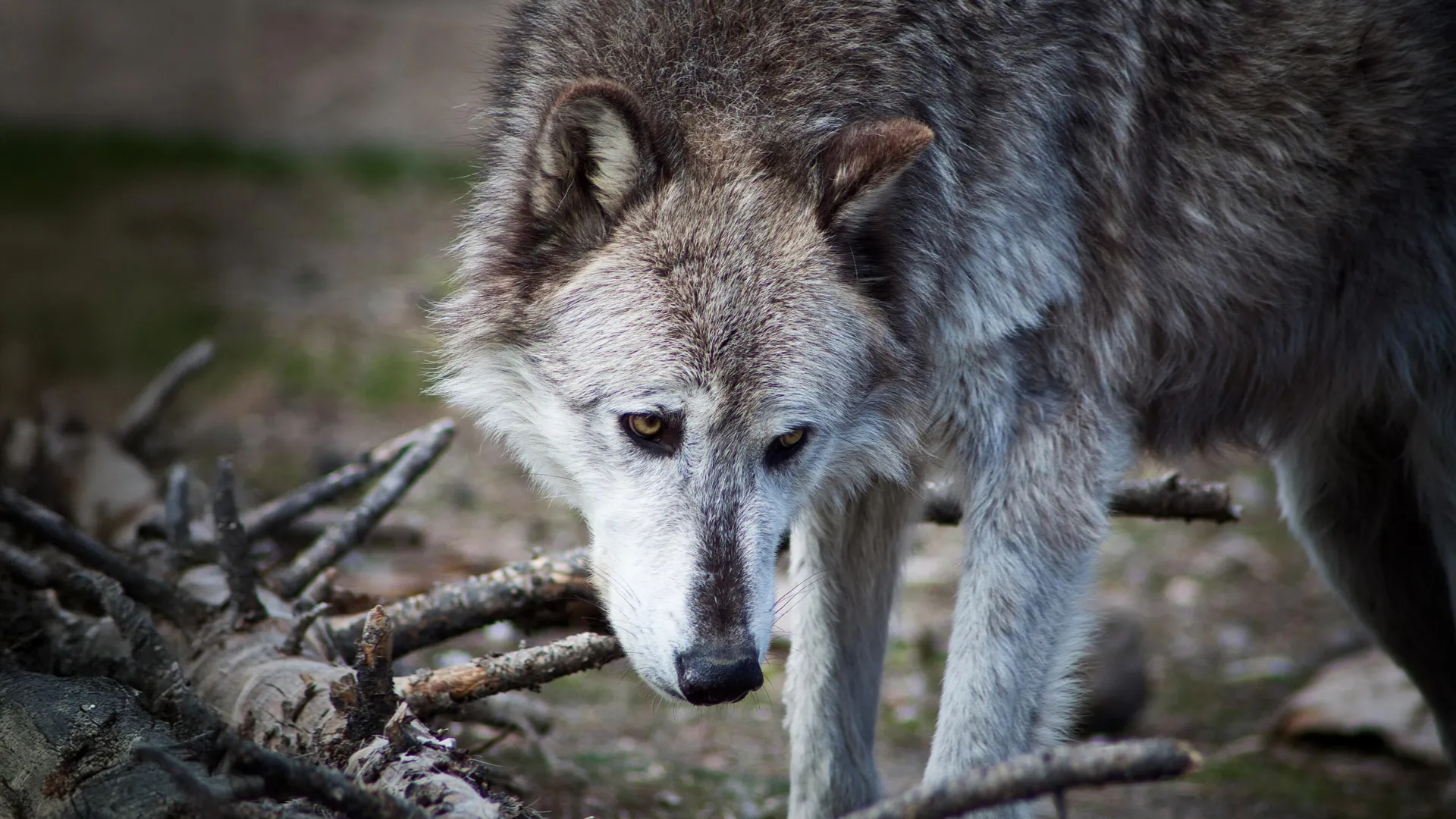
For nearly three decades, the reintroduction of gray wolves (Canis lupus) into Yellowstone National Park has been hailed as one of the greatest triumphs of modern conservation biology. It is a tale retold in classrooms, documentaries, and academic journals worldwide: the apex predator returned, reduced the overpopulated elk herds, allowed riparian willows to bounce back by an astonishing 1,500%, stabilized riverbanks, and ultimately brought back beavers, songbirds, and fish in a textbook demonstration of a "trophic cascade."
However, a rigorous new peer-reviewed study threatens to rewrite this iconic ecological fairy tale. Published in the journal Global Ecology and Conservation, a formal comment by a team of scientists from Utah State University and Colorado State University delivers a sharp critique of a high-profile 2025 paper authored by Ripple et al.
According to the new re-analysis, the foundational claims underpinning the narrative of a park-wide, wolf-driven ecological resurrection are fundamentally flawed. The authors of the critique argue that the dramatic conclusions of the 2025 study relied upon circular mathematical reasoning, severe sampling biases, and the violation of basic ecological modeling assumptions.
Rather than a sweeping, park-wide ecosystem revolution orchestrated entirely by a single top predator, the revised data point toward a much more complex, localized, and modest environmental reality. In this nuanced view, factors such as hydrology, localized browsing pressures, and micro-site environmental conditions play a far more decisive role in landscape recovery than previously acknowledged.
This deep investigative report examines the core of the scientific dispute, explores the methodological missteps identified in the original research, details the official statements from the lead researchers on both sides, and contextualizes what this means for the future of wildlife management and ecological science.
Detailed Chronology: The Rise and Challenge of an Ecological Icon
To understand the weight of the new study, it is necessary to retrace the timeline of Yellowstone’s ecological monitoring since the historic reintroduction of wolves in 1995 and 1996.
1995–1996: The Great Reintroduction
Following an absence of nearly 70 years due to government-sponsored eradication programs, 41 gray wolves were captured in Canada and northwestern Montana and released into Yellowstone National Park. Conservationists and ecologists anticipated profound changes, particularly in the behavior and population size of northern Yellowstone elk (Cervus canadensis), the wolves’ primary prey.
The Late 1990s to 2010s: Birth of the Trophic Cascade Legend
In the years following the reintroduction, researchers noted that elk populations declined from historic highs, and remaining elk spent less time lingering in vulnerable riparian zones—such as streambanks and valley bottoms—out of fear of wolf predation.
As elk browsing pressure decreased in these specific corridors, observers reported a visible resurgence of woody plants, particularly willow (Salix spp.), aspen (Populus tremuloides), and cottonwood (Populus angustifolia). Because willows provide essential materials for beaver dams and habitat for migratory birds, scientists coined the term "trophic cascade" to describe how a top carnivore could cascade down the food web to fundamentally reshape the physical geography of the park. Publications by Ripple and colleagues became the cornerstone of this narrative, circulating globally as proof of the vital stabilizing role apex predators play in degraded ecosystems.
2024: A Divergent Perspective Emerges
Cracks in the consensus began widening in early 2024. A study led by Hobbs et al. (2024)—which evaluated two decades of meticulous field experiments and empirical data collection within Yellowstone—reported only weak and highly localized trophic cascade effects. Their findings suggested that plant recovery was far from uniform and could not be solely or even primarily attributed to the presence of wolves.
2025: The Ripple et al. Paper and Immediate Retort
Despite the cautions raised by Hobbs and others, a prominent 2025 paper by Ripple et al. re-asserted the magnitude of the trophic cascade, famously claiming a staggering 1,500% surge in willow crown volume following the wolves’ return. This metric immediately captured the public imagination and reinforced the dominant paradigm.
Late 2025: The Global Ecology and Conservation Critique
Prompted by what they viewed as severe analytical overreaches in the 2025 paper, Dr. Daniel MacNulty of Utah State University, Dr. David Cooper of Colorado State University, and their colleagues submitted a formal scientific comment to Global Ecology and Conservation. Their re-analysis systematically dismantled the statistical architecture behind the 1,500% willow growth claim, restoring a fierce debate over how scientists measure, interpret, and communicate complex ecological phenomena.
Supporting Context & Metrics: Unpacking the Statistical Flaws
The core of the dispute between the Utah State/Colorado State team and Ripple et al. centers on how scientific models handle data, particularly when evaluating plant growth over decadal timescales.
The Mechanics of Circular Reasoning
The most explosive claim in the new critique targets the celebrated statistic: a 1,500% increase in willow crown volume.
According to Dr. MacNulty and his co-authors, this metric was not derived from direct, independent measurements of willow volume across time. Instead, it was calculated using a regression model that relied on plant height measurements to both calculate and predict crown volume.
In statistical modeling, circular reasoning occurs when an independent variable and a dependent variable are derived from the same underlying metric in a closed loop. Because height was used simultaneously to compute and to predict volume, the statistical relationship between the two was mathematically guaranteed to appear exceptionally strong—even if zero actual biological growth or volume expansion had occurred in the field.
The analytical method essentially manufactured a powerful correlation by design, creating the illusion of a massive ecosystem-wide transformation where the raw data could not reliably support it.
Methodological Concerns and Sampling Bias
Beyond the mathematical circularity of the willow volume calculations, the new critique highlights multiple systemic issues in how data were sampled and interpreted across the landscape:
- Spatial Heterogeneity: The original studies often generalized local observations from specific, highly responsive riparian patches and applied them across the entire northern range of the park.
- Confounding Environmental Variables: Water availability, local hydrology, beaver activity, spring runoff patterns, and localized browsing by ungulates other than elk (such as moose and bison) were frequently underweighted.
- Selection Bias in Plot Locations: Monitoring plots were sometimes concentrated in areas where management interventions (like fencing or water table restoration) occurred, skewing the apparent impact of predators alone.
Once these methodological distortions and circular assumptions are corrected, the re-analysis demonstrates that the evidence for a sweeping, park-wide ecological rebound driven strictly by wolf predation evaporates. The data instead reveal a patchy, highly variable biological response. Willow and aspen recovery is real, but it is heavily restricted to specific micro-sites where hydrology and water tables favor plant survival independently of how many wolves are hunting elk nearby.
Official Statements and Expert Perspectives
The academic community has reacted strongly to the publication of the critique, reflecting deep divisions over how ecological narratives are constructed and maintained in the public sphere.
"Ripple et al. argued that carnivore recovery produced one of the world’s strongest trophic cascades," said Dr. Daniel MacNulty, lead author of the critique and a wildlife ecologist at Utah State University. "लेकिन our re-analysis shows their conclusion is invalid because it relies on circular reasoning and violations of basic modeling assumptions."
Dr. MacNulty was careful to emphasize that the critique is not an attack on the concept of predator conservation, but rather a defense of scientific rigor.
"Our goal is to clarify the evidence, not downplay the role of predators," MacNulty added. "Predator effects in Yellowstone are real but context-dependent—and strong claims require strong evidence."
Echoing these sentiments, co-author Dr. David Cooper, an emeritus senior research scientist at Colorado State University, pointed out that nature refuses to conform to neat, linear narratives.
"Once these problems are accounted for, there is no evidence that predator recovery caused a large or system-wide increase in willow growth," Dr. Cooper stated. "The data instead support a more modest and spatially variable response influenced by hydrology, browsing, and local site conditions."
This perspective helps resolve a long-standing academic mystery: why different teams of scientists, analyzing overlapping datasets from the same national park, could arrive at such radically divergent conclusions. While Ripple et al. (2025) championed the wolf as an ecological architect capable of single-handedly restoring a degraded landscape, field-based experimentalists like Hobbs et al. (2024)—who spent decades gathering empirical ground-truth data—found only weak, localized cascade effects.
Future Outlook: Implications for Conservation and Science Communication
The publication of this formal critique in Global Ecology and Conservation marks a pivotal moment for wildlife management, conservation biology, and how science is communicated to the public. The fallout from this study extends far beyond the borders of Yellowstone National Park, touching upon core principles of how researchers study complex adaptive systems.
1. Re-evaluating the "Keystone Species" Paradigm
No one disputes that the gray wolf is an important apex predator that exerts top-down pressure on ungulate populations. However, the mythos of the wolf as an omnipotent ecological wizard—capable of effortlessly healing complex landscapes simply by being present—has suffered a severe blow. Conservation scientists must now pivot toward more holistic models that integrate bottom-up forces (such as hydrology, climate change, snowpack dynamics, and plant physiology) with top-down pressures. Ecosystems are not simple chains of cause and effect; they are multi-dimensional webs where single-variable explanations almost always fall short.
2. The Danger of "Siloed" Narratives in Conservation
The Yellowstone wolf story became a global marketing tool for rewilding projects worldwide. When academic research becomes intertwined with powerful cultural narratives, it can create an institutional resistance to self-correction. The new study serves as a vital reminder of the self-correcting nature of the peer-review process. Science advances not by protecting cherished myths, but by ruthlessly interrogating assumptions, correcting methodological errors, and welcoming divergent empirical datasets.
3. Implications for Future Field Studies
Moving forward, wildlife ecologists working in Yellowstone and other iconic wilderness areas will face heightened scrutiny regarding their statistical models. The exposure of circular reasoning in the willow volume calculations underscores the urgent need for transparent, independent data collection where prediction variables are strictly segregated from calculation formulas. Funding agencies and journal editors are likely to demand more rigorous cross-validation and multi-factor analysis before accepting sweeping claims about trophic cascades.
Conclusion
Yellowstone National Park remains one of the most intensely studied and fiercely protected natural laboratories on Earth. The return of the gray wolf was, and remains, a monumental achievement in wildlife restoration. Yet, as science matures, so must our understanding of the forces that shape the natural world.
The myth of the effortless, park-wide wolf-driven renaissance is giving way to a more nuanced, scientifically grounded reality—one where predators matter deeply, but where water, earth, climate, and complex ecological webs share the stage in an intricate, ongoing dance of survival and recovery.