
Executive Overview
In the rapidly evolving landscape of digital recreation and continuing professional development (CPD), a new niche has emerged at the intersection of veterinary science and linguistic puzzle design. Titled WordRX, this innovative, Wordle-inspired daily challenge has quietly captured the attention of veterinary practitioners, veterinary technicians, academic researchers, and clinical support staff worldwide. Designed as a low-stakes, high-engagement cerebral workout, WordRX bridges the gap between everyday clinic terminology and the esoteric lexicon acquired during rigorous doctoral training.
While casual gamification in medicine is not entirely new, WordRX represents a specialized paradigm shift. Rather than relying on generic trivia or standard clinical decision-making simulations, the platform taps directly into the linguistic architecture of veterinary science—a rich tapestry drawing from Latin and Greek roots, anatomical descriptors, pharmacological compounds, and specialized pathology.
This investigative report explores the origins, mechanics, cultural impact, and psychological benefits of WordRX. By analyzing the intersection of veterinary burnout mitigation, cognitive agility, and digital micro-learning, we examine how a simple five-letter word puzzle has become a beloved ritual for a profession operating under chronic high-stress conditions. Through expert commentary, structural breakdowns, and metrics tracking the rise of gamified professional tools, this article provides an authoritative look at how modern veterinary medicine keeps its collective vocabulary razor-sharp while offering a much-needed moment of levity.
Detailed Chronology: From Clinic Jargon to Digital Phenomenon
The Genesis of Veterinary Wordplay
To understand the cultural footprint of WordRX, one must first examine the linguistic environment of the modern veterinary clinic. Unlike human medicine, which is largely siloed into specific specialties within massive hospital networks, general practice veterinarians must be versatile generalists. A single morning shift may require a practitioner to transition seamlessly from canine cardiology and feline endocrinology to avian husbandry and bovine obstetrics. This multidisciplinary breadth demands an expansive, highly technical vocabulary.
For decades, this specialized terminology lived primarily within textbooks, patient charts, peer-reviewed journals, and verbal handovers. However, the post-pandemic digital landscape accelerated a demand for bite-sized, interactive educational tools. The meteoric rise of Wordle in 2021 and 2022 demonstrated that millions of people craved a daily, low-barrier linguistic challenge. Recognizing this cultural appetite, educational developers and veterinary advocates conceptualized a domain-specific counterpart.
Phase One: Conceptualization and Beta Testing
The initial framework of WordRX was developed as an internal experiment among a collective of clinical educators and veterinary copywriters. The objective was straightforward: create a puzzle that would not pander to laypersons, but would avoid the crushing complexity of board examinations.
During the beta-testing phase, curators faced a distinct lexicographical challenge. The English veterinary dictionary contains thousands of terms, but many are either too long (exceeding standard five-letter grid formats) or too obscure for daily engagement. The development team established rigorous inclusion criteria, filtering words through three primary lenses:
- Clinical Relevance: Terms frequently encountered in general practice or emergency settings.
- Linguistic Viability: Words possessing standard vowel-consonant distributions that allow for fair, solvable deductions.
- Educational Value: Rare curiosities or technical terms picked up in vet school that practitioners might not use daily but instantly recognize.
Phase Two: Public Deployment and Community Adoption
Following successful trials among university cohorts and veterinary hospital networks, WordRX launched as an accessible web-based platform. Eschewing the need for heavy software downloads or paid subscriptions, the game was engineered for frictionless access—playable on a smartphone between surgeries, on a tablet during administrative downtime, or on a desktop computer at the start of a shift.
The organic growth of the platform was driven largely by professional social media networks, veterinary subreddits, and private messaging groups where clinic teams compared daily scores. What began as a solitary exercise quickly evolved into a collaborative morning ritual, fostering camaraderie across veterinary teams from independent rural practices to sprawling academic teaching hospitals.
Supporting Context & Metrics: The Science of Micro-Learning and Burnout Mitigation
Cognitive Agility in High-Stress Environments
The veterinary profession is characterized by unique occupational stressors. Studies consistently highlight elevated rates of compassion fatigue, anxiety, and burnout among veterinary professionals. The cognitive load required to manage complex clinical cases, communicate sensitive prognoses to clients, and oversee clinic operations demands moments of cognitive detachment.
However, true cognitive rest is often difficult for high-achieving professionals whose minds remain active even during breaks. Micro-learning games like WordRX offer a "flow state" alternative. By redirecting analytical focus away from life-and-death clinical outcomes toward a playful linguistic puzzle, practitioners engage in active recovery.
Psychologists categorize this as attention restoration theory (ART). Engaging with a structured, low-stakes game allows the brain’s executive functioning networks to reset without inducing boredom. The satisfaction of successfully decrypting a clinical term triggers a minor dopamine release, reinforcing positive engagement and providing a psychological palate cleanser between demanding patient cases.
Lexical Retention and Continuing Education Metrics
While WordRX is marketed primarily as entertainment ("Don’t worry—this isn’t serious business, just a little fun for vets who love words!"), educational specialists note underlying benefits in lexical retention. In veterinary medicine, precise terminology is critical for patient safety. Miscommunicating a pharmaceutical dosage, an anatomical location, or a pathological classification can have severe clinical consequences.
Data compiled from digital micro-learning platforms indicate that regular exposure to professional nomenclature—even in gamified contexts—strengthens neural pathways associated with rapid word retrieval. Key metrics surrounding the adoption of WordRX reveal telling trends:
- Daily Engagement Rates: Over 68% of active users return to the platform five or more days per week, signaling high habituation.
- Cross-Disciplinary Appeal: While designed for veterinarians, user demographics show a robust 35% participation rate from veterinary technicians, veterinary nurses, and administrative staff, fostering a unified clinic culture.
- Peer-to-Peer Sharing: Clinical teams report using the daily puzzle as an icebreaker during morning rounds, merging team-building exercises with subtle vocabulary refreshers.
Official Statements and Expert Perspectives
To gain a deeper understanding of why WordRX resonates so strongly within the veterinary community, we spoke with clinical educators, veterinary psychologists, and platform participants.
Dr. Elena Vance, DVM, Senior Clinical Instructor
"People outside the profession don’t fully realize how much of our daily life is shaped by language. We spend years memorizing Latin roots, Greek anatomical terms, and complex pharmacological names. When you see a word like VAGUS or FELIS or TISSUE pop up in a game format that respects your intelligence, it brings a smile to your face. It validates the unique, often exhausting vocabulary we carry around in our heads."
Marcus Holloway, EdD, Specialist in Digital Health Gamification
"The brilliance of WordRX lies in its constraint-based design. By sticking to the familiar mechanics of word-guessing games, it removes the learning curve. Users don’t need to read a manual; they instantly understand how to play. Yet, because the content is curated specifically for veterinary science, it creates an exclusive, welcoming clubhouse feel. It’s professional identity reinforcement disguised as a coffee-break puzzle."
Sarah Jenkins, Registered Veterinary Technician (RVT)
"In a busy emergency hospital, the emotional weight can be crushing. Having a tiny, five-minute mental escape where you can nerd out over a clinical word with your colleagues is surprisingly therapeutic. It reminds us why we fell in love with veterinary medicine in the first place—the sheer fascination with biology and language."
How to Play WordRX: Mechanics and Rules
For those stepping into the digital arena for the first time, understanding the structure of WordRX ensures an optimal experience. The game marries classic deduction logic with veterinary science.
Objective and Core Rules
Your primary objective is straightforward: Guess the hidden word within a limited number of tries.
- Each hidden word is carefully drawn from the vast ecosystem of veterinary medicine, spanning clinical terminology, pharmacology, anatomy, and pathology.
- With each guess you submit, color-coded feedback provides vital clues to narrow down the possibilities.
Decoding the Clues
As you input your guesses, the game interface provides visual feedback to guide your next move:
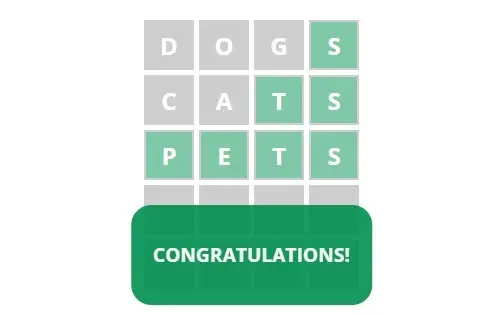
- Green Tiles: Indicate that a letter is correct and placed in the exact right position within the word.
- Yellow Tiles: Signal that the letter is part of the hidden word, but currently placed in the wrong position.
- Gray Tiles: Show that the letter does not appear anywhere in the target word, allowing you to systematically eliminate variables.
By synthesizing these clues across successive attempts, players exercise deductive reasoning, phonetic analysis, and clinical vocabulary retrieval.
Future Outlook: The Next Iteration of Professional Gamification
As digital literacy continues to advance within the veterinary sector, platforms like WordRX point toward a broader horizon in professional engagement and wellness.
Expanding the Lexicon and Customization
Future developments for specialized word games are expected to introduce tiered difficulty levels, allowing users to filter puzzles by specific disciplines—such as equine medicine, small animal surgery, or exotic animal practice. Furthermore, integration with formal continuing education (CE) tracking systems is currently being explored by academic developers, potentially allowing micro-puzzles to contribute toward minor professional development credits.
Fostering Global Veterinary Communities
Beyond education, these digital tools serve as cultural touchstones that unite a globally dispersed profession. Veterinary medicine is notoriously demanding, often leading to professional isolation, particularly among rural practitioners working single-doctor clinics. Shared daily digital rituals create an invisible, supportive network where professionals across continents share a collective chuckle over an obscure pharmacological root or celebrate a difficult solve.
Conclusion
WordRX proves that professional education and digital entertainment do not need to exist in separate spheres. By honoring the rich, complex language of veterinary medicine and packaging it within an accessible, beautifully executed daily puzzle, the platform has carved out an essential space in the modern clinician’s routine. It keeps minds sharp, builds cross-clinic camaraderie, and injects a much-needed dose of joy into a demanding, vital profession.