
Executive Overview
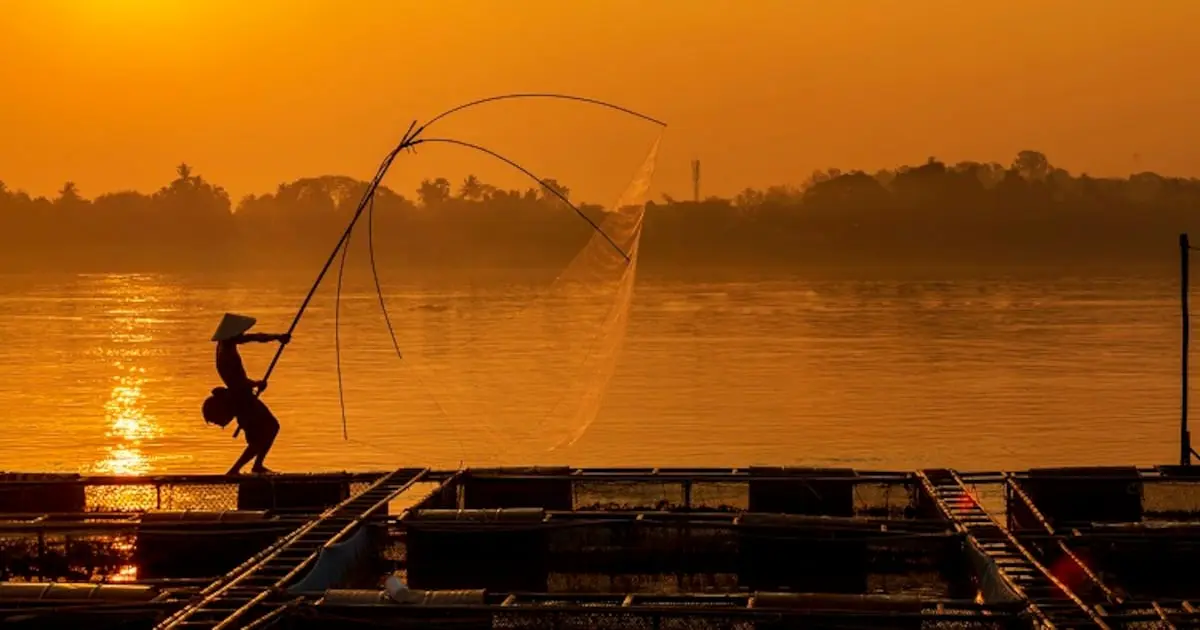
In an ambitious effort to safeguard one of the world’s most economically vital and ecologically diverse river basins, a major international conservation and fisheries initiative has officially been launched. Titled FishTech Plus, this four-year, multi-million-dollar program is designed to reverse decades of ecological fragmentation across the Lower Mekong Basin. Spanning Laos, Cambodia, Thailand, and Vietnam, the initiative aims to restore crucial river connectivity, protect declining freshwater fisheries, and fortify the livelihoods of millions of people who depend on the river for their daily survival.
The initiative is jointly funded by the Australian Centre for International Agricultural Research (ACIAR) and the Australian Department of Foreign Affairs and Trade (DFAT) through the Mekong–Australia Partnership. Formally inaugurated this month by Australia’s Minister for International Development, Anne Aly, during a high-profile visit to a Mekong project site, FishTech Plus is scheduled to run through 2030.
Led by Australia’s Charles Sturt University in close collaboration with regional governments, academic institutions, and local communities, FishTech Plus builds directly upon the foundational successes of the original FishTech program. While the initial phase focused heavily on deploying fish passage technologies—such as specialized fishways and ladders—to help aquatic species bypass man-made barriers, the expanded "Plus" iteration introduces a groundbreaking regional initiative: a systematic evaluation of obsolete and aging river infrastructure, including the potential removal of select non-functional weirs.
By pairing Australian hydrological and ecological research with deep local expertise, FishTech Plus seeks to address a profound vulnerability in the Lower Mekong. For the tens of millions of people residing along its banks, the river is not merely a geographic feature; it is the primary engine of food security, economic resilience, and cultural identity. As climate pressures mount and structural barriers continue to disrupt natural hydrological cycles, FishTech Plus represents a critical, evidence-based intervention to ensure the Mekong remains a living, flowing artery for generations to come.
Detailed Chronology
The Genesis: The Original FishTech Program
To understand the scope and ambition of FishTech Plus, one must examine the groundwork laid by its predecessor, the original FishTech initiative. For decades, rapid economic development in the Mekong region drove a surge in river infrastructure construction. Hydropower dams, irrigation weirs, and water diversion canals proliferated to support agricultural expansion and energy needs. However, these structures frequently overlooked the complex migratory behaviors of native fish species.
In the Mekong Basin, hundreds of fish species undertake extensive seasonal migrations—moving from deep dry-season refuges in the mainstream river into seasonally flooded forests and plains during the monsoon to feed and spawn. When barriers blocked these pathways, fish populations plummeted, severing the natural biological replenishment of the river system.
The original FishTech program intervened by implementing cutting-edge fish passage technologies. Working across multiple jurisdictions, the project successfully reconnected more than 3,900 kilometers of rivers and restored access to approximately 14,000 hectares of vital aquatic habitat. These early wins proved that targeted engineering and ecological interventions could successfully restore migration routes without compromising the fundamental operational goals of water management structures.
The Launch of FishTech Plus (2024–2030)
Building upon the momentum, methodologies, and cross-border networks established during the first phase, planning for FishTech Plus culminated in late 2024, setting the stage for full operational rollout starting this month.
The initiative was officially unveiled by Australia’s Minister for International Development, Anne Aly, during a strategic diplomatic and field mission to the Mekong region. Minister Aly’s visit underscored Australia’s enduring commitment to environmental sustainability and economic security in Southeast Asia under the broader umbrella of the Mekong–Australia Partnership.
Running formally through 2030, FishTech Plus transitions the region from localized fish passage retrofitting to a holistic, basin-wide management strategy. The program’s timeline is structured around three primary milestones:
- Phase 1 (2024–2026): Baseline assessments, stakeholder mapping, capacity-building curriculum rollouts, and the initial selection of obsolete infrastructure candidates for the regional weir-removal demonstration project.
- Phase 2 (2026–2028): Large-scale deployment of advanced fish passage technologies, implementation of pilot weir modifications and removals, and continuous monitoring of ecological and hydrological responses.
- Phase 3 (2028–2030): Data synthesis, regional policy advocacy, institutional knowledge transfer, and the establishment of sustainable, locally led management frameworks to ensure long-term oversight of restored waterways.
Supporting Context & Metrics
The Ecological and Economic Stakes of the Mekong
The Lower Mekong Basin supports the world’s largest inland fishery, yielding an estimated catch of over two million tonnes annually, with a first-sale value running into billions of dollars. More importantly, this harvest represents up to 80% of the animal protein consumed by the region’s rural populations, alongside essential micronutrients such as iron, zinc, and fatty acids.
However, the basin is facing an unprecedented convergence of threats. Climate change is altering historical precipitation and flow patterns, while sand mining, deforestation, and structural barriers are starving the delta of sediment and blocking biological migration.
According to assessments by ACIAR and partner organizations, fish populations in key tributaries have experienced alarming declines over the past two decades. When fish stocks dwindle:
- Nutritional security drops sharply, increasing susceptibility to malnutrition and micronutrient deficiencies, particularly among women and children in rural households.
- Economic resilience collapses for artisanal fishers and smallholder farmers who rely on surplus catches for supplemental income.
- Ecosystem resilience degrades, as predatory-prey dynamics and nutrient recycling mechanisms tied to fish migrations are disrupted.
The Paradigm Shift: Tackling Aging Barriers
One of the most innovative and contentious aspects of FishTech Plus is its focus on aging infrastructure. Across Laos, Cambodia, Thailand, and Vietnam, hundreds of concrete and masonry weirs were constructed decades ago to support local irrigation schemes. Today, many of these structures are functionally obsolete. Siltation has filled their reservoirs, reducing their water storage capacity to near zero, while changing agricultural practices have rendered their original irrigation layouts redundant.
Despite delivering minimal economic benefits, these decaying structures continue to exact a heavy ecological toll by blocking fish passage, altering water temperatures, and trapping organic matter. Furthermore, the financial burden of maintaining these deteriorating assets often falls heavily on local governments and rural cooperatives.
FishTech Plus will introduce a regional-first demonstration program explicitly designed to evaluate the environmental and economic impacts of removing selected obsolete weirs. By conducting rigorous before-and-after assessments, the project will generate empirical data comparing the costs of ongoing maintenance versus the immense ecological and economic dividends of total structural removal. This evidence will provide regional policymakers with a powerful decision-making framework to determine whether a given barrier should be upgraded, modified with a fish ladder, or completely dismantled.
Official Statements
The launch of FishTech Plus has garnered strong endorsement from government officials, research leaders, and international development agencies alike.
Jennifer Blair, ACIAR Fisheries Research Program Manager:
"Restoring river connectivity is critical to supporting food security and economic resilience across the region. FishTech Plus will help communities and governments restore river connectivity while building the skills, partnerships, and evidence needed to manage these important waterways for the future."
Blair emphasized that physical engineering alone is insufficient to secure the long-term health of the Mekong. True sustainability requires empowering local institutions, training the next generation of aquatic scientists, and fostering transparent, cross-border dialogue among riparian nations.
Dr. Lee Baumgartner, Charles Sturt University Researcher:
"The challenges facing river systems are increasingly shared across countries and regions. Through FishTech Plus, Australian research and practical experience will work alongside local knowledge to deliver solutions that support both healthy ecosystems and thriving communities throughout the Mekong."
Dr. Baumgartner highlighted the collaborative ethos of the project, noting that Australian advancements in environmental flow management and fishway design will be adapted to fit the unique socio-ecological realities of Southeast Asia.
Australian Minister for International Development, Anne Aly:
During her inaugural site visit, Minister Aly underscored Australia’s strategic partnership with Mekong nations, framing environmental cooperation as a cornerstone of regional stability and prosperity. She noted that initiatives like FishTech Plus demonstrate how targeted international development assistance can deliver tangible, grassroots benefits while addressing complex global challenges such as biodiversity loss and climate vulnerability.
Future Outlook
Building Regional Capacity and Long-Term Resilience
Infrastructure interventions and ecological restoration are only as durable as the institutions charged with maintaining them. Recognizing this, FishTech Plus is heavily investing in human capital across the Lower Mekong Basin.
Beyond its engineering and ecological trials, the program will roll out comprehensive regional capacity-building initiatives. These include:
- Professional Training Workshops: Equipping local water resource managers, engineers, and environmental regulators with state-of-the-art tools for assessing river connectivity and fish passage efficiency.
- Curriculum Development: Collaborating with universities in Laos, Cambodia, Thailand, and Vietnam to integrate modern freshwater ecology and sustainable engineering principles into undergraduate and postgraduate degree programs.
- Graduate Placements and Fellowships: Providing early-career scientists and researchers from the Mekong region with hands-on research opportunities alongside Australian and international experts, fostering a new cadre of homegrown river stewards.
A Blueprint for Global Inland Fisheries Management
As the world grapples with the degradation of freshwater ecosystems—which have suffered steeper declines in biodiversity than terrestrial or marine biomes—the lessons learned in the Mekong Basin will carry global significance.
By systematically demonstrating the feasibility and high return on investment of retrofitting fish passages and removing obsolete barriers, FishTech Plus aims to create a replicable blueprint for inland water management worldwide. If successful, the initiative will not only restore thousands of kilometers of interconnected river habitats and revitalize vital fisheries, but it will also prove that human engineering and natural river systems can achieve a sustainable, harmonious coexistence.
Through the combined dedication of ACIAR, DFAT, Charles Sturt University, and their regional partners, FishTech Plus offers a beacon of hope for the Mekong—ensuring that the river remains a source of life, wealth, and cultural continuity for the millions who call its basin home well into the future.