
Executive Overview
Deep beneath the crushing pressures and perpetual twilight of the world’s oceans, an evolutionary arms race is quietly unfolding. Far from the pristine reaches of the pelagic zone, where light fades and carbon is scarce, marine microorganisms have unlocked an unexpected evolutionary survival mechanism: they are learning to digest plastic.
A landmark, large-scale global study conducted by researchers at the King Abdullah University of Science and Technology (KAUST) has revealed that widespread marine microbes are genetically equipped to consume polyethylene terephthalate (PET)—the remarkably durable, synthetic polymer ubiquitous in modern life, used extensively in single-use beverage bottles, synthetic textiles, and packaging.
This groundbreaking discovery exposes the planetary scale of human impact, demonstrating that microbial life has begun adapting to the relentless tide of anthropogenic debris. At the heart of this adaptation is a specialized biochemical signature known as the M5 motif—a distinct structural feature on plastic-degrading enzymes called PETases. This motif acts as a molecular fingerprint, allowing scientists to identify which marine bacteria possess functional plastic-dismantling capabilities and which are mere evolutionary look-alikes.
While the revelation of plastic-eating bacteria underscores the astonishing resilience and adaptability of the natural world, lead researchers urge caution. The discovery should not be mistaken for an environmental silver bullet. The metabolic breakdown of synthetic polymers by deep-sea microbes occurs at a geological snail’s pace, entirely incapable of offsetting the millions of metric tons of plastic waste flowing into marine ecosystems annually. Furthermore, by the time microscopic debris sinks to the deep sea, the ecological damage to marine life and human food webs has already been done.
Nevertheless, the implications of this study stretch far beyond marine ecology. By decoding how nature has spontaneously modified hydrocarbon-degrading enzymes to target artificial polymers, scientists have unlocked a powerful new blueprint for biotechnology. The naturally occurring enzymes cataloged in this global study provide an unprecedented template for bio-engineering. Optimized in laboratories, these marine-derived catalysts could soon revolutionize industrial recycling plants, offering a viable, sustainable method to break down plastic waste at scale and fundamentally transform humanity’s relationship with synthetic refuse.
Detailed Chronology: From Accidental Discovery to Global Marine Survey
The Paradigm Shift of 2016
For decades, the scientific consensus regarded polyethylene terephthalate as a recalcitrant material—virtually impervious to natural degradation. Because synthetic polymers do not exist in the natural geological record, conventional wisdom dictated that no organism possessed the enzymatic machinery required to break the robust chemical bonds holding plastic chains together.
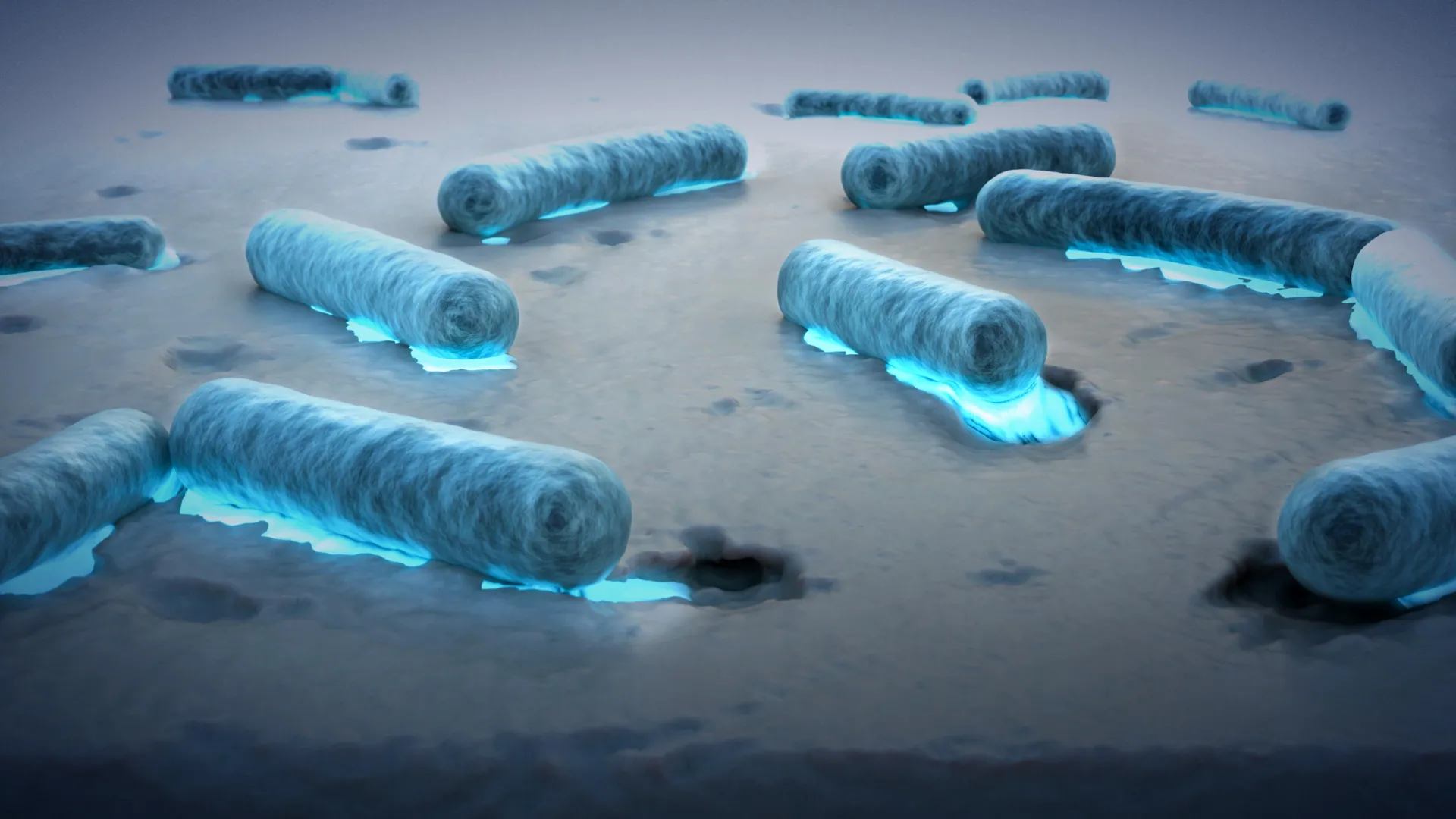
That rigid paradigm began to fracture in 2016, following a startling discovery at a Japanese waste recycling facility. Researchers isolating bacteria from sludge samples contaminated with plastic waste identified a novel bacterium, Ideonella sakaiensis, which demonstrated a unique ability: it survived by consuming PET as its primary carbon and energy source. The organism secreted a specialized enzyme—subsequently dubbed PETase—capable of hydrolyzing PET into its chemical precursors, ethylene glycol and terephthalate.
This revelation electrified the global scientific community. It proved that evolution could, under intense selective pressure, forge pathways to dismantle human-made materials. However, a profound mystery immediately confronted microbiologists: was the emergence of Ideonella sakaiensis a localized, isolated fluke within a contaminated recycling plant, or had microorganisms across Earth’s expansive natural biomes—particularly the vast, deep oceans—independently developed similar metabolic adaptations to cope with the mounting accumulation of marine debris?
The KAUST Global Marine Expedition
To answer this critical question, a team of researchers at KAUST embarked on a massive, systematic global screening initiative. Rather than focusing on localized terrestrial waste sites, the research team turned their attention to the global ocean, recognizing that marine currents continuously sweep floating debris into expansive gyres while microplastics steadily rain down into the abyssal depths.
The researchers compiled and analyzed a vast dataset comprising more than 400 distinct ocean water samples gathered from marine expeditions spanning the globe. These samples represented a diverse cross-section of aquatic environments, ranging from sunlit surface waters laden with floating plastic particulate to the nutrient-poor, high-pressure abyssal zones nearly two kilometers beneath the surface.
Utilizing an advanced methodological framework that integrated cutting-edge artificial intelligence modeling, high-throughput genetic screening, and rigorous laboratory validation, the KAUST team sought to map the distribution, abundance, and functional capabilities of putative plastic-degrading enzymes.
Through AI-driven structural modeling, the researchers identified a defining structural characteristic that separated truly functional PET-degrading enzymes from inactive ancestral homologs: the M5 motif. Laboratory experiments subsequently confirmed that marine bacteria carrying the complete M5 motif efficiently targeted and degraded PET substrates. Genetic activity mapping further revealed that these M5-PETase genes were not dormant relics; they were actively expressed throughout the global oceans, demonstrating a direct correlation with regions characterized by heavy plastic pollution.
Supporting Context & Metrics: The Scale of the Phenomenon
The empirical data gathered during the KAUST study paint a vivid picture of a planetary biosphere in transition. The metrics compiled by the research team highlight both the ubiquity of these plastic-degrading microbes and the immense scale of the synthetic challenge they face.
- Geographic Penetration: Functional PETases containing the distinctive M5 motif were detected in nearly 80 percent of all marine water samples tested across the globe. This widespread distribution confirms that plastic-degrading genetic potential is not restricted to polluted coastal zones or industrial waste sites; it is a global marine phenomenon.
- Vertical Range: Active plastic-degrading microbes were discovered operating across extreme environmental gradients—from sunlit surface gyres choked with macro- and micro-plastics down to dark, nutrient-depleted deep-sea trenches sitting nearly two kilometers below the ocean surface.
- The Deep-Sea Advantage: In the abyssal ocean, where organic carbon derived from surface photosynthesis is exceptionally scarce, the introduction of anthropogenic carbon provides an anomalous, highly concentrated energy source. The ability to utilize synthetic polymers confers a distinct, albeit opportunistic, metabolic survival advantage to deep-sea microorganisms.
- Degradation Velocity vs. Accumulation: Despite their widespread genomic presence, the rate of natural enzymatic degradation remains exceptionally slow. Current estimates indicate that microbial degradation rates operate on scales of decades or centuries for macroscopic items, falling orders of magnitude short of the estimated 11 million metric tons of plastic waste entering aquatic ecosystems every year.
Official Statements and Expert Analysis
The implications of the KAUST study have reverberated across the scientific community, drawing insightful commentary from the study’s primary architects and environmental policy experts alike.
Dr. Carlos Duarte, a renowned marine ecologist and co-leader of the research initiative, emphasizes the dual nature of the discovery—celebrating microbial ingenuity while issuing a sober warning against ecological complacency.
"The M5 motif acts like a fingerprint that tells us when a PETase is likely to be functional, able to break down PET plastic," explains Dr. Duarte. "Its discovery helps us understand how these enzymes evolved from other hydrocarbon-degrading enzymes. In the ocean, where carbon is scarce, microbes seem to have fine-tuned these enzymes to make use of this new, human-made carbon source: plastic."
However, Dr. Duarte is quick to temper enthusiasm regarding the environmental remediation potential of these marine bacteria in situ.
"By the time plastics reach the deep sea, the risks to marine life and human consumers have already been inflicted," he warns. "The microbial breakdown process is far too slow to offset the massive flow of plastic waste entering the oceans each year. Nature’s adaptation is fascinating, but it is not a rescue plan for our pollution crisis."
Echoing these sentiments, Dr. Intikhab Alam, a senior bioinformatics researcher and co-leader of the study at KAUST, highlights the evolutionary significance of the findings from a microbial genetics perspective.
"The ability to snack on synthetic carbon may confer a crucial survival advantage in the deep sea," Dr. Alam notes. "What we are documenting here is a clear evolutionary response: microorganisms are actively adapting to human pollution on a planetary scale. It demonstrates that life will find metabolic pathways to exploit novel chemical landscapes, even those engineered entirely by human industry."
Future Outlook: Translating Deep-Sea Discovery into Real-World Solutions
While relying on deep-sea bacteria to naturally cleanse the world’s oceans is ecologically unviable, the genetic blueprint uncovered by the KAUST team holds transformative potential for terrestrial waste management and sustainable industrial chemistry.
The primary bottleneck in utilizing PETases for industrial recycling has historically been their inefficiency under real-world operational conditions. Laboratory-engineered enzymes often fail when exposed to the complex mixtures of additives, dyes, and weathered polymers found in commercial waste streams. However, the M5-containing enzymes that spontaneously evolved in the deep sea have been forged in the crucible of natural selection, proving their structural stability and catalytic functionality in dynamic, harsh environmental conditions.
Pathways to Commercialization
- Enzyme Optimization via AI: By leveraging the structural data provided by the M5 motif, biotechnologists can use artificial intelligence and directed evolution to engineer synthetic enzymes with drastically accelerated reaction rates.
- Industrial Bio-Recycling Facilities: Optimized marine-derived PETases can be integrated into closed-loop industrial treatment plants. These facilities can break down post-consumer textile and packaging waste into pure constituent monomers, which can then be repolymerized into virgin-quality plastic without petroleum extraction.
- Decentralized Domestic Applications: Over the longer term, researchers envision deploying engineered microbial consortia or immobilized enzyme filters in municipal waste management facilities and eventually residential recycling systems.
Conclusion
The discovery of plastic-eating bacteria in the deep ocean serves as a profound paradox. On one hand, it is a sobering testament to the pervasive, inescapable reach of human pollution—demonstrating that synthetic debris has penetrated the remotest corners of the biosphere to such an extent that microbial life has been forced to evolve alongside it. On the other hand, it offers a beacon of scientific hope. By decoding the molecular signatures that allow nature to dismantle artificial polymers, humanity has acquired an invaluable roadmap. In our ongoing battle against plastic pollution, the deep sea has provided us with unexpected, powerful new allies.