
Executive Overview
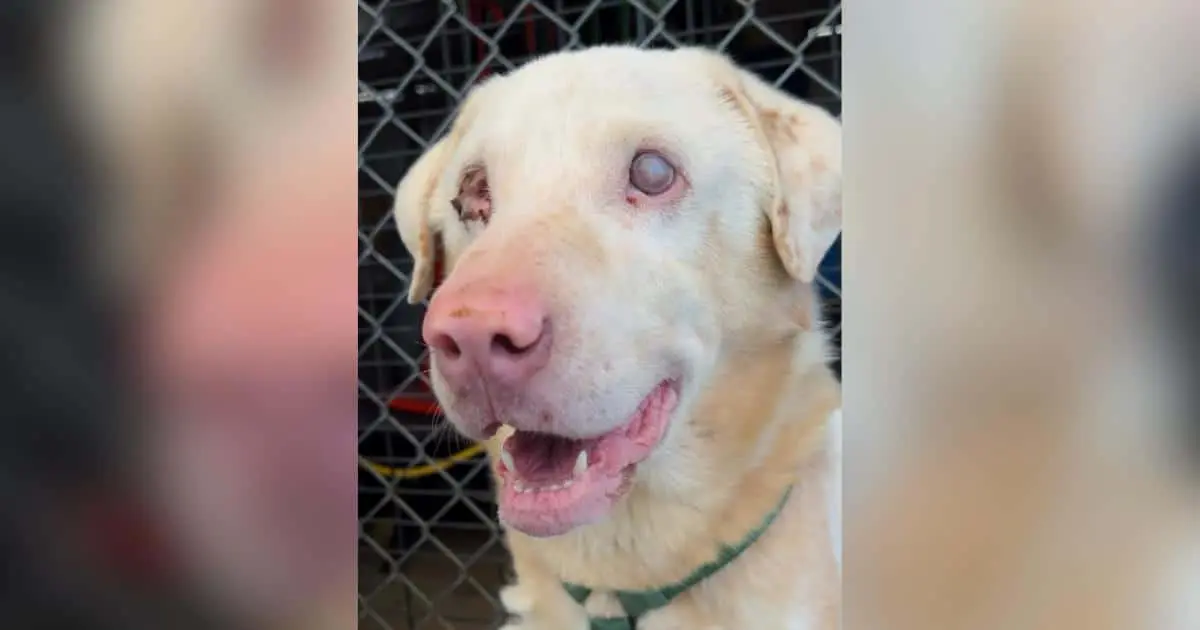
In the early morning hours outside Buckeye, Arizona, a severe animal welfare crisis materialized in the form of a gentle, sightless dog named Copper. Left abandoned near a private property on the fringes of the Sonoran Desert, the blind canine was exposed to a hostile environment where survival is measured in hours. Unable to see his surroundings, seek out water, or identify oncoming threats, Copper’s survival depended entirely on his remaining senses—and a stroke of sheer luck.
Discovered by a passerby just after sunrise, Copper was quickly transported to Desert Tails Rescue, a local non-profit organization that has increasingly found itself on the front lines of a surging regional abandonment crisis. His rescue occurred at a critical juncture: had he remained in the open desert for just a few hours longer, rising daytime temperatures—which frequently soar to 115 degrees Fahrenheit—would have proven fatal.
Copper’s harrowing ordeal is not an isolated incident. Rather, it serves as a stark symptom of a nationwide systemic failure in animal welfare. As economic pressures, housing instability, and soaring veterinary costs converge, animal shelters across the United States are grappling with unprecedented capacity limits. This investigation details Copper’s rescue, explores the physiological dangers of desert abandonment, examines the operational strain on local rescues, and outlines the structured alternatives available to pet owners facing crisis.
Detailed Chronology
[Late Night / Early Morning]
Copper is abandoned near a property on the outskirts of Buckeye, AZ.
       │
       ▼
[Overnight Hours]
Copper survives the desert night, navigating unfamiliar terrain using only sound and scent.
       │
       ▼
[Early Morning (Post-Sunrise)]
A citizen discovers Copper and contacts authorities/rescuers before temperatures spike.
       │
       ▼
[Mid-Morning]
Copper is admitted to Desert Tails Rescue; immediate stabilization and cooling protocols begin.
       │
       ▼
[Subsequent Days]
Comprehensive veterinary evaluations, blood work, and preparation for bilateral enucleation surgery.
The Abandonment and the Night of Survival
Sometime during the dark hours of the night, Copper was driven to a rural area outside Buckeye, Arizona, and left behind. For an animal with normal vision, the desert at night is a daunting landscape filled with nocturnal predators, cacti, and disorienting terrain. For Copper, who is completely blind, the experience was a sensory nightmare.
Deprived of visual cues, Copper was forced to rely on his acute senses of hearing and smell to navigate the unfamiliar environment. The shifting sands, the rustle of desert brush, and the unfamiliar scents of local wildlife would have kept the dog in a constant state of high alert. Lacking the ability to locate shelter or find a path back to safety, he remained stationary or wandered aimlessly, vulnerable to any hazards in his immediate vicinity.
The Critical Window of Discovery
The timeline of Copper’s rescue was a matter of life and death. In the arid climate of Maricopa County, morning temperatures rise rapidly. By 10:00 AM, the ground temperature can easily surpass 120 degrees Fahrenheit, causing severe burns to a dog’s paw pads, while ambient temperatures climb toward the daily peak.
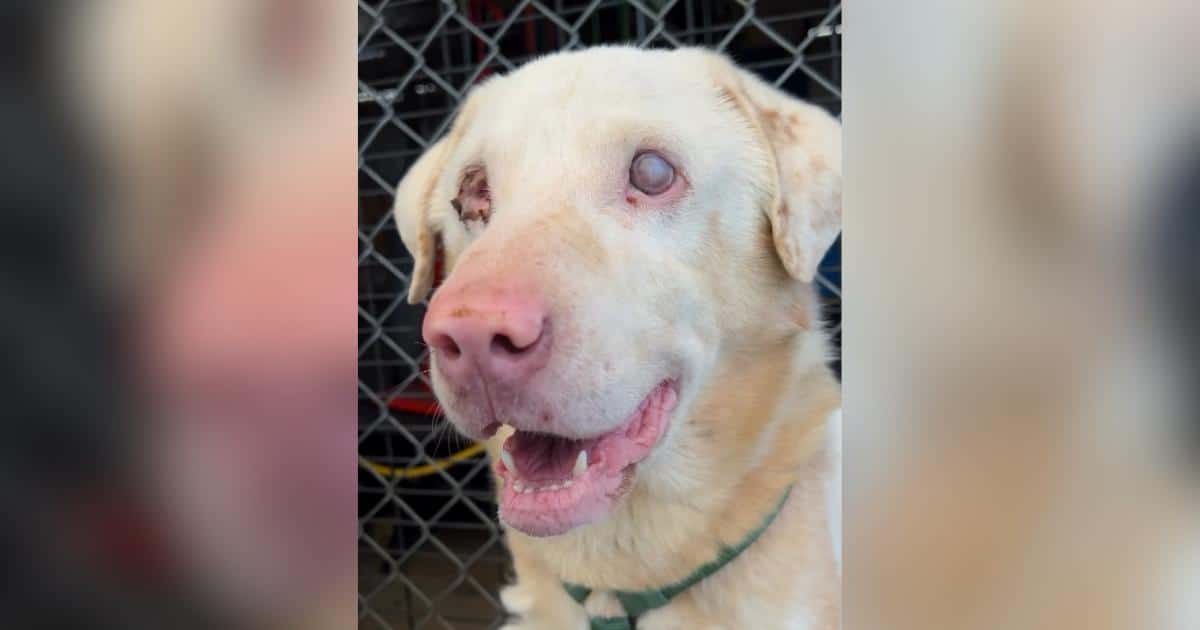
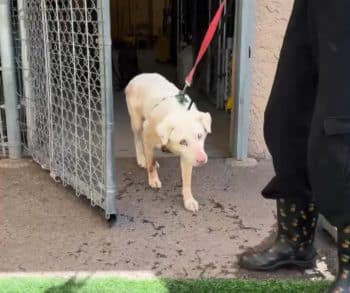
Fortunately, a local resident spotted Copper early the following morning. Recognizing the dog’s vulnerability and obvious disorientation, the individual secured him and alerted Desert Tails Rescue. Upon arrival at the rescue facility, staff noted that while Copper was frightened and mildly dehydrated, he had been spared the worst of the daytime heat.
Supporting Context & Metrics
To fully comprehend the gravity of Copper’s situation, it is necessary to examine both the environmental physics of the Arizona desert and the macro-level metrics currently defining the animal rescue landscape.
The Lethal Physics of Desert Exposure
Dogs do not sweat like humans; they rely primarily on panting and minor heat release through their paw pads to regulate body temperature. When ambient temperatures exceed a dog’s normal body temperature (approximately 101 to 102.5 degrees Fahrenheit), panting becomes increasingly ineffective.
| Ambient Temperature | Ground/Asphalt Temp | Time to Second-Degree Burns | Risk Level for Canines |
|---|---|---|---|
| 77°F | 125°F | 60 Seconds | Moderate (Dehydration risk if active) |
| 87°F | 143°F | 15 Seconds | High (Heat stroke potential within 30 mins) |
| 100°F+ | 150°F+ | Instantaneous | Extreme (Rapid onset of organ failure) |
| 115°F (Buckeye Peak) | 160°F+ | Instantaneous | Fatal (Survival measured in hours) |
For a blind dog like Copper, the inability to locate shade compounding this heat index creates a lethal scenario. Without visual navigation, a dog will often walk in circles or remain exposed to direct sunlight, accelerating the onset of heatstroke, brain damage, and subsequent multi-organ failure.
The Macro Shelter Crisis: Capacity and Surrenders
Desert Tails Rescue’s encounter with Copper reflects a broader, highly troubling trend. The organization reported that less than six months prior to Copper’s rescue, a 12-year-old Great Dane—who was both deaf and blind—was found tied to the rescue’s front doors at 3:00 AM.
These desperate acts of abandonment are directly correlated with measurable pressures on the animal welfare system:
- Capacity Overload: Post-pandemic surrender rates have spiked, while adoption rates have plateaued. According to national database Shelter Animals Count, intake rates have consistently outpaced euthanasia and adoption outflows since 2021, leading to a compounding capacity deficit.
- Economic Constraints: Rising inflation has impacted the cost of pet food, basic supplies, and veterinary care. Many owners find themselves unable to afford treatment for chronic conditions, leading to the abandonment of senior or disabled animals.
- Waitlists for Surrender: Due to overcrowding, reputable shelters often have surrender waitlists extending from several weeks to months. Pet owners in acute crises (such as eviction or sudden illness) sometimes feel they have no time to wait, leading to dangerous, illicit abandonments.
Official Statements and Ethical Alternatives
The team at Desert Tails Rescue has expressed deep concern over the rising frequency of abandonment cases, emphasizing that leaving an animal to fend for itself—especially one with severe physical disabilities—is never the only option.
In an official communication, a representative from the rescue highlighted the emotional and physical toll these situations take on both the animals and the staff:
"He’s blind. He cannot see a thing. The thought of him out there alone in the dark, unable to comprehend where he was or why he was left, is heartbreaking. But we want people to know: there are better ways to do this. Rescues are stretched thin, but if you reach out before you hit a point of absolute crisis, we can work together to find a safe solution."
Proactive Strategies for Pet Owners in Crisis
To prevent the physical danger and legal liabilities associated with animal abandonment, animal welfare experts advocate for several proactive steps:
- Early Submission of Surrender Applications: Do not wait until the day of a move or a crisis to contact rescues. Initiating the process weeks in advance allows shelters to budget kennel space or secure a foster home.
- Utilizing Courtesy Adoption Posts: Many rescue groups are willing to list an owner’s dog on their public platforms (such as Petfinder, Adopt-a-Pet, or social media) while the dog remains in the owner’s home. This bypasses the need for physical shelter space.
- Community-Based Rehoming: Equipping a dog with an "Adopt Me" vest and visiting pet-friendly public spaces can facilitate direct, community-level adoptions, bypassing the shelter system entirely.
- Seeking Medical and Food Assistance: Many communities offer pet food pantries and low-cost veterinary clinics designed to help struggling owners keep their pets in their homes.
Future Outlook: Copper’s Medical Roadmap and Rehabilitation
While Copper’s rescue marked the end of his immediate peril, it was merely the beginning of a lengthy and complex rehabilitation process.
The Veterinary Intervention Plan
Upon intake, Copper was placed under the care of specialized veterinary professionals. His medical protocol includes:
- Systemic Diagnostic Work: Comprehensive blood panels to check for tick-borne illnesses, valley fever (prevalent in the Arizona desert), and organ function.
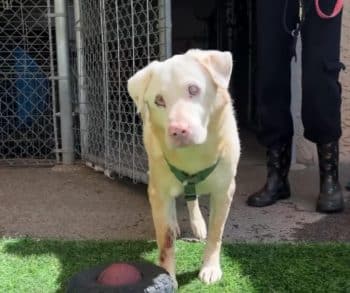
- Bilateral Enucleation Surgery: Due to advanced, painful ophthalmic disease that caused his blindness, veterinary surgeons have determined that removing both eyes and permanently suturing the eyelids closed is the most humane path forward. This procedure eliminates chronic pain and the risk of localized infections.
- Neutering and Preventative Care: Once stabilized, Copper will undergo standard sterilization, microchipping, and updated vaccinations.
                  [INITIAL INTAKE & STABILIZATION]
                                 │
                                 ▼
                     [DIAGNOSTIC BLOOD WORK]
                                 │
                                 ▼
                 [BILATERAL ENUCLEATION SURGERY]
            (Pain elimination & infection prevention)
                                 │
                                 ▼
                  [BEHAVIORAL REHABILITATION]
            (Sensory mapping & trust building)
                                 │
                                 ▼
                 [PERMANENT ADOPTION PLACEMENT]
Cognitive Adaptation and Behavioral Recovery
Despite the trauma of his abandonment, Copper has shown remarkable resilience. Dogs possess an extraordinary ability to adapt to sensory deficits. Without sight, Copper will navigate his world using a combination of olfactory mapping and auditory cues.
In his foster environment, caretakers are utilizing structured rehabilitation techniques:
- Environmental Consistency: Maintaining a static layout of furniture, food bowls, and bedding to allow Copper to build a mental map of his surroundings.
- Tactile Boundaries: Utilizing different floor textures (such as transition rugs) to signal doorways or steps.
- Scent Markers: Using mild, dog-safe scents (like lavender or chamomile) to mark specific areas of interest, such as the exit to the backyard.
The Path to Adoption
Once Copper has fully recovered from his bilateral enucleation surgery and his behavioral assessments are complete, Desert Tails Rescue will begin the search for a permanent home. His ideal adopters will be those who understand the unique, rewarding dynamics of caring for a special-needs dog—someone who can offer a predictable, loving environment where he will never again have to wonder where his next meal is coming from, or if he is safe.
Copper’s journey from a terrified, blind dog abandoned in the harsh Arizona desert to a cherished companion is a powerful testament to the impact of timely community intervention. His story stands as a beacon of hope, illustrating that even when human systems fail, dedicated rescue networks and vigilant citizens can rewrite the ending for the most vulnerable among us.