
Executive Overview
For generations, the popular imagination of the avian world has been dominated by the vibrant, loud, and often aggressively displayed traits of male birds. From the dazzling cobalt plumage of the male Indigo Bunting to the complex, territory-claiming melodies of male songbirds, ornithology and recreational birding alike have historically focused heavily on the male half of the population. This persistent bias has left a profound void in our empirical understanding of female birds, obscuring everything from their vocal capabilities to their ecological vulnerabilities.
Now, a monumental, comprehensive study published in the journal Proceedings of the Royal Society B is shattering long-held assumptions about avian life histories. Analyzing more than half a million bird-banding records spanning nearly three decades across the United States and Canada, researchers have uncovered a striking and pervasive reality: female perching birds—the massive, biodiverse taxonomic order encompassing all songbirds, flycatchers, and related species—live, on average, significantly shorter lives than their male counterparts.
Led by Dr. Joanna Wu, an ecologist at the University of California, Los Angeles, the research team found that male perching birds experience a 12.9 percent higher average survival rate than females. Furthermore, among adults who successfully reach maturity, males survive an average of 1.66 years—roughly 19.3 percent longer than the meager 1.39-year average lifespan recorded for adult females. This stark survival disparity challenges fundamental evolutionary assumptions about sex, longevity, and mortality across the animal kingdom.
Beyond reshaping academic discourse, these findings carry profound implications for wildlife conservation. As researchers delve deeper into the biological and ecological drivers behind this gender gap—ranging from the grueling physiological tolls of long-distance migration to chromosomal genetic architectures—it is increasingly clear that overlooking female birds carries a steep cost. In an era of accelerating biodiversity loss and habitat destruction, conservation strategies that rely solely on male-centric data are fundamentally flawed, threatening the long-term viability of North America’s most common bird populations.
Detailed Chronology: How the Discovery Unfolded
The path to this groundbreaking revelation spans decades of meticulous fieldwork, invisible data collection, and a growing cultural shift within ornithology toward gender equity in scientific observation.
Decades in the Field: The Foundation of MAPS Data
The bedrock of this landmark study relies on an astonishingly rich, long-term dataset amassed by the Monitoring Avian Productivity and Survivorship (MAPS) program, an initiative spearheaded by the Institute for Bird Populations. Beginning in the late 20th century and continuing through the modern era, MAPS established a sprawling network of 1,229 bird-banding stations distributed strategically across the United States and Canada.
At these stations, dedicated ornithologists, researchers, and citizen scientists safely capture wild birds using specialized, ultra-fine mesh structures known as mist nets. Upon capture, each bird is gently handled, measured, and fitted with a lightweight, uniquely numbered aluminum band around its leg before being immediately released back into the wild. When these banded birds are recaptured in subsequent seasons or years, scientists gain invaluable longitudinal data regarding individual survival, site fidelity, and population dynamics.
The Genesis of the Research
Dr. Joanna Wu, whose academic and professional career has long centered on avian ecology and conservation, began noticing persistent gaps in how sex-specific data was handled in bird research. Having previously worked as a scientist for the National Audubon Society, Wu co-founded the "Galbatross Project"—an initiative alongside fellow researchers designed to redirect scientific and public attention toward female birds.
Recognizing the vast, untapped potential of the MAPS database, Wu and her co-authors set out to perform the largest systematic evaluation of sex-specific survival rates in North American passerines ever attempted. They pulled and filtered records representing more than 560,000 individual birds, narrowing their focus to 92 distinct passerine species with robust sample sizes.
Unveiling the Pattern
When the data was fully synthesized, the consistency of the results stunned the research team. Out of the 92 focus species analyzed, 82 exhibited lower female survival rates. More importantly, the statistical signal was so robust that a clear, undeniable pattern of female mortality emerged across 35 distinct species spanning multiple major passerine families—ranging from diminutive titmice and chickadees to melodic thrushes and brightly colored cardinals.
The findings were formalized and published in July, immediately drawing praise from evolutionary biologists and gerontologists worldwide for the unprecedented scale and clarity of the dataset. What began as an advocacy effort by the Galbatross Project to champion overlooked female birds had now culminated in rigorous, peer-reviewed empirical evidence demanding a structural shift in how avian biology is studied.
Supporting Context & Metrics: The Anatomy of Avian Mortality
To fully grasp the magnitude of the new study, one must examine the precise quantitative metrics unearthed by Wu and her colleagues, alongside the complex biological and ecological mechanisms driving the gender gap.
The Numbers Behind the Gap
The statistical disparity in survival rates between male and female perching birds is both consistent and severe. The core findings break down into several key metrics:
- Overall Survival Advantage: Males demonstrated a 12.9 percent higher average survival rate compared to females across the studied passerine species.
- Adult Longevity: Among birds that successfully transitioned into adulthood, males lived an average of 1.66 years.
- Female Lifespan Deficit: In stark contrast, adult females exhibited an average lifespan of just 1.39 years, translating to a 19.3 percent reduction in longevity compared to males.
- Species-Wide Consistency: Out of 92 species examined, 89 percent (82 species) displayed lower survival rates for females, with 35 species showing statistically significant divergence across diverse families.
The Hazards of Migration
Why do female perching birds die younger than males? The researchers propose several compelling hypotheses, chief among them being the grueling physical toll of migration.
Many migratory passerine species exhibit sex-segregated migration patterns, where females frequently journey significantly farther south to their wintering grounds than their male counterparts. This extended transit subjects females to prolonged exposure to environmental hazards.
"They can encounter bad weather, predation, or lack of food," explains Dr. Joanna Wu. "It’s a really physiologically stressful time during migration."
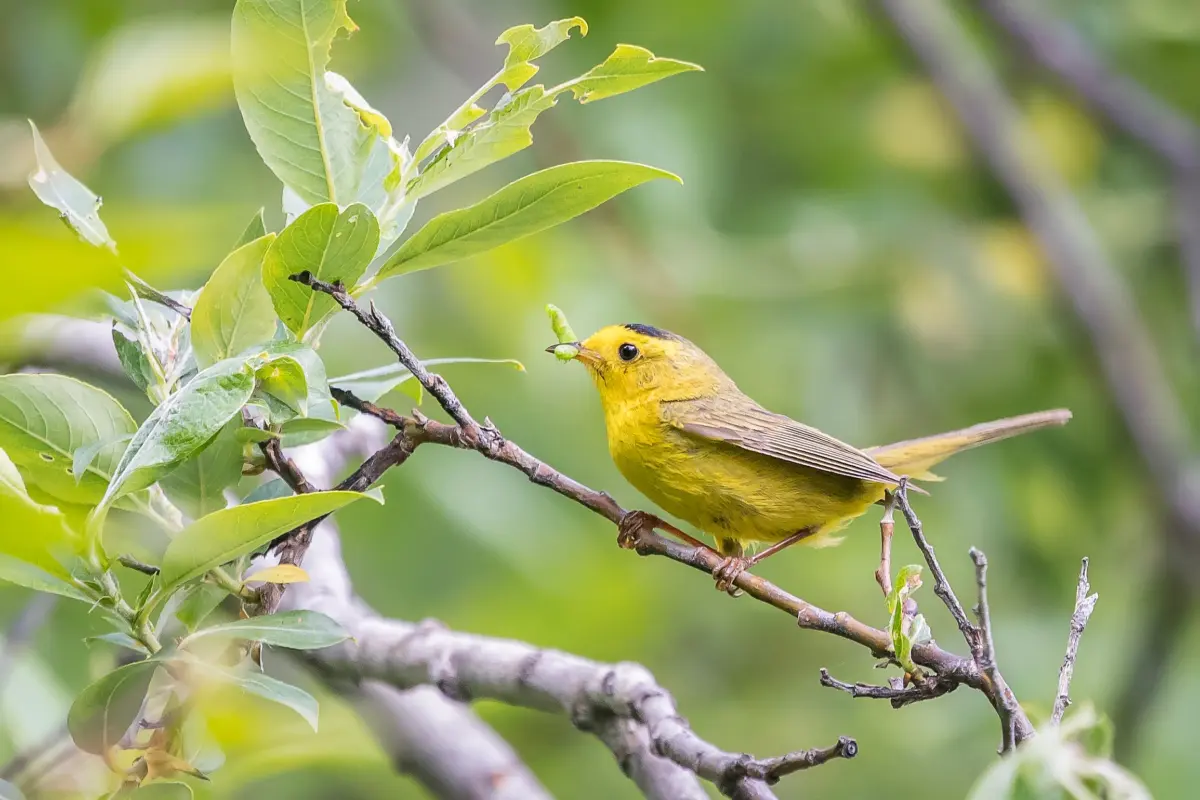
The study noted that long-distance migrants, particularly warbler species, displayed some of the most dramatic divergences in survival rates between the sexes, underscoring the lethal cost of the long-distance journey for females.
Chromosomal Disparities: The Genetic Twist
Beyond environmental pressures, the answer may be etched directly into the genetic code of birds. In the study of longevity, humans and other mammals often lead scientists to assume that females naturally outlive males. This mammalian advantage stems from the XX/XY sex chromosome system, where females possess two identical X chromosomes, providing a genetic backup system if a harmful mutation occurs on one.
In birds, however, the genetic architecture is completely reversed. Female birds possess heteromorphic sex chromosomes (designated as ZW), meaning they carry two different chromosomes, while males are the homogametic sex (ZZ), carrying an identical pair.
"Even though most people think that females live longer, because that’s true in a lot of mammal species, it’s not necessarily true across the landscape of life, and this is a really good example of that," notes Dr. Steven Austad, scientific director of the American Federation for Aging Research. This fundamental chromosomal difference may inherently leave female birds more vulnerable to genetic vulnerabilities as they age.
Official Statements and Expert Perspectives
The academic community has received the study with immense enthusiasm, recognizing it as a watershed moment for ornithological research and evolutionary biology.
Dr. Steven Austad, a globally recognized authority on aging and longevity who was not directly involved in the research, emphasized the sheer scale and future significance of the publication:
"There have been previous studies that have reported that female birds live shorter than males in some species, but this is by far the biggest study with the most birds and species involved. It will be quoted a lot in the future literature."
Dr. Joanna Wu underscored the emotional and scientific surprise of uncovering such a universal pattern across decades of data:
"I was just really surprised that this pattern was so consistent for so many species over almost a 30-year period. It goes to show that we can’t just assume that what’s true for males is also true for females."
Wu also reflected on how her long-standing advocacy through the Galbatross Project serendipitously aligned with hard, empirical data:
"I got lucky that this scientific effort does support the cause of the Galbatrosses to draw attention to female birds. We can no longer afford to let half the avian population remain an afterthought in ecological research."
Future Outlook: Reforming Conservation and Scientific Paradigms
The revelation that female perching birds face shorter lifespans and unique ecological pressures is far more than an academic curiosity; it exposes critical flaws in contemporary conservation biology that must be urgently addressed.
The Hidden Dangers of Methodological Bias
For decades, conservation planners and field researchers have utilized standardized methodologies that inadvertently introduce sex-based biases. For instance, during the peak breeding season, researchers frequently erect mist nets near active nesting territories to capture and monitor local populations. However, because female songbirds often spend long hours incubating eggs or brooding altricial chicks within hidden nests, they are systematically under-sampled compared to territorial, highly mobile males who spend more time exposed in the canopy. Consequently, baseline survival estimates have historically leaned heavily on male demographic data.
Habitat Loss: An Unequal Burden
This data collection bias translates directly into dangerously inadequate conservation policies. When different sexes occupy distinct ecological niches or utilize separate non-breeding habitats, failing to account for female distribution can spell disaster for a species.
A stark illustration of this phenomenon exists in the plight of the Golden-winged Warbler. Research indicates that during the non-breeding season in Central America, male Golden-winged Warblers primarily populate high-elevation forests, whereas females tend to inhabit lower-altitude zones. Because lower-altitude forests are far more susceptible to human clearing, agricultural conversion, and aggressive logging, female Golden-winged Warblers have experienced double the rate of habitat destruction compared to males.
Despite such glaring disparities, a comprehensive 2019 review revealed that a staggering 92 percent of conservation plans for 66 migratory North American bird species failed to reference distribution or habitat differences related to sex.
The Path Forward for Ornithology
Armed with the empirical backing of Wu’s landmark study, the scientific community is entering a new era of accountability. Dr. Wu is dedicating the final chapters of her doctoral dissertation to exploring the subtle nuances of sex-biased habitat utilization.
Initiatives like the Galbatross Project are gaining institutional traction, encouraging birders, ornithologists, and policy-makers to intentionally seek out, document, and protect female birds across all life stages. As conservation organizations rewrite their strategic frameworks, the message from the forest canopy is unmistakable: protecting the future of North American bird populations requires looking beyond the bright plumage and complex songs of the males, and ensuring that the hidden, demanding lives of female birds are brought fully into the light of science and conservation.