
Executive Overview
In a tongue-in-cheek announcement that briefly sent ripples of amusement across digital news networks, the Great Plains SPCA declared that it had officially "confirmed extraterrestrial life" within its facility. Rather than originating from a distant galaxy or being unmasked in a classified governmental aerospace facility, these purported lifeforms were discovered residing quietly in a Kansas animal shelter.
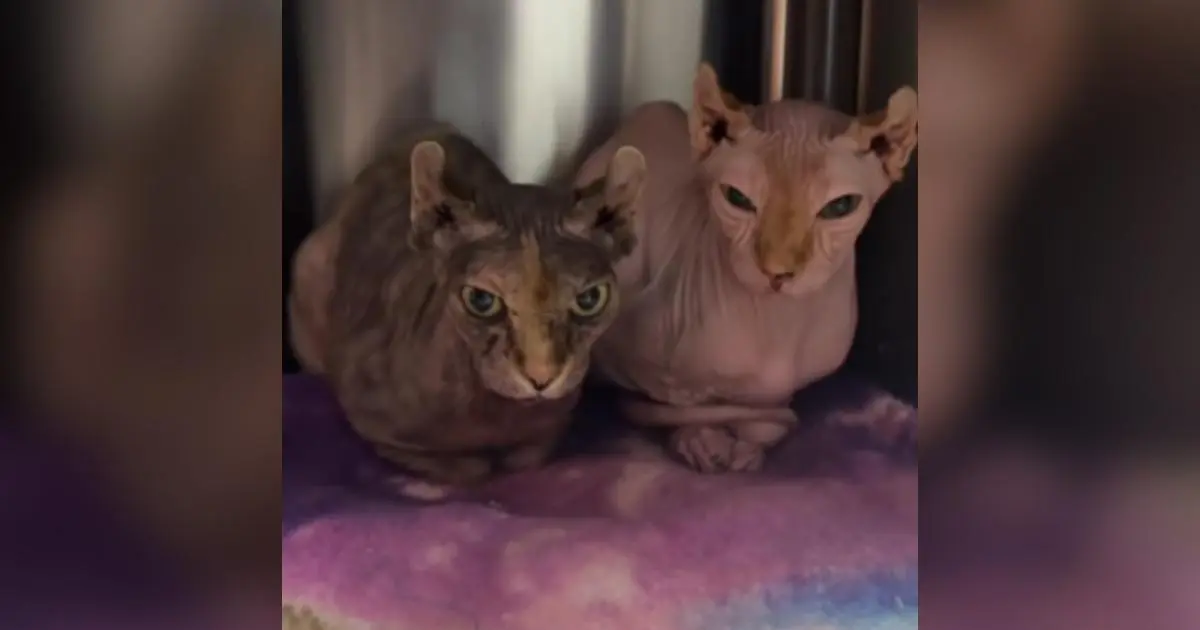
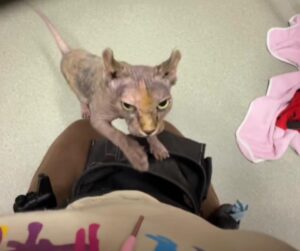
The subjects of this playful proclamation are Xena and Mr. Tigger, a bonded mother-and-son pair of Elf Sphynx cats. Characterized by their nearly hairless bodies, highly expressive faces, and distinctively curled ears, the pair bear a striking aesthetic resemblance to classic depictions of extraterrestrial visitors. Beneath their otherworldly facade, however, lies a deeply grounded rescue story centered on animal welfare, the importance of keeping bonded feline families intact, and the unique physiological care required by rare cat breeds.
This report examines the chronology of Xena and Mr. Tigger’s arrival at the Great Plains SPCA, explores the fascinating genetic background of the Elf Sphynx breed, analyzes the behavioral science behind bonded feline pairs, and details the successful conclusion of their adoption journey. While the shelter’s initial bulletin framed the arrival as a groundbreaking interstellar event, the true narrative highlights the resilience of animals facing major life transitions and the dedication of modern rescue organizations.
Detailed Chronology: From Surrender to First Contact
The Intake and the Interstellar Announcement
The sequence of events began when the Great Plains SPCA took in two unusual feline residents. Due to changing personal circumstances, the cats’ previous owner could no longer provide the specialized care that Xena and Mr. Tigger required. Relinquishing pets is frequently a traumatic and difficult decision, but the owner ensured the pair remained together by surrendering them to a facility equipped to manage their unique needs.
Upon intake, shelter staff immediately noted the cats’ striking appearance. Combining the hairless, wrinkled skin of the Sphynx with the distinctively curled ears of the American Curl, Xena and Mr. Tigger possessed a visual profile unlike standard shelter intakes. Capitalizing on their unique look, the Great Plains SPCA posted an update introducing the cats with a playful hook:
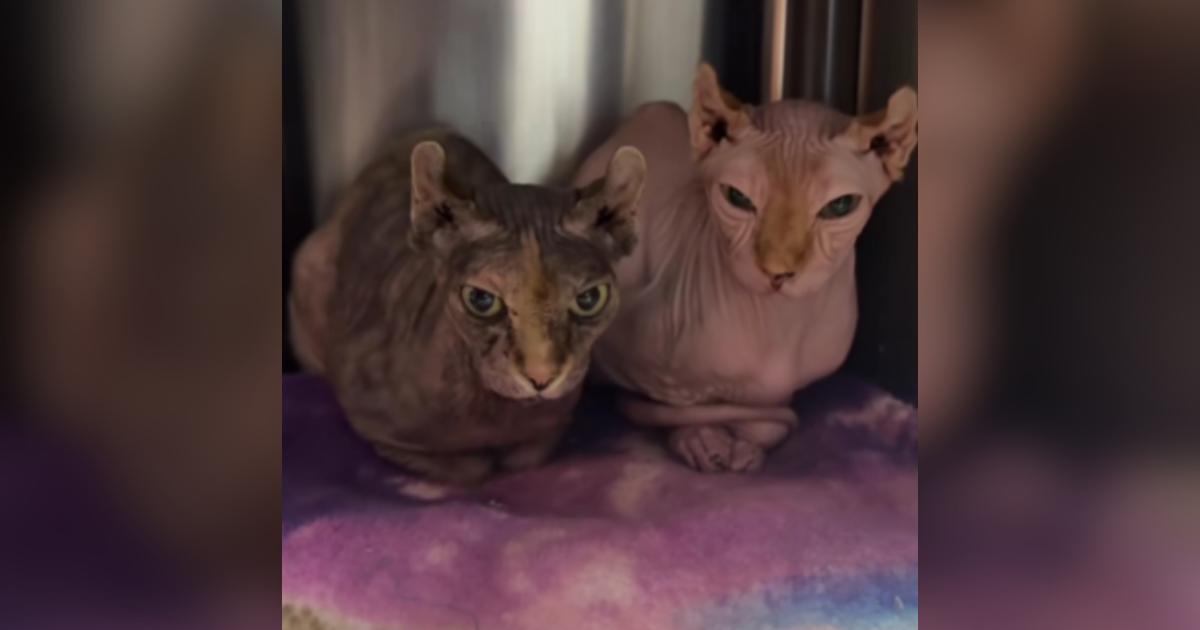
"We have confirmed extraterrestrial life at Great Plains SPCA… Apparently, the aliens were not hiding on Mars or traveling through some distant galaxy because they were hanging out at an animal shelter in Kansas."
The Waiting Period and Public Reaction
While the internet delighted in the "extraterrestrial" framing, the shelter emphasized that the cats were not immediately available for adoption. Like many specialized rescues taking in rare or delicate breeds, the staff needed time to evaluate the cats’ health, monitor their adjustment to the shelter environment, and prepare them for transition.
During this preliminary phase, the shelter posed a question to its online community: “Who’s ready to welcome two aliens into their home?” The response was immediate and overwhelming. Prospective adopters from across the region expressed interest, though the shelter maintained a strict criterion: Xena and Mr. Tigger constituted a package deal and would only be adopted out as a bonded pair.
The Adoption Breakthrough ("First Contact")
The suspense did not last indefinitely. Following a brief stabilization and medical assessment period, the Great Plains SPCA issued a definitive update that brought closure to the narrative. The shelter updated its public files with the single word awaited by hundreds of followers: ADOPTED.
Xena and Mr. Tigger successfully transitioned from their temporary enclosure into a permanent, loving home. True to the shelter’s overarching mission, mother and son remained side-by-side, proving that even visitors who look like they arrived via a tiny spacecraft can seamlessly integrate into terrestrial domestic life.
Supporting Context & Metrics: The Science of Elf Sphynx Cats
To understand why Xena and Mr. Tigger generated such attention, one must examine the specific phenotype and genetic history of the Elf Sphynx.
[Sphynx Cat] (Hairless Gene, Wrinkled Skin)
       +
[American Curl Cat] (Dominant Ear-Curling Gene)
       =
[Elf Sphynx Breed] ("Extraterrestrial" Appearance)
Genetic Origins and Physical Traits
The Elf Sphynx is a relatively modern and rare experimental cat breed. Developed primarily through the targeted cross-breeding of traditional Sphynx cats and American Curls, the breed was engineered to combine two distinct genetic mutations:
- The Hairless Mutation (Sphynx): Responsible for the lack of a traditional fur coat, prominent cheekbones, and heavily textured, warm-to-the-touch skin.
- The Ear-Curling Mutation (American Curl): Caused by a dominant genetic trait that causes the cartilage of the ear to sweep backward in a smooth arc, giving the cat a permanent, alert, elf-like expression.
Contrary to popular belief, cats with Sphynx ancestry are rarely 100% hairless. Most possess a fine, peach-fuzz-like layer of down across their bodies. This microscopic coat changes their tactile profile, making them feel less like traditional pets and more like a warm, suede-like fabric.
Specialized Care Metrics
Because hairless and low-coat breeds lack the natural protective barrier provided by a thick fur coat, owners must adhere to specific husbandry metrics:
- Skin Oil Management: In standard cats, sebaceous oils are distributed across the fur. Without hair to absorb these oils, Elf Sphynxs accumulate natural skin secretions rapidly. Consequently, they require regular, scheduled bathing (typically weekly or bi-weekly) to prevent skin irritation and residue buildup on household fabrics.
- Thermal Regulation: Lacking insulation, Elf Sphynx cats are highly sensitive to ambient temperatures. They require temperature-controlled indoor environments, frequently seeking out sunbeams, heated pet beds, or human sweaters to maintain their core body temperature.
- UV Protection: Just like humans, hairless cats are susceptible to sunburns. Direct, prolonged exposure to ultraviolet light through windows or outdoors can cause severe dermal damage.
Official Statements & Behavioral Insights
The Significance of Bonded Pairs in Animal Welfare
Animal behaviorists and shelter administrators frequently emphasize that cats—often mischaracterized as solitary, aloof animals—are capable of forming deep, complex social attachments.
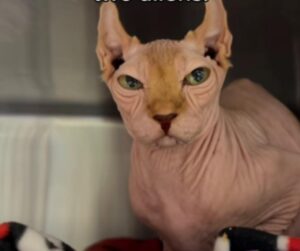
According to shelter caseworkers at the Great Plains SPCA, the decision to keep Xena and Mr. Tigger together was non-negotiable. As mother and son, their bond manifested in classic behavioral ways:
- Mutual Grooming and Comfort: Sharing sleeping spaces and engaging in mutual grooming helps reduce stress hormones during major life changes.
- Environmental Anchoring: When an animal experiences the trauma of losing its home—shifting from familiar sights, sounds, and smells to the chaotic environment of a shelter—having a familiar conspecific present acts as an anchor. For Xena and Mr. Tigger, looking across an unfamiliar room and seeing a familiar face provided vital psychological stabilization.
Shelter Perspective on Creative Outreach
The use of humor in animal rescue communications has become an increasingly sophisticated tool for organizations seeking to drive engagement. By framing an ordinary intake through the lens of a sci-fi comedy, the Great Plains SPCA transformed a standard adoption announcement into viral content.
"Great Plains SPCA may have finally confirmed extraterrestrial life," the shelter noted in its closing remarks, "but anyone hoping to investigate the evidence is officially too late. Xena and Mr. Tigger have left the building, and Earth’s newest little aliens are home."
Future Outlook & Industry Implications
The rapid adoption of Xena and Mr. Tigger highlights broader trends in modern animal rescue:
- Destigmatizing Special Needs and Rare Breeds: Specialized and hairless breeds often face unfair stereotypes regarding their health or temperament. By highlighting the affectionate, playful nature of Elf Sphynx cats, shelters can educate the public while securing rapid placements.
- Prioritizing Psychological Well-being: The insistence on keeping bonded pairs together—regardless of the logistical challenges of finding adopters with multi-cat capacity—reflects an evolving, humane standard within the shelter community.
- The Power of Digital Storytelling: Creative marketing campaigns directly correlate with reduced length-of-stay metrics in shelters. Leveraging humor allows organizations to cut through digital noise, ultimately saving more animal lives.
While the Great Plains SPCA has officially closed the book on this particular extraterrestrial investigation, the success of Xena and Mr. Tigger serves as an encouraging reminder that every animal—regardless of how unusual they may look—deserves a secure, permanent place to call home.