
Executive Overview
In a discovery that upends traditional models of human-canine history, an international team of researchers has unearthed ancient wolf remains on a tiny, isolated island in the Baltic Sea—a remote outcrop that the apex predators could never have reached under their own power.
Published in the Proceedings of the National Academy of Sciences (PNAS), the study details the unearthing of canid bones dating back between 3,000 and 5,000 years on Stora Karlsö, a rugged Swedish island spanning a mere 2.5 square kilometers. Because the island possesses zero native land mammal populations, the presence of these animals demands a radical historical revision: prehistoric humans actively captured, transported via watercraft, and deliberately maintained wild wolves within their settlements.
Led by a multidisciplinary consortium of geneticists and archaeologists from the Francis Crick Institute, Stockholm University, the University of Aberdeen, and the University of East Anglia, the research combines state-of-the-art paleogenomics with stable isotope bone chemistry. The results reveal an astonishingly complex prehistory. DNA sequencing confirmed that the specimens were pure grey wolves, completely devoid of domestic dog ancestry. Yet, chemical markers in their bones tell a tale of domestic integration: these wild predators subsisted almost entirely on a human-provided marine diet of seals and fish. Furthermore, physical abnormalities, diminutive statures, and startlingly low genetic diversity point toward a scenario of captive management, human oversight, and selective pressure during the Neolithic and Bronze Ages.
This discovery introduces a provocative new paradigm to the study of human-animal interactions. For decades, anthropological consensus framed the relationship between prehistoric humans and wolves strictly through the lenses of competition, avoidance, or the linear pathway that led directly to the domestication of the modern dog (Canis lupus familiaris). The Baltic findings shatter this neat narrative. They demonstrate that ancient hunter-gatherer-fisher communities occasionally engaged in sophisticated, deliberate experiments with wild wolves—capturing, feeding, and perhaps even breeding them long before the dawn of modern civilization, in arrangements that left no direct descendants in today’s canine gene pools.
Detailed Chronology: Unearthing the Secrets of Stora Karlsö
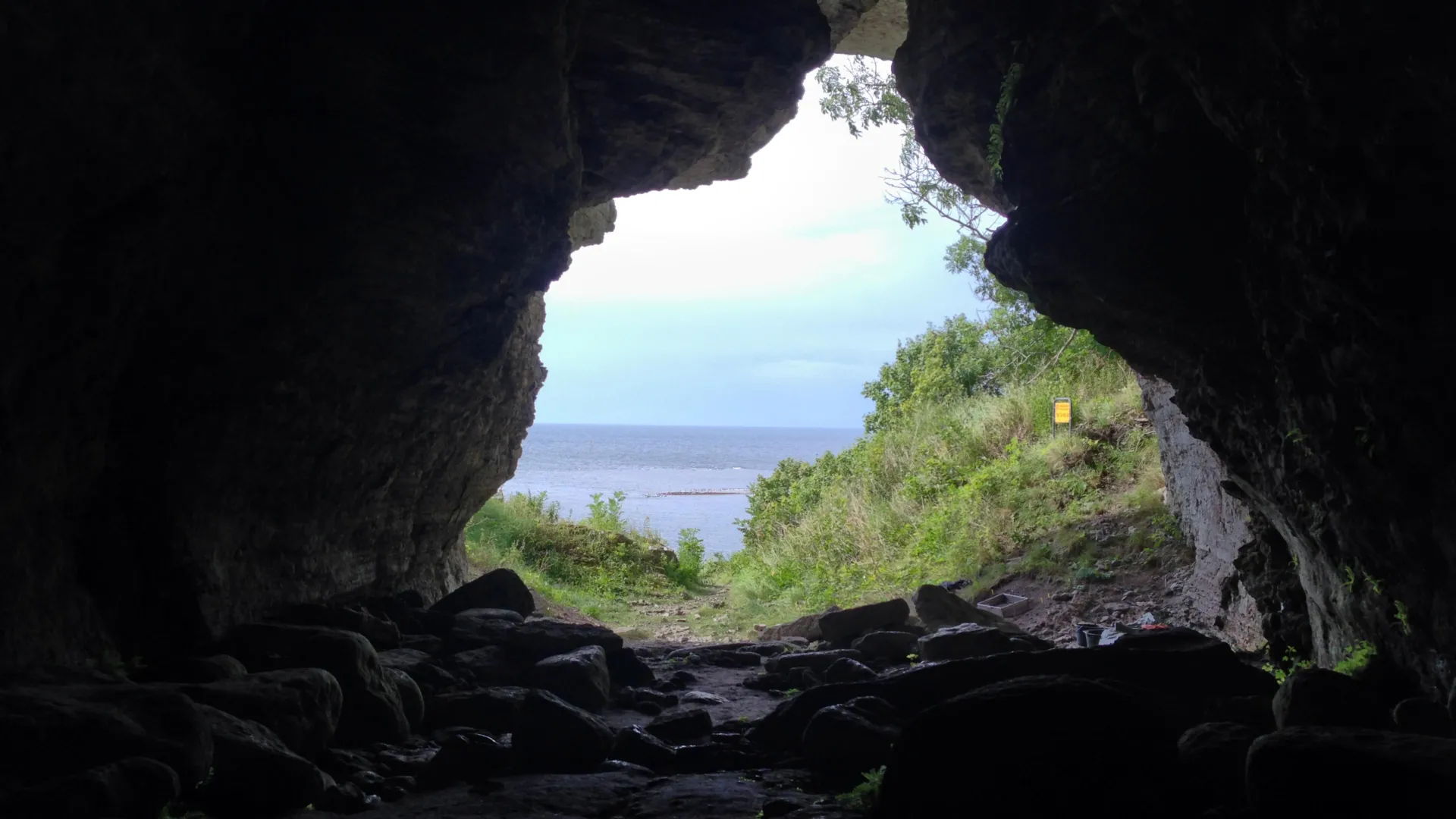
The story of this archaeological paradigm shift begins deep within the subterranean limestone passages of the Stora Förvar cave. Located on the sheer cliffs of Stora Karlsö off the western coast of Gotland, Sweden, the cave is a well-documented trove of prehistoric activity. Throughout the Neolithic and Bronze Ages, the site served as an intensive seasonal basecamp for maritime hunter-gatherers, specialized seal hunters, and coastal fishers who harvested the rich biological bounty of the Baltic Sea.
The Neolithic and Bronze Age Context
During the period spanning from roughly 5,000 to 3,000 years ago, northern Europe was undergoing profound cultural and ecological transformations. While farming communities were expanding across the European mainland, coastal populations in Scandinavia maintained a heavily maritime-focused lifestyle. Stora Karlsö, positioned miles off the coast in the open Baltic, was a strategic hub for hunting grey and ringed seals, as well as harvesting migratory fish.
Generations of archaeological excavations at Stora Förvar have yielded thousands of faunal remains, stone tools, and artifacts. Among the vast collections housed in Swedish museums were two unassuming canid jaw and limb bones. For decades, these fragments languished in storage, largely assumed to belong to domestic dogs or stray mainland wolves that had crossed over during rare winter ice-bridging events.
The Breakthrough: Geography Forces the Issue
The breakthrough occurred when researchers scrutinized the geographical impossibility of natural wolf migration to the island. Stora Karlsö is separated from the nearest major landmass by treacherous, open waters. While severe winters in the Baltic can occasionally produce pack ice, climatological reconstructions of the mid-to-late Holocene indicate that stable, continuous ice bridges capable of supporting migrating wolf packs were extraordinarily rare—and certainly insufficient to account for the multi-generational presence of wolves indicated by the archaeological strata.
Faced with this geographical barrier, the research team realized that only one mechanism could explain the presence of the canids: human transport. Prehistoric mariners, navigating dugout canoes or early skin boats across the choppy Baltic swells, must have deliberately captured wolves on the mainland and ferried them across the open water to the island.
To test this hypothesis, the scientists deployed a battery of advanced analytical techniques, extracting ancient DNA (aDNA) from the fossilized bones and subjecting the collagen to isotopic testing. What emerged was a startling biological profile that confirmed the human-transport hypothesis while deepening the mystery of why these wild predators were brought across the sea in the first place.
Supporting Context & Metrics: Genetics, Diet, and Physical Anomalies
To understand the true significance of the Stora Karlsö canids, the research team peeled back layers of genomic, chemical, and osteological data. The breadth of metrics deployed in this study provides an unusually clear window into the daily lives of animals that lived thousands of years ago.
Genomic Analysis: Pure Wolves, Unique Lineages
The extraction of ancient DNA from archaeological specimens is fraught with contamination and degradation challenges. However, the Francis Crick Institute’s Ancient Genomics Laboratory successfully sequenced the genomes of the Stora Karlsö canids.
The results were unequivocal:
- Species Identification: Both ancient bone samples belonged definitively to grey wolves (Canis lupus). There was zero evidence of admixture or hybridization with domestic dogs. Their maternal and nuclear ancestry firmly linked them to the broader population of ancient Eurasian wolves.
- Genetic Bottlenecks: Analysis of the most complete genome recovered revealed a staggering drop in genetic diversity. The Stora Karlsö wolf possessed lower genetic diversity than any other ancient wolf genome sequenced to date. This level of impoverishment in the gene pool is typically diagnostic of extreme population isolation, a severe demographic bottleneck, or intentional captive management and inbreeding.
Stable Isotope Chemistry: Sharing the Hunter’s Table
How did these wolves survive on a tiny island devoid of native ungulates like deer or elk? On the mainland, wolves are apex predators that rely on large hoofed mammals. On Stora Karlsö, no such prey existed.
By analyzing carbon and nitrogen stable isotopes locked within the bone collagen, the researchers reconstructed the diet of the ancient wolves. The chemical signatures revealed an unexpected menu:
- Marine Dominance: The wolves’ diets were overwhelmingly marine-based, consisting primarily of seals and fish.
- Dietary Overlap: This isotopic signature matches the diet of the human seal-hunters who occupied the Stora Förvar cave during the same epochs.
- Human Provisioning: Because wild wolves do not naturally hunt marine mammals in open water or deep coastal shelves to this degree, the data proves that the animals were eating the refuse of human seal-hunting activities—or were being directly fed by human handlers living in the settlement.
Osteological Oddities: Stature and Injury
Physical examination of the bones further reinforced the hypothesis of human-canine coexistence:
- Diminutive Stature: The Stora Karlsö wolves were noticeably smaller than typical contemporary mainland wolves. While island dwarfing is a well-documented evolutionary phenomenon in isolated ecosystems (often driven by limited resource availability), the specific physiological shifts observed here align with changes seen in early captive or domesticated animal populations.
- The Bronze Age Survivor: Most remarkably, one of the Bronze Age specimens exhibited severe, healed trauma to a limb bone. In a wild setting, such an injury would have been a death sentence, rendering the wolf incapable of pursuing fleet-footed prey or defending its territory. The fact that this animal survived long enough for the bone to heal indicates that it was cared for—sheltered, protected, and fed by humans who had a vested interest in keeping the injured predator alive.
Official Statements: Perspectives from the Research Front
The profound implications of the Stora Karlsö discovery have generated widespread commentary from the international team of scientists who spearheaded the investigation. Their statements underscore how this single site forces a radical reassessment of human-animal prehistory.
"The discovery of these wolves on a remote island is completely unexpected. Not only did they have ancestry indistinguishable from other Eurasian wolves, but they seemed to be living alongside humans, eating their food, and in a place they could only have reached by boat. This paints a complex picture of the relationship between humans and wolves in the past."
— Dr. Linus Girdland-Flink, University of Aberdeen, Co-Lead Author
The logistical hurdle of transporting an adult or adolescent wolf across open water by boat is itself a testament to a level of daring and interspecies management that historians have rarely attributed to Neolithic societies.
"It was a complete surprise to see that it was a wolf and not a dog. This is a provocative case that raises the possibility that in certain environments, humans were able to keep wolves in their settlements, and found value in doing so."
— Pontus Skoglund, Francis Crick Institute, Senior Author
Dr. Skoglund’s emphasis on "value" highlights the core economic and cultural question raised by the study: Why would Stone Age seal hunters intentionally burden themselves with captive apex predators? While modern humans view wolves as competitors or dangerous threats, prehistoric maritime communities may have recognized unique utility in them—perhaps utilizing them for guarding perimeter camps, hunting assistance in specialized terrain, or for spiritual, ritualistic, or symbolic purposes.
"The genetic data is fascinating. We found that the wolf with the most complete genome had low genetic diversity, lower than any other ancient wolf we’ve seen. This is similar to what you see in isolated or bottlenecked populations, or in domesticated organisms. While we can’t rule out that these wolves had low genetic diversity for natural reasons, it suggests that humans were interacting with and managing wolves in ways we hadn’t previously considered."
— Anders Bergström, University of East Anglia, Co-Lead Author
Bergström’s insights bridge the gap between hard genetic metrics and behavioral interpretation, emphasizing that the genomic profile of the Stora Karlsö canids mirrors the early genomic signatures found in the earliest stages of animal domestication.
"The combination of data has revealed new and very unexpected perspectives on Stone Age and Bronze Age human-animal interactions in general and specifically concerning wolves and also dogs."
— Jan Storå, Stockholm University, Co-Author and Professor of Osteoarchaeology
Professor Storå emphasizes that multidisciplinary methodologies—marrying osteoarchaeology, stable isotope analysis, and paleogenomics—are essential for unlocking the hidden nuances of ancient human behavior, proving that traditional archaeological excavation alone would have missed the profound biological story locked within the bones.
Future Outlook: Rethinking the Evolutionary Tree of Canines
The revelation that prehistoric humans transported, fed, and potentially managed wild wolves on a remote Baltic island opens up new frontiers in archaeological research and evolutionary biology. For generations, the narrative of dog domestication has been cast as a relatively linear, progressive march: humans encountered wolf pups, tamed them, bred docile traits, and eventually forged humanity’s oldest animal partnership.
The Stora Karlsö findings suggest a much messier, highly experimental prehistory.
Dead-End Domestication Experiments?
The wolves of Stora Karlsö did not leave genetic descendants in the modern dog population. Their presence on the island represents a localized, perhaps temporary phenomenon that eventually vanished—perhaps when the seal-hunting economy of the island shifted, or when the captive lines died out.
This implies that prehistoric human-wolf interactions involved multiple, independent experiments across different environments. In some regions, humans may have kept captive wolves for temporary utility, spiritual reverence, or companionship without those relationships developing into permanent, multi-generational domestication. Just as human agricultural experiments sometimes failed or took localized paths that died out, our ancestors’ relationships with apex predators were likely diverse, pragmatic, and frequently ephemeral.
Next Steps in Ancient Genomics and Archaeology
Buoyed by these findings, the research consortium is expanding its focus:
- Broader Regional Screening: Archaeologists are currently re-examining museum collections across Scandinavia and Northern Europe, screening other unusual canid remains from Neolithic and Bronze Age sites for hidden wolf signatures and marine dietary isotopes.
- Advanced Proteomics: Researchers are exploring new proteomic and isotopic markers to better distinguish between captive-raised wild animals and early domesticates when morphological evidence is ambiguous.
- Island Ecosystem Modeling: Paleoclimatologists and ecologists are modeling prehistoric island carrying capacities to understand how human settlements and captive carnivores coexisted within such restricted spatial footprints.
Ultimately, the ancient wolves of Stora Karlsö serve as a humbling reminder of the deep, intricate antiquity of human ingenuity. Long before the rise of written history, our ancestors were master mariners capable of transporting apex predators across the sea, forging complex ecological relationships that challenge our modern assumptions about the boundary between the wild and the domesticated.