
Executive Overview
For millennia, domestic dogs have walked alongside humanity, serving as our most loyal companions, steadfast protectors, and intuitive partners. One of the defining characteristics of this unprecedented interspecies bond is the dog’s uncanny ability to read human emotions. Whether a dog is bounding over to share in our laughter, leaning into our legs during a moment of sadness, or stepping back cautiously when we frown, their capacity to interpret our psychological states has long been observed by pet owners and behaviorists alike.
Yet, while behavioral evidence of this social intelligence has accumulated for decades, the underlying neurological mechanisms have remained largely shrouded in mystery. How does a canine brain translate the subtle micro-movements of human facial muscles into meaningful emotional cues? What happens inside their minds when they look into our faces?
A landmark study published in the Cell Press journal iScience has begun to lift the veil on these biological processes. Spearheaded by an international team of researchers—primarily from the University of Vienna, alongside contributions from the National Autonomous University of Mexico and Eötvös Loránd University in Hungary—the research offers an unprecedented, high-resolution look into the canine brain.
Utilizing advanced functional neuroimaging and machine learning, the researchers discovered that human smiles trigger distinctive, targeted activity in specific regions of the dog brain. More significantly, the study provides the first definitive neurobiological evidence that dogs do not merely lump negative human emotions into a single, generic category of "bad." Instead, they can neurologically distinguish between multiple negative expressions, including anger, fear, and sadness.
This groundbreaking research goes beyond simple animal psychology; it touches upon the very nature of evolution and domestication. Primates share cognitive traits with humans due to a common evolutionary ancestor, but dogs tell an entirely different story. Diverging down a radically separate evolutionary path, Canis lupus familiaris developed sophisticated social adaptations entirely through thousands of years of living, working, and evolving alongside human beings.
By analyzing these neural pathways, scientists are not only learning how our pets perceive us, but also gaining a profound appreciation for how domestication has fundamentally reshaped the architecture of the mammalian brain.
Detailed Chronology of the Research
To untangle the complex web of how dogs process human emotional displays, the research team structured their investigation into a rigorous, multi-phased experimental process.
Phase One: Examining the Neural Signature of Happiness
The scientific journey began by focusing on positive human facial expressions. Previous behavioral research strongly suggested that happy human faces—characterized by relaxed facial muscles and an upturned mouth—hold special, highly salient communicative value for domestic dogs. To see if this behavioral preference manifested in the brain, the researchers designed an initial neuroimaging experiment.
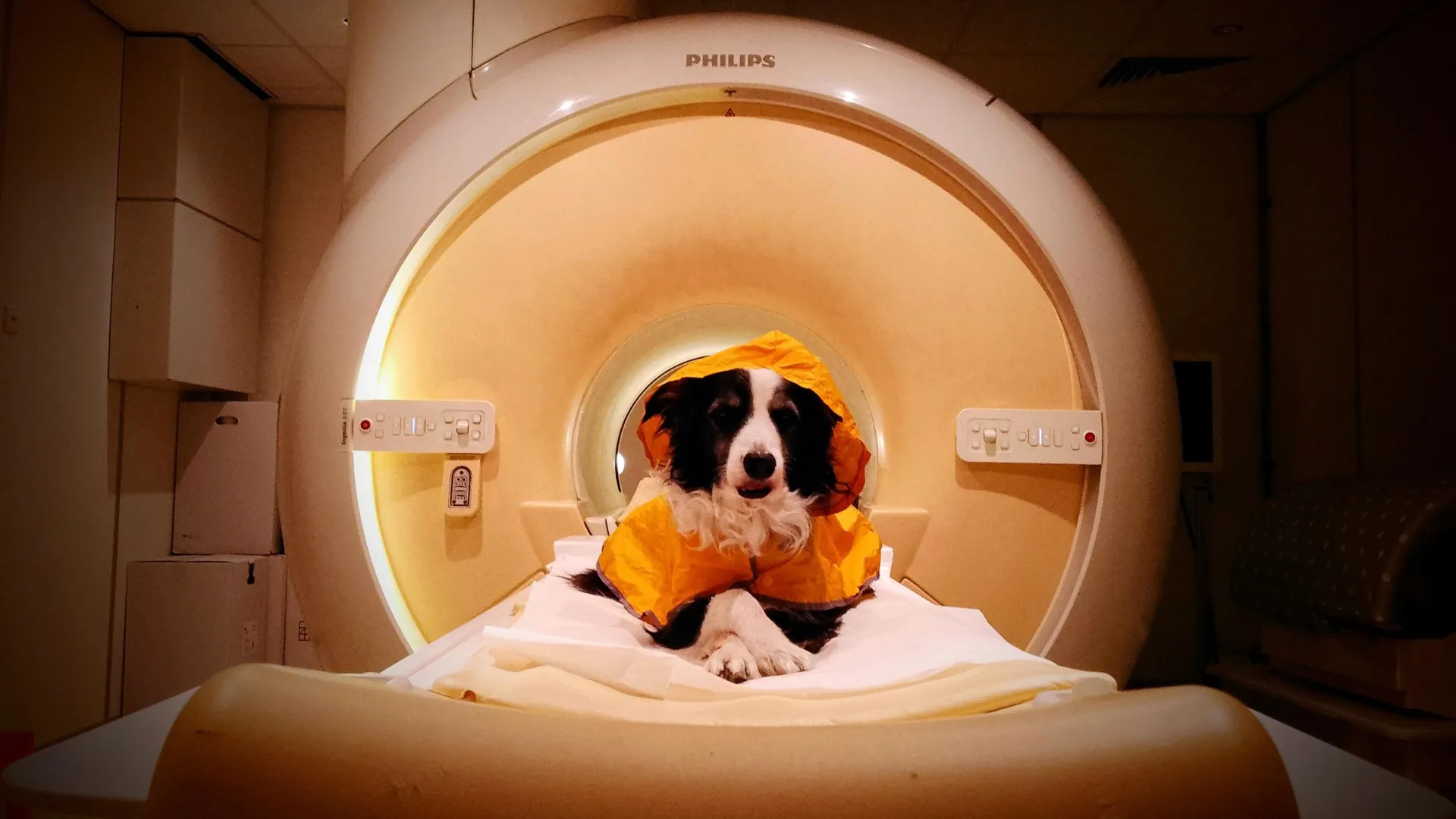
The team recruited a cohort of eight pet dogs, carefully training them to remain completely still inside a functional magnetic resonance imaging (fMRI) scanner without the use of physical restraints or sedation. While inside the scanner, the dogs were shown a series of visual stimuli consisting of photographs of unfamiliar human faces displaying either happy or neutral expressions.
As the images flashed before the dogs, the fMRI machines recorded real-time fluctuations in blood flow and neural activity. The results were striking. When the dogs gazed upon happy human faces, researchers observed a sharp, statistically significant increase in neural activity within two distinct regions of the brain: the temporal cortex and the caudate nucleus.
In mammalian neurology, the temporal cortex is heavily involved in higher-level cognitive processing, visual integration, and the interpretation of complex sensory inputs. Meanwhile, the caudate nucleus is a key node in the brain’s reward circuitry—the very same structure that lights up when animals anticipate food, play, or other highly desirable stimuli.
This initial finding provided the first concrete biological clues that human smiles are not merely registered as abstract visual shapes by dogs; they are processed as rewarding, emotionally significant events.
Phase Two: Expanding the Spectrum to Negative Emotions
Having established how the canine brain processes joy, the research team sought to determine whether these same neural networks reacted uniformly to other, more challenging human emotions. Specifically, they wanted to know if the temporal cortex and caudate nucleus networks would respond differently to a broader spectrum of facial expressions, or if the brain simply divided the world into "happy" versus "everything else."
To test this, the researchers expanded their experimental cohort to 12 dogs. This time, the imaging sessions exposed the animals to a more diverse catalog of human facial expressions: happiness, anger, fear, and sadness.
Because interpreting multi-variable fMRI data across different emotional states can introduce immense complexity, the research team turned to advanced machine learning algorithms. By feeding the complex patterns of whole-brain neural activity into computational models, the scientists could test whether a computer program—representing the dog’s underlying neurological responses—could successfully differentiate among the various emotional expressions based solely on brain scans.
The computational analysis revealed that the neural responses to happy faces were remarkably distinct, making it relatively straightforward for the algorithm to separate the brain’s reaction to smiles from its reactions to anger, fear, and sadness. However, the most profound discovery emerged when the researchers peered deeper into the data regarding negative emotions.
Phase Three: Uncovering Nuance in Negative Expressions
Conventional wisdom in animal behavior studies often assumed that domestic animals might view all negative human expressions through a single lens of perceived threat or stress. However, a rigorous whole-brain analysis conducted during the second phase of the study shattered this assumption.
The machine learning models and spatial analyses detected distinct, reproducible patterns of neural activity when dogs viewed fearful human faces compared to when they viewed angry or sad expressions. This differentiation went far beyond a simple binary sorting mechanism.
For the first time in behavioral science, researchers had captured objective neurological proof that dogs can tell apart specific negative human emotional expressions. An angry face—signaling potential aggression or conflict—registers differently in a dog’s brain than a fearful face (signaling vulnerability or danger) or a sad face (signaling distress).
Supporting Context & Metrics
To fully appreciate the weight of these findings, it is essential to examine the methodological framework, the biological structures involved, and the broader context of interspecies communication.
The Experimental Demographics and Controls
| Parameter | Phase One | Phase Two |
|---|---|---|
| Sample Size | 8 domestic dogs | 12 domestic dogs |
| Stimuli Used | Happy and neutral human faces | Happy, angry, fearful, and sad human faces |
| Imaging Technology | fMRI (functional Magnetic Resonance Imaging) | fMRI combined with Machine Learning analysis |
| Subject Environment | Unrestrained, fully awake pet dogs | Unrestrained, fully awake pet dogs |
| Key Regions Analyzed | Temporal cortex, caudate nucleus | Whole-brain network analysis |
Anatomy of Canine Emotional Processing
Understanding where these reactions occur in the brain provides vital insight into why dogs respond the way they do. The two primary regions highlighted in the study—the temporal cortex and the caudate nucleus—play distinct roles in the cognitive architecture of the dog:
- The Temporal Cortex: Positioned on the sides of the brain, this region processes sensory input, helping the animal recognize complex visual patterns, including the intricate geometry of human facial features. The study demonstrates that dogs do not just casually glance at a face; their visual processing centers are finely tuned to decode facial topography.
- The Caudate Nucleus: Located deep within the basal ganglia, this area is intimately tied to the brain’s dopaminergic reward pathways. The activation of the caudate nucleus in response to human smiles suggests that over the course of domestication, human happiness has become intrinsically linked to positive reinforcement within the canine psyche.
The Limitations of Still Imagery
While the study offers unprecedented resolution into brain function, the researchers are careful to contextualize their findings. A laboratory setting utilizing two-dimensional, still photographs of unfamiliar humans captures only a microscopic fraction of real-world communication.
In everyday life, dogs rarely interpret humans based solely on facial expressions in isolation. Canines are multimodal communicators. They simultaneously process a rich symphony of signals, including:
- Body Language: Posture, shoulder tension, hand gestures, and overall physical orientation.
- Auditory Cues: Vocal tone, pitch, volume, and cadence of human speech.
- Olfactory Signals: Chemical cues and pheromones released by humans during states of high stress, fear, or excitement.
Therefore, while the fMRI results prove that the visual processing of faces alone is enough to trigger distinct neural pathways, a dog’s real-world assessment of human emotion is a complex, multi-sensory synthesis.
Official Statements & Expert Insights
The research team emphasizes that while these neurological findings bridge a major gap in our understanding of animal cognition, they must be interpreted with scientific nuance.
First author Raúl Hernández-Pérez of the University of Vienna highlights the evolutionary precision of both species:
"Humans are really good at picking up small details on the face, and so are dogs. This makes dogs very interesting. By studying their brains, we can understand what adaptations have developed to support their remarkable social and emotional understanding of humans."
The study also challenges long-held assumptions regarding how social intelligence evolves across mammalian lineages. Senior author Laura Cuaya, who initiated the research at the National Autonomous University of Mexico before expanding the project through collaborations at the University of Vienna and Eötvös Loránd University, points out the unique evolutionary journey of the domestic dog:
"When we compare humans with primates, we are looking at abilities that may have come from a common ancestor. With dogs, the story is totally different. They followed a very different evolutionary path, yet through domestication, they developed the social abilities needed to understand and cooperate with us."
Regarding the activation of the caudate nucleus during the observation of human smiles, Cuaya elaborates on its deeper psychological significance:
"The activity in the caudate nucleus is particularly interesting. It suggests that happy human faces may have emotional significance for dogs."
However, the researchers issue an important caution against anthropomorphism—the attribution of human-like internal emotional experiences to animals without sufficient proof. Just because a dog’s brain distinguishes an angry face from a sad face does not automatically mean the dog feels sadness or anger in the exact same phenomenological way a human does.
Nevertheless, Cuaya urges a fundamental shift in how society views and treats our canine companions:
"I would like people to see dogs as emotional beings. They have evolved with us to understand our expressions and cooperate with us, and recognizing that can change how we communicate with and care for them."
Future Outlook & Implications for Animal Welfare
As science continues to peel back the layers of canine cognition, the implications of this research extend far beyond academic journals. Understanding how dogs process human emotional expressions opens new avenues in animal training, veterinary care, pet psychology, and human-animal interaction.
The Impact of Domestication and Environment
It is vital to note that all the subjects participating in this study were pet dogs—animals living within structured, supportive human-family environments. The researchers note that free-ranging or street-dwelling dogs, which navigate vastly different social landscapes and environmental pressures, may process human signals through different neurological filters.
Future comparative studies will likely examine how environmental upbringing alters the brain’s structural response to human emotional cues, shedding light on the plasticity of the canine brain under varying degrees of socialization.
Upcoming Research Frontiers
The research team has already outlined a comprehensive roadmap for future investigations. Key areas of focus include:
- Multimodal Integration Studies: Moving beyond still photographs, upcoming experiments will explore how dogs combine visual facial cues with auditory signals (such as a soothing voice versus an angry shout) at a neurological level.
- Cross-Species Processing Comparisons: Researchers plan to conduct direct comparative studies analyzing how humans and dogs process identical emotional data sets, offering a parallel view of interspecies empathy.
- Dog-Centric Emotional Frameworks: Shifting away from human-centric models of emotion to better understand how dogs experience their own emotional reality in relation to their human pack members.
Transforming Human-Animal Communication
Ultimately, this research serves as a scientific validation of what millions of dog owners have intuitively known for generations: our dogs truly understand us. When we smile at our pets, we are activating their brain’s reward centers. When we display fear, anger, or sadness, their brains are not merely registering a generic threat; they are discerning the specific emotional flavor of our distress.
Armed with this knowledge, pet owners, trainers, and animal welfare advocates can refine how they interact with dogs. Recognizing that our pets are neurobiologically tuned to read our micro-expressions underscores the immense responsibility we carry in our daily interactions. By treating dogs as emotionally perceptive, sentient partners who actively decode our psychological states, we can foster deeper bonds of trust, improve training methodologies, and fundamentally elevate the quality of life for our most faithful animal companions.