
EXECUTIVE SUMMARY
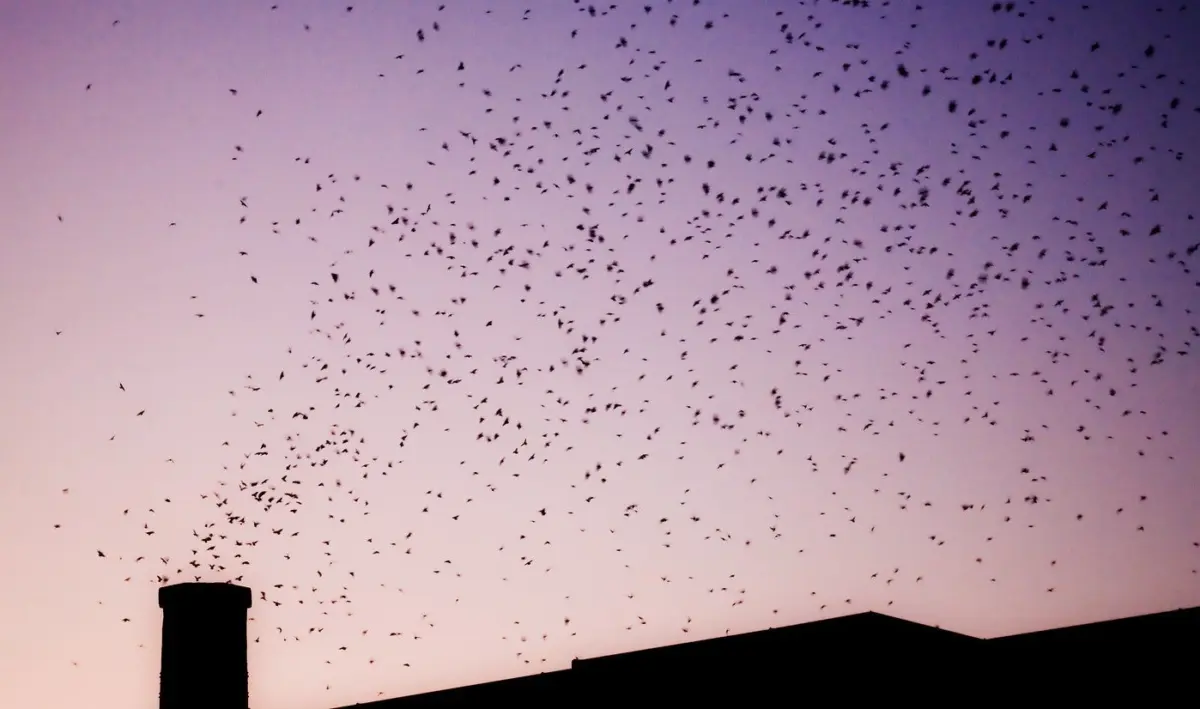
As the crispness of autumn begins to settle over the landscape, the skies above North Carolina are preparing to host one of the most mesmerizing wildlife spectacles in the natural world. Every autumn, thousands of chimney swifts—small, hyper-aerial insectivores often mistaken for bats due to their erratic, darting flight paths—gather in towns and cities across the state. Before embarking on an arduous, thousands-of-miles migration journey to their wintering grounds in South America, these remarkable birds congregate in massive flocks. At dusk, they perform a breathtaking aerial ballet, swirling in massive, funnel-shaped formations—frequently described by observers as a "bird tornado"—before dramatically plunging en masse into large brick chimneys to roost for the night.
To celebrate and share this ecological marvel with the public, local chapters of the National Audubon Society and allied bird alliances throughout North Carolina have announced their schedules for the annual "Swift Night Out" series. These community science and public engagement events offer residents a rare, highly accessible window into avian migration. From the mountains of Western North Carolina to the Piedmont region, conservationists are rolling out the welcome mat, inviting families, amateur naturalists, and curious onlookers to witness the phenomenon firsthand, learn about urban wildlife conservation, and contribute to vital behavioral monitoring efforts.
This comprehensive report examines the ecological significance of the chimney swift migration, details the mechanics of the "Swift Night Out" events, provides an exhaustive regional schedule of upcoming gatherings, explores the mounting environmental pressures facing urban-roosting bird species, and outlines future outlooks for grassroots urban conservation initiatives in the Carolinas.
1. Executive Overview: The Phenomenon of the Chimney Swift
To understand the cultural and ecological excitement surrounding a Swift Night Out event, one must first appreciate the extraordinary biology and lifestyle of the chimney swift (Chaetura pelagica). Often referred to as "flying cigars" because of their stiff-winged silhouettes and cigar-shaped bodies, chimney swifts spend almost their entire lives airborne. They catch insects on the wing, drink on the wing, and occasionally even mate on the wing. Their feet are uniquely adapted for clinging to vertical, rough surfaces rather than perching on branches or wires, which historically tied their survival to large, hollow old-growth trees.
However, as European settlement altered North American forests, widespread logging eliminated most of the large hollow trees that swifts naturally depended upon for nesting and roosting. Remarkably, chimney swifts adapted brilliantly to human infrastructure. They discovered that large, unlined brick chimneys—particularly those found on older schools, churches, industrial buildings, and large homes—resembled the hollow tree cavities of their evolutionary past.
As summer gives way to autumn, these solitary nesters undergo a dramatic behavioral shift. Driven by biological imperatives to migrate, they abandon their breeding territories and begin gathering in communal roosts. These staging sites can host anywhere from a few dozen to several thousand individuals.
As twilight approaches, the swifts gather high above urban centers, engaging in coordinated, high-speed aerial acrobatics. Scientists believe this swirling vortex serves multiple purposes: it confuses potential predators (such as peregrine falcons or owls), allows individuals to communicate and assess the safety of the roost, and creates a mesmerizing spectacle that has captivated human communities for generations. Once the sun dips below the horizon, the swirling mass suddenly funnels downward, dropping feet-first into the dark interior of the chimney in a matter of minutes.
2. Detailed Chronology and Behavioral Timeline of a Swift Watch
For those attending a Swift Night Out event for the first time, understanding the chronological progression of the evening enhances the experience and deepens appreciation for avian behavior. Audubon event coordinators typically structure these gatherings to coincide with the golden hour and twilight, ensuring participants catch every phase of the nocturnal transition.
Phase 1: Pre-Roost Gathering and Dispersal (Late Afternoon to 45 Minutes Before Sunset)
Hours before the main event, local bird experts and Audubon volunteers station themselves near known historic chimney roosts. Attendees arrive, set up lawn chairs, and receive binoculars and educational handouts. During this window, smaller groups of swifts may be seen high overhead, foraging for high-altitude flying insects such as beetles, flies, and mosquitoes. They maintain a continuous, high-pitched Twitter-like chatter that sounds remarkably like static electricity or a telegraph key.
Phase 2: The Critical Mass (30 to 15 Minutes Before Sunset)
As the ambient light begins to soften and cast a warm glow across the urban skyline, the number of swifts increases dramatically. Birds that have spent the day foraging miles away begin converging on the target chimney. The scattered groups merge into a loose, milling cloud. Observers often notice the flock expanding and contracting, moving with fluid, synchronized grace that defies individual agency. This is the stage where the collective intelligence of the flock is most apparent; individual birds respond instantly to the movements of their neighbors, creating an organic wave-like motion across the sky.
Phase 3: The "Bird Tornado" (10 to 5 Minutes Before Sunset)
This is the climax of the evening. The flock tightens dramatically, forming a dense, swirling vortex directly above the rim of the chimney. The sheer volume of birds circling in unison creates an audible rush of wind through feathers—a sound that seasoned birders liken to a gentle waterfall or rushing stream. The funnel dips closer and closer to the chimney opening, resembling a living, breathing meteorological phenomenon.
Phase 4: The Descent (Sunset to Twilight)
Suddenly, the dynamic shifts from horizontal motion to a vertical plunge. Individual birds or small clusters break away from the swirling vortex, stalling their flight and dropping straight down into the darkness with wings tucked tight. To human observers, it looks like water swirling down a bathtub drain. This descent happens with astonishing speed; a flock of 3,000 birds can completely empty from the sky and vanish into a single brick structure in less than five minutes. Once inside, the swifts cling to the interior brick walls using their sharp claws and tail-feathers for support, settling in for a night of rest before the next leg of their southward journey.
3. Supporting Context, Regional Significance, and Metrics
North Carolina serves as a vital ecological highway for migratory birds along the Atlantic Flyway. Because the state spans a diverse geographic gradient—from the rugged crests of the Blue Ridge Mountains down through the rolling hills of the Piedmont to the coastal plains—it supports a wide array of staging habitats.
The Urban-Avian Interface
Urban and suburban centers throughout North Carolina, particularly in rapidly growing metropolitan areas like the Triangle (Raleigh-Durham-Chapel Hill), the Triad (Greensboro-Winston-Salem-High Point), and the mountain hub of Asheville, unintentionally play a critical role in chimney swift conservation. Many of the historic brick chimneys that sustained swift populations throughout the 20th century are now disappearing. Urban revitalization projects, historic building demolitions, home renovations, and the widespread practice of capping chimneys to prevent wildlife intrusion have severely threatened available roosting habitat.
According to avian monitoring data compiled by the Cornell Lab of Ornithology and Partners in Flight, chimney swift populations have experienced a steep, long-term decline across North America over the past half-century. Partners in Flight estimates a cumulative population decline of more than 60% since 1970. This downward trend highlights the urgency of community-based conservation initiatives. When local residents gather for a Swift Night Out, they are not merely enjoying a recreational outing; they are participating in grassroots monitoring that helps conservationists map active roost sites, assess population health, and advocate for the preservation of unlined brick structures.
4. Official Schedules: Find a "Swift Night Out" Near You
To ensure broad public participation, regional Audubon chapters and independent bird alliances across North Carolina have published their official event schedules for the autumn migration season. Residents are encouraged to check individual chapter websites for real-time updates, exact meeting locations, and weather-dependent schedule adjustments.
New Hope Bird Alliance
Serving the counties of Chatham, Durham, and Orange, the New Hope Bird Alliance is organizing public watch events centered around historic urban roosts in the vibrant Triangle region. Known for its active community science network, the alliance provides expert guides who explain swift ecology and help participants count the swirling birds.
- Target Counties: Chatham, Durham, Orange
- Web Resource: New Hope Bird Alliance Calendar of Events
Blue Ridge Audubon Chapter
In the mountainous terrain of Western North Carolina, the Blue Ridge Audubon Chapter coordinates watch events against the stunning backdrop of autumn foliage. Mountain towns often host unique roost sites in older downtown districts, providing dramatic viewing opportunities as swifts navigate between ridgelines before dropping into valley chimneys.
- Target Counties: Buncombe, Henderson, and surrounding Western North Carolina counties
- Web Resource: Blue Ridge Audubon Chapter Calendar
T. Gilbert Pearson Audubon Society
Operating in the heart of the Piedmont, the T. Gilbert Pearson Audubon Society has scheduled dedicated community events tailored to highlight urban wildlife in Guilford and Caswell counties. These events frequently partner with local municipalities to promote downtown sustainability and historic preservation.
- Target Counties: Guilford, Caswell
- Web Resource: T. Gilbert Pearson Audubon Society Events Page
High Country Audubon Society
Covering the high-elevation counties of the Blue Ridge, the High Country Audubon Society offers events where crisp autumn air meets incredible wildlife behavior. Because high-country weather can shift rapidly, chapter organizers emphasize checking their digital calendar for timely updates on viewing locations.
- Target Counties: Avery, Ashe, Alleghany, Watauga, Wilkes
- Web Resource: High Country Audubon Society Official Website
Forsyth Audubon
Forsyth Audubon hosts specialized "Swift Watch" events within Forsyth County, focusing on downtown Winston-Salem’s historic industrial and civic architecture. These gatherings have grown increasingly popular among urban photographers, families, and local nature enthusiasts.
- Target County: Forsyth
- Web Resource: Forsyth Audubon Swift Watch 2
5. Official Statements and Expert Perspectives
Conservation leaders across the state emphasize that events like Swift Night Out bridge the gap between urban life and wild nature, fostering a deeper sense of environmental stewardship among everyday citizens.
"Most people walk past these historic brick chimneys every day without giving them a second thought," notes a regional Audubon conservation coordinator. "But as the sun goes down in September, these ordinary structures transform into vital life-support systems for thousands of migratory birds. When members of the public stand together, look up, and witness a tornado of swifts plunge into a chimney, it fundamentally changes how they view their urban environment. Suddenly, downtown buildings aren’t just concrete and brick—they are shared habitats."
Field ornithologists also stress the importance of community science in tracking population trends. Because chimney swifts are difficult to survey using traditional daytime breeding bird surveys, evening roost counts provide some of the most reliable metrics on regional population health.
"Every pair of eyes at a Swift Night Out counts," explains an avian researcher collaborating with state conservation networks. "When participants record the approximate size of a flock, note the time of entry, and report whether a chimney is showing signs of deterioration or capping, they provide invaluable data. This information allows us to work proactively with building owners, historic preservationists, and city planners to protect these crucial roost sites before development pressures erase them."
6. Future Outlook: Protecting Urban Roosts for Generations to Come
As North Carolina continues to experience rapid population growth and urban expansion, the future of the chimney swift hinges on proactive preservation and public awareness. The loss of traditional nesting and roosting habitat remains the single greatest threat to the species’ long-term recovery.
Looking ahead, Audubon chapters and allied conservation groups are spearheading several strategic initiatives to secure a sustainable future for the chimney swift:
- Historic Building Advocacy: Conservationists are working alongside municipal historic preservation commissions to advocate for the structural integrity of unlined brick chimneys. Rather than demolishing or aggressively capping old industrial and civic stacks, property owners are increasingly encouraged to retrofit or maintain them as wildlife sanctuaries.
- Artificial Tower Construction: In areas where natural or historic chimneys are scarce, several Audubon chapters and local parks have begun constructing "swift towers"—freestanding wooden or masonry structures specifically designed to mimic the interior dimensions and texture of a chimney. These towers provide safe, alternative nesting and roosting sites for local breeding pairs and migrating flocks.
- Expanded Community Science Protocols: Plans are underway to digitize and streamline roost-reporting databases across the Carolinas. By equipping volunteers with standardized observation protocols, regional chapters aim to build a robust, multi-year dataset that can inform state and federal wildlife conservation policies.
- Public Education and Engagement: The continued expansion of the Swift Night Out series demonstrates the power of experiential conservation. By inviting families, students, and local leaders into the field, Audubon organizations are cultivating a new generation of wildlife advocates who recognize that urban centers can—and must—coexist with thriving migratory bird populations.
Conclusion
The autumn migration of the chimney swift is a fleeting, breathtaking reminder of the natural wonders that persist right outside our doors. As flocks gather across the skies of North Carolina, the upcoming schedule of Swift Night Out events provides an open invitation to slow down, look up, and connect with the natural world. Whether you are an experienced birder or a curious resident stepping out for an evening walk, joining your local Audubon chapter for a Swift Watch is an unforgettable way to experience the magic of autumn migration and support vital grassroots conservation efforts.