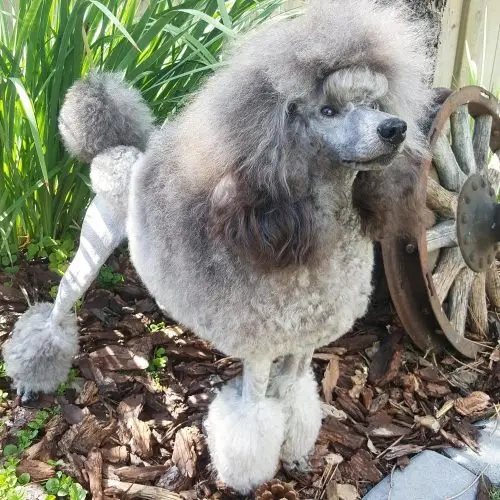

For pet owners navigating the increasingly complex labyrinth of commercial airline regulations, traveling with a larger-than-average canine companion in the passenger cabin is often viewed as a logistical impossibility. Standard carrier guidelines enforced by major air carriers frequently dictate strict height and length restrictions that systematically exclude taller breeds, such as Miniature Poodles, terriers, and similarly leggy dogs. Owners are routinely forced to resign themselves to the harrowing prospect of checking their beloved animals into the cargo hold.
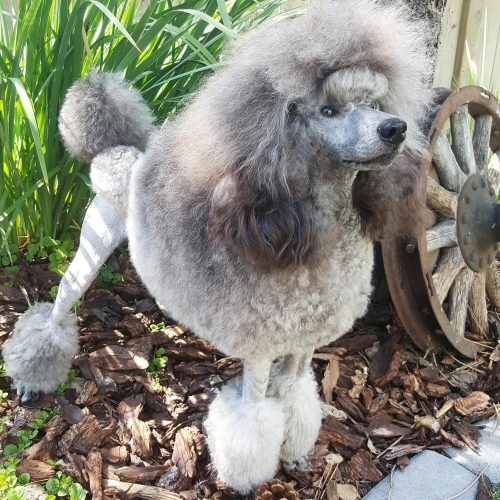
However, a groundbreaking travel report shared by professional dog groomer Keri and her tall, full-coated Miniature Poodle, Flint, shatters conventional limitations. By exercising extraordinary resourcefulness, mechanical ingenuity, and rigorous behavioral conditioning, Keri successfully piloted Flint across a multi-leg Air Canada itinerary spanning various aircraft models.
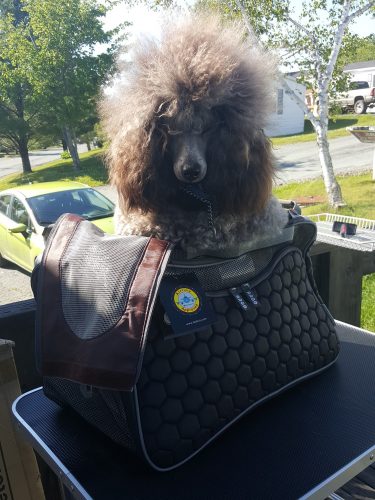
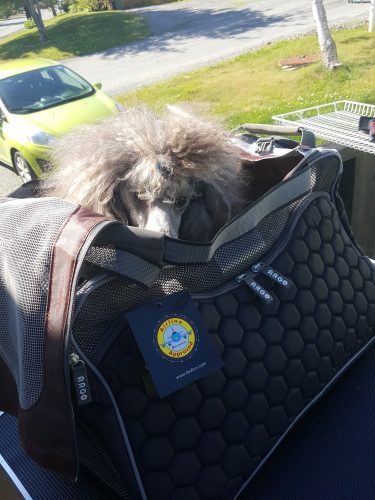
Rather than relying on off-the-shelf solutions, Keri engineered a brilliant modification to an affordable expandable pet carrier. By strategically altering the structural frame using bolt cutters, she transformed a rigid, high-profile container into a flexible, compliant travel module. This case study details the meticulous selection process, the bold engineering modifications, rigorous desensitization training, and firsthand operational metrics across multiple commercial aircraft. It serves as an authoritative blueprint for pet owners seeking to accommodate larger dogs within the stringent confines of in-cabin airline storage.
Detailed Chronology: From Selection to Skies
The journey to successful in-cabin canine transit began months before departure, driven by initial skepticism from peers who insisted Flint’s stature disqualified him from flying in the cabin. Undeterred, Keri embarked on an exhaustive search for a carrier that could accommodate a dog standing significantly taller than the standard profile permitted under typical airline seat clearances.
The Carrier Selection Phase: Testing the Contenders
Keri evaluated several prominent models on the market before arriving at her final choice:
- Large Sherpa Carrier (19” L x 11.75” W x 11.5” H): Dismissed during in-store physical evaluations as fundamentally too small for Flint’s long frame and thick coat.
- Large Bergan Carrier (19” L x 10” W x 13” H): Similarly rejected during preliminary sizing checks for lacking adequate interior volume.
- Teafco Argo Petagon Carrier (21” L x 12” W x 13” H): Praised as exceptionally well-manufactured, featuring robust materials, discreet reflective tape, and multiple storage pockets. However, Flint visibly rejected it, showing reluctance to enter. Furthermore, the built-in cooling tray insert compromised precious vertical clearance, and the narrow zipper clearance struggled to accommodate Flint’s voluminous hair without snagging.
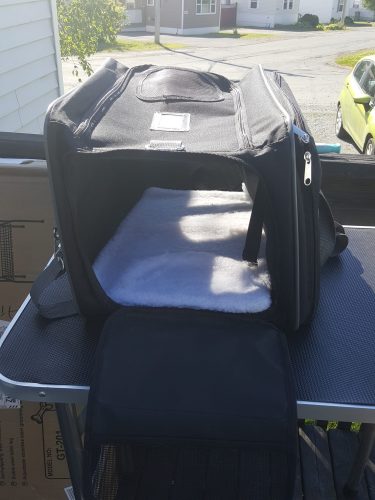
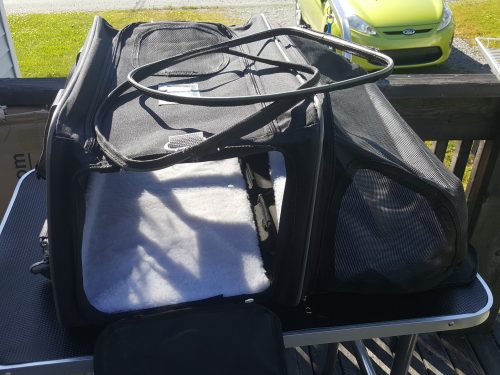
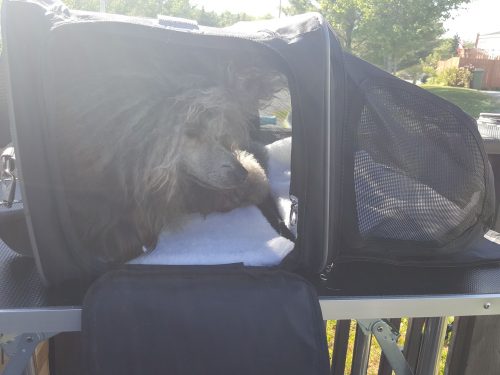
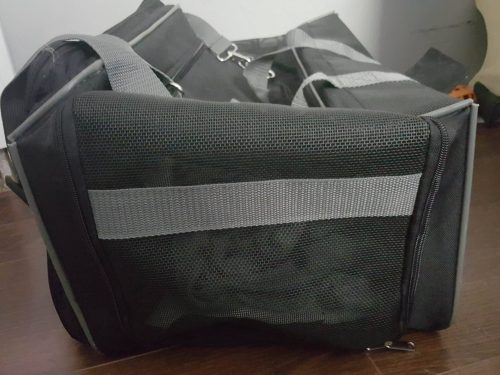
- Large Pettom Expandable Foldable Travel Carrier (19” x 12” x 12” inches, expanding to 22.5”): Crowned the ultimate winner. Its dual-zippered end openings allowed Flint to walk in autonomously. Crucially, its expandable mesh "pup tent" side panel offered a massive structural advantage, providing the extra horizontal width vital for long poodle legs.
The Engineering Modification: Rethinking the Frame
Recognizing that the Pettom carrier’s rigid rectangular profile risked failing strict under-seat height limits, Keri implemented a radical modification that far exceeded standard user adjustments:
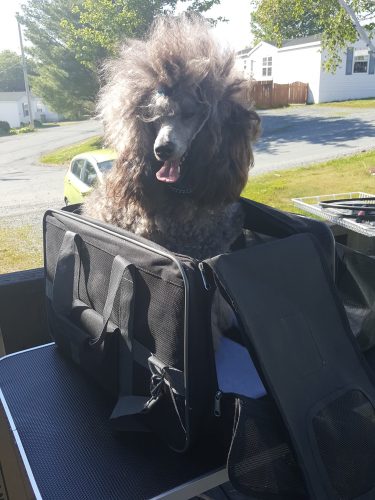
- Eliminating Internal Hazards: The zippered-in internal supports for the expandable section were promptly removed to prevent a dog’s foot from becoming entangled during movement.
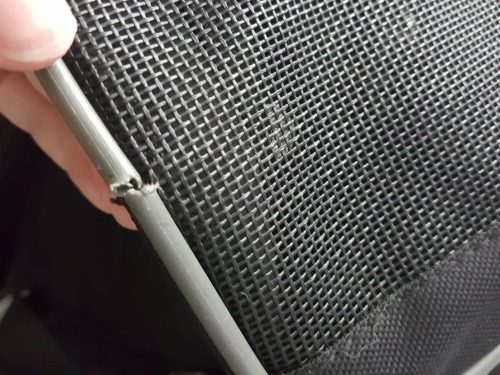
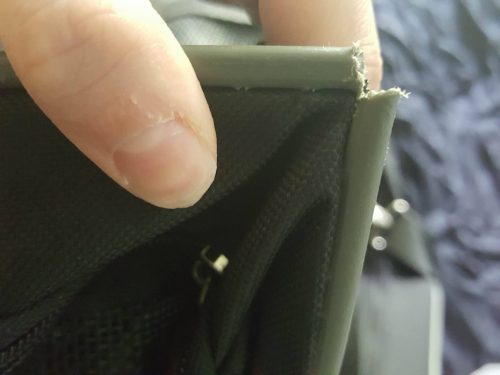
- Precision Wire Cutting: Using heavy-duty bolt cutters, Keri severed the four perimeter wire frame supports surrounding the kennel at a height of 9 inches, exercising extreme caution to preserve the surrounding mesh and fabric integrity.
- Optimizing Flexibility: This structural edit allowed the upper sides of the bag to fold inward and slope downward while empty, yet instantly pop back into an expanded stance when occupied by a moving dog.
(Safety Advisory: Raw cut wire ends required careful taping or smoothing, as sharp metal points caused minor abrasions during initial handling.)
Behavioral Desensitization and Veterinary Sign-Off
Transitioning Flint from apprehension to absolute comfort inside the modified carrier required a structured three-week behavioral conditioning program:
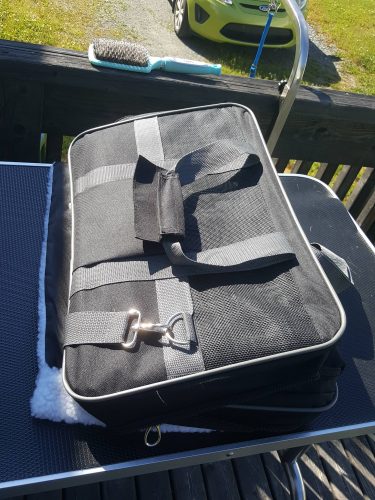
- Week 1: The carrier was left open permanently in the living space, paired with high-value treat placement to encourage voluntary exploration.
- Week 2: Short, incremental sessions were introduced with the carrier zipped completely shut for brief intervals.
- Week 3: Flint was placed inside the carrier during his routine afternoon naps, positioned consistently at Keri’s feet with continuous positive reinforcement.
By departure week, a light tap on the carrier or a gentle hand placement signaled immediate, stress-free entry. To preempt any regulatory friction at check-in, Keri brought the modified carrier to her veterinary clinic, securing an official written endorsement confirming the carrier was safe, appropriate, and properly sized for Flint’s specific anatomical dimensions.
Supporting Context & Metrics: Fleet-Wide Aircraft Analysis
Keri’s multi-leg itinerary with Air Canada provided a robust real-world stress test across four distinct commercial aircraft models. The operational metrics collected during these flights provide invaluable data for future travelers.
| Aircraft Model | Seat Pitch | Seat Width | Carrier Configuration Used | In-Flight Deployment Status |
|---|---|---|---|---|
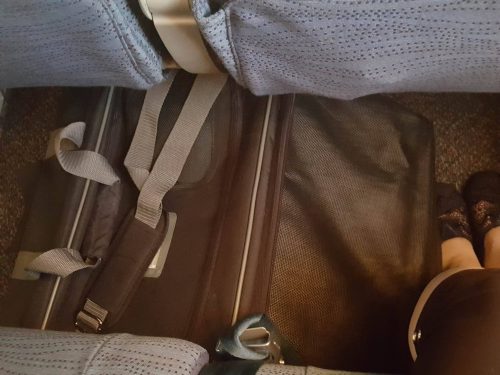
| Embraer 175 | 32" – 34" | 18" | Window Seat (Economy) | Fully expanded into adjacent leg space (unoccupied seat next to owner). |
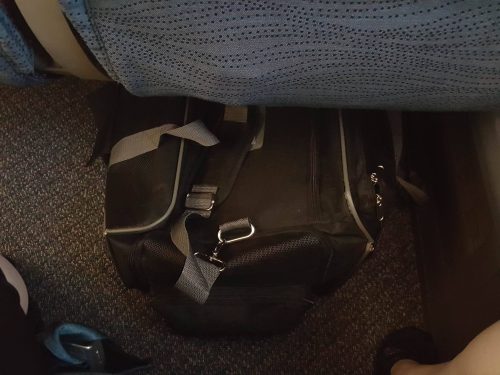
| Airbus A320-200 | 35" | 17.8" | Preferred Window Seat | Tucked under seat; mesh "pup tent" half-deployed to utilize side space. |
| Embraer 190 | 31" – 33" | 18" | Economy Window Seat | Loaded horizontally; mesh tent unzipped over owner’s feet post-takeoff. |
| Bombardier Q400 | 31" | 17" | Economy Window Seat | Maintained in closed configuration due to extremely restricted space. |
Operational Takeaways by Flight Segment
- Embraer 175 (Duration: ~2 hours): Occupying an empty adjacent seat allowed Keri to pull the carrier completely out from under the seat post-takeoff and fully deploy the expandable mesh lean-to. Flint transitioned from pre-flight vocalization to absolute silence once airborne.
- Airbus A320-200 (Duration: ~5 hours): Upgraded to a Preferred Seating window seat for maximum legroom. Due to a full flight, the carrier was pushed as far back as possible and tilted slightly to accommodate the aircraft’s side wall curvature, deploying the pup tent halfway.
- Embraer 190 (Duration: ~4 hours): Loaded horizontally across the under-seat zone. Because the seat structure lacked a restrictive under-seat metal bar, the carrier bled an inch or two into neighboring foot space with the seatmate’s explicit consent. The mesh tent was deployed over Keri’s feet after takeoff.
- Bombardier Q400 (Duration: ~2 hours): Representing the tightest physical envelope encountered, the Q400 permitted zero carrier expansion. The modified bag fit snugly in its closed state, proving that while tight regional turboprops are navigable, they require a compliant dog willing to remain contained without deployment features.
Official Guidelines & Regulatory Considerations
Navigating airline pet policies requires strict adherence to international and carrier-specific mandates. While Keri’s modifications proved triumphant on Air Canada, pet owners must evaluate several core compliance factors before attempting similar travel:
- Carrier Dimension Compliance: Airlines universally require that in-cabin pet carriers fit completely underneath the seat forward of the passenger. While manufacturers list nominal dimensions, rigid frames often fail when forced under seats equipped with electronic control boxes or life-raft housings. Keri’s wire-cutting technique resolves this by introducing necessary structural compliance.
- Animal Welfare Standards: Major carriers mandate that the animal must be able to stand up, turn around, and lie down comfortably within the carrier. For tall breeds like Miniature Poodles, achieving compliance requires utilizing expandable models where structural limits can be temporarily bypassed once cruising altitude is reached.
- Documentation Requirements: Securing a veterinarian’s letter of approval, alongside up-to-date rabies vaccination certificates and health clearances required by destination jurisdictions, remains non-negotiable. Airport security checkpoints also demand that the pet be removed from the carrier to pass through metal detectors, underscoring the absolute necessity of reliable leash-training and desensitization.
Future Outlook: The Evolution of In-Cabin Pet Travel
Keri’s successful transit of Flint on Air Canada signals a shifting paradigm in pet travel logistics. As commercial aviation continues to standardize tight seat pitches and downsize regional aircraft configurations, manufacturers of pet accessories face mounting pressure to innovate beyond rigid, static designs.
The DIY engineering demonstrated through the modification of the Pettom Expandable Carrier highlights an unmet market demand: lightweight, semi-flexible, structurally adaptable soft-sided carriers engineered specifically for long-legged, medium-weight breeds. Future product development will likely draw inspiration from user-driven innovations like Keri’s, incorporating modular, collapsible frame supports that dynamically adjust to the erratic geometry of commercial aircraft floorboards.
For travelers unwilling to subject their pets to the traumas of cargo hold transport, this case study proves that preparation, technical ingenuity, and rigorous behavioral training can successfully bridge the gap between rigid airline rules and the reality of traveling with larger canine companions.