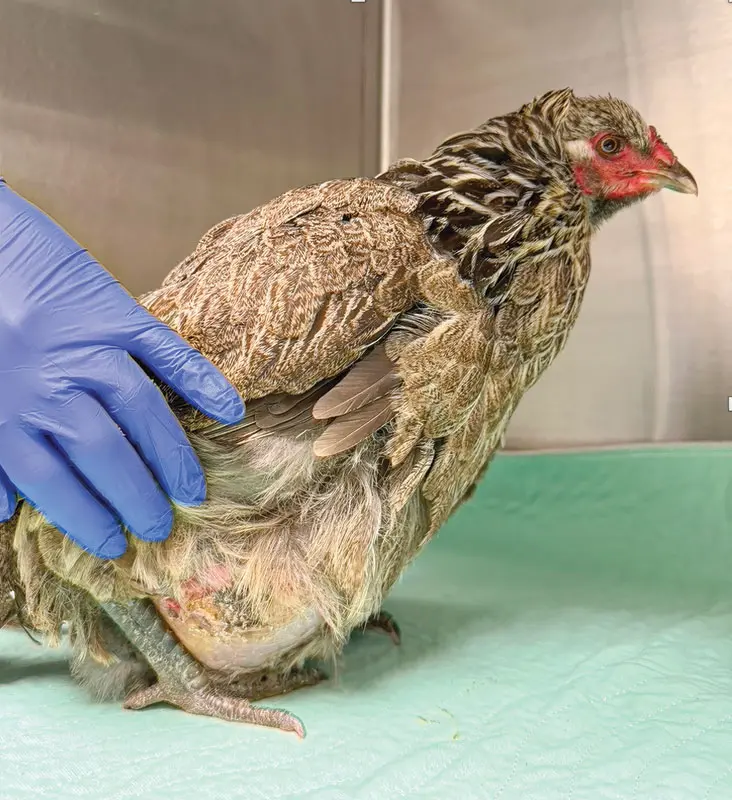

By Olivia A. Petritz, DVM, DACZM
Executive Overview
In the United States alone, the cultural footprint of agriculture and pet ownership has undergone a remarkable transformation, anchored by an estimated 85 million backyard chickens. This figure represents a staggering 28 percent surge in population between 2023 and 2025.
Driven by shifting consumer values, a growing desire for sustainable food sourcing, and the appeal of keeping unconventional companions, suburban and urban homesteads alike have welcomed flocks with open arms. However, this demographic boom has outpaced veterinary infrastructure and owner preparedness.
Recent surveys of backyard poultry owners reveal a stark reality: the majority of keepers have maintained their flocks for less than five years, and minimizing predation is cited as the single most challenging hurdle of poultry ownership.
Compounding these husbandry challenges is a profound regulatory paradox. While backyard chickens occupy a unique psychological space as beloved household pets—often given names, pampered, and treated with the same emotional investment as a dog or cat—they are legally classified by federal and state agencies as major food-producing species, sharing a regulatory category with cattle, pigs, and commercial turkeys.
Consequently, strict government regulations governing pharmaceutical use, drug withdrawals, and food safety supersede an owner’s perception of their chicken’s status. For the veterinary practitioner, treating these patients requires a delicate balancing act: navigating complex, life-saving medical procedures while strictly adhering to public health mandates that protect the human food supply from chemical and medicinal residues.
Detailed Chronology and Retrospective Clinical Insights
To better understand the medical vulnerabilities of this burgeoning population, a retrospective study reviewed emergency presentations for backyard chickens brought to a large academic hospital in the United States.
Over a three-year study period, 78 chickens were presented on an emergency basis, with an average patient age of just one year. The clinical data paint a vivid picture of the fragility of young hens and the specific vulnerabilities they face in backyard environments:
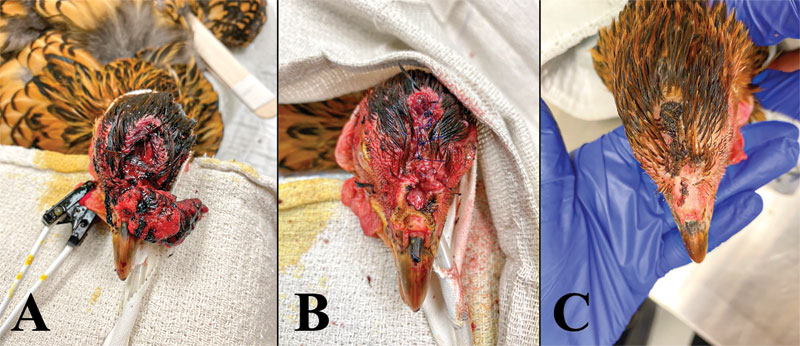
- Trauma (Predation): Accounting for 32 percent of all emergency presentations, trauma from predators represents the single most common reason owners rush their chickens to advanced care facilities.
- Reproductive Tract Disease: Ranking second at 13 percent, disorders of the avian reproductive system plague maturing and aged hens alike.
- Clinical Outcomes: Despite intensive veterinary intervention, the retrospective data reveals a guarded prognosis for emergency avian patients: only 45 percent of all hens presented on emergency were successfully discharged, while 53 percent succumbed to their conditions or required humane euthanasia.
Veterinary professionals managing these cases must carefully triage wounds, evaluate systemic stability, and design therapeutic plans that factor in both the unique anatomy of the bird and stringent drug-residue laws.
Supporting Context and Metrics: Core Clinical Challenges
An analysis of emergency room logs and clinical presentations highlights four primary disease categories that dominate backyard poultry medicine: trauma, reproductive tract disease, lameness, and respiratory illness.
1. Trauma and Wound Management
Predation trauma is the most frequent presentation in clinical practice, often involving deep, contaminated tissue lacerations. Clinicians must meticulously investigate all wounds for potential penetration into the coelomic cavity or the respiratory system (specifically the air sacs), as these involve a markedly guarded prognosis.
- Diagnostic Limitations: Radiographs are notoriously insensitive for evaluating penetrating coelomic wounds in avian species. It is nearly impossible to distinguish free coelomic air from air contained naturally within the air sacs on standard x-rays.
- Cleaning and Lavage: If air sac involvement is suspected, fluid lavage must be performed with extreme caution. Bandaging and primary closure may be indicated, though significant variability in wound location prevents overarching treatment formulas.
- Housing and Protection: Following trauma, patients should be strictly housed indoors until wounds heal completely to prevent myiasis (flystrike) and conspecific trauma (pecking by flockmates).
- Pharmacological Constraints: Systemic antibiotics are critical, ideally guided by culture and sensitivity testing. However, choices are severely limited compared to companion animal medicine due to meat and egg residue laws. Prohibited drugs in food-producing animals include nitroimidazoles (metronidazole), chloramphenicol, and fluoroquinolones.
- Analgesia and Breed Pharmacokinetics: Pain management is essential, yet many analgesics lack approved withdrawal times. While meloxicam (1 mg/kg PO BID) achieves effective plasma concentrations in White Leghorn hens, significant pharmacokinetic differences exist across breeds. Popular backyard breeds like Wyandottes and bantam Cochins exhibit a larger volume of distribution, slower metabolism, and delayed clearance of meloxicam compared to commercial White Leghorns, necessitating a reduced dosage of 1 mg/kg PO once daily.
2. Reproductive Tract Disease
Reproductive disorders are exceptionally common in backyard hens, typically presenting with non-specific, chronic, and progressive clinical signs including lethargy, hyporexia, and diarrhea.
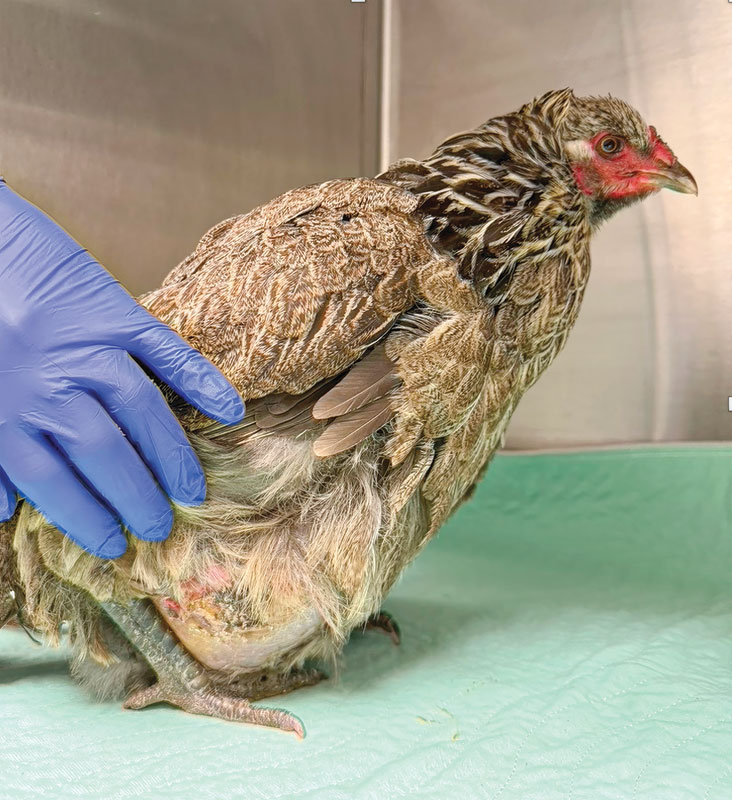
Owners frequently report reduced or absent egg production, often misinterpreting this as egg binding (dystocia)—a condition that is actually rare in chickens compared to psittacines and other avian species.
- Coelomic Effusion and Neoplasia: Affected hens frequently develop coelomic fluid accumulation. Ovarian adenocarcinoma is highly prevalent in aged hens, progressing to carcinomatosis and end-stage coelomic effusion. Unlike parrots, where large volumes of fluid reliably cause acute respiratory distress (dyspnea), chickens often tolerate significant coelomic fluid volumes without overt respiratory compromise.
- Salpingitis and Impactions: Salpingitis and oviductal impactions manifest as firm, tubular structures palpable in the left dorsal coelom. Medical management is rarely successful due to dense accumulations of impacted yolk. A salpingohysterectomy can surgically remove the diseased oviduct, though it is technically challenging. The ovary is rarely removed due to the risk of fatal hemorrhage, meaning internal ovulation can theoretically continue post-surgery.
- Yolk Peritonitis: Delicate yolk membranes can rupture, spilling free yolk into the coelomic cavity and triggering severe, often sterile or septic peritonitis.
- Ultrasound and Centesis: Because survey radiographs offer poor serosal detail in reproductively active hens, coelomic ultrasound is invaluable. Coelomocentesis—ideally performed via a ventral midline approach to protect internal organs—serves both diagnostic and therapeutic functions, though repeat taps are frequently required.
3. Lameness and Neuromuscular Conditions
Lameness is a leading cause of debility in backyard flocks, driven primarily by trauma, pododermatitis (bumblefoot), and Marek’s disease.
- Pododermatitis: Triggered by trauma, poor perching surfaces, or malnutrition, bumblefoot requires correction of underlying husbandry issues. Due to the caseous nature of avian abscesses, surgical debridement is frequently mandatory. Regional limb perfusion offers superior localized antibiotic delivery compared to oral routes.
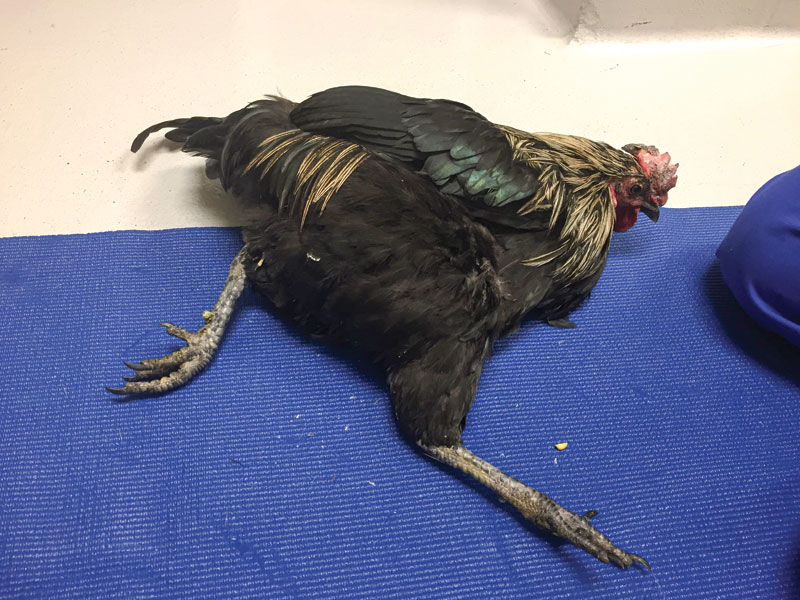
- Marek’s Disease (Gallid Alphaherpesvirus 2): Ubiquitous across backyard flocks regardless of vaccination history, this highly contagious virus accounts for a staggering majority of lymphoproliferative and neoplastic diagnoses in national mortality reviews. The neurolymphomatosis syndrome causes asymmetric paralysis of pelvic limbs or wings via mononuclear infiltration of peripheral nerves. With no effective treatment, humane euthanasia is recommended. While in-ovo or post-hatch vaccination reduces shedding, it does not completely prevent infection or viral persistence in environmental dust and litter for months.
4. Respiratory Disease and Infectious Pathogen Surveillance
While acute respiratory distress is less common as an immediate emergency in chickens compared to parrots, chronic respiratory disease is an omnipresent threat.
- Bacterial Pathogens: Mycoplasma gallisepticum leads to classic upper respiratory signs, chronic sinusitis, and infraorbital swelling. Other pathogens include Avibacterium paragallinarum, Pasteurella multocida, and infectious laryngotracheitis virus. Tetracyclines provide symptomatic relief, but no antibiotic completely eradicates Mycoplasma.
- Highly Pathogenic Avian Influenza (HPAI): HPAI H5N1 remains a critical regulatory concern given its nationally notifiable status. Characterized by rapid clinical decline, cyanotic or swollen combs and wattles, neurological abnormalities (tremors, torticollis, opisthotonos), and mortality rates approaching 90 to 100 percent within 24 hours, any suspected case mandates immediate reporting to state veterinary authorities.
Official Statements and Regulatory Frameworks
The intersection of veterinary medicine and agricultural policy creates an intricate compliance landscape for backyard chicken practitioners.
According to regulatory bodies and academic experts, veterinarians treating backyard poultry must exercise extreme diligence when prescribing extra-label drug use (ELDU). Because eggs and meat enter the human food chain, unauthorized chemical residues pose significant public health risks.
Veterinary organizations and regulatory agencies consistently emphasize the following operational directives:
- The FARAD Resource: Clinicians are strongly encouraged to consult the Food Animal Residue Avoidance Databank (FARAD) prior to administering any pharmaceutical agent. FARAD provides critical guidance on scientifically validated withdrawal intervals for food-producing animals, helping mitigate illegal residue risks.
- State and Federal Reporting: Certain infectious agents, such as Mycoplasma gallisepticum, are reportable in specific jurisdictions (e.g., North Carolina), while Highly Pathogenic Avian Influenza is universally notifiable at the federal level. Rapid reporting safeguards regional livestock economies and commercial poultry operations from catastrophic outbreaks.
- The Pet vs. Livestock Dichotomy: Veterinary associations stress that client education must bridge the gap between emotional attachment and legal reality. Owners must understand that prescribing a medication without establishing a valid veterinary-client-patient relationship (VCPR) and an appropriate egg/meat withdrawal time violates federal law.
Future Outlook: Bridging the Gap in Avian Care
As the popularity of backyard poultry continues to expand through the latter half of the decade, the veterinary community faces a clear mandate: adapt, educate, and innovate.
The future of backyard chicken medicine hinges upon several critical developments:
- Expanded Pharmacokinetic Research: Continued clinical studies are urgently needed to establish breed-specific pharmacokinetic profiles for analgesics, anti-inflammatories, and approved antimicrobials. Relying solely on commercial production data (such as White Leghorns) is no longer clinically viable given the high prevalence of heritage and fancy breeds in backyard settings.
- Enhanced Biosecurity Education: Veterinarians must take an active role in educating the public on biosecurity, effective quarantine protocols for new flock additions, and the limitations of commercial vaccines against evolving viral strains like Marek’s disease and HPAI.
- Regulatory Harmonization: As advocacy groups push for clearer guidelines regarding backyard food-producing animals, regulatory frameworks must evolve to offer practical pathways for pet-bird practitioners without compromising food safety standards.
Ultimately, safeguarding the health of America’s 85 million backyard chickens requires a collaborative effort among veterinarians, regulatory agencies, and dedicated flock owners—ensuring that these unique feathered companions live long, healthy lives while safeguarding public health.
About the Author:
Olivia A. Petritz, DVM, DACZM, graduated from Purdue University, completed advanced internships, and finished a residency in zoo and exotic animal medicine at the University of California, Davis. Dr. Petritz became a diplomate of the American College of Zoological Medicine in 2013, specializing in zoological companion animals (exotic pets). After establishing an exotics service at a specialty hospital in Los Angeles, she currently serves as an associate professor of Avian and Exotic Animal Medicine at North Carolina State University.