
Executive Overview
In the constant quest to innovate agricultural practices and input technologies, some of the most profound breakthroughs emerge not from synthetic laboratories, but from replicating the earth’s most fundamental natural phenomena. For Netherlands-based agtech pioneer VitalFluid, the ultimate source of inspiration hangs directly above us in the atmosphere: the thunderstorm. Founded in 2014 by Eindhoven University of Technology alumni Paul Leenders and Polo van Ooij, VitalFluid has spent the last decade perfecting a proprietary, patented technology known as Vidar. This system artificially replicates the intense electrical discharges of a storm to produce plasma-activated water (PAW)—a meticulously balanced liquid lightly charged with reactive oxygen and nitrogen species.
Initially conceptualized as a novel method for decentralized, green fertilizer production, VitalFluid executed a strategic pivot in 2023. Recognizing the insurmountable scale and economic barriers required to genuinely disrupt the heavily entrenched global fertilizer market, the company redirected its core focus toward high-value crop protection. By leveraging the naturally occurring antimicrobial and antifungal properties of PAW, VitalFluid has positioned itself at the vanguard of sustainable agriculture. Backed by a robust portfolio of over 30 rigorous field trials, the company is deploying its technology to combat pervasive agricultural scourges such as powdery mildew, Fusarium, and Venturia across greenhouses, orchards, and open-field farming systems.
This strategic evolution has recently culminated in significant corporate milestones. Late last month, VitalFluid announced the successful closure of a €17.2 million Series A funding round, bolstered by an additional €2.7 million innovation credit from the Netherlands Enterprise Agency (RVO). With institutional backing from major impact funds and industrial heavyweights—including lead investor Invest-NL alongside Alder Tree Investments, BOM (Brabantse Ontwikkelings Maatschappij), Future Food Fund, Goeie Grutten Impact Fonds, Graduate Ventures, Horticoop, Innovation Industries, and VDL Groep—the company is primed for rapid commercial expansion.
As VitalFluid navigates the complex web of international regulatory frameworks, secures key environmental registrations, and charts a disciplined course toward profitability projected for the 2028–2029 fiscal window, it offers a masterclass in modern agtech resilience. By avoiding the pitfalls of hyper-inflated valuations and prioritizing sound unit economics, VitalFluid is demonstrating that the future of sustainable farming lies in pragmatic, seamlessly integrated tools that empower growers rather than promising unattainable silver bullets.
Detailed Chronology: From Academic Inspiration to Commercial Pivot
The Genesis: Recreating Nature in Eindhoven (2014)
The story of VitalFluid began in 2014 within the academic ecosystem of the Eindhoven University of Technology. Founders Paul Leenders and Polo van Ooij shared a fascination with the chemical transformations that occur naturally during thunderstorms. Lightning storms are among the earth’s most powerful natural chemical reactors; as electrical energy surges through the atmosphere, it breaks apart stable nitrogen and oxygen molecules, allowing them to recombine into reactive nitrogen and oxygen species. When dissolved in rainwater, these compounds act as natural nourishment and sanitizers for the biosphere.
Leenders and van Ooij set out to capture this ephemeral natural process within a controlled industrial apparatus. Their engineering efforts ultimately birthed the Vidar technology platform. Operating around the clock, Vidar systems utilize controlled electrical discharges to activate water continuously, infusing it with reactive species without the addition of harsh synthetic chemicals or artificial stabilizers.
The Fertilizer Ambition and the Reality Check
During its formative years, VitalFluid’s leadership team naturally gravitated toward the multi-billion-dollar synthetic fertilizer market. Because a primary byproduct of plasma-activated water is nitrate—the quintessential plant nutrient—the initial vision was to develop on-farm machines capable of generating decentralized, green fertilizers. This would theoretically allow farmers to reduce their reliance on industrially manufactured, fossil-fuel-intensive nitrogen fertilizers transported across global supply chains.
However, as the company matured and attempted to scale its technology for bulk nutrient production, the economic and physical realities of the global fertilizer market became starkly apparent. Competing against established multinational commodity giants requires capital expenditure and efficiency gains on a scale that few startups can sustainably achieve. As current CEO Erik Hertel candidly notes, bridging the gap to genuinely rival the global fertilizer business would necessitate generations of technological iteration.
The 2023 Pivot: Embracing Crop Protection
Rather than viewing the limitations of the fertilizer application as a failure, VitalFluid’s leadership recognized an alternative, highly lucrative utility inherent in their machines. The very same plasma-activation process that generated nitrates also produced a potent, broad-spectrum antimicrobial and antifungal solution.
In 2023, the company executed a calculated strategic pivot. By shifting its commercial focus away from bulk fertilizer production and toward high-value crop protection, VitalFluid found its true product-market fit. The plasma-activated water, when deployed strategically, demonstrated remarkable efficacy in neutralizing plant pathogens. This pivot allowed the company to repurpose its existing large-scale machine architecture, transforming it from an uncompetitive nutrient generator into a cutting-edge, residue-free crop protection system.
Regulatory Milestones and the Series A Breakthrough (Late 2024)
With its revised commercial trajectory firmly established, VitalFluid achieved two critical milestones in rapid succession. On the regulatory front, the company successfully secured United States Environmental Protection Agency (EPA) registration for its technology as a pesticidal device—a classification facilitated by the fact that the machines produce zero hazardous chemical residues.
Concurrently, VitalFluid captured the attention of the venture capital and impact investing communities. In late August, the company announced a landmark €17.2 million Series A funding round led by Invest-NL, alongside a consortium of prominent Dutch and European investment funds. Augmented by a €2.7 million innovation credit from the Netherlands Enterprise Agency, this capital injection provided VitalFluid with the financial runway necessary to scale its manufacturing operations, expand its international footprint, and aggressively pursue comprehensive regulatory approvals in Europe.
Supporting Context & Metrics: The Agtech Landscape and Unit Economics
Navigating the Post-Hype Agtech Reality
VitalFluid’s deliberate, pragmatic approach to growth does not exist in a vacuum; it is shaped by the turbulent history of the broader agtech sector over the past decade. The venture capital boom of the late 2010s saw countless agtech startups raise massive funding rounds at inflated, unsustainable valuations, driven by hyperbolic narratives of completely disrupting traditional agriculture overnight. Many of these companies ultimately collapsed when they failed to achieve product-market fit or realized that their unit economics were fundamentally broken.
Mindful of these industry-wide missteps, VitalFluid’s management team has deliberately rejected the "growth-at-all-costs" mentality. Instead, the company is prioritizing sustainable scaling, rigorous field validation, and positive unit economics from the ground up. This disciplined strategy has already yielded tangible results; VitalFluid has successfully achieved positive unit economics in its early United Kingdom market operations, proving that the technology can be commercialized profitably without relying on speculative future efficiencies.
Economic and Operational Metrics of Plasma-Activated Water
To understand VitalFluid’s market potential, it is essential to examine the unit economics and operational metrics governing modern crop protection:
- Funding and Capitalization: €17.2 million in Series A funding, supplemented by a €2.7 million innovation credit (totaling nearly €20 million in fresh capital injections).
- Field Trial Validation: Backed by more than 30 comprehensive field trials across controlled and open environments.
- Production Capacity: Patent-protected Vidar technology capable of 24/7 continuous autonomous production of plasma-activated water.
- Target Profitability Window: Strategically slated for financial self-sufficiency and profitability by the 2028–2029 fiscal years.
- Geographic Expansion & Regulatory Validation: Secured U.S. EPA pesticidal device registration; early submission positioning for Dutch and broader European Union regulatory dossiers.
Comparative Advantage: PAW vs. Existing Technologies
In the crowded arena of biological and physical crop protection tools, farmers are frequently overwhelmed by standalone technologies that demand significant operational changes. CEO Erik Hertel is quick to contextualize PAW not as a magical panacea, but as a pragmatic, highly compatible instrument for the modern grower’s toolkit.
When compared against competing physical interventions—such as ultraviolet (UV) radiation robotics utilized for powdery mildew control—PAW offers distinct operational advantages. While UV robots perform effectively, they function strictly as standalone, nocturnal solutions restricted to operating during dark hours when crops are not photosynthesizing and workers are absent.
In contrast, VitalFluid’s plasma-activated water is designed for maximum operational friction-reduction. Because PAW can be delivered via standard, existing agricultural spraying equipment, growers do not need to invest in expensive, specialized robotic fleets. Furthermore, PAW’s chemical characteristics allow it to be seamlessly tank-mixed with various compatible agricultural products, enabling farmers to integrate the technology effortlessly into their existing Integrated Pest Management (IPM) protocols.
Official Statements and Industry Insights
The philosophy driving VitalFluid’s commercial strategy is articulated clearly by its leadership. Addressing the historical realities of the agricultural input market, CEO Erik Hertel offers a refreshing dose of realism regarding the limitations of agricultural innovations:
"At the end of the day, to compete with the global fertilizer business, the technology would still need to improve miles. Funny enough, the development of the fertilizer machine allowed us also to produce the antimicrobial plasma water on a large scale, and that’s why we pivoted in 2023."
Hertel maintains a pragmatic skepticism toward industry peers who promise total eradication of agricultural challenges through proprietary marvels:
"Anyone that claims to solve all farmer issues related to crop protection is a liar or future billionaire."
Highlighting the distinct operational superiority of integration over standalone novelty, Hertel elaborates on how PAW fits into daily farm management:
"Comparing our solution to UV robots, UV robots do a great job in controlling mildew, but they’re a standalone solution that only runs during the night hours. Whereas I think the benefit for us will be that we can be applied using existing spraying equipment, can be combined with other products that have the right characteristics, so that’s very convenient for a grower to integrate VitalFluid into the full IPM program."
Reflecting on the painful lessons learned from the broader agtech investment landscape and the company’s deliberate financial pacing, Hertel emphasizes the primacy of sustainable business fundamentals:
"Based on the learnings of the past years, where we’ve seen a lot of agtech companies that raised big rounds at crazy valuations and didn’t make it, we want to take a more sensible approach where [we] search for positive unit economics, which we currently already achieved in the UK."
Future Outlook: Crops, Compliance, and Commercialization
Crop Pipelines and Geographic Rollout
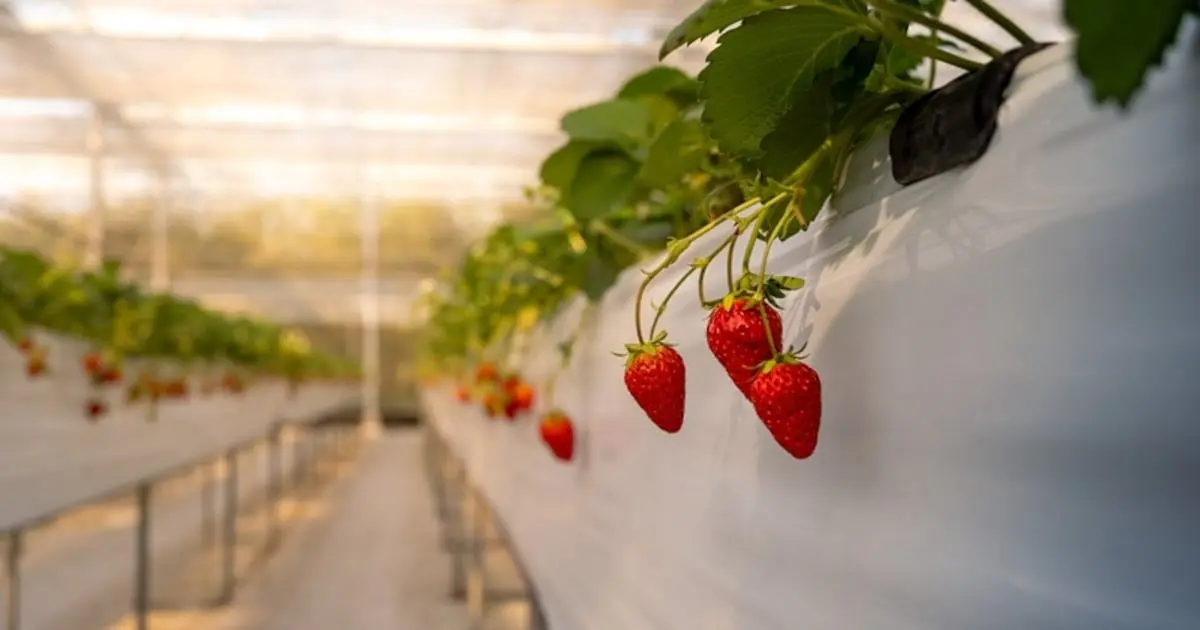
VitalFluid is currently executing a phased crop-by-crop commercial launch strategy. The company is introducing its PAW technology initially to strawberry producers—a high-value, highly sensitive crop notoriously vulnerable to fungal pathogens like powdery mildew and Botrytis. Simultaneously, VitalFluid is running extensive efficacy and yield tests across tomatoes, cucumbers, and sweet peppers in protected greenhouse environments.
Looking further ahead on the agricultural horizon, the company has mapped out aggressive expansion plans into permanent crop systems, specifically targeting apple and grape orchards where scab (Venturia) and fungal rots present persistent, costly management challenges across European and North American agricultural belts.
Regulatory Horizons: Navigating the EU Compliance Labyrinth
While VitalFluid has successfully cleared its initial regulatory hurdle in the United States by securing EPA registration as a pesticidal device—a classification earned due to the technology leaving zero hazardous chemical residues behind—the regulatory landscape in Europe presents a significantly more complex challenge.
In the European Union, regulatory bodies enforce exceptionally stringent definitions regarding plant protection products. Any substance or technology making explicit claims to impact a fungal disease or phytopathogenic organism is automatically categorized strictly as a pesticide or fungicide, subjecting it to exhaustive, multi-year evaluation dossiers.
Despite these bureaucratic hurdles, VitalFluid has proactively positioned itself for success. The company has secured an advantageous early submission position and is actively preparing to submit its comprehensive dossier to Dutch regulatory authorities early next year. By maintaining open, transparent dialogue with European regulators and emphasizing the clean, residue-free chemical profile of plasma-activated water, VitalFluid aims to pave a clear pathway toward full commercial authorization across the EU market.
The Road to Profitability (2028–2029)
With a freshly fortified balance sheet anchored by the recent €17.2 million Series A round and €2.7 million innovation credit, VitalFluid is locking its sights firmly on long-term corporate viability. By consciously modeling its growth on financial sobriety, localized unit economic validation (such as its successful proving ground in the UK), and deep integration with existing farming workflows, the company is bypassing the boom-and-bust cycle that has historically plagued the agtech sector.
As VitalFluid scales its manufacturing capabilities, broadens its crop validation trials, and secures crucial international regulatory approvals, it stands as a compelling model of modern agricultural innovation. By looking to the skies to simulate the raw chemistry of a thunderstorm, VitalFluid is quietly engineering a cleaner, more resilient, and economically sustainable future for global crop protection.