
Executive Overview
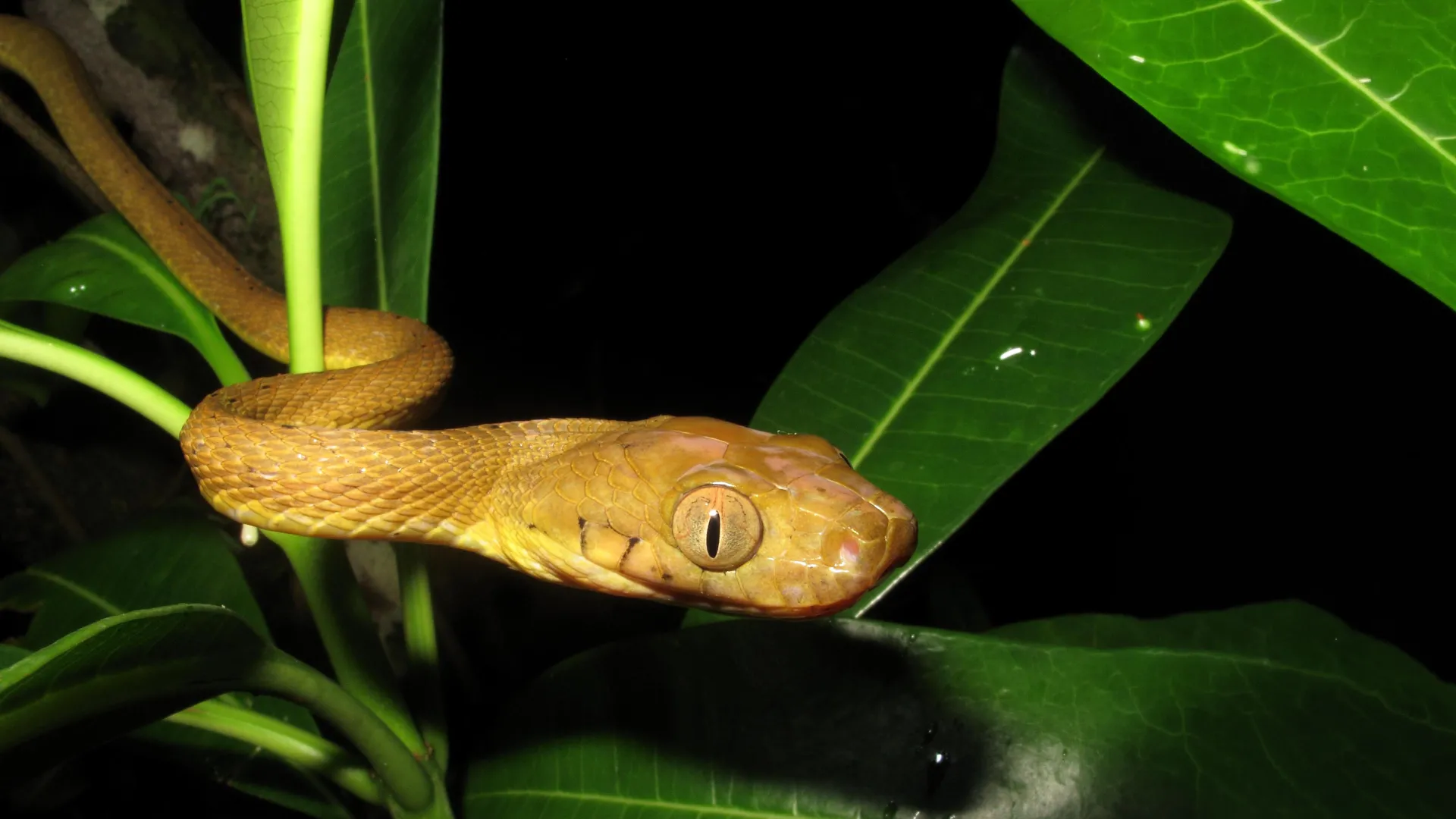
Few ecological disasters match the quiet, relentless devastation wrought by the brown tree snake (Boiga irregularis) on the island of Guam. Native to Australia and parts of the South Pacific, this nocturnal predator arrived on the U.S. territory sometime after World War II, likely stowed away in military cargo planes. Free from natural predators and introduced to an island ecosystem entirely unprepared for its hunting prowess, the snake population exploded. In some regions of Guam, densities have skyrocketed to an astonishing 30,000 snakes per square mile.
The consequences have been catastrophic. The brown tree snakes have driven numerous native forest bird species to local extinction, fundamentally altering the island’s canopy and forest regeneration processes. Furthermore, their proclivity for climbing utility poles and electrical infrastructure results in hundreds of disruptive power outages each year, imposing heavy economic costs on the territory.
For decades, biologists have scratched their heads over a profound evolutionary paradox at the heart of this biological invasion. Historical records and ecological models indicate that Guam’s entire burgeoning population stemmed from a tiny founding group of snakes—perhaps only a handful of individuals. According to classical population genetics, such a restricted founder pool should trigger a severe genetic bottleneck. Inbreeding depression normally strips a species of the genetic diversity required to adapt to novel environments, reducing fitness, increasing susceptibility to disease, and rendering rapid population growth statistically improbable. Yet, the brown tree snakes of Guam defied every theoretical expectation, proliferating into the tens of millions.
Now, a groundbreaking study led by researchers at the University at Buffalo (UB), in collaboration with the U.S. Geological Survey (USGS), has cracked the case. Published on July 24 in the prestigious journal Science Advances, the research reveals that brown tree snakes harbor a vast, previously invisible reservoir of genetic variation. Utilizing cutting-edge long-read sequencing technology, the scientific team uncovered more than 19,000 structural variants within the snake’s genome—large-scale insertions, deletions, duplications, and rearrangements of DNA.
Particularly concentrated in genes governing immune response and olfaction (the sense of smell), these structural modifications provide the hidden adaptive raw material that enabled the snakes to weather intense inbreeding, fend off novel pathogens, and conquer a foreign ecosystem. This discovery not only rewrites our understanding of the brown tree snake’s invasive success but also challenges fundamental tenets of conservation biology, offering new insights into how critically endangered, highly inbred species might possess unexpected evolutionary resilience.
Detailed Chronology: From Accidental Stowaway to Genetic Revelation
To understand the magnitude of the recent scientific breakthrough, it is necessary to retrace the timeline of the brown tree snake’s invasion and the technological evolution that allowed researchers to finally decode its survival strategy.
Post-WWII Arrival and Ecological Collapse
The trajectory of Guam’s environmental tragedy began in the turbulent wake of World War II. Amid the rapid movement of military personnel, equipment, and cargo through the Pacific, Boiga irregularis slipped past human defenses. Landing on Guam—an island historically devoid of terrestrial mammalian or reptilian predators capable of subduing an agile, venomous arboreal snake—the invader found paradise.
The island’s endemic bird populations, which had evolved in the absence of such stealthy predators, had no behavioral defenses against the snakes. By the 1960s, the invaders had spread across the entire island. Forest birds vanished one by one; today, species like the Guam flycatcher and the rufous fantail are entirely gone from the wild, their songs permanently silenced. As avian populations crashed, populations of spiders and insect pests surged, cascading through the ecosystem and disrupting plant pollination and seed dispersal.
The Theoretical Paradox
As ecologists mapped the spread of the snakes, they ran into a theoretical wall. Mathematical models of invasion biology dictate that successful invaders usually possess high genetic diversity, allowing subsets of the population to adapt to fluctuating climates, new food sources, and novel diseases. When a population is founded by very few individuals—a population bottleneck—genetic drift purges diversity. The resulting inbreeding leads to the expression of deleterious recessive mutations, lowering reproductive success and driving populations toward extinction rather than expansion.
For years, the brown tree snake stood as an anomaly. How could a lineage originating from a microscopic founding group outpace all theoretical predictions of inbreeding depression? Traditional genetic analyses, which focused on single-nucleotide polymorphisms (SNPs)—the swapping of individual DNA letters (such as an A changing to a G)—showed relatively low diversity among Guam snakes, deepening the mystery.
The Technological Turning Point
The breakthrough came when UB researchers joined forces with the USGS Brown Tree Snake Rapid Response Team (RRT)—an elite unit dedicated to preventing the dissemination of the snakes from Guam to other vulnerable Pacific islands and the U.S. mainland.
Rather than relying on legacy sequencing methods that act like magnifying glasses inspecting text letter-by-letter, the research team deployed long-read sequencing. This advanced technology reads massive, continuous stretches of DNA molecules, enabling scientists to spot structural variants—genomic rearrangements affecting 50 base pairs or more.
When the lab processed the tissue samples provided by the USGS, they bypassed the superficial similarities picked up by older tools. They looked past the individual letters and examined how entire paragraphs of the genomic text had been rearranged. The analysis, completed and published in mid-2024, shattered previous assumptions, revealing that the snakes’ genetic toolkit was far richer than anyone dared imagine.
Supporting Context & Metrics: Decoding the Genome
The sheer scale of the genetic data unearthed by the UB-led team sheds new light on the molecular architecture of biological invasions.
By the Numbers: The Scale of Discovery
- 19,000+ Structural Variants: The research team identified more than 19,000 distinct locations in the brown tree snake genome where DNA segments were duplicated, deleted, or inverted.
- 8x Genomic Footprint: Structural variants alter nearly eight times more of the total genome than standard single-nucleotide polymorphisms (SNPs). While SNPs capture fine-scale point mutations, structural variants represent massive chromosomal real estate reorganization.
- 30,000 Snakes per Square Mile: In peak density areas on Guam, the snake population reaches staggering proportions, highlighting the explosive demographic growth fueled by this hidden genetic flexibility.
The Power of Structural Variants
To grasp the significance of structural variants, consider the metaphor articulated by study co-author Dr. Levi Gray: comparing genomes using traditional sequencing is like reading two books letter by letter with a magnifying glass. If the letters match up closely, you might assume the books are identical. However, you would completely miss the fact that entire chapters have been ripped out, pasted into a different section, or duplicated multiple times.
Long-read sequencing exposes these major architectural shifts. In the brown tree snake, these large-scale alterations were not distributed randomly across the genome. Instead, they showed striking enrichment in two vital functional categories: immune function and olfaction (the sense of smell).
Immunity and Olfaction: The Keys to the Kingdom
- Immune Resilience: Invasive species frequently encounter novel pathogens as they move into new geographic zones. The dense clustering of structural variants in immune-related genes suggests that Guam’s snakes possess an enhanced capacity to generate immunological diversity, allowing them to rapidly ward off local diseases that might otherwise decimate an inbred population.
- Olfactory Sophistication: Brown tree snakes rely intensely on their forked tongues and Jacobson’s organs to sample chemical cues from the environment, tracking prey and navigating complex forest canopies. The high diversity in their olfactory genes may explain a bizarre behavioral quirk: while brown tree snakes readily cannibalize conspecifics in their native Australian range, such predatory behavior is rarely observed on Guam. The snakes’ acute, structurally diverse sense of smell may allow them to recognize close relatives—a consequence of severe inbreeding—and inhibit aggressive cannibalism, preserving the population during its critical growth phase.
Official Statements and Expert Insights
The implications of this study extend far beyond the jungles of Guam, prompting reflection from the researchers spearheading the investigation.
Dr. Trevor Krabbenhoft, associate professor in the UB Department of Biological Sciences and corresponding author of the study, emphasizes that our perception of genetic health has historically been constrained by our instruments:
"The brown tree snake is maybe not wildly diverse, but it has important sources of genetic diversity that have been underappreciated. How we define genetic diversity and how we actually measure it is shaped largely by the technology of the day."
Dr. Christopher Osborne, an aquatic biologist at SUNY Oswego and first author of the study who conducted the research as a UB doctoral student, points out the duality of the findings. While daunting for pest control, the discovery offers a glimmer of hope for conservationists fighting to save imperiled wildlife:
"It’s possible that endangered species may have more flexibility in their genes than we realize. We’re now getting a better understanding of unappreciated sources of genetic diversity that may explain how some inbred species can still respond to their environment."
Dr. Levi Gray, a postdoctoral researcher in Krabbenhoft’s lab who previously studied Guam’s snake crisis while embedded with the USGS, elaborates on the evolutionary mechanics and the lingering questions regarding the timing of these genetic shifts:
"Is it possible some of this diversity emerged after the invasion? It is, but we would have to sequence snakes from the native populations to know for sure. By looking at structural variants, we realize that DNA in one individual might be in a completely different place on the chromosome than in another—something older technology simply couldn’t see."
Additional contributions to the landmark study were made by USGS scientists Dr. M. Renee Bellinger and Dr. Melia Nafus, along with UB research scientist Brian Foote, postdoctoral researcher Dr. Steven Fleck, and PhD candidates Sarah Chang and Hannah Waterman.
Future Outlook: Managing Invaders and Saving Endangered Species
The publication of this study in Science Advances marks a paradigm shift in conservation genetics, opening new avenues for both invasive species management and biodiversity preservation.
Implications for Eradication and Biosecurity
For environmental agencies like the USGS Rapid Response Team, state wildlife departments, and international biosecurity networks, the news carries a sobering message. The brown tree snake is an even more resilient adversary than previously feared. Its ability to leverage structural genomic variants to bypass the hazards of inbreeding means that eradication and containment strategies cannot rely on the assumption that the population will collapse under its own genetic weight.
Biosecurity protocols at Pacific ports of entry must remain hyper-vigilant. Cargo inspections, trapping networks, and canine scent-detection units remain the frontline defense against the accidental exportation of these resilient reptiles to places like Hawaii, the Commonwealth of the Northern Mariana Islands, or the U.S. mainland. Furthermore, understanding the genetic architecture of the snake’s immune and olfactory systems could eventually inform the development of targeted biological controls or more effective chemical attractants.
A Beacon of Hope for Endangered Wildlife
Paradoxically, the genetic resilience that makes the brown tree snake such an effective invader offers a vital lesson for saving the world’s most endangered animals.
Many endangered species—ranging from the black-footed ferret and the northern white rhinoceros to isolated island populations of birds and mammals—suffer from severe, human-induced population bottlenecks. Conservation geneticists have long feared that these heavily inbred species are living on borrowed time, doomed to genetic stagnation and eventual extinction due to a lack of adaptive potential.
By proving that large-scale structural variants can shield an inbred population from the perils of the genetic bottleneck, the UB-USGS study suggests that many endangered species may possess hidden reserves of genetic adaptability. Conservationists equipped with long-read sequencing technology can now scan the genomes of endangered taxa for structural variants, identifying resilient lineages and prioritizing populations that harbor this previously overlooked form of genetic diversity.
As science continues to refine its tools, the brown tree snake stands transformed from a simple cautionary tale of ecological destruction into a complex model organism. By decoding how a handful of stowaways conquered an island paradise, researchers are unlocking the fundamental rules of survival, adaptation, and resilience in a rapidly changing world.