
Executive Overview
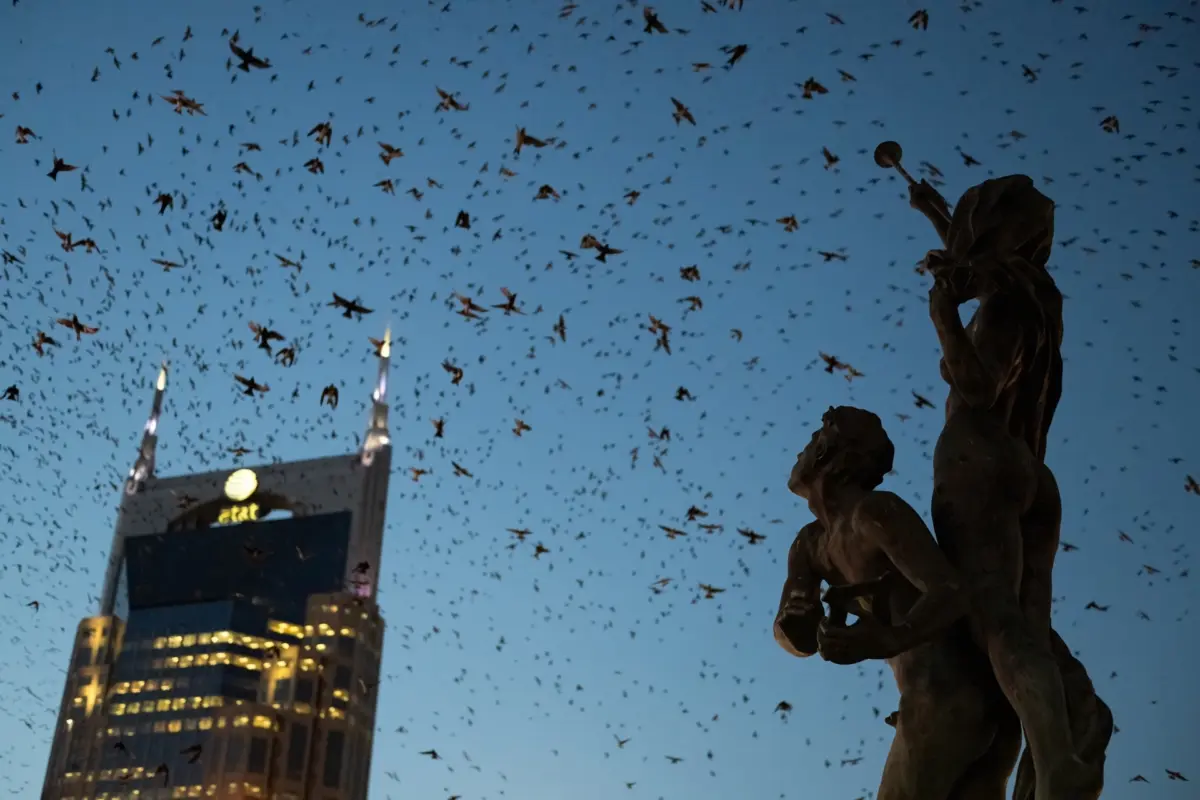
For generations, the conventional narrative surrounding wildlife conservation and metropolitan development has been one of mutual exclusivity. Cities were long perceived as ecological dead zones—asphalt expanses and concrete canyons devoid of natural value, where the only species capable of thriving alongside humanity were opportunistic generalists like pigeons, starlings, and rats. For migratory birds, urban areas were viewed strictly as hazards to be avoided: monolithic zones of light pollution, glass-walled skyscrapers, and fragmented habitats that offered little more than peril.
However, a landmark study published earlier this year in the prestigious journal Nature has completely upended this long-standing ecological dogma. Analyzing continental-scale migration patterns through the lens of modern weather radar, researchers have discovered that millions of migrating birds are bypassing pristine wilderness in favor of stopping, resting, and refueling directly inside human metropolitan areas.
The findings are both astonishing and profound. Nearly half of all major migratory "hotspots"—defined as areas where exceptionally high numbers of birds congregate to rest and replenish their energy—are located within metropolitan environments. Specifically, 48 percent of these hotspots occur in urban areas during the spring migration, and 44 percent during the fall. Given that metropolitan areas account for a relatively small fraction of the total landmass of the continental United States, this represents a massive, disproportionate concentration of avian activity.
This paradigm shift moves urban conservation from the periphery of ecological strategy to its very center. With approximately 86 percent of the U.S. population residing in these very same metropolitan regions, the destiny of millions of migratory birds is now inextricably linked to everyday urban dwellers. The concrete jungle, it turns out, is a critical link in the continental flyway system. Understanding why birds are flooding into cities, how researchers mapped this hidden migration, and what society must do to protect these feathered travelers is one of the most urgent environmental imperatives of our time.
Detailed Chronology: Uncovering the Urban Migration Phenomenon
The journey toward this paradigm-shifting discovery began with a moment of cognitive dissonance for Miguel Jimenez, a researcher who spearheaded the investigation as part of his Ph.D. dissertation at Colorado State University.
Phase 1: The Initial Skepticism and Research Design
When Jimenez first reviewed the preliminary spatial data generated by his research models, his immediate reaction was that the code was broken. The computer outputs suggested that vast waves of migratory songbirds, shorebirds, and raptors were descending upon major American cities on an unprecedented scale.
At the time, the prevailing academic consensus held that cities played a negligible role in supporting major ecological processes like migration. Traditional conservation priorities historically targeted pristine forests, expansive wetlands, and protected national preserves. "There’s this narrative that on the conservation front, there’s not much action that we can take in cities," Jimenez reflects. Unconvinced by this fatalistic view, he set out to answer a fundamentally overlooked question: Just how much migratory stopover actually happens within the urban matrix?
Phase 2: Deploying Continental-Scale Radar
To measure stopover activity across the entire United States, Jimenez and his team cast a wide net, turning to a tool traditionally used by meteorologists rather than ornithologists: NEXRAD weather surveillance radar.
By harnessing decades of archival and real-time radar data, the research team could track the nightly lift-offs and landings of massive migratory flocks. While traditional observation methods—such as human birdwatchers logging sightings or community science platforms—are plagued by geographic biases (people tend to look for birds where they live, primarily in affluent, accessible areas), weather radar provides an impartial, macro-level view of the skies.
The team mapped the density of descending birds relative to the U.S. Census Bureau’s definition of metropolitan areas: population cores of at least 50,000 residents plus their surrounding communities. The results, finalized and published in Nature, revealed the shocking reality: nearly half of the nation’s critical migratory hotspots reside squarely within city limits.
Phase 3: Solving the Urban Paradox – Light and Water
Once the data confirmed the heavy presence of birds in metropolitan areas, Jimenez faced a follow-up question: Why are millions of wild animals choosing to rest in the middle of human industrial centers?
Two primary mechanisms emerged to explain this urban pull:
- Artificial Light at Night (ALAN): Cities emit immense glow that travels far into the night sky. While this light frequently disorients nocturnal migrants—pulling them off course and drawing them toward lethal collisions with windows—it also acts as an initial, powerful beacon that draws birds toward metropolitan centers from miles away.
- Water Infrastructure: Historically, human settlements were established near water sources—rivers, lakes, and coastlines. Furthermore, modern cities actively engineer landscapes to import and manage water for human consumption, creating lush parks, ornamental lakes, and well-watered golf courses. For a migrating bird crossing an otherwise dry or monotonous landscape, these concentrated pockets of water and associated food sources act as an irresistible oasis.
This water-centric theory was powerfully reinforced by another surprising geographic finding: urban migration hotspots were notably more prevalent in the western United States than in the East. In arid western regions where the surrounding natural landscape is largely desert, cities provide life-sustaining resources that simply do not exist in the untamed wilderness outside municipal boundaries.
Supporting Context & Metrics: The Science, The Luxury Effect, and The Threats
To fully grasp the implications of the Nature study, one must examine the intricate intersection of ecology, socioeconomics, and modern urbanization metrics.
The Radar Revolution vs. Community Science
One of the most vital methodological takeaways of the research is the validation of weather radar as an ecological instrument. While community science databases like eBird and iNaturalist are invaluable for tracking species richness (identifying precisely which birds are present), they suffer from significant human biases. People living in lower-income neighborhoods have less leisure time, fewer local parks, and less access to technology, leading to under-reporting of wildlife.
Weather radar bypasses human social structures entirely, scanning the atmosphere indiscriminately above both wealthy enclaves and industrial districts. As Melanie Smith, science and conservation product director at the National Audubon Society, notes, pairing radar abundance estimates with community science species data creates an unprecedented, highly accurate monitoring apparatus for urban ecosystems.
The "Luxury Effect" in Western Cities
A fascinating nuance discovered during the study was the distribution of birds within arid western metropolitan areas like Los Angeles, Phoenix, and San Diego. In these dry climates, birds were found in significantly higher concentrations within higher-income neighborhoods.
This phenomenon is known in ecology as the luxury effect—the observation that urban biodiversity and vegetative cover tend to scale upward in wealthier districts. Affluent neighborhoods typically feature more mature trees, expansive lawns, private gardens, and better-maintained municipal irrigation systems.
"People and birds alike prefer wetter, greener spaces," explains Smith, who led the development of Audubon’s Bird Migration Explorer. "Urban green spaces in these western cities aren’t just recreational amenities for people. They’re functioning as habitat." However, this underscores a troubling environmental justice issue: low-income urban neighborhoods often suffer from "heat island" effects and a lack of green infrastructure, depriving both human residents and migrating wildlife of safe, restorative spaces.
The Lethal Toll of Urban Sprawl
While cities offer critical stopover resources, they simultaneously present catastrophic hazards. The sheer speed and scale of ongoing American urbanization are compounding these dangers:
- Window Collisions: An estimated one billion birds die annually in the United States from striking glass windows during migration. Reflective and transparent glass mirrors sky and vegetation, deceiving birds into fatal impacts.
- Light Pollution: Unshielded architectural lighting disorients nocturnal migrants, exhausting their fat reserves as they circle helplessly in illuminated urban skies until they drop from exhaustion or strike buildings.
- Habitat Fragmentation: Urban sprawl carves continuous wild spaces into tiny, isolated patches of green, forcing exhausted birds to compete fiercely for limited food resources while dodging domestic predators like outdoor cats.
Official Statements & Expert Perspectives
The academic community and conservation leaders have responded to the study with a mixture of revelation and an urgent call to action.
Miguel Jimenez, Lead Author and Former Outreach Biologist:
"The initial hotspot numbers were pretty shocking, but the more I thought about it, it made a lot of sense… There’s this narrative that on the conservation front, there’s not much action that we can take in cities. I wanted to know how much migratory stopover actually happens in cities… Ultimately, the study speaks to how quickly the country is still urbanizing. Studies like his show how we can make urban development better and safer for birds—and since so many birds rest in cities, it’s critical that we do so."
Melanie Smith, Science and Conservation Product Director, National Audubon Society:
"The West, in a lot of ways, is a big desert. Through sources like eBird, you get a sense of the species mix and relative abundance of those species. By pairing that with radar’s estimate of abundance, you get a powerful tool for monitoring urban areas… Urban green spaces in these western cities aren’t just recreational amenities for people. They’re functioning as habitat."
These perspectives highlight a unified realization: conservation is no longer something that can be outsourced exclusively to remote national parks and distant wildernesses. The battle to preserve global biodiversity is increasingly being fought—and won or lost—on the rooftops, balconies, and courtyards of our largest cities.
Future Outlook: Transforming the Urban Landscape for Avian Survival
The revelation that nearly half of America’s migratory bird hotspots are embedded within metropolitan environments shifts the burden of stewardship directly onto urban planners, policy-makers, and everyday citizens. Because 86 percent of the population lives in these spaces, the potential grassroots workforce for avian conservation is massive.
Actionable Interventions for City Dwellers
Safeguarding migrating birds does not require massive capital investment from every individual; small, cumulative changes can drastically alter survival rates during peak migration windows:
- Light Mitigation: Participating in initiatives like Audubon’s Lights Out program by turning off non-essential architectural and interior lighting during peak nocturnal migration hours (typically midnight to dawn during spring and fall).
- Bird-Safe Architecture: Retrofitting existing commercial and residential glass with patterned window films, UV-reflective glass, or external screens to prevent lethal window strikes.
- Habitat Enhancement: Planting native flora on balconies, backyards, and corporate campuses to provide natural food sources (insects and berries) rather than manicured, sterile lawns. Microforests are increasingly taking root in urban spaces, serving as vital ecological stepping stones.
- Predator Management: Keeping domestic cats strictly indoors during migration seasons to prevent them from decimating exhausted, ground-feeding songbirds.
Policy and Structural Reform
At the legislative level, municipal and federal governments must institutionalize bird-friendly building codes. Several regional authorities—ranging from local municipalities in Minnesota to sweeping mandates in New York City—have already adopted mandatory bird-safe building policies. Activists are currently pushing for the passage of federal legislation like the Bird-Safe Building Act, which would mandate bird-friendly design features in federally owned and leased properties.
Furthermore, urban planners must prioritize equitable investments in urban rewilding and green infrastructure. Addressing the "luxury effect" by planting trees, establishing community gardens, and creating wetlands in historically underserved, low-income urban neighborhoods will simultaneously cool heat-island-plagued communities, improve human health, and expand critical migratory stopover corridors.
Conclusion
For the countless warblers, thrushes, tanagers, and shorebirds navigating the dark skies above American cities each spring and fall, the concrete jungle is no longer just a lethal gauntlet to be feared. Thanks to the eye-opening data captured by weather radar, we now know that cities are essential sanctuaries where millions of birds land to catch their breath. Whether a migrating traveler successfully completes its arduous journey or falls victim to the hazards of the modern metropolis now depends entirely on the choices we make within our own backyards.